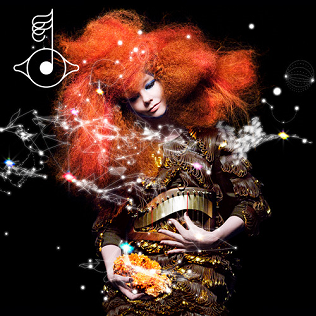
With Biophilia, released in 2011, Björk took one of the boldest steps of her career. It followed Volta, a politically charged and rhythm-heavy album, but rather than repeating herself, she pushed into new ground. This project was more than just music—it became a multimedia experiment that blended sound, science, and technology into a single creative framework.
In the early 2010s, when digital music and streaming were reshaping the industry, Biophilia stood out. It wasn’t just an album you listened to—it was one you could interact with. Each song was paired with a mobile app, and the project as a whole was presented as an educational tool and a visual experience, as much as a musical one. At a time when most albums were becoming more streamlined and disposable, Björk offered something complex and expansive.
Sonic Exploration

At its core, Biophilia is a sonic experiment shaped by both high production values and deliberate restraint. The album doesn’t chase the polish of mainstream pop, but it doesn’t fall into lo-fi territory either. Instead, the production is clean, spacious, and at times stark—allowing each sound to breathe within the mix. This clarity fits the album’s themes, which often revolve around the laws of nature and scientific precision. Every sound feels intentional, almost like it was placed under a microscope before being released into the song.
Björk’s use of custom-built instruments adds a unique texture to the album. For example, the “gameleste”—a fusion of a gamelan and celesta—brings a metallic, chime-like resonance to tracks like “Crystalline.” Elsewhere, bursts of electronic noise, pipe organs, and even a Tesla coil are woven into the arrangements. These choices mirror the natural phenomena each track explores, making the music feel like an extension of the elements it describes.
Vocally, Björk remains as expressive as ever, though her delivery here is more subdued compared to earlier albums. She often floats over the instrumentation rather than dominating it. In tracks like “Virus,” her voice is intimate and hushed, echoing the parasitic theme of the lyrics, while on “Mutual Core,” she builds intensity gradually until it explodes in a rush of rhythm and layered harmony.
Genre-wise, Biophilia resists easy classification. It blends elements of experimental electronic, avant-pop, classical minimalism, and ambient music. There are even traces of choral and folk traditions in the way some vocals are arranged. Yet it never fully settles into one style. That genre-blending serves the album’s concept well, creating a sense of organic growth and transformation. However, this can also make it feel disjointed at times, especially for listeners who prefer a more consistent sonic palette.