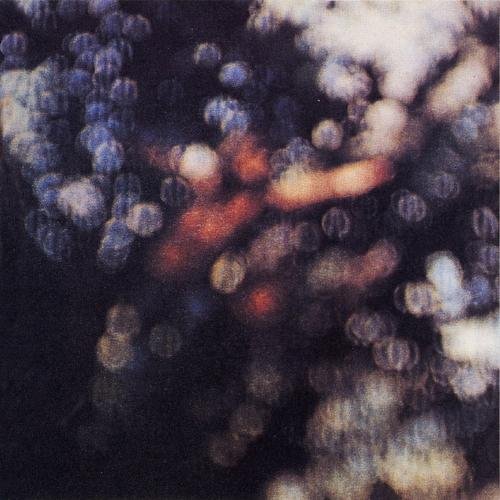
By 1972, Pink Floyd were approaching a turning point. The sprawling experimentation of their early years had gradually developed into a more focused musical identity, culminating in the atmospheric ambition of Meddle (1971). Yet before the extraordinary success of The Dark Side of the Moon (1973), the band took an unexpected detour into film music.
Released in June 1972, Obscured by Clouds was recorded as the soundtrack to Barbet Schroeder’s film La Vallée. Rather than pursuing the extended compositions that had increasingly defined their work, Pink Floyd delivered a comparatively concise collection of atmospheric instrumentals, acoustic ballads and straightforward rock songs. It was unmistakably their music, but presented on a smaller, more intimate scale.
Often overshadowed by the albums surrounding it, Obscured by Clouds contains moments of remarkable melodic beauty, unsettling reflections on mortality and some of the band’s most understated performances. Yet its relaxed, occasionally fragmented character raises an interesting question: is this an overlooked gem in Pink Floyd’s catalogue, or a collection of promising ideas that never quite reaches its full potential?
The Story Behind Obscured by Clouds
Composing music for the cinema was hardly unfamiliar territory for Pink Floyd. The band had previously recorded the soundtrack to Barbet Schroeder’s More (1969) and contributed music to Michelangelo Antonioni’s Zabriskie Point (1970). Both projects offered opportunities to experiment with atmosphere and texture beyond the expectations of a conventional rock album.
When Schroeder approached the band again to provide music for La Vallée, they were already entering one of the busiest periods of their career.
The film follows a group of travellers journeying into the remote landscapes of Papua New Guinea in search of a mysterious valley. Its themes of exploration, spirituality and encounters with unfamiliar environments provided fertile ground for Pink Floyd’s atmospheric tendencies.
Yet La Vallée was not simply a film about physical exploration. Its characters become increasingly removed from the familiar world, pursuing an experience that promises personal transformation. This emphasis on uncertainty and discovery suited a band whose music had long explored atmosphere, ambiguity and unfamiliar sonic territory.
Recording at Château d’Hérouville
Pink Floyd began recording on 23 February 1972 at Château d’Hérouville, a residential studio near Paris. Following their initial sessions, they returned on 23 March for four further days of work, before completing the mixing at Morgan Studios in London on 6 April.
The recording process was remarkably swift. Working around an increasingly demanding touring schedule, the band wrote and recorded the soundtrack in approximately two weeks of studio time.
Compared with the lengthy development of compositions such as “Echoes“, these circumstances encouraged a more immediate approach. Rather than spending months refining elaborate musical structures, Pink Floyd had to produce material capable of accompanying specific scenes while remaining sufficiently engaging to work independently.
Crucially, the band were already developing The Dark Side of the Moon. An early version had been performed live before the French sessions began, meaning Obscured by Clouds was created alongside, rather than before, their next major artistic statement.
The soundtrack’s practical requirements encouraged shorter, self-contained compositions. Some of the music was used sparingly in the finished film, occasionally appearing as background sound rather than dominating individual scenes. Two album tracks, “Mudmen” and “Stay”, were absent from the film altogether.
This unusual relationship between soundtrack and standalone album helps explain its character. The music needed to serve the film, but Pink Floyd were also creating recordings that could exist beyond it.
The result was neither a conventional film score nor an entirely unified studio album. Instead, Obscured by Clouds occupied an intriguing middle ground, allowing the band to explore simpler musical ideas without abandoning the atmospheric qualities that had become central to their identity.
The Sound of Obscured by Clouds

Where Meddle demonstrated Pink Floyd’s growing confidence in extended compositions, Obscured by Clouds revealed what happened when those same musicians worked within tighter boundaries. The arrangements are leaner, the melodies more immediate and the performances often surprisingly direct.
There is also a noticeable change in emphasis. Rather than allowing every composition to unfold through gradual development, the band frequently establish a musical atmosphere and explore it within a relatively short running time.
This approach produces some striking results, although it also exposes the limitations of ideas that might have benefited from further development.
From Synthesiser Atmospheres to Straightforward Rock
The opening title track establishes the album’s atmospheric character immediately.
Built around a repetitive synthesiser figure, a steady rhythm and gradually emerging guitar textures, “Obscured by Clouds” creates an atmosphere of quiet anticipation. Its electronic sounds give the music an almost mechanical quality, while the underlying rhythm prevents it from drifting into abstraction.
Rather than building towards an elaborate climax, the piece relies on repetition and subtle changes in texture to sustain its momentum. The effect is hypnotic, although it functions more convincingly as an introduction than a fully realised musical statement.
Its transition into “When You’re In” provides an immediate contrast.
Driven by a heavier guitar riff and an insistent rhythm section, the instrumental possesses an uncomplicated energy rarely associated with Pink Floyd’s more elaborate recordings. Nick Mason’s drumming gives the composition much of its force, while Gilmour’s guitar brings a rougher edge to the band’s familiar sound.
There is something appealing about this directness. Pink Floyd sound less concerned with constructing an elaborate atmosphere than with the immediate impact of playing together as a rock band.
Yet the composition offers relatively little beyond its central musical idea, making it enjoyable without being especially substantial.
Elsewhere, the album reveals a warmer, more melodic character.
“Burning Bridges” combines Richard Wright and David Gilmour’s vocals with gentle keyboard passages and expressive guitar work. Its understated arrangement creates a reflective atmosphere without relying on lengthy instrumental developments.
The contrast between the two voices is particularly effective. Gilmour brings a slightly firmer presence, while Wright’s softer delivery complements the song’s relaxed character. Their performances blend naturally, giving the composition a warmth that distinguishes it from the opening instrumentals.
“The Gold It’s in the…” moves in the opposite direction. Its energetic guitar playing and straightforward rock structure feel unusually carefree for Pink Floyd, offering a burst of momentum between the album’s more reflective passages.
Although its conventional approach makes it less distinctive than the strongest material, the song demonstrates the band’s willingness to embrace a simpler, more immediate form of rock music.
The Atmospheric Beauty of Mudmen
Perhaps the album’s finest instrumental performance arrives with “Mudmen”.
Beginning with restrained keyboard textures, the piece gradually opens into a sweeping guitar passage from Gilmour. His expressive playing supplies much of its emotional weight, moving between delicate melodic phrases and more forceful moments.
Wright’s keyboards provide a spacious foundation, giving the guitar room to breathe without allowing the arrangement to lose its direction.
What makes “Mudmen” particularly interesting is its relationship with “Burning Bridges”. The instrumental revisits musical material associated with the earlier song, transforming its gentle melodic character into something more expansive.
This connection provides a subtle sense of continuity within an album that can otherwise feel fragmented.
Without vocals to guide the listener, the melody takes on a different emotional quality. Gilmour’s guitar becomes the principal expressive voice, while Wright’s accompaniment allows the music to develop naturally.
The result is one of the album’s most convincing demonstrations of Pink Floyd’s ability to communicate through instrumentation alone.
Production and Musical Chemistry
The production reinforces the album’s relatively informal character.
Instruments generally retain a natural, uncluttered presence, while keyboards and guitar effects provide enough texture to connect the more conventional songs with the soundtrack material.
Wright’s contributions are especially important. His keyboards rarely dominate the arrangements, instead supplying the harmonic foundation that allows Gilmour’s guitar to move between restrained melodies and more dramatic passages.
Mason’s drumming also adapts effectively to the album’s contrasting styles. He provides the steady momentum of the opening instrumentals, the driving force of “Childhood’s End” and the lighter rhythmic touch required by the acoustic material.
Waters’ bass playing, meanwhile, helps anchor the arrangements without drawing unnecessary attention away from the melodies.
There is a looseness to these performances that works in the album’s favour. Compared with the meticulous construction of Pink Floyd’s later recordings, Obscured by Clouds feels unusually spontaneous.
That freedom occasionally results in underdeveloped compositions, but it also gives the record a distinctive warmth. Rather than attempting to make every musical idea sound monumental, Pink Floyd frequently allow the performances to speak for themselves.
Lyrics and Themes: Life, Death and Time

Beneath its relaxed musical character, Obscured by Clouds contains some surprisingly sombre reflections on mortality, uncertainty and the passing of time.
Although the album lacks the overarching narrative of Pink Floyd’s later conceptual works, several songs explore concerns that would become increasingly important to the band.
What makes these themes particularly interesting is their appearance within an album composed primarily for someone else’s film. Rather than following a single narrative, the lyrics reveal individual perspectives that occasionally intersect.
Roger Waters and the Shadow of Mortality
Nowhere is this more apparent than on “Free Four”, where Roger Waters confronts death with unusual directness.
Rather than disguising his concerns beneath elaborate symbolism, he presents mortality as an unavoidable reality. The song also contains a personal reference to his father, Eric Fletcher Waters, who was killed during the Second World War when Roger was still an infant.
This autobiographical element gives “Free Four” particular significance within Pink Floyd’s catalogue.
The loss of his father would become an increasingly prominent subject in Waters’ songwriting, eventually finding more extensive expression on The Wall (1979) and The Final Cut (1983).
Here, however, the subject appears within a deceptively cheerful composition, making the contrast between the music and its meaning especially striking.
Waters does not present mortality as an abstract philosophical concern. Instead, the song acknowledges death as something inseparable from ordinary existence, giving its observations an uncomfortable directness.
This willingness to confront difficult subjects through relatively accessible songwriting would become one of the defining qualities of his later work.
Time, Uncertainty and Lost Opportunities
“Wot’s… Uh the Deal” approaches the passage of time from a quieter perspective.
Its lyrics convey longing and uncertainty, contemplating the distance between youthful expectations and the realities of experience. Rather than offering a clear narrative or resolution, the song captures the uneasy feeling of watching opportunities pass while searching for fulfilment.
The words are conversational rather than grandiose, allowing the underlying melancholy to emerge without dramatic expression.
There is also a sense of resignation beneath the song’s reflective surface. Its concerns are familiar, but their understated presentation makes them feel unusually personal.
“Childhood’s End” explores similar anxieties through more abstract imagery.
Written by David Gilmour, its reflections on time, mortality and an uncertain future suggest an awareness of forces beyond individual control. The lyrics possess a restless quality, contrasting the possibility of change with the unsettling recognition that time continues moving forward.
The title is shared with Arthur C. Clarke’s science-fiction novel, although the song does not attempt to retell its story. Instead, it stands independently as a meditation on existence and uncertainty.
“Stay” brings these concerns into a more intimate setting.
Written by Waters and Wright, and sung by Wright, the song depicts a fleeting romantic encounter with a sense of emotional detachment. Beneath its gentle surface lies the suggestion of a relationship defined more by impermanence than lasting connection.
The contrast between its warm musical character and emotionally distant subject matter gives the composition a subtle melancholy.
These songs do not form a unified concept, nor should they be forced into one. Their significance lies in the individual moments where the songwriting becomes unexpectedly revealing.
For all its modest ambitions, Obscured by Clouds contains early expressions of concerns that would shape some of Pink Floyd’s most celebrated work.
Best Songs on Obscured by Clouds
Although the album’s quality varies, several songs demonstrate how effective Pink Floyd could be when working with relatively simple arrangements.
Its finest moments rely on memorable melodies, expressive performances and an emotional depth that extends beyond their modest presentation.
Wot’s… Uh the Deal
Perhaps the album’s greatest achievement is “Wot’s… Uh the Deal”, one of the most quietly affecting songs in Pink Floyd’s early catalogue.
Built around Gilmour’s delicate acoustic guitar playing, the composition unfolds with an almost effortless grace. Wright’s gentle piano accompaniment and Gilmour’s restrained vocal delivery create an atmosphere of wistful reflection, while the melodic guitar solo adds warmth without overwhelming the arrangement.
The interplay between acoustic guitar and piano is particularly effective. Neither instrument competes for attention, allowing the melody to emerge naturally from the arrangement.
There are no dramatic changes in tempo or elaborate instrumental developments. Instead, the song succeeds through the careful placement of relatively simple musical elements.
Gilmour’s vocal performance is equally important. His delivery avoids unnecessary drama, allowing the song’s reflective character to speak for itself.
The guitar solo provides a particularly memorable moment. Rather than attempting to dominate the composition through technical display, Gilmour concentrates on melodic phrasing, extending the song’s emotional atmosphere.
Its beauty lies in that restraint.
For an album frequently overshadowed by more ambitious recordings, “Wot’s… Uh the Deal” is a reminder that some of Pink Floyd’s most affecting music emerged from their least complicated arrangements.
Childhood’s End
“Childhood’s End” offers a considerably different experience.
Written and sung by Gilmour, the track combines a spacious, atmospheric introduction with driving rhythms and forceful electric guitar playing.
Mason’s energetic drumming gives the composition urgency, while the contrast between its restrained opening and more assertive passages creates a satisfying sense of progression.
The guitar work is particularly compelling. Gilmour moves between atmospheric textures and more aggressive playing without allowing the song to lose its identity.
Unlike the relatively static “When You’re In”, the composition develops beyond its initial musical ideas while maintaining a direct, accessible structure.
It also highlights Gilmour’s growing confidence as both a songwriter and vocalist. His performance is assured, while the arrangement successfully combines Pink Floyd’s experimental instincts with a more conventional rock sound.
The result is one of the album’s most convincing compositions, demonstrating how the band could retain their distinctive atmosphere without relying on an extended running time.
Free Four
Few songs on Obscured by Clouds are as immediately accessible, or as unsettling beneath the surface, as “Free Four”.
With its buoyant acoustic rhythm, prominent percussion and catchy melody, the track initially sounds almost cheerful.
Waters’ vocal performance is unusually direct, giving the song a conversational quality that contrasts sharply with its subject matter.
That contradiction is central to its appeal.
The lively arrangement never fully acknowledges the seriousness of the lyrics, creating a sense of unease beneath the song’s apparent simplicity.
Rather than presenting mortality through sombre instrumentation, Pink Floyd surround Waters’ reflections with an unexpectedly upbeat musical setting.
This makes the song memorable for reasons beyond its lyrical significance.
Its accessible structure also demonstrates that the band could communicate difficult ideas without relying on elaborate arrangements or lengthy instrumental passages.
“Free Four” may sound comparatively straightforward, but the tension between its music and lyrics gives it a distinctive character within the album.
Stay
“Stay” finds Richard Wright taking centre stage with a gentle, piano-led composition that offers one of the album’s quieter pleasures.
His relaxed vocal delivery complements the soft keyboard textures and Gilmour’s expressive guitar playing, creating an atmosphere of intimacy tinged with melancholy.
Wright’s performance is particularly effective because of its restraint. Rather than forcing emotion into the composition, he allows the melody and arrangement to establish the mood.
The song lacks the immediate impact of “Childhood’s End” or the melodic distinction of “Wot’s… Uh the Deal”, but its understated character is part of its appeal.
Its gentle progression also provides a welcome contrast to the album’s more forceful material, demonstrating the importance of Wright’s musical sensibilities to Pink Floyd’s sound.
Although “Stay” is unlikely to be regarded as one of the band’s defining compositions, it remains a rewarding example of their quieter songwriting.
Together, these songs reveal a side of Pink Floyd that can be overlooked amid discussions of their ambitious conceptual works.
Their greatest achievements were not always dependent on lengthy compositions or elaborate studio experimentation. Sometimes, a memorable melody and an expressive performance were enough.
Where Obscured by Clouds Falls Short

For all its understated charm, Obscured by Clouds remains an uneven album.
Its strongest compositions possess enough melodic and emotional substance to stand alongside some of Pink Floyd’s better-known material, but not every track reaches the same standard.
The opening instrumentals illustrate this inconsistency.
Both “Obscured by Clouds” and “When You’re In” establish appealing musical ideas, yet neither develops them with the imagination found in the band’s strongest instrumental work.
Their repetitive structures serve an atmospheric purpose, but beyond their immediate impact, there is relatively little to sustain interest.
Compared with the carefully constructed progression of “One of These Days” from Meddle, they can feel more like musical sketches than fully realised compositions.
“The Gold It’s in the…” presents a different limitation.
Its energetic guitar playing and uncomplicated rock arrangement provide an enjoyable change of pace, but the song offers few surprises. There is nothing inherently wrong with Pink Floyd embracing straightforward rock music; the problem is simply that this particular composition leaves a less lasting impression.
The closing “Absolutely Curtains” is similarly divisive.
Its atmospheric instrumental passages initially suggest a return to the band’s more experimental tendencies, but the piece ultimately feels more effective as cinematic accompaniment than as a satisfying conclusion to the album.
The final section features singing by members of the Mapuga people of Papua New Guinea, an unusual addition that connects the recording directly with the film’s setting.
While the performance gives the album a distinctive ending, the transition from Pink Floyd’s instrumental music to the vocal recording is abrupt. As a result, the conclusion can feel disconnected from the preceding compositions.
These weaknesses also affect the album’s overall cohesion.
Pink Floyd move between atmospheric instrumentals, reflective ballads and energetic rock compositions without always establishing a convincing relationship between them.
The variety is appealing, but the sequencing lacks the immersive quality of their more carefully structured releases.
Nevertheless, judging Obscured by Clouds entirely against the band’s greatest achievements would be unfair. Its informal character is part of what makes it distinctive, and attempting to develop every musical idea into an elaborate composition might have undermined that quality.
The album’s weakness is not its modest ambition, but the inconsistency with which its ideas are realised.
The Album’s Place in Pink Floyd’s History

Few Pink Floyd albums occupy quite the same position as Obscured by Clouds.
Released between Meddle and The Dark Side of the Moon, it has inevitably been overshadowed by two records that played important roles in establishing the band’s reputation. Yet treating it merely as a transitional curiosity overlooks what makes it worthwhile.
By 1972, Pink Floyd had spent several years developing a musical identity following Syd Barrett’s departure.
Their increasingly collaborative approach had produced ambitious works such as “Echoes”, demonstrating how effectively they could combine individual contributions within an extended composition.
Obscured by Clouds offered a different perspective on that creativity.
Without the demands of a grand conceptual framework, the band could explore shorter songs and more conventional arrangements. Gilmour’s melodic guitar playing and growing confidence as a songwriter are particularly evident, while Wright’s keyboards and understated performances provide much of the album’s warmth.
Waters, meanwhile, was beginning to express increasingly personal concerns through his lyrics.
These qualities make the album historically interesting, but they do not mean it should be regarded simply as preparation for The Dark Side of the Moon.
That project was already taking shape before the soundtrack sessions began, and the two recordings emerged from different creative circumstances.
Their similarities are better understood as evidence of musicians exploring related ideas during the same period.
An Overlooked Commercial Success
Although Obscured by Clouds is frequently regarded as a lesser-known entry in Pink Floyd’s catalogue, it was hardly an insignificant release at the time.
Issued in the UK on 2 June 1972, the album reached No. 6 in the British charts, demonstrating that the band had already established a substantial audience before their international breakthrough the following year.
Its commercial performance is particularly interesting given the circumstances of its creation.
Recorded quickly as a film soundtrack, Obscured by Clouds nevertheless found an audience as a standalone album, suggesting that Pink Floyd’s musical identity had become strong enough to attract listeners even outside their more ambitious projects.
Its subsequent reputation has been shaped partly by what followed.
The extraordinary success of The Dark Side of the Moon, and the sequence of major albums that emerged throughout the 1970s, inevitably pushed some of the band’s earlier recordings into the background.
Yet Obscured by Clouds deserves attention beyond its position in that chronology.
What distinguishes the album is its relative lack of conceptual ambition. Its compositions are not required to serve an elaborate narrative or contribute to a monumental statement. Some benefit enormously from that freedom, while others reveal the limitations of a less developed approach.
Its reputation as a lesser Pink Floyd album is therefore understandable, but perhaps too dismissive.
The record contains enough memorable songwriting, expressive musicianship and distinctive atmosphere to stand as a worthwhile achievement in its own right.
More importantly, it reminds us that Pink Floyd’s development was not a straightforward progression from experimentation to perfection.
Their catalogue contains unexpected diversions and contrasting ambitions, and Obscured by Clouds is among the most revealing.
Final Verdict: Is Obscured by Clouds Worth Hearing?

Obscured by Clouds may never command the admiration reserved for Pink Floyd’s greatest albums, but dismissing it as a minor soundtrack would be a mistake.
At its best, the record is quietly remarkable.
“Wot’s… Uh the Deal” offers some of the band’s most beautiful understated songwriting, “Childhood’s End” combines atmosphere with genuine rock energy, and “Free Four” reveals a darker lyrical perspective beneath an unexpectedly accessible melody.
Its weaknesses are equally apparent. Several instrumentals feel underdeveloped, the sequencing lacks consistency and the strongest compositions occasionally overshadow the surrounding material.
Yet there is something refreshing about hearing Pink Floyd work without the elaborate conceptual ambitions that would soon define their music.
Obscured by Clouds succeeds not because it anticipates greater achievements, but because it captures a different, more spontaneous side of the band.
It may not be an essential masterpiece, but it is far more than a footnote in their discography.
Official Tune Tempest Rating
Obscured by Clouds earns its 8/10 through its melodic highlights, expressive musicianship and distinctive atmosphere. Although its soundtrack origins contribute to an uneven listening experience, the strength of its finest compositions makes it a rewarding and frequently overlooked entry in Pink Floyd’s catalogue.