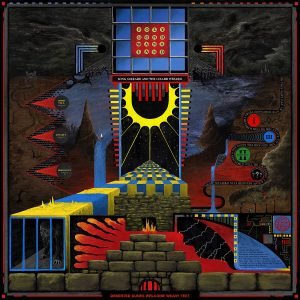
Polygondwanaland landed in late 2017, deep into one of the most ambitious years of King Gizzard & the Lizard Wizard’s career. It was the fourth of five albums they released that year, a stretch of output that felt both chaotic and strangely calculated. Coming off the heels of records like Flying Microtonal Banana and Sketches of Brunswick East, this album didn’t just keep the momentum going — it shifted gears.
Where earlier 2017 releases flirted with microtonality, sci-fi storytelling, or jazzy textures, Polygondwanaland turns toward progressive rock with sharp focus. Its songs are built around polyrhythms and complex time signatures, but the album doesn’t feel bloated. Instead, there’s a clear structure and intent that helps it feel tighter than some of the band’s looser experiments. It blends tricky musical ideas with a sense of flow that doesn’t overwhelm the listener.
Sonic Exploration

The production on Polygondwanaland strikes a careful balance between clarity and warmth. It doesn’t go for a lo-fi or deliberately rough aesthetic, but it also avoids sounding overly polished. Instead, the album’s mix lets the layered instrumentation breathe without feeling too clinical. Every instrument — from the interlocking guitars to the punchy bass and the crisp, syncopated drums — finds its space. The result is a sound that feels textured and immersive, yet still approachable.
That production choice works well for the album’s themes, which often dwell in abstract or mythic territory. There’s a certain dreamlike quality to the sonic palette, where intricate rhythms and repeating motifs build hypnotic cycles. This helps create a sense of movement that fits with the album’s concept of ancient lands, shifting time, and primal rhythms.
Musical Arrangements
The arrangements are one of the album’s standout features. Songs like “Crumbling Castle” and “Inner Cell” unfold in phases, layering guitars, flutes, and synthesizers in ways that feel both methodical and organic. The dual drummers are especially effective here — not just playing in unison, but creating interwoven patterns that add depth without overwhelming the mix. Vocals are often treated as part of the texture rather than the focus, blending into the instrumentation to serve the greater sonic tapestry.
In terms of genre, Polygondwanaland is rooted in progressive rock, but it doesn’t fall into the trap of becoming a pastiche. There are clear influences from 70s prog, with shifting time signatures and conceptual ambition, yet the band filters those ideas through a modern psych-rock lens. Elements of krautrock, math rock, and even world music rhythms peek through, but the blend feels natural rather than forced.
Lyrical Analysis

The lyrics on Polygondwanaland draw from a world that feels ancient, symbolic, and slightly out of reach. Instead of grounding the listener in personal stories or direct emotion, the band leans into myth, allegory, and a kind of cryptic storytelling that feels more like reading an old scroll than hearing someone’s diary. Central themes include decay, power, isolation, and transformation — all framed within a fictional setting that evokes prehistoric continents and lost civilizations.
Recurring motifs like castles crumbling, cells dividing, and the passage of time suggest a fascination with both physical and spiritual entropy. The opening track “Crumbling Castle” sets the tone with a vivid image of a structure falling apart, which seems to mirror the breakdown of empires, identities, or even reality itself. Later songs like “Inner Cell” and “Loyalty” continue this thread, suggesting a kind of descent or unraveling that’s both external and internal.
Lyrical Depth
Lyrically, the album sits more on the abstract side. These aren’t direct emotional appeals or personal confessions. Instead, the band uses poetic language that invites interpretation. Lines often feel like pieces of a larger puzzle, giving listeners room to project their own meanings. There’s a narrative structure if you look for it — characters, conflicts, consequences — but it’s more suggestive than literal.
This approach can be both a strength and a weakness. On one hand, it adds to the album’s mystique and gives it staying power. The lyrics don’t give everything away on the first listen, which makes them feel more rewarding over time. On the other hand, the lack of emotional clarity might leave some listeners feeling distant from the material. The album’s cool detachment can make it harder to connect with on a purely emotional level, especially compared to more direct or heartfelt songwriting.
Cohesion and Flow

One of Polygondwanaland’s most impressive achievements is how fluidly it moves from track to track. The album doesn’t just contain songs — it unfolds. There’s a strong sense of narrative pacing, even if the story isn’t entirely clear on first listen. Each track leads into the next with purpose, often connected through shared motifs or transitional instrumental passages that maintain momentum.
The opener, “Crumbling Castle,” acts as a gateway into the album’s world, both thematically and musically. Its gradual build and shifting sections set the tone for what’s to come, and when it finally gives way to “Polygondwanaland,” the transition feels seamless. As the album progresses through tracks like “Inner Cell,” “Loyalty,” and “Horology,” there’s a noticeable through-line — not just in rhythm and tone, but in mood. It’s a descent of sorts, a journey that starts with grandeur and slowly becomes more introspective and tense.
This arc gives the album an emotional contour. While the lyrics remain abstract, the arrangement of the songs helps communicate a kind of narrative progression. The tension builds mid-album and then softens toward the end, particularly with the instrumental “Tetrachromacy” and the relatively gentler closer “The Fourth Colour.” Even the album’s more experimental turns, like the shifting meters or off-kilter grooves, are handled in ways that preserve flow rather than disrupt it.
Thematic Consistency
Thematically, the album is quite consistent. Its imagery, tonal palette, and rhythmic complexity hold steady from start to finish. There are no sudden detours into unrelated genres or moods. If anything, the risk here lies in the uniformity — listeners looking for variety in pacing or mood may find it a bit dense in the middle. Some tracks can blur together on a casual listen, especially since the vocals often stay within a similar range and delivery style.
Standout Tracks and Moments
While Polygondwanaland is best experienced as a full album, there are individual tracks and moments that rise above the rest in terms of creativity, execution, and emotional pull.
Crumbling Castle
“Crumbling Castle” is the obvious standout and arguably the album’s centerpiece. At over ten minutes long, it’s a bold opener that manages to feel both expansive and tightly structured. The track gradually builds through shifting grooves, layered guitars, and hypnotic rhythms. Its closing section, where multiple musical lines converge in a swirling crescendo, captures the band’s ability to make complexity feel exhilarating rather than overbearing.
Inner Cell
“Inner Cell” is another highlight, notable for its brooding tone and sharp rhythmic interplay. The way the guitars sync with the drums here is particularly effective, giving the track a sense of tension that never quite resolves. It’s also one of the more vocally dynamic songs, with layered harmonies adding depth to the otherwise sparse vocal lines.
Loyalty
“Loyalty” continues the narrative and musical thread from “Inner Cell” with a shift in pace that feels deliberate and engaging. Its chorus — if it can be called that — sticks with you not because it’s catchy in a pop sense, but because of its eerie, chant-like quality. There’s a subtle shift in mood here that deepens the album’s sense of unease.
Memorable Moments
A particularly memorable moment comes during “Tetrachromacy,” when the band leans into minimalism. The track strips back some of the album’s density, allowing the rhythm section and synth textures to lead. This change in dynamic gives the listener a moment to breathe, and its placement in the album feels strategic. It reminds us that the band understands the importance of pacing, not just in songcraft but in album flow.
Another small but striking moment happens in “The Fourth Colour” — the closing track. The way it brings back earlier musical motifs gives the sense of a cycle completing. There’s a subtle emotional payoff here, as if the listener has been guided through a labyrinth only to arrive back at the start, changed but not lost.
Artistic Contribution and Innovation

In the landscape of modern psychedelic and progressive rock, Polygondwanaland occupies a unique space. It doesn’t just revisit genre staples — it reimagines them with a distinct voice and purpose. While many contemporary prog-leaning albums rely heavily on nostalgia or technical showmanship, King Gizzard & the Lizard Wizard bring a sense of urgency and invention to their approach. This record, in particular, feels both like a tribute and a challenge to the boundaries of the genre.
What truly sets Polygondwanaland apart is the way it was released. By making the album public domain — free to download, reproduce, and distribute — the band made a radical statement about music ownership and distribution. In a time when most artists are navigating streaming algorithms and digital marketing strategies, this move felt almost subversive. It gave fans and independent labels the freedom to press their own copies, turning the album into a shared cultural artifact rather than a tightly controlled product.
Innovation
From a musical perspective, the innovation lies in the album’s rhythmic structures and its ability to make complexity feel accessible. The band’s use of polyrhythms, layered time signatures, and looping motifs doesn’t come across as indulgent. Instead, it creates a hypnotic, trance-like experience that rewards both casual listeners and those looking for technical depth.
Thematically, Polygondwanaland also stands out for its mythic tone. Few modern rock albums commit this fully to world-building. Rather than relying on direct lyrical storytelling, it invites listeners to interpret and explore a symbolic universe. It avoids easy answers and linear narratives, opting instead for suggestion and atmosphere.
Still, the album isn’t without precedent. Fans of classic prog bands like Gentle Giant, King Crimson, or even Magma will recognize some of the influences — intricate structures, esoteric themes, and a fondness for extended compositions. What makes King Gizzard’s version feel fresh is their willingness to let these ideas coexist with more grounded psych-rock sensibilities. The fusion feels natural rather than forced, helping the album appeal to a broader audience without diluting its ambition.
Closing Thoughts

Polygondwanaland stands as one of King Gizzard & the Lizard Wizard’s most focused and thoughtfully constructed works. It blends the band’s love for rhythmic complexity, conceptual ambition, and genre-bending experimentation into a single, cohesive statement. From the layered percussion to the mythic lyricism and the unorthodox release strategy, the album pushes boundaries without losing its sense of purpose.
One of its greatest strengths lies in its flow. The transitions between tracks feel deliberate, and the musical ideas evolve naturally across the album’s runtime. The thematic consistency, both in tone and content, adds to its immersive quality. There’s also a sense of confidence in how the band handles technical material — the polyrhythms, shifting time signatures, and structural experimentation are impressive without being alienating.
Still, the album is not without its weaknesses. Its commitment to mood and abstraction can create a sense of distance. For listeners seeking emotional immediacy or melodic hooks, the album may feel dense or overly cerebral. Some tracks can blur together on casual listens due to similar vocal delivery and tonal choices. These aren’t flaws that derail the experience, but they do temper its accessibility.
As a part of the band’s already eclectic discography, Polygondwanaland is a defining moment — one that showcases their ability to balance ambition with clarity. It’s not the most energetic or varied album they’ve released, but it may be their most structurally refined and conceptually rich.
Official Rating: 8/10
This score reflects a high level of creativity, technical skill, and artistic intent. While it may not connect with every listener on an emotional level, its craft and innovation are undeniable. It’s a bold, rewarding listen that invites revisits, and it firmly secures its place as one of King Gizzard’s standout releases.