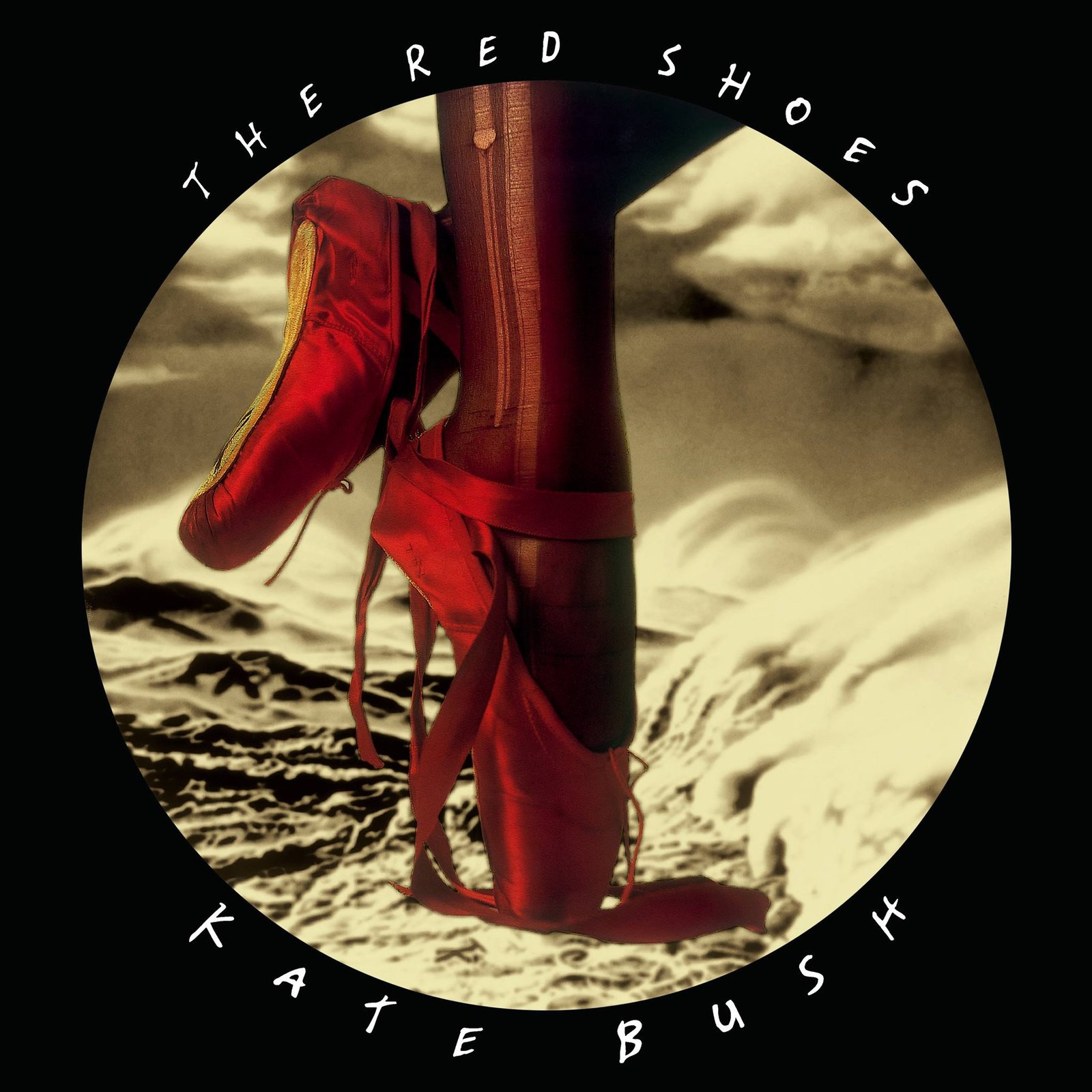
Few albums in Kate Bush’s discography are as fascinating or as frustrating as The Red Shoes. Released on 1 November 1993, her seventh studio album arrived during a difficult period in her personal life. Its twelve songs reveal an artist confronting loss and emotional upheaval while pursuing an increasingly eclectic musical direction.
Four years after The Sensual World, Bush returned with a record that often favoured direct melodies, prominent guitars and energetic pop-rock arrangements. Yet this apparent accessibility came at a cost. Where her finest albums balance experimentation with a strong sense of cohesion, The Red Shoes sometimes struggles to reconcile its contrasting styles and ambitions.
Nevertheless, its inconsistencies should not overshadow its finest achievements. Beneath the occasionally overworked production lie some of Bush’s most affecting compositions, particularly the deeply personal “Moments of Pleasure” and the dramatic “Top of the City”.
The Red Shoes is ultimately an album of striking contrasts, where extraordinary emotional honesty coexists with creative decisions that do not always succeed. It may lack the consistency of Bush’s greatest work, but its strengths make it far more than a minor entry in her catalogue.
The Making of The Red Shoes: Creativity, Loss and Change
The creation of The Red Shoes coincided with a particularly difficult period in Kate Bush’s personal life. Following The Sensual World, she experienced several significant losses, including the death of her mother, Hannah, in 1992. Her long-standing romantic relationship with bassist and engineer Del Palmer also ended, although the pair continued collaborating professionally.
These circumstances provide important context for the album’s emotional character, particularly its reflections on grief, separation and resilience. Yet Bush was also pursuing a different musical direction, seeking a more immediate sound that could accommodate accessible pop arrangements alongside her experimental instincts.
A Different Approach to Recording
Unlike her previous albums, The Red Shoes was conceived primarily with the compact disc format in mind. This change influenced how Bush approached the record’s length and structure.
As she explained:
“The Red Shoes was the first album to be recorded for the CD format rather than vinyl. It really affected how I thought about the shape of the album.”
— Kate Bush, on The Red Shoes
The format offered greater freedom to develop an extended collection of compositions without the same constraints imposed by vinyl. Whether this freedom benefited the finished album is more debatable, particularly given its uneven pacing.
The recording sessions also featured contributions from several prominent musicians, including Eric Clapton, Jeff Beck and Prince. Their involvement brought distinctive musical personalities to the project, reflecting Bush’s willingness to explore unfamiliar collaborative possibilities.
The Inspiration Behind The Red Shoes
The album’s title draws upon the imagery of Michael Powell and Emeric Pressburger’s celebrated 1948 film The Red Shoes, itself inspired by Hans Christian Andersen’s fairy tale about enchanted footwear that compels its wearer to dance uncontrollably.
The film’s exploration of artistic devotion and personal sacrifice particularly resonated with Bush’s theatrical imagination. These influences also informed The Line, the Cross and the Curve, the short musical film she created to accompany the album.
However, The Red Shoes is not a conventional concept album. Its compositions explore different emotional experiences and musical styles, with the title’s symbolism providing a suggestive backdrop rather than a continuous narrative.
A Changing Musical Landscape: The Sound of The Red Shoes

Musically, The Red Shoes represents one of the most eclectic releases in Kate Bush’s catalogue. Where The Sensual World established a relatively consistent atmosphere through its blend of traditional instrumentation and electronic textures, its successor moves between polished pop, guitar-driven rock, orchestral balladry and experimental compositions.
The change is striking, particularly in the prominence of rhythmic grooves and brighter instrumental arrangements. Although this approach gives the record considerable energy, its success depends heavily on how effectively Bush integrates these elements into individual songs.
Pop Accessibility and Musical Experimentation
The album’s more direct approach is immediately apparent on “Rubberband Girl”. Built around an insistent rhythmic groove, prominent percussion and an infectious chorus, the song embraces a comparatively straightforward pop-rock sound.
Its playful energy makes for an engaging opening, although the repetitive arrangement lacks some of the musical development associated with Bush’s finest compositions. The emphasis is firmly on rhythm and momentum rather than the unexpected structural changes that characterise much of her earlier work.
Elsewhere, “Constellation of the Heart” pursues an equally accessible direction, combining bright instrumentation with an exuberant vocal performance. Yet its busy production occasionally overwhelms the underlying melody, making the composition feel less focused than its energetic presentation suggests.
“Eat the Music” introduces a different rhythmic character, drawing upon Caribbean-influenced percussion and exuberant vocal arrangements. Its colourful instrumentation is immediately appealing, but the song’s extended groove arguably offers more rhythmic excitement than compositional development.
By contrast, the title track demonstrates how the album’s eclecticism can produce something genuinely distinctive. Its driving rhythms and traditional instrumental colours create an atmosphere of increasing urgency, capturing the unsettling momentum of its central narrative.
Guest Musicians and Contrasting Arrangements
The contributions of several prominent guest musicians bring additional character to the recordings.
On “And So Is Love”, Eric Clapton’s expressive guitar playing complements the song’s melancholy atmosphere. His restrained phrasing provides an effective contrast to Bush’s impassioned vocals, allowing the arrangement to develop without becoming unnecessarily elaborate.
Jeff Beck’s guitar work on “You’re the One” offers a similarly distinctive presence. His expressive playing reinforces the composition’s emotional intensity without distracting from its central melody.
Prince’s involvement in “Why Should I Love You?” produces a more complicated result. The song combines elements of funk, pop and gospel-inspired vocal arrangements, creating a lively but crowded musical landscape.
There are moments of genuine excitement, particularly in its rhythmic interplay and contrasting vocal textures. However, the abundance of competing ideas makes it difficult for the composition to establish a consistent direction.
These collaborations illustrate an important distinction. Exceptional musicianship does not automatically produce an exceptional arrangement. The most successful contributions complement Bush’s songwriting, while the less convincing moments suggest that greater restraint might have served the material better.
The Power of Bush’s Voice
Whatever the album’s instrumental shortcomings, Bush remains an exceptionally expressive vocalist.
Her performance on “The Song of Solomon” is particularly striking. Moving between intimate restraint and impassioned intensity, she conveys desire with an emotional directness that contrasts with the song’s carefully layered arrangement.
“Top of the City” offers another compelling example. Bush’s voice gradually becomes more forceful as the composition develops, giving its climactic passages a sense of desperation that the instrumentation alone could not achieve.
Perhaps the most affecting performance appears on “Moments of Pleasure”. Against Michael Kamen’s orchestral arrangement, Bush sings with a vulnerability that feels unusually exposed. The emotional impact comes from the sincerity of her delivery rather than theatrical excess.
These performances demonstrate her remarkable ability to communicate contrasting emotional states, from sensual confidence to grief and uncertainty.
Production: Ambition Without Consistency
The album’s production is most effective when its elaborate instrumentation reinforces the songwriting. Elsewhere, densely layered percussion, prominent electronic textures and competing instrumental parts can make the music feel unnecessarily crowded.
“Big Stripey Lie” offers a particularly unusual example of Bush’s willingness to experiment. Featuring her own guitar and bass playing, the song embraces abrasive textures and a comparatively raw, confrontational character. Its restless arrangement is intriguing, although the results feel less fully developed than her most successful experiments.
Certain production choices also give the album a distinctly early-1990s character. While this is not inherently a weakness, some of its brighter electronic textures and heavily processed rhythms have aged less gracefully than the more organic arrangements elsewhere in Bush’s catalogue.
The Red Shoes remains musically adventurous, but its finest recordings demonstrate the importance of balancing experimentation with clarity and purpose.
Literary Inspiration and Lyrical Themes: Love, Loss and the Price of Creativity

Beneath its contrasting musical styles, The Red Shoes reveals a recurring interest in the difficulties of navigating change. Throughout the album, Bush explores grief, romantic uncertainty, emotional resilience and the sometimes destructive nature of artistic ambition.
Compared with the elusive narratives of The Sensual World, much of the songwriting feels unusually direct. Bush still employs literary references, symbolism and theatrical characters, but several compositions communicate their emotions with striking clarity.
Grief, Memory and the Passage of Time
Few compositions in Bush’s catalogue confront personal loss as openly as “Moments of Pleasure”. Rather than presenting grief through an elaborate fictional narrative, the song reflects upon memories of people who have shaped her life.
Its emotional power lies in the contrast between affection and absence. Bush recalls fleeting moments of happiness while acknowledging the pain of knowing they cannot be repeated. The result is neither an uncomplicated celebration of memory nor an expression of despair, but a moving recognition that joy and sorrow frequently coexist.
The song’s deeply personal perspective gives it particular significance within the album. Yet its appeal extends beyond the circumstances that inspired it, capturing the universal experience of finding comfort in memories that can also intensify feelings of loss.
Love, Desire and Emotional Uncertainty
Romantic relationships provide another important source of inspiration, although Bush approaches them from contrasting perspectives.
“The Song of Solomon” draws upon the biblical Song of Songs, traditionally associated with passionate love and desire. Bush rejects conventional romantic restraint, presenting intimacy as something to be expressed openly rather than concealed behind elaborate gestures.
Its sensual imagery conveys emotional longing and physical desire as inseparable experiences, giving the composition an unusual combination of confidence and vulnerability.
“And So Is Love” offers a more troubled perspective, examining the relationship between affection and suffering. Rather than portraying love as an uncomplicated source of fulfilment, Bush acknowledges its capacity to expose emotional pain.
“You’re the One” explores the difficulty of accepting the end of a relationship. Its lyrics convey an attachment that persists despite the recognition that circumstances have changed. Although its subject matter is comparatively familiar, Bush’s performance lends it considerable emotional weight.
Resilience and the Search for Renewal
Not every composition approaches emotional difficulty through sorrow or introspection.
“Rubberband Girl” uses the elasticity of a rubber band as a metaphor for resilience. Bush imagines an ability to absorb life’s pressures and recover from disappointment rather than becoming permanently overwhelmed by them.
The imagery is comparatively simple, but its playful quality provides an effective contrast to the album’s more sombre material. At the same time, the metaphor is less developed than the more imaginative lyrical concepts found elsewhere in her catalogue.
“Constellation of the Heart” similarly encourages a change in perspective, using celestial imagery to suggest the possibility of looking beyond familiar emotional limitations. Its optimistic intentions are clear, although the lyrics occasionally feel more abstract than illuminating.
These compositions introduce a welcome sense of possibility, even if their messages lack the psychological complexity of the album’s strongest songwriting.
Spirituality, Protection and the Unknown
“Lily” draws inspiration from Lily Cornford, a spiritual healer and friend of Kate Bush who introduced her to ideas about spiritual protection and the benevolent influence of angels.
The song’s most distinctive feature is its spoken introduction, performed by Cornford herself. Her recitation of a prayer associated with the Gayatri establishes a contemplative, almost ceremonial atmosphere before Bush introduces the image of a protective circle of fire and invokes four archangels: Gabriel, Raphael, Michael and Uriel.
As Bush’s vocals become increasingly forceful, the music transforms this intimate search for reassurance into something more urgent and dramatic. The contrast between Cornford’s measured delivery and Bush’s impassioned performance gives the composition much of its distinctive character.
What makes “Lily” particularly compelling is its treatment of vulnerability. Rather than presenting courage as the absence of fear, Bush explores the possibility of finding strength through spiritual reassurance.
The combination of spoken prayer, ritualistic imagery and dramatic musical development makes it one of the album’s most successful experiments.
Artistic Obsession and the Symbolism of the Red Shoes
The album’s title track develops imagery associated with Powell and Pressburger’s The Red Shoes and the Andersen fairy tale that inspired its central ballet.
In the film, the gifted ballerina Victoria Page finds her devotion to dance increasingly at odds with the demands of romantic love. The enchanted shoes of the ballet offer a disturbing symbol of artistic compulsion, transforming the exhilaration of performance into an inescapable ordeal.
Bush explores this supernatural premise through the experience of uncontrollable dancing. What initially appears liberating gradually becomes threatening, suggesting how an irresistible passion can develop into a destructive force.
Dance becomes both an expression of freedom and a form of imprisonment. The tension between pleasure and obsession gives the song a darker significance beneath its energetic musical surface.
This is among the album’s most imaginative lyrical concepts, demonstrating Bush’s continuing fascination with stories in which desire and personal freedom become dangerously entangled.
Cohesion and Flow: An Album of Contrasts

Bush had previously demonstrated an exceptional ability to unite contrasting compositions within a coherent artistic vision. Hounds of Love, for example, balances accessible pop songwriting with the conceptual ambition of The Ninth Wave, while The Sensual World maintains a recognisable atmosphere despite its varied musical influences.
The Red Shoes, by comparison, can feel more like a collection of individual compositions than a carefully shaped musical journey.
An Uneven Listening Experience
The album opens with the energetic “Rubberband Girl”, establishing an upbeat, rhythm-driven atmosphere before moving into the restrained melancholy of “And So Is Love”. The colourful, percussion-driven “Eat the Music” then introduces another dramatic change in mood.
These contrasts are not necessarily unsuccessful. Indeed, Bush’s ability to move between different emotional perspectives has always been central to her appeal. However, the transitions sometimes feel abrupt, with little sense of a developing musical direction.
The album’s central sequence is more compelling. “Moments of Pleasure” introduces a moment of intimate reflection before “The Song of Solomon” turns towards sensual desire. “Lily” and the title track then create a particularly striking pairing, moving from spiritual protection into the dangerous exhilaration of uncontrollable dancing.
Yet the momentum becomes less assured as the record progresses. The dramatic “Top of the City” gives way to the brighter pop of “Constellation of the Heart”, followed by the abrasive experimentation of “Big Stripey Lie”.
Each composition has its own identity, but their placement creates an unsettled listening experience that does little to establish a sustained emotional or musical trajectory.
A Stronger Ending, but an Uneven Journey
The closing stages provide another dramatic contrast. The densely arranged “Why Should I Love You?” introduces a final burst of exuberance before “You’re the One” brings the record to a reflective conclusion.
The final song is an effective choice, offering a sense of emotional resolution that feels appropriate to the album’s recurring concerns with love and separation.
There is also an underlying thematic connection between the compositions. Grief, vulnerability, resilience and the struggle to regain control appear throughout, giving the album a degree of emotional unity.
Nevertheless, these shared concerns do not always translate into a convincing musical progression. The Red Shoes rewards attention to its individual compositions, but the experience of listening to it as a complete album is less satisfying than the quality of its strongest material might suggest.
Standout Tracks and Memorable Moments
Despite its shortcomings, The Red Shoes contains several compositions that deserve recognition among Kate Bush’s finest work.
“Moments of Pleasure” remains the album’s defining achievement. Its reflections on memory, affection and loss possess an extraordinary emotional sincerity, while Michael Kamen’s orchestral arrangement provides a beautifully measured accompaniment. Bush captures the complicated relationship between grief and gratitude without allowing the song to become sentimental.
“Top of the City” offers a different kind of intensity. Its carefully controlled dynamics and increasingly desperate vocal performance build towards a powerful climax, demonstrating Bush’s ability to create drama through musical development rather than sheer instrumental excess.
“The Song of Solomon” is equally accomplished, combining sensual confidence with emotional vulnerability. Its layered harmonies and expressive vocal performance give the composition an almost devotional atmosphere, making it one of the album’s most distinctive explorations of intimacy.
Elsewhere, “Lily” and the title track demonstrate the enduring strength of Bush’s theatrical imagination. Both transform unusual concepts into compelling musical experiences, using their arrangements to deepen the atmosphere and meaning of their respective narratives.
Finally, “You’re the One” provides a poignant conclusion. Its examination of romantic separation benefits from Bush’s affecting delivery and Jeff Beck’s expressive guitar playing, creating a moment of reflection that feels particularly appropriate at the album’s close.
These six compositions represent the strongest achievements of The Red Shoes. Their contrasting approaches also demonstrate that Bush’s musical ambition was not itself the problem. When her imaginative ideas and emotional intentions worked together, the results could still be exceptional.
The Legacy of The Red Shoes: An Important Turning Point

Released in November 1993, The Red Shoes occupies a distinctive position in Kate Bush’s discography. It marked the conclusion of her first sustained period of studio recording and preceded a lengthy absence from releasing new albums.
Its historical significance is therefore considerable, although its reputation has remained more complicated than that of her most celebrated releases.
Commercial Success and Critical Reception
Despite its artistic inconsistencies, The Red Shoes achieved considerable commercial success, reaching number two on the UK Albums Chart. Its performance demonstrated that Bush retained a substantial audience more than fifteen years after her debut.
The album’s singles reflected its contrasting musical directions, from the accessible pop of “Rubberband Girl” to the emotional intimacy of “Moments of Pleasure” and the theatrical character of the title track.
Critical reception was more divided. Although the album’s emotional depth and adventurous songwriting attracted praise, its elaborate production and uneven material prompted reservations.
The distinction is important: The Red Shoes was commercially successful, even if its artistic standing has generally remained less secure than that of Hounds of Love or The Sensual World.
The Line, the Cross and the Curve
Bush extended the project into film with The Line, the Cross and the Curve, a musical fantasy featuring songs from the album and performances by Miranda Richardson and Lindsay Kemp.
The film demonstrated her continuing fascination with dance and visual storytelling, although its reception was mixed and Bush later expressed dissatisfaction with the finished work.
While an ambitious companion to the album, it remains a secondary part of the project’s legacy rather than its defining achievement.
A Twelve-Year Wait for New Music
Following The Red Shoes, Bush did not release another studio album until Aerial in November 2005.
The twelve-year interval transformed the earlier record’s historical significance. What initially appeared to be another stage in an evolving career became, retrospectively, the conclusion of her first major period of recording activity.
Her return also revealed a notable shift in musical priorities. Where The Red Shoes frequently embraces energetic arrangements and abrupt stylistic contrasts, Aerial favours patience, atmosphere and gradual development.
The difference is particularly striking when considering Bush’s approach to album construction. Aerial demonstrates a more sustained interest in musical continuity, suggesting an artist increasingly concerned with allowing individual compositions to contribute to a larger listening experience.
In retrospect, The Red Shoes stands at an important creative crossroads. Its mixture of personal songwriting, ambitious experimentation and occasionally excessive production captures a particular moment in Bush’s development, while the music that followed reveals how substantially her artistic priorities would evolve.
Final Verdict: An Imperfect but Rewarding Kate Bush Album

The Red Shoes is one of the more difficult albums in Kate Bush’s discography to assess. Its finest moments reveal a songwriter capable of extraordinary emotional sensitivity and musical imagination, yet the complete record falls short of the remarkable consistency that defines her greatest achievements.
“Moments of Pleasure”, “Top of the City”, “The Song of Solomon” and “Lily” demonstrate the enduring strength of her songwriting, while the title track offers a compelling reminder of her theatrical inventiveness. These are substantial achievements, not merely isolated flashes of inspiration.
However, the album also contains less convincing material. Some arrangements feel unnecessarily elaborate, certain compositions lack sufficient development, and the sequencing struggles to bring its contrasting musical identities into a satisfying whole.
Nevertheless, The Red Shoes should not be dismissed simply because it falls short of Hounds of Love or The Sensual World. Its emotional honesty and willingness to pursue unconventional ideas remain admirable, even when the results are imperfect.
It is a flawed but frequently rewarding album, whose most affecting compositions possess a lasting power that its shortcomings cannot diminish.
Rating: 7/10
Ultimately, The Red Shoes is a reminder that even Kate Bush’s less accomplished albums contain moments of remarkable artistry. Its imperfections are difficult to ignore, but so too are the beauty of its finest songs and the imagination behind its most adventurous ideas. It may never command the same admiration as her greatest achievements, yet it remains a fascinating chapter in the career of an artist whose willingness to challenge expectations has always been central to her appeal.