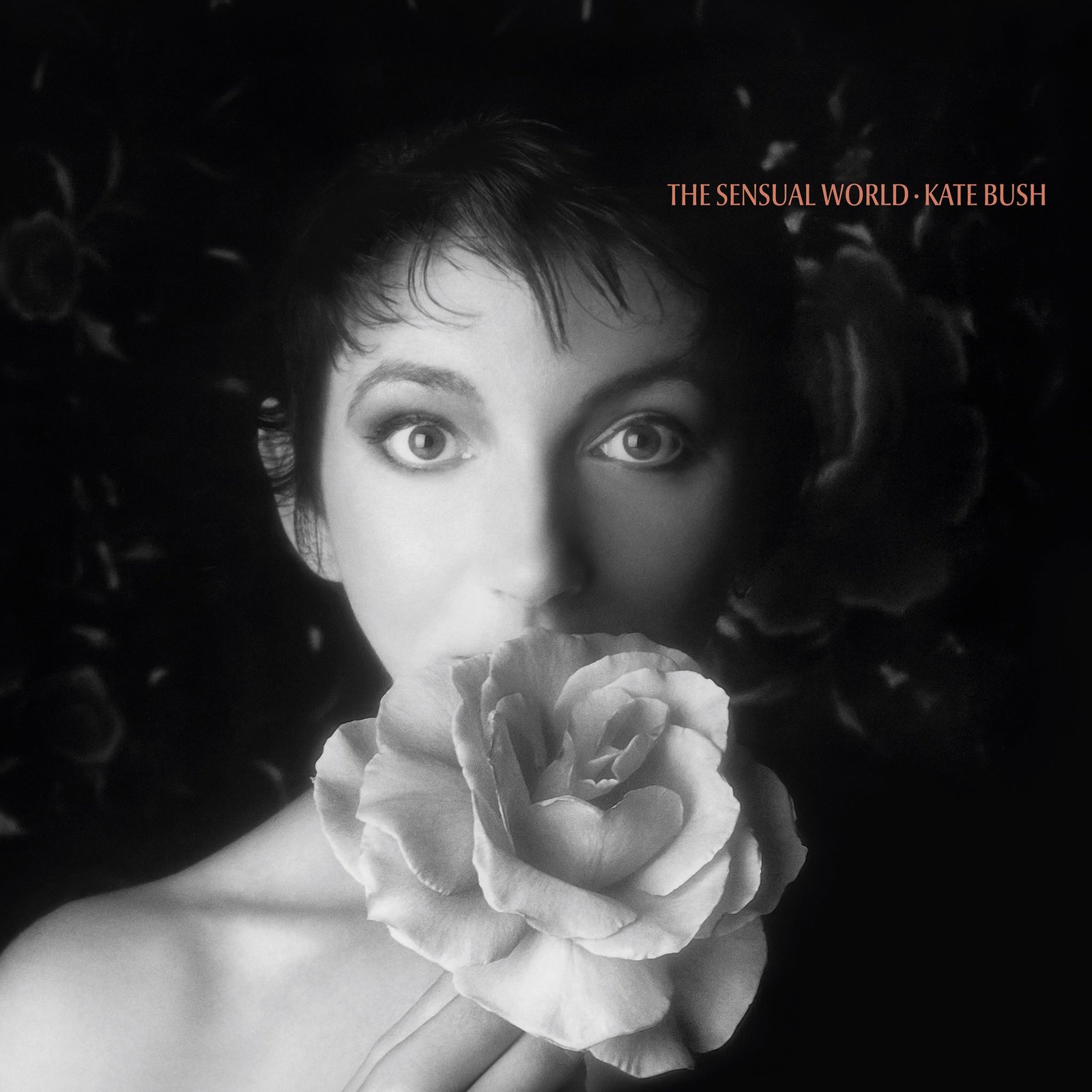
Few artists have explored the boundaries between imagination and reality quite like Kate Bush. Throughout her career, she has transformed literature, mythology and personal emotions into music that feels both otherworldly and unmistakably human. With The Sensual World, released on 16 October 1989, Bush created one of her most intimate and emotionally revealing albums.
Arriving four years after the acclaimed Hounds of Love, her sixth studio album pursued a more reflective musical direction. Richly layered arrangements, distinctive instrumentation and expressive vocals provide the backdrop for songs exploring desire, vulnerability, memory and the uncertainties of human relationships.
Yet beneath its apparent restraint lies considerable artistic ambition. Drawing upon literature, traditional folk music and experimental production, Bush creates a world where physical sensations and emotional experiences become inseparable.
The Sensual World reveals its subtleties gradually, offering a deeply affecting exploration of what it means to love, long for and connect with others.
The Making of The Sensual World: Creativity Without Compromise
By the time Kate Bush began developing The Sensual World, she had established a working environment that offered considerable creative independence. Much of the album took shape in her own recording studio, where ideas could evolve without the pressures of conventional recording schedules.
Working closely with engineer Del Palmer, Bush continued refining the experimental approach that had become central to her music. Songs developed through successive layers of instrumentation, programming and vocal arrangements, often undergoing substantial changes during production.
“Love and Anger” proved particularly difficult to complete. Its arrangement evolved repeatedly as Bush searched for a musical form that could capture the conflicting emotions at its centre.
Although electronic technology remained important, the album placed greater emphasis on the interaction between sampled sounds and live musicians. Orchestral recording sessions and contributions from traditional instrumentalists expanded its musical vocabulary, giving the finished recordings a distinctive warmth.
The Trio Bulgarka: An Extraordinary Collaboration
Among the album’s most memorable contributions came from the Trio Bulgarka, whose powerful traditional harmonies introduced an entirely new dimension to Bush’s music.
Her brother Paddy helped introduce her to Bulgarian vocal music, sparking a fascination with its unusual harmonies and expressive intensity. Bush subsequently arranged to collaborate with the ensemble, incorporating their voices into three of the album’s most distinctive compositions.
Their contributions to “Rocket’s Tail”, “Never Be Mine” and “Deeper Understanding” are particularly remarkable. Rather than using the singers merely as an atmospheric embellishment, Bush made their performances central to the musical character of each song.
Reflecting on the collaboration, Bush recalled:
“Working with the Trio Bulgarka was thrilling. Their voices were so powerful – when they sang you could feel the air cracking.”
— Kate Bush, on collaborating with the Trio Bulgarka
The quotation captures the extraordinary physical intensity of their performances. Their voices remain instantly recognisable within Bush’s elaborate arrangements, demonstrating her willingness to embrace different musical traditions without diminishing the individuality of her collaborators.
James Joyce and the Origins of the Title Track
One of the album’s most intriguing creative challenges concerned its opening song, “The Sensual World”. Bush originally intended to set words from Molly Bloom’s closing soliloquy in James Joyce’s Ulysses to music.
Her concept imagined Molly stepping beyond the confines of the novel and experiencing the physical world around her. However, permission to use Joyce’s text was refused, forcing Bush to reconsider her approach.
Rather than abandon the idea, she wrote new lyrics inspired by the passage’s sensual imagery and flowing rhythms. The resulting composition retained the spirit of her original concept while becoming a distinctive work in its own right.
More than two decades later, Bush finally realised her initial vision. Having obtained permission to use Joyce’s words, she reworked the composition as “Flower of the Mountain” for her 2011 album Director’s Cut.
A World of Sound and Sensation: The Music of The Sensual World

One of the album’s greatest strengths is its extraordinary range of musical textures. Bush combines electronic precision with the warmth of acoustic instruments, creating arrangements that feel meticulously constructed without sacrificing spontaneity.
The Fairlight CMI remains part of her musical vocabulary, contributing sampled textures and programmed rhythms. Yet traditional instrumentation often takes a more prominent role than on Hounds of Love, bringing an earthy quality to the recordings.
Traditional Instruments and Contemporary Sound
Irish musical influences are particularly prominent. Davy Spillane’s expressive uilleann pipes, Dónal Lunny’s bouzouki and Alan Stivell’s Celtic harp introduce distinctive melodic colours. Elsewhere, Nigel Kennedy’s violin and Michael Kamen’s orchestral arrangements expand the album’s musical possibilities.
On the title track, traditional instruments intertwine with electronic percussion to create a sense of movement and anticipation. Their flowing melodies contrast with the rhythmic precision beneath them, producing an arrangement that feels both ancient and contemporary.
“The Fog” offers another compelling example. Its delicate passages gradually expand into sweeping instrumental sections, with Kennedy’s violin introducing warmth and emotional intensity.
Meanwhile, “Heads We’re Dancing” combines insistent rhythms with Mick Karn’s distinctive bass playing. The result is an atmosphere that feels simultaneously playful and unsettling.
These combinations never sound like disconnected stylistic experiments. Bush draws upon different traditions while maintaining a musical identity that remains unmistakably her own.
The Expressive Power of Kate Bush’s Voice
Despite the sophistication of the instrumentation, Bush’s voice remains the album’s most versatile instrument.
Her performances move between breathy intimacy, theatrical intensity and soaring emotional release. Often, a subtle change in phrasing is enough to transform the atmosphere of a composition.
On “Never Be Mine”, her restrained delivery conveys a painful sense of longing. “Love and Anger”, by contrast, reveals a more forceful and impassioned performance. Neither feels exaggerated; Bush adjusts her approach to the emotional character of each song.
Her vocal arrangements are equally inventive. On “Rocket’s Tail”, the unaccompanied voices of the Trio Bulgarka create an almost ceremonial atmosphere before giving way to an explosive rock arrangement featuring David Gilmour’s electric guitar.
“This Woman’s Work” demonstrates the opposite extreme. Its sparse piano accompaniment leaves Bush’s voice exposed, allowing every hesitation and change in register to carry extraordinary emotional weight.
Production That Serves the Emotion
The album’s elaborate arrangements rarely feel excessive. Even its most unusual instrumental combinations have a clear expressive purpose.
At times, the density of the production can obscure finer melodic details, particularly in the more rhythmically intricate passages. Yet closer listening reveals the precision of Bush’s arrangements and the subtle relationships between individual instruments.
Although rooted in the recording technology of the late 1980s, The Sensual World retains a remarkable warmth. Its sophisticated production enhances the emotional character of the songs rather than overwhelming them.
Literary Inspiration and Lyrical Themes: The Complexity of Human Experience

Throughout The Sensual World, Bush explores the contradictions that shape human relationships. Desire exists alongside uncertainty, affection becomes entangled with regret, and the longing for connection often exposes an underlying fear of vulnerability.
Rather than presenting these experiences through straightforward narratives, she relies on evocative imagery and shifting perspectives. Her characters confront memories they cannot change, struggle to express their feelings and search for reassurance in uncertain circumstances.
These unresolved emotions give the album much of its psychological depth.
Desire, Sensuality and the Physical World
The title track presents sensuality as something broader than romantic or sexual desire.
Inspired by the consciousness of Molly Bloom, Bush imagines an awakening to the physical world. Movement, touch and sensation become expressions of freedom, while the lyrics follow the spontaneous rhythms of thought.
The composition celebrates the intensity of ordinary experience. Yet elsewhere on the album, Bush explores how desire can become painful when imagination and reality no longer align.
Memory, Longing and Emotional Vulnerability
“Never Be Mine” examines the distance between imagined possibilities and lived experience. Its central emotion is not simply romantic disappointment, but longing for an alternative life that can never be fully realised.
Memory becomes both a source of comfort and an obstacle to acceptance. The possibilities that exist within the imagination can remain powerful long after reality has placed them beyond reach.
“The Fog” approaches vulnerability through the metaphor of learning to swim. The reassuring presence of a father offers guidance, while the act of letting go becomes a reflection on trust and independence.
In both compositions, Bush transforms familiar experiences into reflections on the difficulty of accepting uncertainty.
Isolation and the Search for Connection
“Deeper Understanding” offers one of the album’s most unsettling narratives. Its protagonist retreats from personal relationships and develops an increasingly intimate attachment to a computer.
Bush recognises the appeal of technology that promises reassurance without judgement. The computer appears capable of providing the attention and understanding missing from the protagonist’s life.
Yet this apparent comfort conceals a deeper loneliness. The song raises questions about whether artificial companionship can satisfy the emotional needs ordinarily fulfilled through human relationships.
“Heads We’re Dancing” explores a different form of psychological uncertainty. Its disturbing narrative reveals how charm and attraction can conceal dangerous realities, challenging the reliability of first impressions.
Love, Regret and the Limits of Expression
“This Woman’s Work”, originally written for the film She’s Having a Baby, confronts the possibility of losing someone before important feelings have been expressed.
The song adopts the perspective of a man facing a medical crisis involving his partner and their unborn child. His helplessness gives way to regret as he confronts everything he has failed to communicate.
Bush avoids offering an easy resolution. Instead, the narrative remains suspended between hope, fear and remorse.
Across these compositions, she reveals how difficult it can be to understand or express our deepest emotions. That sensitivity gives the album its lyrical power, allowing its individual stories to resonate beyond their immediate circumstances.
Cohesion and Flow: An Album of Contrasts

Despite its musical diversity, The Sensual World possesses a strong sense of unity. Bush moves between atmospheric folk influences, intricate electronic arrangements, dramatic rock passages and intimate balladry without allowing the album to lose its identity.
The sequencing reinforces this cohesion. The title track’s celebration of sensual discovery gives way to the restless intensity of “Love and Anger”. “The Fog” then introduces a more reflective atmosphere, before the album moves into increasingly unsettling psychological territory.
These shifts create variety while allowing the record’s emotional concerns to develop naturally.
From Intimacy to Emotional Release
The album’s final stretch is especially effective. The wistful restraint of “Never Be Mine” gives way to the exhilarating transformation of “Rocket’s Tail”, before “This Woman’s Work” strips away much of the preceding complexity.
Rather than building towards a conventional grand finale, the original vinyl edition concludes with a moment of exposed vulnerability. After the album’s elaborate arrangements, the simplicity of “This Woman’s Work” feels particularly powerful.
The original CD and cassette editions offer a different conclusion through the additional track “Walk Straight Down the Middle”. Its restless rhythms and psychological unease replace that emotional finality with a more ambiguous ending.
A Unified Artistic Vision
What holds The Sensual World together is neither a continuous storyline nor a uniform musical style. Its cohesion emerges from Bush’s consistent interest in the distance between what people feel, what they desire and what they can communicate.
The songs approach these experiences from contrasting perspectives, creating a sense of continuity without imposing a rigid conceptual narrative.
This allows the album to function as a complete listening experience while preserving the individuality of its compositions.
Standout Tracks and Memorable Moments
Although The Sensual World works beautifully as a complete album, several compositions deserve particular attention. Together, they demonstrate the breadth of Bush’s musical imagination and her ability to balance intricate arrangements with expressive performances.
“The Sensual World”: An Extraordinary Opening
The title track immediately establishes the album’s distinctive atmosphere. Davy Spillane’s uilleann pipes intertwine with hypnotic percussion and Bush’s flowing vocal melodies, creating a sense of movement and anticipation.
Despite the precision of its arrangement, the music feels wonderfully spontaneous. Bush captures the exhilaration of discovering the physical world through sensation, transforming a literary inspiration into an immersive musical experience.
“The Fog”: A Breathtaking Meditation on Trust and Vulnerability
Among the most beautiful compositions in Kate Bush’s catalogue, “The Fog” transforms the experience of learning to swim into a moving exploration of trust, independence and emotional vulnerability.
Its arrangement is exquisite. Delicate piano passages and atmospheric electronic textures establish a sense of uncertainty, while Nigel Kennedy’s expressive violin introduces an almost overwhelming warmth. His playing moves between tender reassurance and soaring intensity, reflecting the tension between holding on and finding the courage to let go.
Bush’s vocal performance is equally affecting. Her restrained delivery conveys apprehension, while the spoken voice of her father, Robert Bush, lends the recording an extraordinary intimacy. Their interplay transforms the song’s central metaphor into something deeply personal.
What makes “The Fog” particularly remarkable is the relationship between its music and meaning. As the instrumentation expands, the arrangement evokes both the fear of surrendering control and the liberation that comes with learning to trust.
It is one of the album’s most quietly extraordinary achievements, finding immense beauty in a seemingly ordinary human experience.
“Deeper Understanding”: A Visionary Exploration of Isolation
“Deeper Understanding” combines an unsettling narrative with one of Bush’s most imaginative vocal arrangements.
The Trio Bulgarka’s harmonies represent the computer’s reassuring presence, giving an artificial companion an unexpectedly human warmth. The contrast is essential to the song’s impact. Listeners can understand the attraction of technological companionship while recognising the loneliness beneath it.
Its exploration of digital dependence has acquired additional resonance in the decades since its release.
“Rocket’s Tail”: A Moment of Musical Exhilaration
Few moments in Bush’s discography are as thrilling as the transformation at the heart of “Rocket’s Tail”.
Beginning with the unaccompanied voices of the Trio Bulgarka, the composition erupts into a powerful rock arrangement dominated by David Gilmour’s electric guitar. The contrast between the ceremonial opening and the explosive instrumental passages is breathtaking.
Beneath the spectacle lies a celebration of fleeting beauty and the exhilaration of embracing life’s possibilities. The music’s dramatic progression gives those ideas a vivid physical presence.
“This Woman’s Work”: The Power of Restraint
If “Rocket’s Tail” demonstrates Bush’s ability to create overwhelming musical intensity, “This Woman’s Work” reveals the power of simplicity.
Built around a delicate piano accompaniment, the song places her vocal performance at its centre. Bush moves from fragile introspection towards soaring emotional desperation, capturing feelings that seem almost impossible to articulate.
Every hesitation and shift in register feels essential. The result is one of the most affecting recordings of her career, achieving its impact without elaborate instrumentation or unnecessary theatricality.
The Moments That Define the Album
Beyond these standout compositions, the album contains numerous details that deserve attention.
The wistful interplay between Bush and the Trio Bulgarka on “Never Be Mine” captures longing with extraordinary delicacy. Meanwhile, Mick Karn’s distinctive bass playing brings an unsettling rhythmic character to “Heads We’re Dancing”.
“Love and Anger” provides another memorable contrast, with its forceful instrumentation and expressive guitar passages offering moments of exhilarating release.
Together, these performances demonstrate Bush’s command of musical scale. She understands when to embrace extravagance and when to allow a single voice or instrument to carry the emotional weight.
Artistic Legacy and Significance: The Enduring Importance of The Sensual World

Released in October 1989, The Sensual World arrived with considerable expectations. Hounds of Love had established Bush as a major commercial and artistic force, yet its successor pursued a more introspective direction.
The album reached number two on the UK Albums Chart and achieved platinum certification in Britain. Its commercial performance demonstrated Bush’s continued popularity, even as her music became increasingly intricate and reflective.
Critical Reception and Growing Appreciation
The album received a mixture of enthusiastic and more reserved critical responses. Its sophisticated arrangements and emotional intensity attracted praise, although some reviewers found it less immediate than Hounds of Love.
The comparison was perhaps inevitable. Its predecessor had combined accessible singles with the ambitious conceptual structure of The Ninth Wave. The Sensual World, by contrast, relied more heavily on atmosphere, subtle melodic development and psychological complexity.
Over time, the album has remained an important part of Bush’s critical reputation. Its musical ambition and distinctive emotional character demonstrate that her artistic development extended well beyond the achievements of Hounds of Love.
An Important Chapter in Kate Bush’s Evolution
Within Bush’s discography, The Sensual World occupies a fascinating position between the conceptual ambition of Hounds of Love and the more openly personal concerns of The Red Shoes.
Its significance lies partly in Bush’s increasingly reflective approach to songwriting. Rather than relying upon elaborate narratives alone, she explores the emotional uncertainty within familiar experiences.
The album also demonstrates her continuing interest in expanding her musical vocabulary. The Trio Bulgarka’s vocal harmonies and the contributions of traditional instrumentalists introduced new possibilities into her arrangements.
A similar willingness to explore patient musical development and understated emotional expression can be heard in her later work, particularly Aerial (2005) and 50 Words for Snow (2011).
A Distinctive Place in Her Catalogue
The Sensual World deserves recognition on its own terms rather than simply as the successor to Hounds of Love.
Its importance lies in the confidence of its artistic vision. Bush demonstrates that ambitious songwriting need not depend upon grand narratives or dramatic spectacle. Intimate experiences can provide equally compelling material.
The album remains an essential chapter in her development, revealing an artist increasingly interested in the subtle contradictions of human experience.
Final Verdict: Kate Bush’s The Sensual World — 10/10

The Sensual World stands among Kate Bush’s greatest achievements. Its brilliance lies in the sensitivity with which she transforms complicated emotions into music of extraordinary imagination and beauty.
The breathtaking elegance of “The Fog”, the unsettling vision of “Deeper Understanding”, the explosive energy of “Rocket’s Tail” and the devastating vulnerability of “This Woman’s Work” reveal an artist at the height of her creative powers.
The album can be challenging. Some arrangements are densely layered, while its lyrical narratives resist immediate interpretation. Yet those complexities are part of its appeal, encouraging listeners to engage with the music beyond its surface.
What makes The Sensual World exceptional is the balance between artistic ambition and emotional intimacy. Bush creates compositions that are adventurous without losing their humanity, finding beauty in uncertainty and meaning in the smallest experiences.
Rating: 10/10
One of the finest achievements in art pop, The Sensual World remains an album of remarkable imagination and emotional intelligence. Its power lies not simply in what Bush expresses, but in how convincingly her music allows us to feel it.