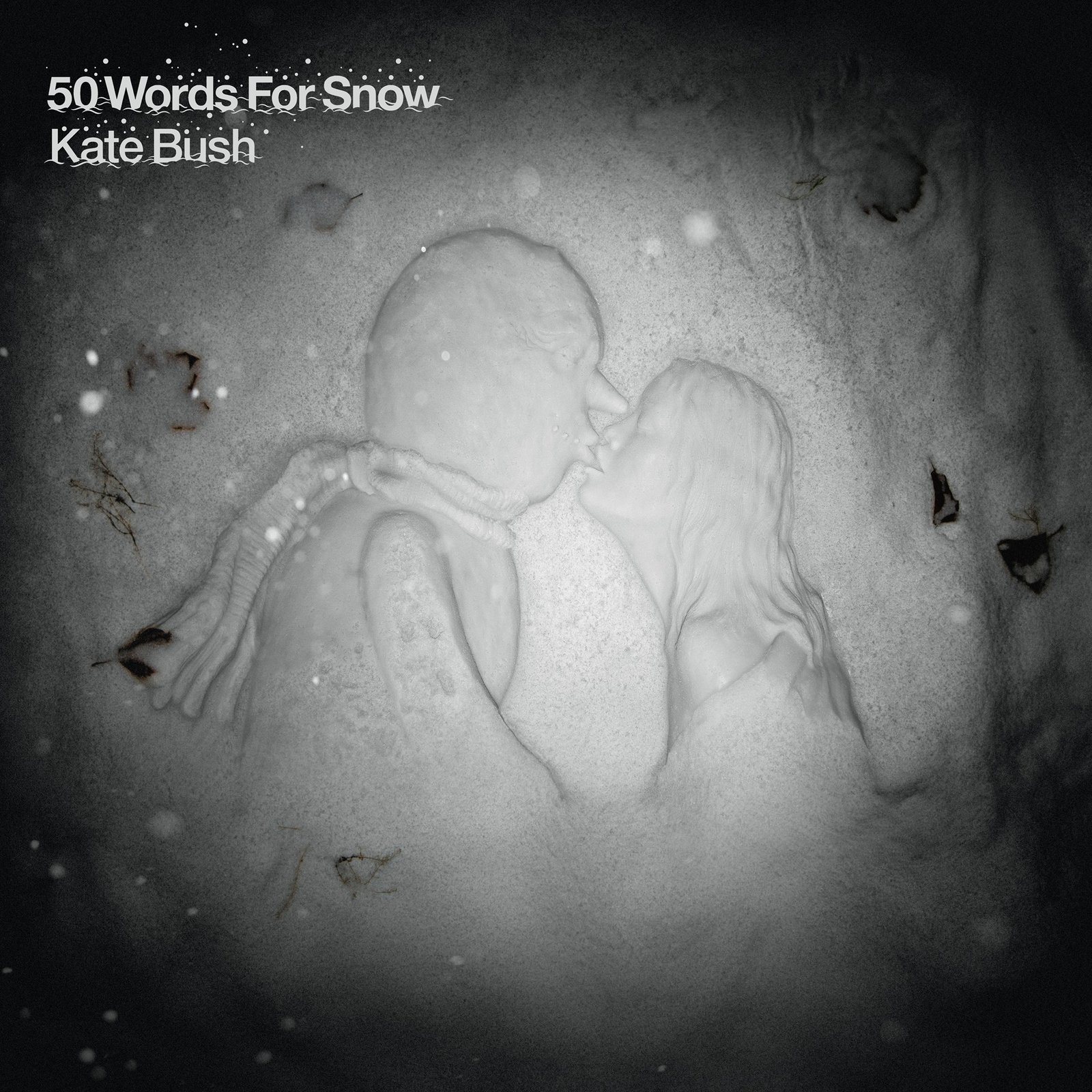
Few albums capture the atmosphere of a season as completely as Kate Bush’s 50 Words for Snow. Released on 21 November 2011, her tenth studio album transforms winter into something far more profound than a backdrop for its seven compositions. Snow becomes a symbol of vulnerability, desire, isolation and the fleeting beauty of existence, inspiring one of the most distinctive and emotionally affecting works of Bush’s career.
Arriving six months after Director’s Cut, the album offered a striking contrast to its predecessor. Where that earlier release reconsidered existing recordings, 50 Words for Snow presented an entirely new collection of compositions, united by an unusually precise artistic vision. Across approximately 65 minutes, Bush abandons conventional pop structures in favour of extended narratives, spacious arrangements and music that seems to unfold according to its own perception of time.
The apparent simplicity of these recordings conceals considerable ambition. Rather than relying upon the dense production and dramatic contrasts associated with some of her most celebrated work, Bush allows piano, understated percussion and the natural character of her mature voice to carry much of the emotional weight. Individual sounds emerge from the surrounding stillness with an intimacy that makes the album feel simultaneously expansive and intensely personal.
Its stories are equally extraordinary. A falling snowflake becomes a fragile consciousness searching for protection; a ghostly woman remains connected to the world through memories of a beloved companion; and an impossible romance with a snowman develops into a haunting exploration of intimacy and loss. These premises might appear whimsical in isolation, yet Bush approaches them with such conviction that their underlying humanity gradually becomes impossible to ignore.
What makes 50 Words for Snow particularly compelling is its refusal to hurry. The compositions invite listeners to surrender to their deliberate pacing, allowing melodies, images and emotions to accumulate significance through repetition and gradual transformation. Winter becomes more than a physical environment: it is a state of mind in which ordinary distinctions between memory, imagination and reality begin to dissolve.
Not every artistic decision achieves the same degree of success, but the album’s finest moments are among the most remarkable of Bush’s later career. More than three decades after her recording debut, she was still discovering new ways to challenge the possibilities of popular music, creating a work whose quietness could prove as arresting as the most dramatic achievements in her catalogue.
The Making of 50 Words for Snow: Creating a Winter World
Kate Bush’s fascination with the natural world had long informed her songwriting. From the elemental imagery of Hounds of Love to the celebration of sunlight, birdsong and the passing hours on Aerial, she repeatedly used landscapes and natural phenomena to explore human emotion. On 50 Words for Snow, however, she allowed a single subject to shape an entire album, finding an astonishing range of possibilities within the apparently simple image of falling snow.
Bush’s interest extended beyond winter’s visual beauty. Snow can transform familiar surroundings almost instantaneously, concealing details, softening sounds and creating the impression of a landscape temporarily removed from ordinary life. Such qualities offered fertile ground for a songwriter fascinated by mythology, imagination and the relationship between physical experience and emotional meaning.
As Bush explained when describing the album’s creative philosophy:
“For this album, I wanted to let the music take as long as it wanted and to make each song a story, to bring creatures of folklore and mythology to life, in a landscape of falling snow.”
— Kate Bush
That statement provides an unusually revealing insight into the album’s construction. Rather than beginning with conventional song structures and fitting her stories within them, Bush allowed the narratives to determine the music’s shape and duration. The result is a collection in which extended passages rarely feel designed to demonstrate complexity. Instead, they provide the time necessary for unusual characters and situations to acquire emotional credibility.
A Remarkably Productive Year
The album emerged during one of the most productive periods of Bush’s later career. Having returned from a twelve-year gap between studio albums with Aerial in 2005, she released Director’s Cut in May 2011, revisiting eleven compositions originally recorded for The Sensual World and The Red Shoes. Just six months later, 50 Words for Snow appeared with seven entirely new songs.
Although their release dates were close together, the two projects were developed during the same general period. Their contrasting approaches reveal different aspects of Bush’s creative personality.
Director’s Cut was concerned with the possibilities of reinterpretation: whether familiar recordings might reveal something new through revised arrangements and mature performances. 50 Words for Snow, by contrast, offered the freedom of creation without an established musical identity to preserve or challenge.
The difference was significant. Rather than negotiating with her artistic past, Bush could construct an entirely new musical environment, allowing the particular demands of each composition to guide her decisions.
Released through her Fish People label, the album also reflected the creative independence she had established by this stage of her career. Its seven lengthy tracks, unconventional narratives and limited interest in immediately accessible hooks suggest an artist following her own instincts rather than attempting to satisfy expectations surrounding a major new release.
Recording the Sound of Winter
The album’s production was central to translating its imaginative premise into music. Bush had previously demonstrated an extraordinary command of elaborate arrangements, but here the challenge was often one of subtraction: deciding how little instrumentation was necessary to sustain a particular atmosphere.
Piano provides much of the musical foundation, supported by carefully judged contributions from musicians including drummer Steve Gadd, bassist Danny Thompson and guitarist Dan McIntosh. Their performances help establish a sound that draws upon jazz, chamber music and atmospheric art pop without becoming confined to any one tradition.
Gadd’s contribution is particularly important. His playing often provides movement without imposing an emphatic rhythmic framework, allowing the compositions to retain their conversational quality. On “Misty”, his understated percussion works alongside Thompson’s double bass to create an intimate musical setting for one of Bush’s strangest narratives.
The album also features an unusually varied cast of guest voices.
Bush’s son Albert, known as Bertie, sings the central character on “Snowflake”, his youthful register contrasting beautifully with his mother’s warmer delivery. Stefan Roberts and Michael Wood contribute the solemn male voices heard on “Lake Tahoe”, while Andy Fairweather Low adds another distinctive vocal character to “Wild Man”.
Elsewhere, Elton John joins Bush for the sweeping duet “Snowed in at Wheeler Street”, and Stephen Fry assumes the role of a fictional professor reciting an increasingly absurd collection of invented expressions for snow.
These contributions serve the album’s dramatic imagination. Bush treats each composition almost as a miniature theatrical work, selecting voices whose contrasting qualities help establish its particular characters and emotional perspective.
Yet the most important creative decision was her willingness to leave these musical worlds relatively undisturbed. Instead of forcing their narratives towards conventional climaxes, Bush frequently allows them to unfold through patient development, trusting the listener to become absorbed in their details.
The result is an album whose apparent stillness conceals extraordinary imaginative activity.
Sonic Exploration: Production, Arrangements and the Beauty of Restraint

The musical language of 50 Words for Snow differs considerably from the dense experimentation of The Dreaming or the dramatic contrasts of Hounds of Love. Although Bush’s instinct for unusual arrangements remains unmistakable, she increasingly favours understatement, allowing melody, texture and rhythm to develop without the constant introduction of new musical ideas.
This approach is not simply an aesthetic preference. It establishes the relationship between the album’s subject and its sound.
Snow can soften the acoustic character of a landscape, absorbing familiar noises and making isolated sounds seem unusually prominent. Bush creates a comparable effect through arrangements in which individual instruments retain their identity rather than merging into a continuous wall of sound.
The resulting recordings possess considerable depth, but their intimacy is never sacrificed to scale.
The Expressive Possibilities of the Piano
Bush’s piano playing provides the album with its most recognisable musical thread. Its recurring figures and measured phrases establish a sense of continuity between compositions whose narratives differ dramatically.
On “Snowflake”, the instrument creates an impression of suspension. Notes are given room to resonate, supporting the contrasting voices without disturbing the song’s delicate character. The arrangement suggests movement without urgency, reflecting the snowflake’s descent towards an uncertain destination.
“Lake Tahoe” employs the piano within a more mysterious dramatic framework. The instrument helps bridge the distance between the song’s ghostly opening and the increasingly intimate memories that emerge later. Its recurring musical ideas give the composition continuity while allowing the emotional perspective to change.
The piano assumes an even more exposed role on “Among Angels”. With little instrumental accompaniment to soften its impact, the relationship between Bush’s voice and the keyboard becomes the entire focus of the performance. Its harmonic movement is measured and expressive, allowing the song’s emotional force to emerge without an elaborate arrangement.
These contrasting uses of the same instrument demonstrate Bush’s sensitivity to musical context. The piano is never merely decorative; it becomes an essential part of how each composition communicates.
Jazz Influences and Rhythmic Freedom
One of the album’s most distinctive qualities is its understated relationship with jazz.
Rather than adopting the genre’s conventions wholesale, Bush draws upon its rhythmic flexibility and the conversational interaction between instruments. The music frequently feels as though it is developing in response to the emotional direction of a performance, even when its arrangements are carefully constructed.
This is especially apparent on “Misty”. Gadd’s percussion and Thompson’s double bass provide a fluid foundation beneath Bush’s piano, allowing the composition to develop through subtle changes in emphasis rather than conventional verse-and-chorus contrasts.
The interaction between these instruments is central to the song’s effectiveness. The accompaniment possesses enough movement to sustain the extended narrative, but rarely becomes so assertive that it distracts from the vocal performance.
There is a sense of musicians listening to one another, leaving space for individual gestures and responding to changes in the composition’s emotional temperature.
Such freedom is essential to the album’s longer pieces. Bush does not simply repeat musical ideas until a predetermined running time has been reached. At their best, the compositions allow familiar figures to acquire new significance as the surrounding narrative develops.
A Mature and Expressive Voice
Bush’s voice had changed considerably by 2011. The piercing upper register and dramatic vocal extremes associated with her earliest recordings had given way to a deeper, warmer instrument, one particularly suited to the reflective character of 50 Words for Snow.
Rather than attempting to recreate her youthful performances, Bush embraces the expressive possibilities of this development.
Her phrasing is frequently conversational, with individual words and melodic gestures carrying emotional meaning through subtle variations in tone. She can move between tenderness, uncertainty and dramatic characterisation without relying upon the vocal extravagance that once defined some of her most recognisable recordings.
On “Misty”, this maturity is indispensable. Bush communicates desire and vulnerability with a naturalness that makes the song’s impossible circumstances strangely believable. The performance retains moments of humour, but never treats the emotional experience as a joke.
“Wild Man” reveals another dimension of her vocal imagination. The contrast between Bush and Andy Fairweather Low gives the song a mysterious, folkloric character, while the shifting delivery reflects the uncertainty surrounding its elusive subject.
Across the album, her voice becomes an instrument of intimacy rather than spectacle. Its expressive depth is especially striking because Bush rarely seems concerned with demonstrating what she can do vocally. She concentrates instead upon what each story requires.
The Importance of Musical Space
The production’s greatest achievement may be its ability to balance intimacy with an almost cinematic sense of scale.
On “Lake Tahoe”, the contrast between the solemn male voices, Bush’s piano and the gradually unfolding narrative creates a remarkable impression of distance. The recording seems to move from an immense, mysterious landscape towards something deeply personal.
“Misty”, meanwhile, finds its scale through duration rather than orchestral grandeur. Its thirteen-minute development gives the listener time to become absorbed in the relationship between the characters, while the fluid instrumental accompaniment sustains an atmosphere that remains remarkably intimate.
The music does not constantly announce its sophistication. Much of its complexity lies in the precision of its decisions: when an instrument enters, how long a phrase is allowed to linger and whether an emotional moment requires greater intensity or greater simplicity.
This is where 50 Words for Snow differs most strikingly from Bush’s earlier work. She remains capable of extravagant musical gestures, but increasingly demonstrates the confidence to withhold them.
The effect is not uniform across every composition, and the album’s more overtly theatrical passages occasionally expose the limitations of that contrast. Nevertheless, its finest recordings reveal an artist with an exceptional understanding of how musical space can shape emotional experience.
Lyrical Analysis and Storytelling: Love, Loss and the Fragility of Existence

Throughout her career, Bush has repeatedly discovered human emotions within extraordinary circumstances. Her songs have explored literary characters, supernatural encounters, psychological transformation and imaginary worlds, often finding unexpected intimacy beneath their theatrical surfaces.
On 50 Words for Snow, this gift for storytelling reaches one of its most refined expressions.
Although the seven compositions share a winter setting, snow assumes different meanings throughout the album. It can represent innocence, concealment, physical vulnerability or the certainty of disappearance. Bush uses these contrasting associations to explore relationships between people, the natural world and the experiences they cannot preserve.
Snowflake: Innocence and the Desire to Protect
The opening composition imagines a snowflake descending towards the earth, searching for someone who will catch it.
Sung partly from the snowflake’s perspective by Bush’s son Bertie, the narrative transforms a familiar natural occurrence into an expression of vulnerability. The snowflake’s existence is temporary, and the movement that defines its journey also brings it closer to disappearance.
Against this uncertainty, Bush’s maternal voice offers reassurance.
The relationship between the two characters suggests the instinct to protect someone whose vulnerability cannot ultimately be overcome. It is particularly moving when understood through the contrast between childhood and adulthood, with the snowflake’s fragility evoking the temporary nature of innocence.
Yet Bush does not insist upon a single interpretation. The song can also be heard as an expression of trust, dependence or the desire to be recognised and valued before an existence comes to an end.
Its emotional strength lies in the simplicity of its central image. The snowflake remains a snowflake, even as its journey acquires significance far beyond the literal circumstances of the story.
Lake Tahoe: Memory and the Persistence of Love
“Lake Tahoe” takes the listener into a more mysterious world, drawing upon the image of a spectral woman associated with the cold waters of the lake.
The song initially resembles a ghost story, with its Victorian imagery and suggestion of a figure appearing from beneath the water. Yet Bush gradually shifts attention towards the woman’s relationship with her dog, introducing a profoundly intimate dimension to the supernatural narrative.
The animal’s memories of its absent owner become the emotional centre of the composition. Through familiar domestic details and the imagined possibility of reunion, Bush transforms the story into a meditation on companionship and the persistence of attachment.
This is an especially effective example of her storytelling. Rather than depending upon the ghostly premise to generate emotion, she allows ordinary affection to become the most moving aspect of an extraordinary situation.
The contrast between the immense landscape and the intimacy of a relationship between a woman and her dog gives the composition its distinctive poignancy.
Loss is not presented through dramatic declarations, but through the persistence of habits, memories and affection after physical separation.
Misty: Desire and the Impossibility of Permanence
“Misty” is perhaps the album’s most daring lyrical achievement.
Its premise concerns a woman who experiences an intimate encounter with a snowman that has mysteriously come to life. In less assured hands, the story could easily have become a novelty, but Bush approaches it with an unusual combination of sensuality, humour and emotional seriousness.
The snowman’s physical nature is central to the narrative. He is made from something beautiful but temporary, and the warmth associated with intimacy threatens the conditions necessary for his existence.
The relationship therefore contains an unavoidable contradiction: the very closeness that makes the encounter meaningful also contributes to its disappearance.
Bush explores this tension through physical details that make the impossible situation unexpectedly tangible. The snowman’s presence is strange, even unsettling, yet the woman’s response is recognisably human. Her curiosity develops into desire and attachment, followed by the distress of discovering that the encounter cannot be preserved.
The story’s emotional implications extend beyond its fantastical premise. It can be understood as an exploration of relationships whose intensity is inseparable from their impermanence, or of the painful desire to hold on to an experience that has already begun to disappear.
What makes “Misty” exceptional is that Bush never entirely resolves the tension between absurdity and sorrow. The song remains strange throughout, but its emotional consequences feel entirely credible.
It is a remarkable demonstration of her ability to discover profound human experiences within the most improbable imaginative circumstances.
Wild Man: Compassion for the Unknown
“Wild Man” explores the legendary Yeti, but its central concern is less the creature’s existence than humanity’s response to the possibility of discovering it.
Rather than portraying the mysterious figure as a threat, Bush encourages sympathy for its vulnerability. The creature inhabits a remote mountain environment, yet the greatest danger may come from human curiosity and the desire to expose what remains unknown.
This reversal gives the song an environmental and ethical dimension.
The pursuit of discovery, often celebrated as an expression of human progress, becomes potentially destructive. Bush raises the possibility that some mysteries deserve protection rather than explanation.
Snow assumes a different role here. Instead of symbolising disappearance, it provides concealment and sanctuary, allowing the creature to remain beyond the reach of those who might threaten its existence.
The song’s compassion for an imagined being reflects Bush’s broader fascination with humanity’s relationship with nature. Its message emerges through storytelling rather than direct instruction, allowing the listener to recognise the moral questions beneath the folkloric imagery.
Snowed in at Wheeler Street: Love Across History
“Snowed in at Wheeler Street” presents the album’s most overtly romantic narrative.
Performed as a duet with Elton John, it imagines two lovers repeatedly encountering one another across different historical periods, only to be separated by conflict, catastrophe and the passage of time.
The concept is compelling. Bush suggests that an emotional connection might endure beyond individual lives, repeatedly drawing two people together even as historical circumstances prevent their happiness.
The story offers considerable scope for dramatic storytelling, combining personal longing with events of much greater historical significance.
Yet the narrative is less nuanced than the album’s strongest compositions. Its repeated separations and declarations of love communicate the emotional stakes directly, leaving comparatively little uncertainty about how the listener is expected to respond.
The premise remains imaginative, but its execution occasionally favours romantic melodrama over the psychological complexity that distinguishes “Misty” or “Lake Tahoe”.
That limitation becomes more apparent when the song is considered alongside the album’s subtler explorations of attachment and loss.
50 Words for Snow: The Imagination of Language
After the emotional intensity of the preceding compositions, the title track introduces a deliberately playful approach to the album’s central subject.
Stephen Fry recites an increasingly improbable collection of invented expressions for snow, while Bush encourages him through the performance.
The concept is wonderfully eccentric, recalling the humour that has frequently accompanied Bush’s more experimental songwriting.
Beneath its absurdity lies an interesting observation about language. By inventing new names for something familiar, Bush suggests that the act of description can transform perception itself.
Snow becomes an almost limitless collection of imagined sensations, associations and possibilities, resisting the idea that any single definition could capture its significance.
The composition also provides a necessary counterweight to the album’s melancholy. Its humour is not a distraction from the central concept, but another expression of the wonder that snow inspires.
Among Angels: Compassion and Reassurance
The closing “Among Angels” moves away from elaborate narratives towards a more direct expression of emotional vulnerability.
Its spiritual imagery suggests the possibility of unseen love and protection, although the song does not demand a specifically religious interpretation. The angels may be understood as supernatural figures, expressions of compassion or symbols of the support that can remain invisible to someone experiencing distress.
What makes the song particularly affecting is its refusal to offer simplistic reassurance. Bush recognises vulnerability without dismissing it, suggesting that someone who feels isolated or unworthy may nevertheless be surrounded by love.
Placed at the end of the album, this sentiment acquires additional significance.
After stories concerned with disappearance, separation and threatened existence, “Among Angels” offers a quieter perspective: that human connection may endure in forms we cannot always recognise.
Its absence of an explicit snowy narrative is also important. The winter landscape gradually recedes, leaving the emotional concerns that have given it meaning.
The Beauty of Impermanence
Across these contrasting narratives, Bush repeatedly returns to the relationship between love and the knowledge that nothing can be preserved indefinitely.
The snowflake’s descent, the ghost’s lingering attachment and the snowman’s disappearance all explore different aspects of this uncertainty. Yet the album does not present impermanence as purely tragic.
Its characters experience beauty, intimacy and wonder precisely because their circumstances are fragile.
This is the philosophical achievement at the heart of 50 Words for Snow. Bush transforms winter into a means of understanding experiences that are universal, finding emotional significance in the knowledge that even the most extraordinary moments cannot last forever.
Cohesion and Flow: Seven Stories, One Winter Landscape

Although its compositions tell independent stories, 50 Words for Snow possesses a remarkable sense of unity. Its cohesion arises not from a continuous narrative, but from the relationship between musical atmosphere, emotional progression and carefully considered sequencing.
Bush had previously explored extended album structures through The Ninth Wave on Hounds of Love and A Sky of Honey on Aerial. Both works create experiences greater than the sum of their individual songs. 50 Words for Snow achieves something comparable through a collection whose narratives remain largely self-contained.
The opening sequence is particularly effective.
“Snowflake” establishes the album’s vulnerability and unhurried pacing before “Lake Tahoe” expands its emotional and dramatic scale. The transition feels natural despite the differences between their stories, as both compositions invite the listener into a world where ordinary perceptions of time seem suspended.
“Misty” then introduces a more intimate and sensual perspective, its extraordinary duration allowing the album’s emotional intensity to deepen. After this extended encounter, the more rhythmic “Wild Man” provides an important change of energy, opening the musical landscape outward without abandoning its atmosphere.
The most pronounced contrast arrives with “Snowed in at Wheeler Street”. Its theatrical duet introduces a heightened emotional language that is less consistent with the subtlety of the preceding compositions. Although the change provides variety, it also briefly disturbs the album’s carefully established balance.
The title track responds with a different kind of contrast. Stephen Fry’s playful recitation offers humour and linguistic invention after the romantic intensity of the duet, preventing the album from becoming overwhelmed by its own seriousness.
Finally, “Among Angels” provides an inspired conclusion.
The relationship between the opening and closing compositions is especially affecting. “Snowflake” presents a vulnerable figure seeking protection, while “Among Angels” offers reassurance to someone who may be unable to recognise the love surrounding them.
Neither song resolves the album’s recurring uncertainties, but together they create a subtle emotional symmetry.
What makes this sequence successful is Bush’s understanding that thematic unity does not require musical uniformity. The compositions differ in rhythm, dramatic intensity and narrative perspective, yet their contrasting qualities deepen the album’s emotional range.
Its length demands attention, but the experience rewards sustained listening. Rather than functioning as seven interchangeable recordings, the songs acquire additional significance through their placement within the whole.
Standout Tracks and Musical Moments
The imaginative strength of 50 Words for Snow would mean considerably less without the musical precision necessary to realise its unusual concepts. Its finest recordings demonstrate Bush’s ability to sustain attention through performance, arrangement and carefully controlled development.
Snowflake: A Delicate Opening
“Snowflake” establishes the album’s musical identity with extraordinary confidence.
The recurring piano figures create a sense of suspension, while Bertie’s youthful singing gives the composition an unmistakable fragility. Bush’s deeper voice provides a contrasting presence, turning the interaction between the two performers into the recording’s emotional foundation.
The arrangement never overwhelms this relationship. Instead, its measured development allows the vocal performances to retain their intimacy across almost ten minutes.
Particularly affecting is the contrast between the youthful character of Bertie’s delivery and the reassurance conveyed by Bush. Their voices communicate different emotional perspectives without requiring elaborate dramatic gestures.
The song’s achievement lies in how completely its musical form serves its central image. The listener experiences the snowflake’s descent not through descriptive effects, but through the gentle persistence of the music itself.
Lake Tahoe: A Haunting Musical Landscape
“Lake Tahoe” is among the album’s most immersive recordings.
Its opening male voices, performed by Stefan Roberts and Michael Wood, introduce an almost ceremonial quality. Their solemn delivery evokes a musical world removed from ordinary time, immediately establishing the mystery surrounding the narrative.
The contrast with Bush’s voice is striking. Her warmer, more intimate performance gradually draws the listener away from the distant atmosphere of the opening and towards the personal emotions concealed within the story.
The arrangement is notable for its economy. Rather than depending upon elaborate orchestration, Bush uses piano, voices and Steve Gadd’s understated percussion to sustain an eleven-minute composition.
The recording’s dramatic movement emerges through changes in perspective and vocal character, with the musical accompaniment supporting the transition from supernatural mystery to domestic tenderness.
Few compositions in Bush’s later catalogue demonstrate such control over the relationship between atmosphere and narrative.
Misty: An Extraordinary Thirteen-Minute Achievement
At 13 minutes and 32 seconds, “Misty” is the album’s longest composition, and arguably its greatest musical achievement.
Its jazz-influenced arrangement creates an intimate setting that feels almost improvisatory. Bush’s piano interacts with Steve Gadd’s restrained drumming and Danny Thompson’s double bass, allowing the music to develop through fluid rhythmic movement rather than pronounced structural contrasts.
This instrumental foundation is essential to the recording’s success.
The narrative is so unusual that a more emphatic arrangement might have rendered it unintentionally comic. Instead, the musicians establish a remarkably natural musical environment, allowing Bush’s performance to carry the emotional complexity of the encounter.
Her vocal delivery is exceptional. She moves between curiosity, tenderness, sensuality and distress with subtle changes in phrasing, never allowing the character’s emotions to become exaggerated.
The extended duration also becomes part of the composition’s expressive purpose. Repeated musical figures gradually acquire new emotional associations as the relationship develops, while the understated accompaniment allows the listener to become increasingly absorbed in its strange intimacy.
When the encounter gives way to absence, the effect is powerful precisely because Bush has allowed the preceding experience so much room to develop.
“Misty” demonstrates something remarkable: a thirteen-minute composition can feel entirely necessary when its musical form and emotional purpose are so closely connected.
It stands among the finest achievements of Bush’s mature career.
Wild Man: Rhythmic Energy and Mystery
“Wild Man” provides one of the album’s most effective changes of musical character.
Its more pronounced rhythmic pulse distinguishes it from the surrounding piano-led compositions, while the atmospheric production preserves the mystery of its subject.
Andy Fairweather Low’s vocal contribution introduces an earthy contrast to Bush’s performance, reinforcing the song’s folkloric identity. The recurring phrases also provide a recognisable musical anchor, making the composition comparatively immediate without sacrificing its unusual character.
The recording demonstrates Bush’s ability to introduce rhythmic energy without abandoning the broader album’s sensibility.
Its musical momentum gives the listener a welcome change of perspective after the expansive emotional journey of “Misty”, while its mysterious atmosphere ensures that the transition never feels abrupt.
Snowed in at Wheeler Street: When Theatricality Overwhelms Subtlety
“Snowed in at Wheeler Street” is the album’s clearest artistic disappointment, although its ambitions remain considerable.
The collaboration with Elton John brings together two performers with a remarkable capacity for dramatic expression. Their contrasting voices suit the premise of lovers repeatedly separated across history, and there are moments when the urgency of their exchanges conveys genuine emotional desperation.
Nevertheless, the recording occasionally becomes too emphatic for its own good.
John’s powerful delivery and Bush’s increasingly dramatic responses push the composition towards a form of romantic melodrama that feels less psychologically convincing than the album’s finest moments.
The problem is not theatricality itself. Bush has built much of her career upon imaginative dramatic performances, and such an approach can be extraordinarily effective when the arrangement and narrative justify it.
Here, however, the emotional intensity sometimes arrives too insistently.
Where “Misty” allows longing and vulnerability to develop through understated performance, “Snowed in at Wheeler Street” communicates its feelings with comparatively little ambiguity. Its dramatic exchanges leave less room for the listener to discover the emotional implications independently.
The contrast is especially noticeable within an album whose strongest compositions are distinguished by their sensitivity to understatement.
This does not make the duet a failure. Its historical scope, unusual premise and committed performances retain considerable interest. Yet it falls short of the extraordinary musical and emotional precision achieved elsewhere.
On a record that so frequently approaches perfection, that difference matters.
50 Words for Snow: A Celebration of Eccentricity
The title track is one of Bush’s most delightfully peculiar creations.
Stephen Fry’s performance as Professor Joseph Yupik gives the invented vocabulary a mock-academic seriousness, creating an amusing contrast with the increasing absurdity of the expressions themselves.
Bush’s encouragement adds a playful conversational dimension, while the steady musical accompaniment allows the rhythm of the spoken language to become central to the composition.
Its extended duration is part of the joke. What begins as a curious linguistic exercise gradually becomes a celebration of imaginative excess, with the accumulating inventions acquiring a peculiar musical momentum.
The track may lack the emotional intensity of “Lake Tahoe” or “Misty”, but it would be a mistake to judge it according to the same criteria.
Its purpose is different: to reveal the humour, inventiveness and sheer pleasure that can emerge from approaching a familiar subject through an entirely unexpected idea.
It is a reminder that Bush’s experimental imagination has always possessed a mischievous dimension.
Among Angels: The Power of Simplicity
After the album’s extraordinary collection of characters and musical environments, “Among Angels” achieves its emotional impact through an almost complete absence of embellishment.
Bush’s piano and voice carry the composition with remarkable intimacy.
The exposed arrangement places considerable responsibility upon the vocal performance, and Bush responds with some of her most affecting singing. Her phrasing possesses a natural tenderness, while the warmth of her mature register gives the melody a deeply personal quality.
The piano accompaniment supports the performance without attempting to manufacture grandeur. Its measured harmonic movement provides an emotional foundation, allowing the vocal melody to remain the central expressive element.
There is something particularly moving about Bush’s refusal to force the composition towards a dramatic climax.
Instead, its power emerges through sincerity and restraint. After an album concerned with extraordinary circumstances, she concludes with a performance whose emotional concerns are immediately recognisable.
“Among Angels” is among the most beautiful recordings of her later career, demonstrating that her extraordinary imagination is equally capable of expressing itself through absolute simplicity.
Artistic Contribution and Legacy: A Masterpiece of Bush’s Mature Years

By the time 50 Words for Snow appeared, Kate Bush had already established one of the most distinctive bodies of work in popular music. Her reputation rested upon decades of experimentation, ambitious storytelling and an unusual willingness to pursue ideas that other artists might have considered commercially impractical.
Yet her tenth studio album demonstrated that this creative evolution was far from complete.
Rather than attempting to recreate the theatrical intensity of The Dreaming or the elaborate production of Hounds of Love, Bush developed a musical language increasingly concerned with patience, intimacy and the expressive possibilities of understatement.
The result was not a retreat from ambition, but a different understanding of how ambition might be realised.
From Aerial to 50 Words for Snow
The clearest predecessor to 50 Words for Snow is arguably Aerial, released six years earlier.
Both albums reveal Bush’s fascination with the natural environment and the passage of time, using extended musical forms to create experiences that transcend conventional song structures.
Yet their emotional identities are strikingly different.
Aerial frequently celebrates warmth, sunlight and the rhythms of everyday existence. Its second disc, A Sky of Honey, follows the movement of a summer’s day, finding moments of transcendence within birdsong, domestic life and the gradual arrival of evening.
50 Words for Snow inhabits a colder, more uncertain landscape. Its characters experience isolation, longing and the possibility of disappearance, while its arrangements often create a greater impression of musical exposure.
The contrast reveals an important development in Bush’s artistic priorities.
Where Aerial frequently employs rich instrumental textures to celebrate the abundance of the natural world, 50 Words for Snow discovers equally profound expressive possibilities through economy.
The albums can therefore be understood as complementary achievements: one concerned with the fullness of life, the other with its fragility.
Together, they demonstrate Bush’s remarkable ability to transform observations of the natural world into deeply personal musical experiences.
Artistic Freedom and the Extended Song
One of the album’s most important contributions to Bush’s catalogue is its approach to musical duration.
Although she had previously explored long-form composition, 50 Words for Snow extends that freedom across an entire record. Its songs develop according to the demands of their individual narratives rather than the expectations of conventional pop structure.
This approach is especially significant because the music rarely relies upon technical display or constant dramatic transformation to justify its length.
Instead, Bush places considerable trust in repetition, atmosphere and the listener’s willingness to become absorbed in gradual development.
The result challenges the assumption that an extended composition must continually introduce new ideas to remain engaging. At its finest, the album demonstrates how familiar musical gestures can acquire changing emotional meanings through context and performance.
This independence also distinguishes 50 Words for Snow from Director’s Cut, released earlier in 2011.
Where that project revisited material whose established identities inevitably invited comparison, 50 Words for Snow offered an entirely new imaginative world. Its achievements demonstrated that Bush’s creative instincts remained capable of producing work equal in ambition to her earlier masterpieces.
She was not simply preserving or reconsidering her artistic legacy. She was continuing to expand it.
An Achievement Beyond Nostalgia
The album received considerable critical attention upon release and achieved commercial success despite its unconventional structure. Yet its lasting importance is better understood through the distinctiveness of the music itself.
50 Words for Snow does not depend upon a major hit single or an immediately recognisable moment to establish its identity. Its impact is cumulative, emerging through the relationship between its compositions and the sustained atmosphere they create.
This makes it an especially rewarding album to revisit.
Details that might initially appear incidental gradually become essential to the listening experience, while the emotional relationships between the songs grow more apparent with familiarity.
Perhaps most significantly, the album challenges the assumption that an artist’s greatest creative achievements must belong to their earliest or most commercially successful years.
Bush was still developing new approaches to storytelling, composition and performance decades into her career. Her mature voice, increasingly understated arrangements and fascination with extended musical forms became the foundations of a work that stands confidently alongside her most celebrated recordings.
In this respect, 50 Words for Snow is not simply an impressive late-career release. It is evidence of an artistic imagination that continued to evolve without losing its distinctive identity.
Final Verdict: An Extraordinary Winter Masterpiece

50 Words for Snow is one of Kate Bush’s finest achievements: an album of exceptional imagination, emotional intelligence and musical sophistication that stands comfortably alongside the greatest work of her career.
Across seven compositions, Bush transforms the seemingly simple subject of snow into an expansive exploration of love, vulnerability, mortality and the fragile nature of human connection. Her fantastical narratives are never merely exercises in eccentricity. Beneath their supernatural imagery lie recognisable experiences, communicated with an extraordinary sensitivity to the relationship between music and emotion.
The album’s finest recordings are remarkable. “Snowflake” establishes its atmosphere with exquisite tenderness, “Lake Tahoe” combines supernatural mystery with deeply affecting memories of companionship, and “Misty” transforms an almost impossibly strange premise into one of Bush’s greatest explorations of intimacy and loss.
“Among Angels”, meanwhile, provides a profoundly moving conclusion, demonstrating how much emotional significance Bush can communicate through the simplest arrangement.
The album is not entirely beyond criticism. “Snowed in at Wheeler Street”, despite its imaginative concept and the considerable talents of Bush and Elton John, occasionally sacrifices emotional nuance to emphatic theatricality. Its dramatic delivery feels comparatively heavy-handed beside compositions whose power emerges through greater subtlety.
That reservation prevents the album from quite achieving perfection, but it scarcely diminishes the scale of its accomplishment.
What ultimately distinguishes 50 Words for Snow is the confidence of its artistic vision. Bush allows her compositions to unfold at their own pace, trusting the listener to discover meaning through atmosphere, performance and the gradual development of extraordinary stories.
She makes no attempt to recreate the sound of her earlier masterpieces. Instead, she finds new expressive possibilities in the qualities that have always distinguished her work: curiosity, compassion, musical independence and an unparalleled gift for imaginative storytelling.
Final Rating: 9/10
50 Words for Snow is a magnificent achievement and one of the defining works of Bush’s mature career. Its finest moments possess a rare emotional power, transforming the quietest musical gestures into experiences of extraordinary depth.
More than an album about winter, it is a meditation on the fragile beauty of existence itself: the love we experience, the moments we cannot preserve and the wonder that remains precisely because nothing lasts forever.