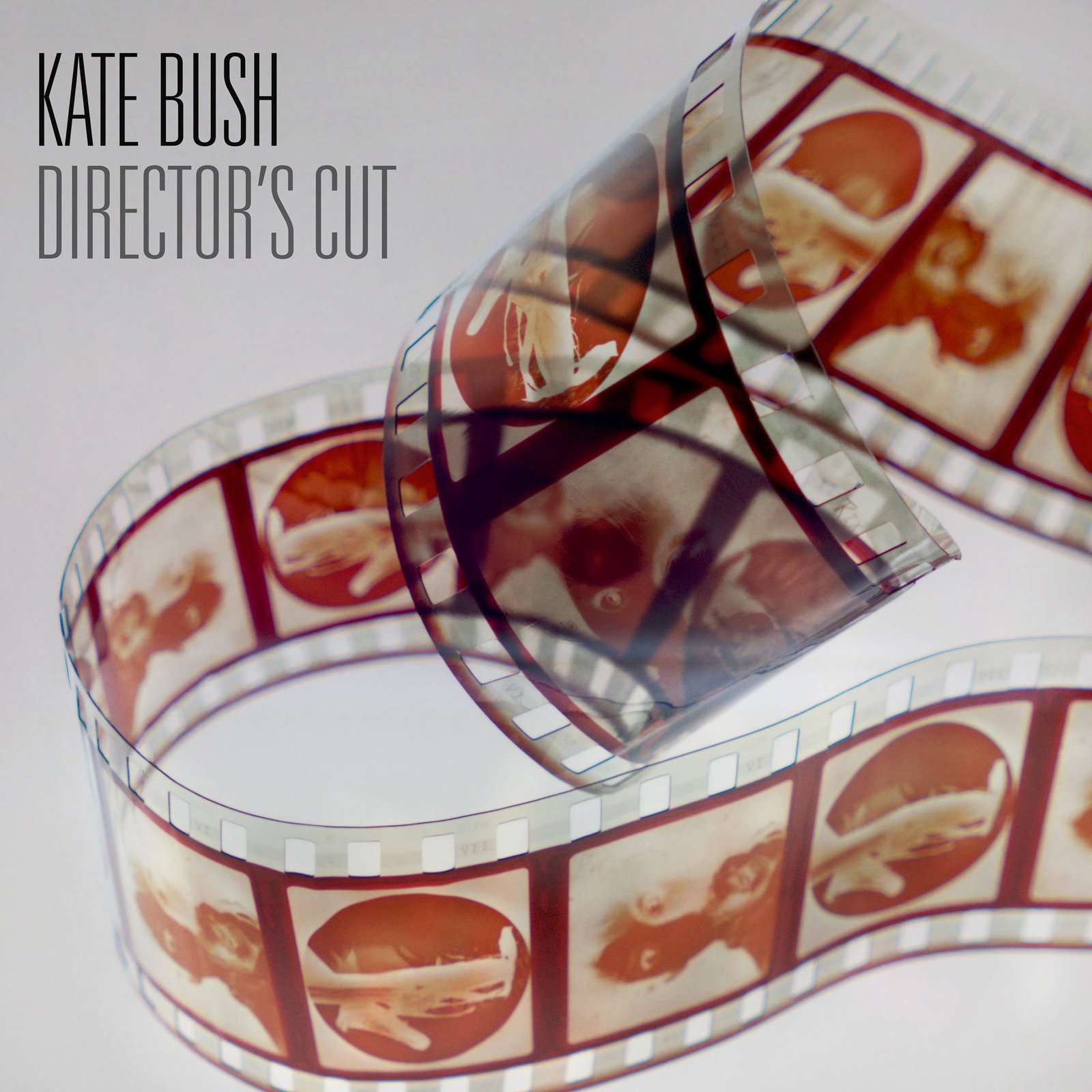
Few artists have exercised as much creative control over their recorded work as Kate Bush. With Director’s Cut, released on 16 May 2011, she undertook one of the most unusual projects of her career: revisiting eleven songs from The Sensual World (1989) and The Red Shoes (1993), replacing vocals, altering arrangements and reconsidering recordings long established in her catalogue.
Rather than presenting a conventional compilation or collection of remixes, Bush approached the material as an opportunity to address aspects of the original recordings she had grown dissatisfied with. The project offered the intriguing possibility of hearing familiar compositions through the perspective of an artist whose voice, musical priorities and personal experiences had changed considerably in the intervening decades.
At its best, the album reveals new possibilities within familiar compositions. Elsewhere, it sacrifices the immediacy, dramatic tension or distinctive textures that gave the originals their character. These versions can be fascinating without necessarily being improvements.
The distinction raises a larger question: when an artist returns to an established recording, is the aim to perfect it or discover what else it might become? Bush’s Before the Dawn concerts three years later would offer a revealing point of comparison, demonstrating another way for familiar music to change through performance.
The Making of Director’s Cut: Revisiting the Past
The decision was particularly intriguing because these albums occupied different positions in her artistic development. The Sensual World had explored increasingly intricate relationships between physical experience, memory and imagination, while The Red Shoes embraced a more direct, occasionally restless musical approach. Both contained some of Bush’s most affecting songwriting, but they also reflected the recording techniques, instrumentation and production choices of their respective periods.
For Bush, aspects of those recordings had remained unresolved. Rather than simply remastering them, she chose to reconsider selected performances and arrangements with the benefit of hindsight. The title deliberately invokes cinema: an artist returning to an existing work to present an alternative interpretation of her original vision.
“It was a personal exercise really – I wanted to revisit some of my older tracks and play with them.”
— Kate Bush
Her description is revealing: the project was as much an opportunity to experiment with familiar music as an attempt to correct it. That distinction matters when judging whether the results work as alternative interpretations rather than definitive replacements.
Reconsidering the Original Recordings
The project involved eleven songs, four from The Sensual World and seven from The Red Shoes. Bush retained elements of the earlier recordings while replacing or modifying others, including vocals, instrumental parts and arrangements. These were neither straightforward remixes nor entirely new recordings, but hybrids combining performances from different stages of her career.
Most significantly, Bush recorded new lead vocals. Her voice had become deeper and warmer, less reliant on the bright upper register and sudden theatrical shifts that distinguished the earlier versions. That change offered a new expressive perspective on songs about memory, longing and personal relationships, even if it did not always suit their existing arrangements.
The clearest unfinished ambition concerned “Flower of the Mountain”, a reworking of “The Sensual World”. Bush had originally hoped to use words from Molly Bloom’s soliloquy in James Joyce’s Ulysses, but could not secure permission for the 1989 recording. She wrote her own lyrics instead; Director’s Cut finally allowed her to return to Joyce’s text. The musical consequences of that change deserve closer attention in their own right.
Artistic Freedom and the Question of Revision
Released through Bush’s Fish People label, Director’s Cut also reflected her increasing independence. She could decide not only when to issue new music but how to revisit her catalogue. That freedom was especially significant for an artist whose studio production had always been integral to the composition itself.
The complication is that these were not unfinished demos. They were fully realised recordings whose textures and performances had acquired meaning for listeners over two decades. The new versions therefore had to do more than demonstrate Bush’s curiosity: they needed to make a persuasive musical case for themselves.
Reimagining the Originals: Production, Arrangements and a Changing Voice

The most immediate difference is Bush’s voice. On the 2011 recordings it sounds deeper, warmer and often more measured. Rather than reproduce her younger performances, she changes the emotional temperature of familiar songs. Sometimes that adds intimacy; sometimes it reduces the urgency that originally animated them.
The challenge is particularly acute in compositions built around abrupt changes of register or theatrical intensity. When the voice becomes more restrained, the surrounding arrangement must find another way to sustain that dramatic tension.
A Warmer, More Organic Sound
The production frequently favours natural instrumental textures over the densely layered electronic treatments of the earlier albums. Acoustic colour, rhythmic clarity and the physical presence of the musicians become more prominent, though the changes are far from uniform across the eleven tracks.
On “Lily”, heavier guitars and a forceful rhythm section replace much of the original’s tightly controlled electronic character. The song acquires a more muscular, rock-oriented energy, while Bush’s lower voice gives its invocation of spiritual protection an imposing quality. It is one of the clearest examples of a revision with its own musical purpose.
“Top of the City” also gains instrumental weight. Its contrasts between quiet vulnerability and dramatic release remain intact, but the revised arrangement gives those shifts a different physical presence. Bush’s mature voice introduces a note of weariness absent from the more urgent original.
When Restraint Becomes a Limitation
“This Woman’s Work” exposes the limits of this approach. The original’s fragile vocal delivery, piano accompaniment and gradual expansion of sound form an exceptionally precise emotional arc. Its intensity arises not only from the writing but from the tension between those particular elements.
The newer performance brings a reflective quality to the song’s fear, helplessness and regret. There is poignancy in hearing Bush return to such demanding material, but the revised vocal and arrangement cannot quite reproduce the original’s devastating fragility. The difference is expressive rather than a question of technical accomplishment.
“Moments of Pleasure” presents a related trade-off. The original orchestration allows grief and celebration to coexist on an expansive scale. The more intimate revision draws attention to the words and to Bush’s changed voice, but loses some of the sweep that made remembrance feel both painful and life-affirming.
That loss matters because the orchestral grandeur was not mere decoration. It supplied the emotional counterweight to the song’s private memories; removing it changes the experience, even when the quieter performance remains affecting.
Experimentation Without Guaranteed Improvement
“Deeper Understanding” moves in a different direction, giving the computer’s responses a heavily processed, Auto-Tuned voice. The artificial sound makes the technological companion immediately recognisable and sharpens the contrast with the lonely human narrator.
The idea is conceptually apt: the machine’s reassuring words now arrive through a conspicuously digital voice, bringing the song’s anxieties about dependence on technology into the sonic world of 2011.
Yet the treatment can interrupt the emotional atmosphere. The earlier computer passages possess an unsettling tenderness that helps explain the narrator’s attachment; the newer voice sounds more mechanical and less sympathetic. The premise becomes clearer, but the ambiguity becomes weaker.
Lyrical Reinterpretation: Familiar Words, Different Perspectives

Although Director’s Cut substantially alters the sound of these compositions, most of their words remain intact. The notable exception is “Flower of the Mountain”. Elsewhere, Bush’s older voice and the passage of time change how familiar lyrics register without changing what they literally say.
“Flower of the Mountain”: Realising an Original Vision
The most substantial lyrical transformation occurs in “Flower of the Mountain”, Bush’s reinterpretation of “The Sensual World”. The original 1989 composition was inspired by the concluding soliloquy of Molly Bloom in James Joyce’s Ulysses, a passage celebrated for its flowing, intimate exploration of memory, desire and human consciousness.
Bush’s 1989 lyrics were more than a practical substitute for Joyce: they formed a vivid, musically responsive interpretation of Molly Bloom’s sensual world. The original song turned literary inspiration into Bush’s own imagery, balancing desire, memory and the natural environment.
With permission secured for the 2011 version, “Flower of the Mountain” brings Joyce’s text directly into the music. The narrator now feels closer to Molly Bloom’s consciousness, and the language moves with the associative, intimate quality of the novel’s closing soliloquy.
That shift changes the relationship between words and melody. The original lyrics were fashioned for Bush’s composition, while Joyce’s language follows its own rhythms. The revision offers greater fidelity to her first idea but not always the same effortless musical flow. It is an illuminating alternative, not an obvious replacement.
There is particular satisfaction in hearing an artistic intention realised after more than twenty years. Equally, the strength of the 1989 recording suggests that a creative obstacle can generate something valuable in its own right.
“Deeper Understanding”: Technology and the Illusion of Connection
“Deeper Understanding” imagines an isolated person turning to a computer for companionship and gradually withdrawing from human relationships. Its narrative was striking in 1989; by 2011, with digital communication embedded in everyday life, the story felt less speculative and more familiar.
The lyrics have barely changed, but their cultural surroundings have. The computer promises comfort, and the narrator’s need for it remains recognisably human. That tension between genuine loneliness and simulated reassurance is more important than the novelty of the technology itself.
The revised digital voice makes the machine’s artificiality more explicit. Yet the original’s gentle computer chorus is crucial to the story’s unease: the comfort sounds plausible enough that we understand its attraction. Bush’s experiment therefore clarifies the premise while making the relationship less emotionally ambiguous.
The song’s continuing relevance demonstrates that an earlier lyric can acquire fresh resonance without extensive rewriting. Its most prophetic quality lies not in predicting particular devices, but in recognising the desire to find understanding where human contact has failed.
Memory, Loss and the Passage of Time
In “Moments of Pleasure”, the act of revisiting the song introduces an additional layer of memory. Bush is reflecting not only on the people evoked by the lyrics but, implicitly, on the younger artist who first recorded those recollections for The Red Shoes.
The years separating the performances make the words feel differently inhabited. What once sounded like an immediate tribute can now suggest a longer process of living with absence, even though the lyric itself remains unchanged.
Bush’s lower, quieter delivery supports that perspective, making the recollections feel almost private. The recording’s intimacy is its distinctive contribution, whatever listeners make of the reduced orchestral scale discussed earlier.
“This Woman’s Work” likewise acquires a more reflective vocal character. But its words about helplessness and things left unsaid were already painfully direct, and the new delivery does not automatically make them more affecting. Here, emotional distance and emotional intensity pull in different directions.
These examples suggest that the value of Director’s Cut as a lyrical project lies in changed perspective rather than newly discovered meanings. “Flower of the Mountain” alters the text itself; the other songs ask us to hear familiar words through the voice of the person who wrote them many years earlier.
Cohesion and Flow: Does Director’s Cut Work as an Album?

Director’s Cut also faces a structural challenge: can eleven songs drawn from two different albums form a satisfying sequence in their new setting? A shared production approach gives the recordings some continuity, but it cannot by itself supply the sense of progression found in Bush’s most carefully designed works.
Unlike The Sensual World or The Red Shoes, the album was assembled around the desire to revisit particular recordings rather than an overarching new narrative. That is not inherently a weakness; the question is whether the running order develops its own momentum.
Sequencing and Emotional Progression
The opening pairing of “Flower of the Mountain” and “Song of Solomon” establishes an intimate, sensual atmosphere. The first is an apt introduction because its use of Joyce’s words makes the project’s purpose immediately audible.
The shift into “Lily” is more abrupt. Its heavy guitars and forceful rhythms interrupt the opening mood, before “Deeper Understanding” moves towards electronic isolation and “The Red Shoes” restores kinetic energy. The variety is appealing, but the transitions often feel like contrasts between self-contained experiments rather than stages in a developing musical argument.
Bush has made stylistic contrasts work brilliantly elsewhere in her catalogue. Here, however, the sequence rarely gives those contrasts an equivalent narrative or emotional purpose.
The Uneven Relationship Between the Two Original Albums
Seven selections come from The Red Shoes, while only four originate on The Sensual World. The balance gives the 1993 material particular weight, although the more reflective songs from 1989 help establish the revised album’s intimate atmosphere.
The two sources remain audible beneath the new arrangements. The Sensual World often privileges inward reflection and sensual detail, while The Red Shoes moves more readily between theatrical drama, pop immediacy and rock energy. Their juxtaposition broadens the album’s palette but also exposes its assembled nature.
A Stronger Closing Sequence
The later sequence is more affecting. “This Woman’s Work”, “Moments of Pleasure” and “Never Be Mine” place vulnerability, remembrance and longing close together, allowing their shared emotional concerns to emerge across their different origins.
The closing “Rubberband Girl” then breaks decisively with that mood. Its loose, guitar-driven character offers a playful release after the reflective songs, although the contrast can feel more like an appended experiment than a carefully prepared resolution.
There is something appealing about ending such an introspective project with a song that embraces resilience and movement. The contrast suggests that Bush’s relationship with her past is not exclusively nostalgic or solemn; it can also accommodate humour, experimentation and a willingness to disrupt familiar expectations.
The finale is appealing in principle: Bush ends not with resignation but with movement and resilience. Whether its deliberately rough performance provides a satisfying conclusion depends on how much the listener enjoys the departure from the original’s polished pop arrangement.
A Sequence With Uneven Momentum
The album works best in stretches rather than as a sustained journey. Its new sonic palette brings disparate songs into conversation, but the underlying selections continue to pull towards their original contexts.
That is a notable contrast with Aerial, where the differing characters of A Sea of Honey and A Sky of Honey contribute to a carefully shaped whole. Director’s Cut is more episodic: the individual reinterpretations often command attention, but their sequence rarely becomes an artistic statement in itself.
Standout Reworkings and Missed Opportunities
“Lily”: A Reworking That Justifies Its Existence
“Lily”, originally from The Red Shoes, is among the most successful transformations. Its protective ritual and mystical imagery gain a tougher physical setting in the 2011 arrangement, which trades the original’s controlled electronic edges for a more forceful band performance.
The guitars push against Bush’s commanding lower register, turning the invocation into something closer to confrontation. Crucially, the new energy suits the song’s underlying drama rather than merely updating its surface. Both versions retain a distinct appeal.
“The Red Shoes”: Energy Without the Same Sense of Urgency
Inspired by Hans Christian Andersen’s tale of compulsive dancing, “The Red Shoes” originally builds a sense of movement slipping beyond control. Folk-inflected textures, insistent percussion and Bush’s increasingly frantic delivery make the arrangement enact the story’s danger.
The revised recording preserves its rhythmic drive but softens some of that escalating desperation. Its more measured performance changes the experience from something nearly uncontrollable into a more orderly dance.
That matters because the original’s theatrical excess was not incidental: it communicated the inability to stop. The 2011 version remains enjoyable, but the cleaner balance makes the narrative feel less urgent.
By approaching the composition with greater restraint, Bush creates a recording that is easier to distinguish from the production style of the early 1990s, but arguably less successful at communicating the story’s underlying tension. The revision is enjoyable in its own right, though it struggles to reproduce the exhilarating instability of its predecessor.
“Rubberband Girl”: A Radical but Divisive Transformation
The 1993 “Rubberband Girl” is a polished pop recording whose buoyant rhythm embodies its message of resilience. Bush’s playful delivery gives the song a nimble quality, as though it can spring back from every setback it describes.
On Director’s Cut, she recasts it as a loose, guitar-led performance with the atmosphere of an informal jam. The emphasis shifts from the original’s pop precision to the pleasure of musicians playing together.
That approach has charm, and it reveals a relaxed side of Bush’s musical personality. But the longer, rougher performance loses much of the original’s melodic immediacy. The spontaneity feels appealing as an idea without always sustaining the recording.
Of all the album’s reworkings, this one most clearly suggests the possibilities of a live setting, where the physical exchange between performers and an audience might give the looseness a stronger purpose. It is an intriguing departure, but not a fully satisfying substitute.
“Never Be Mine”: A More Persuasive Kind of Restraint
“Never Be Mine”, from The Sensual World, is a quieter success. Its longing for something that cannot be possessed needs no dramatic reconstruction, and Bush wisely allows the song’s melancholy to remain central.
The revised arrangement gives her warmer voice more space, changing the sense of emotional distance without forcing a new identity upon the composition. The effect is subtle but persuasive.
Unlike songs that depend on abrupt theatrical contrasts, “Never Be Mine” can accommodate a less demonstrative performance. Its regret is carried by understatement, and the 2011 version finds a convincing place within that emotional register.
It does not displace the original, but it offers a reason to hear the song again: not as a correction, but as a different experience of the same longing.
“Song of Solomon” and “Top of the City”: Two Contrasting Approaches
“Song of Solomon” benefits from the confidence of Bush’s mature delivery. Its frank desire and refusal of romantic convention remain striking, although the warmer arrangement makes for a comparatively modest reinterpretation.
The song is pleasurable to revisit, but the new version adds less to our understanding of the composition than the album’s bolder experiments.
“Top of the City” is more convincing. Its movements between isolation, vulnerability and dramatic intensity survive the changes, while Bush’s lower voice lends the song a more weathered emotional perspective.
The revised performance preserves the scale of the original rather than treating restraint as an end in itself. Its climactic passages still carry force, making this one of the stronger examples of Bush adapting familiar material to her changing voice.
“And So Is Love”: A More Weathered Reflection
The blues-inflected “And So Is Love” deserves attention because its sense of emotional exhaustion fits Bush’s later vocal character particularly well. The revised recording leans into the song’s weary atmosphere, allowing the guitar-led arrangement and lower register to emphasise its acceptance of love’s pain as well as its persistence.
Unlike the more radical revisions, it does not seek to overturn the original. Its appeal lies in a changed emotional inflection: the song sounds less like an immediate reckoning and more like a feeling revisited after years of experience. It is a modest but worthwhile addition to the album’s stronger performances.
Artistic Contribution and Legacy: Reconsidering the Past

Director’s Cut has a distinctive place in Bush’s career: neither an album of new songs nor a conventional retrospective, it asks who has the authority to determine the final form of a recording. The title’s cinematic analogy is revealing, but music complicates the notion of a definitive version. Listeners can remain attached to a performance even when its creator wishes to change it.
Bush’s studio recordings have always been more than documents of songwriting. On The Dreaming, Hounds of Love and Aerial, arrangements, voices and sonic environments are inseparable from the ideas they express. Reopening recordings from The Sensual World and The Red Shoes therefore challenges an important feature of her own artistic legacy.
The record is not a claim that audiences must abandon the originals. Its more useful legacy is the invitation to hear how the same artist can disagree with, or simply move beyond, an earlier interpretation. The results are inconsistent, but the creative question is a worthwhile one.
Before the Dawn: A More Compelling Approach to Reinterpretation?
A revealing comparison arrived in 2014, when Bush returned to the stage for Before the Dawn, her first full concert production since 1979. The performances allowed familiar compositions to change through live arrangements, musicianship and theatrical presentation without suggesting that their original recordings needed replacing.
In particular, the staged sequences of The Ninth Wave and A Sky of Honey expanded existing music through dramatic context. Their reinterpretation was inseparable from the event: the audience encountered these songs as performances taking place in the present, not as revised studio artefacts competing with earlier versions.
This distinction makes Bush’s mature voice an expressive advantage. Different phrasing and instrumental textures can be experienced as part of a live encounter, while the presence of musicians and an audience lends physical energy to the changes.
It is tempting to imagine the loosened “Rubberband Girl” or the more muscular “Lily” developed in that environment. The point is not that Before the Dawn was an alternative plan for Director’s Cut: the concerts came later, pursued different objectives and did not perform the entire 2011 selection. Rather, they demonstrate how performance can provide a persuasive context for reimagining existing work.
The contrast does not invalidate the studio experiment. It clarifies why some of its most interesting decisions might have felt more immediate in front of an audience than as replacements for meticulously constructed recordings.
Between Aerial and 50 Words for Snow
The album also sits at a pivotal point in Bush’s later career. Six years after Aerial, it was followed within months by 50 Words for Snow, a collection of entirely new compositions whose expansive, wintry arrangements made space for the qualities of her mature voice.
The contrast is instructive. Where Director’s Cut fits that voice into older compositions, 50 Words for Snow develops musical environments around it. The latter demonstrates that Bush’s evolving approach to singing and pacing could flourish most fully when she was writing new material.
The album’s lasting contribution is therefore less a set of definitive new versions than a challenge to the idea of finality itself. It reveals an artist willing to question her own work and invites listeners to decide whether creative intention or the experience of the finished recording matters more.
Final Verdict: An Intriguing but Uneven Experiment

There is genuine value in hearing Bush reconsider these songs. “Flower of the Mountain” realises her Joyce-inspired intention, while “Lily” and “Top of the City” establish compelling alternative musical identities. “Never Be Mine” finds a quieter form of intimacy in her mature voice.
The weaker revisions reveal the difficulty of the exercise. “This Woman’s Work” and “Moments of Pleasure” lose some of the dramatic contrasts that gave the originals their force; “Deeper Understanding” makes its technological premise more explicit but less emotionally ambiguous; and “Rubberband Girl” is more interesting in conception than in sustained execution.
The album therefore earns admiration for its ambition without earning unqualified approval for its execution. Its artistic curiosity is unmistakable; its musical rewards are uneven.
Final Rating: 6/10
Director’s Cut is most rewarding when heard not as a corrected history but as a conversation between Bush and her younger self. Some of those exchanges are illuminating; others leave the earlier recordings speaking more powerfully. That unevenness is precisely why the album remains worth discussing, even when it falls short of her finest work.