
For 35 years, Kate Bush’s return to the concert stage seemed little more than a distant possibility. Since her groundbreaking Tour of Life in 1979, one of Britain’s most imaginative musicians had remained largely absent from live performance, cultivating an extraordinary legacy through the increasingly ambitious worlds of her studio recordings. Yet in 2014, Bush finally returned, delivering a theatrical spectacle that would challenge everything audiences expected from a conventional concert.
The resulting live album, Before the Dawn, released in November 2016, captures far more than the excitement of that historic comeback. Across three discs, Bush reimagines some of her most celebrated compositions, transforming familiar recordings into expansive performances that combine the emotional immediacy of live music with her unmistakable flair for storytelling.
At its heart lies a remarkable artistic ambition. Rather than simply revisiting her greatest hits, Bush sought to bring two of her most extraordinary musical creations, The Ninth Wave and A Sky of Honey, to life in ways that had previously existed only within the imagination.
But can an album truly capture the magic of a production conceived as much for the eyes as for the ears? And what happens when some of Bush’s most meticulously constructed studio recordings are given new life on stage?
Before the Dawn offers a fascinating answer, revealing an artist whose creative imagination remained as adventurous and uncompromising as ever.
The Making of Before the Dawn: 35 Years in the Making
When Kate Bush announced her return to the stage in March 2014, the news marked the end of one of popular music’s most remarkable absences. Her only previous concert tour, 1979’s Tour of Life, had established her as a pioneering live performer, combining elaborate choreography, theatrical storytelling and innovative staging at a time when such ambitions were far from commonplace. Yet despite its artistic success, Bush would spend the following 35 years concentrating almost exclusively on studio recordings, leaving the possibility of another major live production increasingly uncertain.
Her eventual return was therefore never likely to follow the conventions of a typical concert. Bush had long regarded music as a medium capable of encompassing theatre, film and visual storytelling, and the intervening decades had only expanded the possibilities available to her. Rather than simply recreating her earlier performances, she envisioned an ambitious production that could finally bring some of her most elaborate musical narratives into the physical world.
From an Impossible Return to a Sold-Out Residency
The decision to perform again was particularly significant given Bush’s longstanding reluctance to tour. Following The Tour of Life, she had increasingly devoted herself to the creative freedom of the recording studio, where complex arrangements and experimental production techniques could be developed without the practical limitations of live performance.
By 2014, however, the opportunity to revisit her music through theatre had become an increasingly compelling prospect. Central to her plans were two extended compositions that had never been presented in their entirety on stage: The Ninth Wave, from Hounds of Love (1985), and A Sky of Honey, from Aerial (2005).
Both works offered possibilities far beyond a conventional concert arrangement. Their interconnected songs, shifting perspectives and cinematic imagery provided the foundations for elaborate dramatic productions, allowing Bush to reconsider material that had originally been realised almost entirely through sound.
The public response was extraordinary. An initial fifteen performances at London’s Eventim Apollo, formerly the Hammersmith Apollo, were expanded to twenty-two, with tickets selling out within fifteen minutes of going on sale. The residency would take place between August and October 2014, returning Bush to the same venue where her original tour had concluded more than three decades earlier.
Yet the scale of the demand was only one aspect of the undertaking. The real challenge lay in transforming an imaginative concept into a functioning theatrical production.
Bringing the Music to Life
Before the Dawn required an unusually extensive creative team, bringing together musicians, actors, dancers, designers and technical specialists. Working with theatrical director Adrian Noble and a range of experienced collaborators, Bush developed a production that blurred the boundaries between concert, musical theatre and cinematic storytelling.
The staging was particularly demanding. The Ninth Wave required the audience to experience the disorientation and vulnerability of a woman lost at sea, while A Sky of Honey presented an entirely different world shaped by birdsong, shifting light and the passage from afternoon into night.
These contrasting narratives called for elaborate scenery, projections, puppetry, choreography and specially filmed sequences. Rather than using theatrical effects merely to embellish the music, Bush sought to make them integral to the storytelling.
One of the most demanding elements involved filming Bush performing “And Dream of Sheep” while immersed in a water tank. The sequence was intended to communicate the physical isolation of the song’s central character, transforming an intensely personal studio recording into a vivid dramatic experience.
The undertaking demonstrated Bush’s willingness to pursue an artistic idea even when its practical execution presented considerable difficulties.
Reflecting upon the immense effort involved in preparing the production, Bush acknowledged both the exhaustion of the creative team and the extraordinary contribution of the audiences:
“We worked with the most incredible team of people and we were all exhausted by the time we reached opening night. It was the unforgettable energy of the audiences every night that drove us on.”
— Kate Bush, reflecting on the creation of Before the Dawn
Her words reveal something important about the production. Despite the meticulous planning and technical complexity, its ultimate success depended upon the relationship between performers and audience. After decades spent creating music largely within the controlled environment of the studio, Bush was once again experiencing the spontaneity and collective energy of live performance.
Assembling the Musicians
The musical demands of Before the Dawn were equally considerable. Bush’s recordings frequently feature intricate layers of instrumentation, unconventional textures and arrangements that resist straightforward reproduction. Translating these compositions to the stage required musicians capable of preserving their distinctive character while allowing them to develop naturally in performance.
The resulting band included guitarist David Rhodes, drummer Omar Hakim, bassist John Giblin, keyboardists Jon Car in and Kevin McAlea, and percussionist Mino Cinelu. Their collective experience provided the versatility necessary to move between the rhythmic intensity of Bush’s earlier material and the expansive arrangements of her later compositions.
Backing vocalists, including Bush’s son Bertie McIntosh, also played an important role. Bertie’s participation was especially significant within A Sky of Honey, where his presence contributed to the theatrical reinterpretation of the original song cycle.
Rather than treating the band as an accompaniment to an elaborate visual production, Bush placed live musicianship at the centre of the experience. The arrangements needed to retain the sophistication of her studio recordings while possessing the immediacy and unpredictability that distinguish a genuinely compelling concert.
This balance between precision and spontaneity would become one of the defining qualities of the resulting album.
Preserving the Experience on Record
Although the original residency was conceived as a theatrical spectacle, the eventual release of Before the Dawn in November 2016 offered listeners a different perspective upon the production.
Presented across four discs, the album follows the show’s principal musical structure, beginning with a selection of individual songs before moving into the complete performances of The Ninth Wave and A Sky of Honey.
Bush approached the recording with the same attention to detail that had characterised the stage production. Rather than attempting to recreate the experience through extensive studio reconstruction, she sought to preserve the musicianship and emotional immediacy of the performances themselves.
Bush confirmed that nothing was re-recorded or overdubbed for the release. The assembled performances retain the character of live playing while presenting the music with exceptional clarity; the first disc also includes the separately recorded, audience-free “Never Be Mine”.
Ultimately, the making of Before the Dawn was about far more than returning to the concert stage after a lengthy absence. It represented the culmination of artistic ideas that Bush had been developing throughout her career, bringing together her fascination with storytelling, visual imagery and musical experimentation on an unprecedented scale.
The question was no longer whether Kate Bush could return to the stage. It was what her extraordinary imagination could achieve once she did.
The Opening Set: Rediscovering Kate Bush’s Greatest Songs
When Kate Bush finally stepped onto the stage at London’s Hammersmith Apollo in August 2014, the significance of the occasion was impossible to ignore. Yet rather than allowing the weight of expectation to define the performance, she opened with a sequence of songs that demonstrated just how naturally her music could flourish in a live setting. Before the elaborate theatrical narratives of The Ninth Wave and A Sky of Honey, the audience encountered something comparatively straightforward: Kate Bush performing with an exceptional band, rediscovering the energy and immediacy of her own remarkable catalogue.
The seven tracks on the first disc offer a carefully considered selection spanning different periods of her career. Beginning with “Lily” and concluding with “King of the Mountain”, the sequence moved between rhythmic intensity, emotional vulnerability and expansive musical arrangements. It was not a conventional greatest-hits retrospective. Instead, Bush selected compositions that could benefit from the physical presence of live musicians, revealing new dimensions of recordings that had become deeply familiar to generations of listeners.
Lily: An Electrifying Opening
Opening with “Lily”, originally released on The Red Shoes (1993), was an inspired decision. Rather than beginning with one of her most commercially recognisable songs, Bush chose a composition whose dramatic intensity and spiritual imagery could establish the performance’s distinctive character immediately.
The live arrangement is considerably more forceful than the original studio recording. Its driving percussion, muscular guitar work and emphatic rhythmic accents transform the song into a powerful statement of intent, demonstrating the exceptional precision and energy of the musicians surrounding her.
Bush’s vocal performance is equally striking. Her voice possesses a deeper, richer character than on the original recording, but the change brings additional authority to the song’s dramatic delivery. She moves between the spoken invocation and the increasingly urgent melodic passages with remarkable conviction, conveying a sense of power without attempting to reproduce every characteristic of her younger voice.
The performance also establishes an important quality of the album: Bush is not interested in recreating her recordings note for note. Instead, she allows the songs to respond to the musicians and the physical energy of the stage.
Hounds of Love: Renewed Energy and Emotional Urgency
The transition into “Hounds of Love” sustains the opening momentum while introducing one of the most recognisable compositions in Bush’s catalogue.
Originally released in 1985, the song’s distinctive rhythmic pulse and dramatic vocal arrangement made it an obvious candidate for live reinterpretation. Yet the Before the Dawn performance succeeds by emphasising its physical energy rather than attempting to duplicate the studio recording’s intricate production.
The drums possess a greater sense of immediacy, while the guitars and keyboards contribute to an arrangement that feels expansive without sacrificing the song’s urgent momentum. The interaction between the musicians creates a powerful rhythmic foundation, allowing the familiar melodic phrases to emerge with renewed force.
Bush’s vocal delivery is particularly effective. The youthful anxiety of the original recording has developed into something more measured and commanding, but the emotional tension remains unmistakable. Her phrasing gives familiar lines a different character, suggesting that the song’s themes have acquired additional resonance through the passage of time.
Joanni: An Unexpected Highlight
Among the opening performances, “Joanni” is perhaps the most revealing example of Bush’s willingness to look beyond the obvious selections from her catalogue.
Originally appearing on Aerial (2005), the song had never achieved the widespread recognition of her major singles. Yet its inclusion demonstrates the artistic priorities guiding the residency: Bush was interested in the dramatic and musical possibilities of particular compositions rather than their commercial familiarity.
The live arrangement gives “Joanni” a greater sense of rhythmic definition, allowing its unusual melodic structure to emerge with striking clarity. The musicians establish an insistent pulse beneath Bush’s vocal, while the arrangement gradually develops a compelling sense of momentum.
Her mature voice is especially well suited to the composition. The performance possesses a reflective quality that contrasts effectively with the more forceful opening songs, demonstrating her ability to communicate emotional intensity without relying upon overt theatrical gestures.
Placed between “Hounds of Love” and “Top of the City”, “Joanni” also provides an important shift in perspective. Its inclusion broadens the musical character of the opening sequence, reminding listeners that Bush’s creative achievements extend far beyond the recordings most frequently associated with her name.
Top of the City: Drama on a Grand Scale
“Top of the City”, another selection from The Red Shoes, provides one of the opening act’s most impressive demonstrations of Bush’s dramatic abilities.
The original recording already possessed considerable emotional intensity, but its live reinterpretation benefits enormously from the expanded instrumental presence of the band.
The arrangement develops through contrasting passages of relative intimacy and powerful rhythmic emphasis, allowing the song’s emotional tensions to become increasingly pronounced. Guitar, keyboards and percussion combine to create an expansive musical backdrop without overwhelming the vocal performance.
Bush’s singing is particularly compelling. The deeper qualities of her mature voice lend the composition a sense of gravity, while her phrasing captures the shifting relationship between vulnerability and defiance.
Rather than depending upon the sheer force of her delivery, she allows the song’s emotional intensity to emerge through carefully controlled changes in tone.
Never Be Mine: An Intimacy the Audience Never Heard
“Never Be Mine” is the opening disc’s quiet surprise, and its provenance makes it different from every other selection here. Although prepared for the show, the song was not performed at the public residency. The version on Before the Dawn comes from a performance recorded without an audience. It is therefore more accurate to describe the opening disc as the album’s opening sequence than as an exact transcript of the first act witnessed by ticket-holders.
The distinction matters, but it is not a reason to discount the performance. Originally released on The Sensual World (1989), “Never Be Mine” turns on the painful difference between a life imagined and a life actually lived. The live arrangement gives that regret room to settle. Its unhurried pace and spacious accompaniment bring Bush’s vocal to the foreground; she sounds less interested in heightening the song’s sorrow than in allowing its acceptance and unresolved longing to coexist.
The absence of an audible crowd gives the recording a peculiar intimacy. Placed between the theatrical reach of “Top of the City” and the propulsive recognition of “Running Up That Hill”, it acts as a moment of inwardness. It also reminds us that Before the Dawn is a carefully assembled album, not an unedited souvenir of one night. The inclusion improves the musical shape of the first disc even as it complicates the idea of an entirely continuous concert document.
Running Up That Hill: A Classic Reimagined
Few moments in the opening sequence carry the weight of expectation surrounding “Running Up That Hill (A Deal with God)”.
One of Bush’s most celebrated recordings, the song had become inseparable from its distinctive synthesiser arrangement and insistent rhythmic pulse. Reinterpreting such a familiar composition without diminishing its character presented a considerable challenge.
The live performance meets that challenge through a combination of musical precision and renewed emotional intensity.
The rhythm section provides a powerful foundation, while the keyboards preserve the song’s recognisable musical identity. The arrangement feels broader and more physical than the original recording, allowing the interaction between the musicians to become a central part of the experience.
Bush’s vocal performance is especially significant. Her lower register introduces a different emotional perspective, replacing some of the original’s youthful urgency with a more reflective intensity. The familiar melody remains intact, but its delivery suggests the accumulated experience of the decades separating the two performances.
The backing vocals also contribute to the recording’s sense of scale, reinforcing the emotional force of the chorus without obscuring Bush’s central performance.
King of the Mountain: A Majestic Conclusion
The opening sequence concludes with “King of the Mountain”, originally released as the lead single from Aerial.
Its placement is particularly effective. Where the preceding songs frequently emphasise rhythmic immediacy, “King of the Mountain” develops through a more expansive musical atmosphere, providing a natural transition towards the elaborate theatrical narratives that follow.
Bush’s voice is especially commanding here. The song’s unusual melodic phrases and shifting emotional character suit her mature register, allowing her to move between restraint and dramatic intensity with remarkable assurance.
As the final song before The Ninth Wave, “King of the Mountain” performs an important structural function. It concludes the opening concert with considerable power while preparing the listener for a more immersive form of musical storytelling.
A Remarkable Return to Live Performance
Taken together, these seven recordings establish Before the Dawn as something considerably more meaningful than a nostalgic celebration of Bush’s past.
The selection is particularly revealing. Alongside familiar classics, Bush includes songs from The Red Shoes and Aerial that benefit enormously from their live reinterpretations, demonstrating the depth and diversity of her catalogue.
The arrangements are consistently accomplished, balancing fidelity to the original compositions with the energy and spontaneity of live musicianship. Omar Hakim’s drumming provides much of the rhythmic force, while the contributions of David Rhodes, John Giblin, Jon Car in, Kevin McAlea and Mino Cinelu create a rich instrumental foundation.
Above all, Bush’s vocal performances demonstrate how effectively her artistry has evolved. Her voice no longer possesses precisely the same qualities as it did during the 1970s and 1980s, but its warmth, expressive depth and dramatic authority bring new dimensions to familiar material.
There is something particularly affecting about hearing these songs performed by the artist who created them, decades after their original release, without any sense that she is attempting to recapture a vanished moment.
Instead, Bush embraces the passage of time, allowing the music to evolve alongside her.
By the conclusion of “King of the Mountain”, she has already demonstrated that her return to live performance was artistically justified. Yet the most ambitious elements of Before the Dawn are still to come.
With The Ninth Wave, Bush would move beyond the conventional concert format entirely, transforming one of her greatest studio achievements into an extraordinary work of musical theatre.
The Ninth Wave: Bringing a Musical Masterpiece to Life
Few moments in Kate Bush’s career demonstrate the extraordinary scope of her imagination more completely than The Ninth Wave. Originally occupying the second side of Hounds of Love (1985), the seven-part song cycle follows a woman struggling to survive after becoming lost at sea, drifting between consciousness, memory, hallucination and the possibility of death. Its intricate production and cinematic storytelling made it one of Bush’s most celebrated achievements, yet for almost three decades, its dramatic possibilities had remained confined to the recording studio and the listener’s imagination.
Before the Dawn finally allowed Bush to realise those possibilities through live theatre. Rather than simply performing the original compositions in sequence, she constructed an elaborate dramatic production combining music, film, acting and physical staging. The result was an ambitious reinterpretation that transformed an already remarkable work into something more immediate and unsettling.
Crucially, the live album demonstrates that the strength of The Ninth Wave lies not solely in its theatrical presentation, but in the extraordinary musical architecture beneath it.
Astronomer’s Call: The Story Steps Beyond the Record
The live version does not begin directly with “And Dream of Sheep”. “Astronomer’s Call”, a spoken monologue, first establishes the theatrical frame and shifts the audience into a world where the protagonist’s ordeal is mediated by other voices. It is an important distinction from the 1985 album: Bush is no longer relying entirely on music and suggestion to connect the scenes. On record, the dialogue is intriguing but also exposes the limits of listening to theatre without seeing it.
And Dream of Sheep: Vulnerability in the Darkness
After that spoken introduction, “And Dream of Sheep” supplies the first sustained musical scene, and one of the most delicate performances in Bush’s catalogue.
For the stage production, Bush filmed herself performing the song while immersed in a water tank, recreating the isolation of the narrative’s central character. The filming was physically demanding, but the resulting imagery provided an unusually direct representation of the woman’s vulnerability.
On the live album, the visual spectacle is absent, leaving the listener to concentrate upon Bush’s voice and the exposed musical arrangement.
The performance is deeply affecting. Her mature vocal register brings a different quality to the song, replacing some of the youthful fragility of the original recording with a warmer, more reflective tenderness. The understated piano accompaniment allows individual phrases to linger, while the surrounding stillness reinforces the character’s exhaustion and uncertainty.
What makes the performance especially powerful is its refusal to exaggerate the emotion. Bush sings with a quiet conviction that communicates the character’s vulnerability more effectively than any dramatic vocal flourish could achieve.
Under Ice: A Descent into Terror
The transition into “Under Ice” marks a dramatic change in atmosphere.
Where “And Dream of Sheep” is defined by vulnerability and isolation, “Under Ice” introduces a growing sense of dread. The arrangement becomes colder and more threatening, with its insistent rhythmic figures and unsettling vocal textures suggesting the protagonist’s descent into a nightmarish psychological landscape.
The live performance emphasises the composition’s dramatic tension. The musicians maintain a controlled intensity, allowing the repeated musical phrases to create an increasingly oppressive atmosphere.
Bush’s vocal delivery is particularly effective. Her performance moves between detached observation and sudden alarm, reflecting the character’s gradual recognition of the danger surrounding her.
The theatrical production expanded these ideas through visual representations of the frozen landscape, but the audio recording remains remarkably evocative.
Indeed, the absence of visual imagery arguably allows the composition’s psychological horror to become more personal. The listener is left to imagine the darkness beneath the ice, guided entirely by the music’s disturbing progression.
Waking the Witch: Theatrical Horror and Musical Experimentation
“Waking the Witch” is among the most uncompromising compositions Bush has ever recorded, combining fragmented voices, violent rhythmic contrasts and surreal imagery into an extraordinary piece of musical theatre.
Its live reinterpretation provides one of the most dramatic moments of Before the Dawn.
The composition’s abrupt transitions between tenderness and aggression become especially powerful within the concert setting. The musicians recreate its disorientating rhythmic structures with impressive precision, while the contrasting vocal performances reinforce the sense of psychological fragmentation.
The theatrical staging introduced additional dramatic elements, transforming the protagonist’s internal struggle into a disturbing confrontation with figures representing judgement and persecution.
On the album, the spoken voices and sudden musical interruptions remain central to the experience. Their interaction with the live instrumentation creates a sense of instability that feels both carefully constructed and emotionally immediate.
What distinguishes the performance is its willingness to preserve the original composition’s strangeness. Bush makes little attempt to soften its confrontational character for the concert audience.
Watching Them Without Her: A Scene Heard but Not Seen
The dialogue of “Watching Them Without Her” relocates the drama to the people awaiting news of the missing woman. It supplies a perspective that the original studio suite largely leaves to the imagination. Heard without the accompanying action, however, the exchange can seem oddly detached from the music. That slight awkwardness is revealing: the album preserves the structure of a stage production, including passages whose primary purpose was dramatic rather than musical.
Watching You Without Me: The Pain of Being Unheard
After the intensity of “Waking the Witch”, “Watching You Without Me” introduces a more intimate form of psychological distress.
The composition imagines the protagonist attempting to communicate with someone who cannot perceive her presence. Its emotional power emerges from the contrast between physical closeness and complete isolation, an idea that Bush originally expressed through unusual vocal processing and fragmented musical textures.
The rhythm section establishes a measured pulse beneath the vocals, while the keyboards recreate the recording’s mysterious harmonic environment. Bush’s performance is particularly moving, conveying frustration and longing through subtle variations in phrasing.
The theatrical production gave physical form to the character’s inability to communicate, but the recording succeeds through the interaction between the vocal arrangement and the music’s restrained momentum.
There is something especially affecting about hearing this composition performed by Bush’s mature voice. The emotional distance between the protagonist and the person she longs to reach becomes more poignant, suggesting a depth of experience that enriches the original recording.
Little Light: The Cost of Theatrical Continuity
The short “Little Light” interlude is another addition to the familiar sequence. Its role is to carry the staged story forward, not to compete with the songs as a standalone composition. Such passages make the live Ninth Wave more expansive and explicit, though they can interrupt the momentum for listeners approaching it as a purely musical suite. Bush’s decision to keep them is part of the album’s honesty about the production it documents.
Jig of Life: A Fierce Celebration of Survival
“Jig of Life” provides a dramatic turning point, replacing the preceding atmosphere of uncertainty with an exhilarating burst of rhythmic energy.
Drawing upon traditional folk influences, the composition combines urgent percussion, instrumental interplay and dramatic vocal exchanges to create a powerful confrontation between the protagonist and the possibility of surrender.
The live arrangement is particularly impressive. The musicians bring remarkable force and precision to the song’s shifting rhythmic patterns, allowing its folk-inspired melodies to emerge with an intensity that feels almost physical.
Bush’s performance possesses considerable dramatic authority, while the spoken contribution associated with the character’s older self introduces a compelling sense of confrontation.
Unlike the preceding compositions, which frequently communicate vulnerability through isolation and uncertainty, “Jig of Life” feels driven by resistance.
Its exuberant instrumental passages transform the sequence’s emotional direction, creating the impression of a character being pulled back towards life.
Hello Earth: The Immensity of the Unknown
If “Jig of Life” represents the struggle to survive, “Hello Earth” expands the narrative towards something altogether more mysterious and transcendent.
One of the most ambitious compositions on Hounds of Love, the song moves between intimate vocal passages and immense choral textures, suggesting a perspective that extends far beyond the protagonist’s immediate circumstances.
The live performance preserves this extraordinary contrast.
Bush’s voice emerges with remarkable clarity against the expansive arrangement, while the atmospheric instrumentation creates a sense of distance and scale. The composition’s gradual development allows the music to move between human vulnerability and an almost overwhelming awareness of the natural world.
Its choral passages are particularly affecting, introducing a solemn quality that gives the performance an almost ceremonial character.
The theatrical production offered opportunities to visualise the narrative’s extraordinary perspective, but the audio recording retains much of its power through the relationship between musical scale and emotional intimacy.
Bush’s performance is especially compelling because she resists the temptation to dominate the arrangement. Instead, her voice becomes one element within a much larger musical environment, reinforcing the composition’s sense of human smallness in the face of forces beyond comprehension.
The Morning Fog: An Emotional Return to Life
After the psychological terror and overwhelming scale of the preceding compositions, “The Morning Fog” provides a profoundly moving resolution.
The music introduces a renewed sense of warmth and rhythmic vitality, replacing the darkness of the earlier sequence with an atmosphere of release and gratitude.
The live arrangement is especially effective in communicating this transformation. The musicians bring a natural buoyancy to the composition, while Bush’s vocal performance conveys an unmistakable sense of emotional relief.
Her delivery possesses a warmth that feels particularly significant after the intensity of the preceding songs. Rather than presenting survival as a moment of dramatic triumph, she emphasises the renewed importance of ordinary human relationships.
The contrast gives the conclusion its emotional force.
Where The Ninth Wave began with a solitary figure facing an uncertain fate, “The Morning Fog” returns the listener to the possibility of connection, affection and everyday existence.
Within the context of Before the Dawn, the song also acquires another layer of significance. Hearing Bush perform this celebration of life before an audience after so many years away from the concert stage creates a moving parallel between the fictional narrative and the real experience of her return.
A Masterpiece Reimagined for the Stage
What makes the Before the Dawn interpretation of The Ninth Wave so successful is Bush’s understanding that the original compositions already possessed an extraordinary dramatic structure.
Rather than attempting to reinvent their fundamental identities, she expanded their possibilities through live performance, theatrical staging and the expressive maturity of her voice.
The musicians demonstrate exceptional versatility, moving between delicate piano-led passages, experimental electronic textures, folk-inspired rhythms and expansive choral arrangements without sacrificing the sequence’s coherence.
Equally important is the relationship between the individual performances. Each composition contributes to a larger emotional progression, making the experience considerably more powerful when heard in its entirety.
The absence of the theatrical visuals inevitably changes the listener’s relationship with the work. Certain dramatic sequences were conceived with physical staging in mind, and their full significance cannot always be understood through sound alone.
Yet this limitation also reveals something remarkable about Bush’s original achievement.
Even without the visual spectacle, The Ninth Wave remains an extraordinarily compelling musical narrative, its emotional development communicated through the performances, arrangements and transitions between songs.
In bringing the work to the stage almost thirty years after its creation, Bush did not merely celebrate one of her greatest accomplishments. She demonstrated that its artistic possibilities had never been exhausted.
On Before the Dawn, The Ninth Wave emerges not as a nostalgic reconstruction, but as a living, evolving masterpiece.
A Sky of Honey: A Theatrical and Musical Transformation

If The Ninth Wave represented Kate Bush’s ability to transform psychological terror into musical theatre, A Sky of Honey revealed an entirely different dimension of her imagination. Originally forming the second disc of Aerial (2005), the song cycle follows the gradual passage of a summer’s day, finding moments of wonder in birdsong, changing light, artistic creation and the natural rhythms of existence. Unlike the desperate struggle for survival that defines The Ninth Wave, its narrative unfolds through observation and celebration, inviting the listener to experience the extraordinary beauty concealed within ordinary life.
For Before the Dawn, however, Bush did not simply reproduce the original recording. She substantially reworked its musical and dramatic presentation, introducing new material, altering the sequence and developing an elaborate theatrical narrative that gave the familiar compositions an entirely different character.
Prelude and Prologue: Entering a World of Imagination
The sequence opens with “Prelude”, establishing the distinctive musical environment that will shape the remainder of the performance.
The familiar birdsong imagery immediately recalls the natural world of Aerial, but its theatrical context introduces a more deliberate sense of anticipation. Rather than simply observing the changing landscape, the audience is invited into a world where human creativity and nature become increasingly intertwined.
The transition into “Prologue” is particularly effective.
One of the most beautiful compositions from the original album, “Prologue” unfolds through delicate piano figures, atmospheric instrumentation and Bush’s expressive vocal performance. Its measured development creates an impression of time gradually expanding, allowing the listener to become absorbed in the subtle musical details.
The live arrangement preserves this essential character while introducing greater instrumental depth. Bush’s mature voice possesses a warmth that complements the composition’s reflective atmosphere, while the musicians sustain its delicate progression without disturbing its sense of intimacy.
An Architect’s Dream and The Painter’s Link: Art Imitating Nature
“An Architect’s Dream” introduces one of the song cycle’s most distinctive ideas: the relationship between artistic creation and the unpredictable forces of nature.
The composition centres upon a painter attempting to capture a landscape, only for the changing weather to transform the scene before the work can be completed. Within A Sky of Honey, this becomes a meditation on the impossibility of fully preserving a moment whose beauty depends upon constant change.
The live performance gives the narrative a renewed sense of immediacy.
The arrangement moves gracefully between Bush’s melodic phrases and the instrumental textures surrounding them, allowing the music to suggest the shifting colours and movement of the landscape. Its gentle rhythmic foundation creates a natural sense of progression, while the atmospheric details retain the impression of a world continuously transforming.
“The Painter’s Link” develops this connection further, functioning as a brief but important transition within the larger sequence.
Its significance lies less in its independent musical identity than in the way it contributes to the continuity of the work. Bush uses the interlude to connect the observational character of the preceding composition with the increasingly expansive emotional atmosphere that follows.
Sunset: A Moment of Musical Transcendence
“Sunset” provides one of the most exhilarating moments of the entire performance.
The composition begins with a reflective atmosphere, its delicate arrangement capturing the gradual transformation of the landscape as daylight begins to fade. Bush’s vocal performance is particularly expressive, conveying a sense of wonder that feels both intimate and expansive.
Yet the song’s greatest achievement lies in its extraordinary musical development.
As the arrangement progresses, the musicians introduce increasingly pronounced rhythmic elements, gradually transforming the composition from a contemplative meditation into an exuberant celebration.
The transition towards its flamenco-inspired conclusion is especially thrilling. Guitar and percussion assume greater prominence, creating a rhythmic intensity that contrasts dramatically with the opening passages.
In the live setting, this transformation acquires an additional physical energy. The interaction between the musicians gives the closing section a spontaneity that is difficult to reproduce within the controlled environment of a studio recording.
Bush’s performance responds beautifully to this change, her voice moving from reflective tenderness towards a more animated expression of joy.
Aerial Tal: The Birds Become Part of the Music
Between “Sunset” and “Somewhere in Between” comes “Aerial Tal”, a brief but essential piece that the earlier draft overlooked. Bush’s imitation of birdsong turns a recurring motif into a musical performance in its own right. It is playful and strange, blurring the line between a human voice and the calls that have shaped the suite’s atmosphere. Its inclusion is also a useful reminder that the live A Sky of Honey does not simply add “Tawny Moon” to an otherwise reduced track list: the original bird-centred interlude remains part of its design.
Somewhere in Between: The Beauty of Transition
“Somewhere in Between” returns the sequence to the reflective atmosphere of the original album, exploring the elusive moment between daylight and darkness.
Bush’s vocal performance is especially effective here. Her mature register brings additional warmth to the melody, while the understated accompaniment allows the song’s emotional subtleties to emerge naturally.
Within the theatrical sequence, the song also performs an important structural function.
Following “Aerial Tal”, it restores a sense of contemplation before the new “Tawny Moon” and the increasingly immersive nocturnal atmosphere of the remaining compositions.
Instead, the music captures the fleeting quality of a moment that exists precisely because one state is giving way to another.
Tawny Moon: Bertie McIntosh’s New Contribution
One of the most significant changes to the original Aerial sequence is the introduction of “Tawny Moon”, a new composition performed by Bush’s son, Bertie McIntosh.
Its inclusion reflects the extent to which Before the Dawn was conceived as a new theatrical interpretation rather than a faithful reconstruction of the studio album.
Bertie’s presence had already been established through his participation in the production, but “Tawny Moon” gives him a more prominent musical role. His youthful voice introduces a contrasting character to the surrounding compositions, providing a different perspective within the evolving landscape of the song cycle.
Musically, the piece draws upon the atmospheric qualities of A Sky of Honey while establishing an identity of its own. Its measured development and expressive vocal melody complement the surrounding material, allowing the transition between the familiar compositions and the newly introduced song to feel natural.
The decision to include Bertie also introduces a personal dimension to the performance. Bush had frequently drawn upon family relationships within her work, and his contribution creates an intriguing connection between generations.
Although “Tawny Moon” does not possess the same emotional or musical complexity as the strongest compositions from Aerial, its presence contributes to the distinctive identity of the live production.
Nocturn: The Extraordinary Power of Musical Development
“Nocturn” is among the most ambitious and musically rewarding compositions in Bush’s catalogue, and its live interpretation represents one of the defining achievements of Before the Dawn.
The song begins within the mysterious atmosphere of night, its recurring musical figures establishing a hypnotic sense of movement. Bush’s voice emerges against the instrumental textures with remarkable clarity, while the rhythm section provides a foundation that gradually becomes more insistent.
What distinguishes “Nocturn” is its extraordinary control over musical development.
Rather than relying upon abrupt changes, Bush allows the arrangement to accumulate energy through repetition, subtle instrumental additions and increasingly expressive vocal phrases.
The live band is exceptional throughout this progression.
Omar Hakim’s drumming provides much of the rhythmic momentum, while the interplay between bass, keyboards and guitar creates a rich instrumental texture that becomes increasingly expansive as the composition develops.
Bush’s performance is equally compelling. Her vocal delivery gradually acquires greater urgency, responding to the growing intensity of the arrangement without overwhelming its carefully constructed progression.
As the composition approaches its conclusion, the music seems to transcend its initial atmosphere of nocturnal stillness, moving towards a sense of exhilaration that prepares the listener for the final transformation.
The extended structure is essential to this achievement. Its emotional impact depends upon the gradual accumulation of musical energy, allowing the climactic passages to feel entirely earned.
Aerial: An Exhilarating Conclusion
The concluding “Aerial” transforms the accumulated energy of the preceding compositions into an exuberant celebration of music, nature and artistic freedom.
Originally one of the most rhythmically adventurous moments on Aerial, the song becomes even more powerful through the immediacy of live performance.
Its driving percussion, expressive guitar work and increasingly animated vocal arrangement create a remarkable sense of momentum. The musicians perform with an intensity that contrasts beautifully with the more contemplative passages earlier in the sequence, demonstrating the extraordinary range of the production.
Bush’s vocal performance is particularly striking.
As the music develops, her singing becomes increasingly playful and uninhibited, embracing the joyous relationship between human expression and the natural world that lies at the heart of the composition.
The theatrical production expanded this sense of transformation through elaborate visual imagery, bringing the relationship between humanity, birdsong and flight towards its dramatic conclusion.
Yet the recording remains immensely powerful without those images.
The rhythmic energy of the band, the escalating arrangement and Bush’s expressive performance communicate a sense of liberation that requires little additional explanation.
What began as a quiet observation of the natural world has become an extraordinary celebration of existence itself.
As the final musical statement of A Sky of Honey, “Aerial” closes the concert’s most expansive theatrical sequence; the encore still lies ahead.
A Familiar Masterpiece Transformed
The Before the Dawn interpretation of A Sky of Honey is particularly significant because Bush treats the original composition as something capable of continued evolution.
Unlike The Ninth Wave, whose live presentation largely preserves the established musical sequence, A Sky of Honey undergoes more substantial changes. The introduction of “Tawny Moon”, the retained “Aerial Tal”, and the expanded role of theatrical storytelling create an experience with its own distinctive identity.
These changes are not uniformly transformative. Some passages remain close to their studio counterparts, and the absence of the visual production occasionally makes the theatrical narrative more difficult to follow.
Nevertheless, the musical performances are consistently compelling.
Bush’s mature voice brings additional warmth and emotional depth to the reflective compositions, while the exceptional musicianship of her band gives the more rhythmically adventurous passages an exhilarating immediacy.
The contrast between the delicate opening of “Prologue” and the extraordinary energy of “Aerial” demonstrates the remarkable scope of the sequence.
More importantly, the performance reinforces the central achievement of the original Aerial suite: its ability to transform the passing of an ordinary day into an experience of profound emotional and artistic significance.
By revisiting the work through live theatre, Bush reveals that its imaginative possibilities were far from exhausted.
Where The Ninth Wave offers a dramatic confrontation with mortality, A Sky of Honey provides a celebration of the natural world and the extraordinary possibilities of human creativity.
Together, they form the artistic heart of Before the Dawn, demonstrating why Bush’s return to the stage was far more than a conventional concert comeback.
The Encore: Among Angels and Cloudbusting
After the intricate machinery of A Sky of Honey, the encore offers a beautifully judged change of scale. Its two songs could hardly be more different, yet together they reveal what the preceding spectacle has sometimes kept at a distance: the intimacy of one performer at a piano and the exhilaration of an entire room joining in.
Among Angels: The Courage of Quietness
“Among Angels”, from 50 Words for Snow (2011), is a brave choice for the first encore. Bush returns to the piano and strips the evening back to a voice, an instrument and a song about unseen care and companionship. Following the heightened colour of “Aerial”, its restraint is almost startling. There is no need to summon another elaborate scene; the slight hesitations and spaces between phrases become the drama.
The performance also places Bush’s mature voice in its most sympathetic setting. Its lower warmth and conversational phrasing suit a song that asks to be trusted rather than admired. Where the theatrical suites often distribute meaning among musicians, actors and images, “Among Angels” depends on her ability to hold attention with the smallest gestures. That she can do so after such a demanding evening is one of the album’s most persuasive achievements.
Cloudbusting: A Shared Ending
“Cloudbusting” then reverses the mood completely. The song’s unmistakable rhythmic drive builds towards a joyous collective release, and the audience becomes an audible participant rather than merely a witness. It is a reminder that Bush can deliver the communal pleasure of a familiar song without reducing the concert to a parade of hits.
The arrangement gives the melody space to gather force, while the recurring refrain becomes increasingly inseparable from the room’s response. The song’s underlying mixture of wonder and loss is still present, but the final impression is one of connection. After an evening of isolated figures, imagined landscapes and elaborate transformations, Bush ends by sharing a song directly with her audience.
The pairing is a masterstroke of pacing. “Among Angels” brings the show down to human scale; “Cloudbusting” sends everyone home together. Leaving these performances out would mean overlooking the concert’s true emotional resolution.
The Sound of Before the Dawn: Vocals, Musicianship and Live Production
The achievement of Before the Dawn is not that an exceptionally complicated catalogue can be reproduced by a band. It is that the arrangements sound inhabited rather than reconstructed. Bush’s studio recordings are full of carefully placed sounds, voices and rhythmic interruptions; in concert, those details have to be negotiated by performers sharing a stage and a dramatic timetable. The recording catches that negotiation at its best.
A Voice That Refuses to Stand Still
Bush’s singing is one of the album’s most absorbing features, not because it resembles her performances of the 1980s but because it often does not. Her lower, fuller register changes the centre of gravity of songs originally recorded in a more elastic, high-lying voice. In “Hounds of Love” the result is firmer and less breathless; in “And Dream of Sheep” the reduced distance between speech and song makes the protagonist sound painfully close. The voice is not uniformly effortless, and the older songs sometimes reveal the work involved in negotiating their range. Those moments matter less than her ability to find a convincing emotional shape for each performance.
Bush is also unusually attentive to silence and timing. She lets a phrase fall away instead of automatically pushing towards a climax, and she can make a change of emphasis carry more weight than an elaborate vocal effect. That interpretative control is especially valuable in a production whose staging could easily have overwhelmed the person at its centre.
The Musicians Behind the Illusion
Omar Hakim’s drumming and John Giblin’s bass provide the elastic rhythmic foundation: firm enough to give “Lily” its opening impact, but capable of loosening into the gradual pulse of “Nocturn”. David Rhodes supplies both sharp-edged guitar emphasis and quieter colour. The additional guitar and stringed-instrument work of Friðrik “Frissi” Karlsson broadens the palette, particularly where the music reaches towards folk and acoustic textures. Jon Car in’s keyboards, guitar, programming and vocals, alongside Kevin McAlea’s keyboards and traditional instruments, help bridge the gap between the intricate studio arrangements and the demands of live theatre. Mino Cinelu’s percussion brings detail and propulsion without treating every passage as a showcase.
The accomplishment is collective. The opening set can afford a relatively direct band sound; The Ninth Wave asks for abrupt changes of scene and emotional temperature; A Sky of Honey depends on sustaining a musical arc over a much longer span. The players move between these demands with discipline, and the performances are strongest when that discipline becomes almost invisible.
The singers and actors are just as important to the show’s identity. Harmonies broaden the choruses, while contrasting voices carry fragments of the theatrical narratives. Bertie McIntosh’s presence gives A Sky of Honey a new dramatic perspective, though “Tawny Moon” also invites a fair question about whether its contribution to the story is greater than its musical impact. The ensemble is not simply a backing group: it helps make Bush’s carefully populated imaginary worlds audible.
The Recording: Detail, Scale and Restraint
Bush produced the album from recordings made for the 2014 production. She has explicitly stated that nothing was re-recorded or overdubbed for the release. That does not mean the album is a single uninterrupted concert: the selections were assembled into a finished record, and “Never Be Mine” was captured without a public audience. The distinction makes the album more interesting, not less authentic. It is a live document shaped with the care of a studio artist.
The mix offers striking separation between instruments without sacrificing the scale of the ensemble. Percussion retains its attack; bass and keyboards have room to develop; and Bush’s voice remains intelligible even as the arrangements grow dense. The audience can be heard, especially at the beginnings and endings of performances, but rarely intrudes on the more intimate scenes. This is a polished recording, sometimes almost too controlled for listeners who prize improvisation or roughness in live albums. Here, though, precision is not a cosmetic choice. It is what allows the music and theatre to keep pace with one another.
From Stage to Record: Does the Magic Survive Without the Visuals?
A live album ordinarily asks whether a performance has been captured convincingly. Before the Dawn faces a more difficult question: what remains of a production in which film, puppetry, choreography and elaborate scenery were not decoration but part of the storytelling? The album preserves the music and dialogue, yet the physical action that connected them is necessarily missing.
What the Listener Cannot See
The problem is most obvious in The Ninth Wave. The filmed image of Bush in the water tank during “And Dream of Sheep”, the terrifying stage action around “Waking the Witch”, and the domestic scene of “Watching You Without Me” give the protagonist’s ordeal a visible form. On record, the spoken passages can suggest an event without quite making clear what the audience was watching. “Astronomer’s Call” and “Watching Them Without Her” are fascinating as traces of a larger theatrical work, but they are not always self-sufficient as audio drama.
A Sky of Honey loses something different: its movement between painting, birdsong, light and human transformation. The music still traces the passage from day towards night, but the stage images that connected the painter and the living landscape cannot be inferred from every sound. Anyone encountering the work only through these discs receives an incomplete account of Bush’s theatrical invention. That is a real reservation, not something to be wished away by praise for the compositions.
What the Recording Makes Possible
At the same time, the absence of spectacle changes how we listen. Without a screen or a stage action to follow, the subtle exchange between piano, percussion, guitars and voice comes forward. The patient development of “Nocturn”, for example, needs no scenery to establish its momentum; the band builds its own landscape. “The Morning Fog” communicates relief through musical warmth even when the narrative’s physical resolution is unseen.
Repeated listening also changes the balance. A theatrical production unfolds once in front of its audience, demanding attention to several things at the same time. An album allows a phrase, a rhythmic detail or an unexpected harmony to be heard again. That does not replace the stage experience, but it gives the recording an independent purpose.
The audience’s reactions matter here too. They register the significance of Bush’s return without drowning out the intimate songs, and in “Cloudbusting” their participation becomes part of the music itself. The record is therefore neither a detached studio reconstruction nor a complete theatrical archive. It is a different form of encounter with the same work.
The lack of an officially released full concert film remains frustrating. Nevertheless, judging Before the Dawn solely by the images it cannot provide would miss its most important achievement: the performances withstand close listening even when the stage machinery falls silent. Its limitations are those of an ambitious theatrical production translated into another medium, not of weak music seeking protection behind visual effects.
Artistic Legacy: The Significance of Kate Bush’s Return
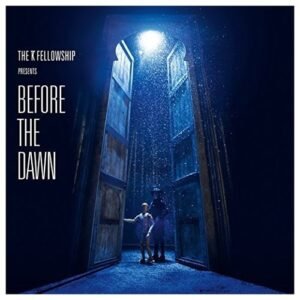
The significance of Before the Dawn lies in the choices Bush made once she finally decided to perform again. She could have assembled a retrospective of celebrated singles, accepted the audience’s gratitude and left her recorded catalogue untouched. Instead, she devoted most of the evening to two long-form works that demanded sustained attention. The decision says more about her artistic priorities than the speed at which the tickets sold.
Completing an Earlier Theatrical Ambition
Bush’s 1979 Tour of Life had already treated a concert as a place for mime, dance and dramatic invention. The 2014 residency did not abandon that impulse; it gave it the resources and technical means to grow. The Ninth Wave, with its shifting realities and inner voices, seemed almost to invite a stage treatment. A Sky of Honey posed a subtler challenge: how to make a passing day and an artist’s changing perception feel like dramatic events. In each case, Bush built theatre from the music’s own imaginative logic rather than merely projecting attractive images behind a band.
That approach also helps explain the unusual set list. No pre-Hounds of Love material was performed. Instead of offering a chronological survey of her career, Bush selected songs that belonged to the world she wanted to create. The omission of early favourites may have disappointed some listeners, but the resulting concert has a shape and identity that a more inclusive greatest-hits programme might have lost.
Reinterpretation Rather Than Preservation
There is a productive connection between Before the Dawn and Bush’s later studio work. Aerial and 50 Words for Snow had already placed increasing trust in extended forms, patience and the grain of her mature voice. The residency brought that sensibility back to earlier material. Songs from The Red Shoes found a new muscularity, while The Ninth Wave gained additional characters and theatrical transitions. A Sky of Honey was not treated as sacred text: “Tawny Moon” changed its course, and the familiar pieces acquired different dramatic functions.
These revisions are not automatically improvements. A spoken scene can make a story clearer on stage and less fluid on record; a new song can deepen a character without becoming a highlight in its own right. But the willingness to take those risks is central to the achievement. Bush was not protecting her catalogue from change. She was testing what it could still do.
The album consequently occupies an unusual position in her discography. It is neither a conventional live greatest-hits collection nor a new studio project, but an alternative realisation of two of her defining musical worlds, framed by performances that reveal how the songs have aged alongside their creator. It preserves a rare public event without allowing rarity alone to become the measure of its value.
Final Verdict: A Live Album Unlike Any Other
Before the Dawn could easily have been judged by the fact of Kate Bush’s return. After 35 years away from the concert stage, simply hearing her sing to an audience again would have carried enormous emotional weight. The achievement of this album is that it gives us far more than that occasion.
The opening set proves that familiar songs can gain fresh urgency without losing their character. The Ninth Wave turns an already audacious studio narrative into a disturbing and often moving theatrical journey. A Sky of Honey moves from delicate observation to rhythmic exhilaration, with “Sunset” and “Nocturn” among the clearest examples of the band’s ability to make Bush’s expansive structures feel alive. And the encore, moving from the unguarded stillness of “Among Angels” to the shared release of “Cloudbusting”, provides the human ending the spectacle needs.
Not every decision translates perfectly to audio. The spoken interludes sometimes depend upon actions we cannot see, and the absence of the visual production leaves an unavoidable gap in the historical record. Nor is every reinterpretation necessarily superior to its studio counterpart. Yet the performances are so assured, the musical architecture so absorbing and the emotional progression so carefully sustained that the album succeeds on its own terms.
A perfect rating should not imply a recording without compromises. Here, it recognises the rare scale of the accomplishment: a live album that is musically compelling, imaginatively structured and unmistakably the work of an artist still prepared to challenge her own achievements. Bush did not return to prove that the past could be recreated. She returned to show that it was not finished.
Rating: 10/10 — A singular live achievement: intimate, adventurous and thrillingly alive, with musical performances powerful enough to stand beyond the spectacle that inspired them.