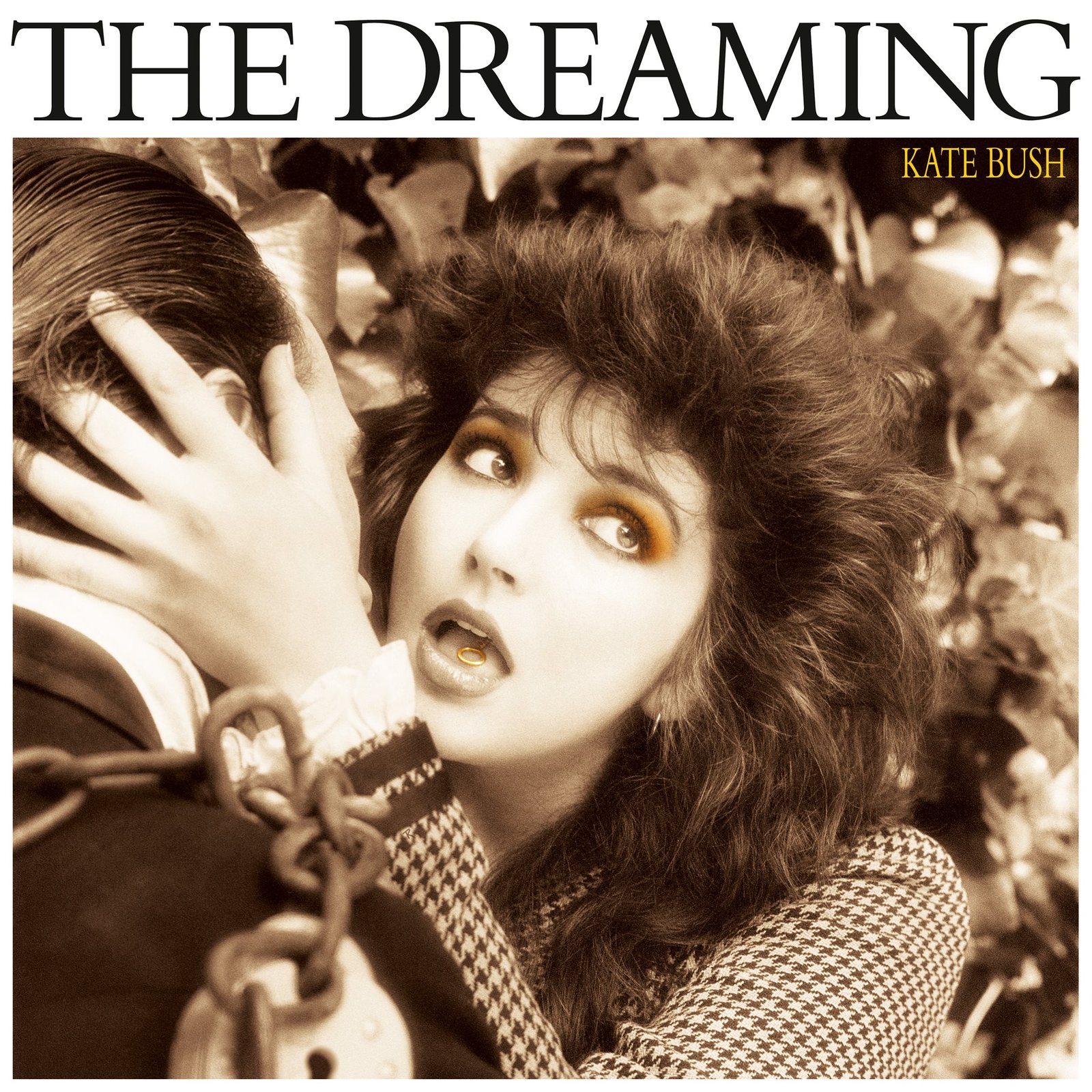
Released on 13 September 1982, Kate Bush’s fourth studio album, The Dreaming, stands as arguably the most experimental and uncompromising record of her career. Following the commercial success of Never for Ever, Bush assumed sole responsibility for producing an album that would take her fascination with unusual sounds, theatrical storytelling and complex musical arrangements to unprecedented extremes.
Across ten compositions, The Dreaming creates a world of fractured rhythms, distorted voices and unsettling narratives. Songs move between psychological terror, political violence, desperate longing and moments of almost surreal humour. Conventional musical structures are frequently disrupted, while Bush’s extraordinary vocal performances transform individual characters into vivid, sometimes frightening presences.
Yet the album’s complexity is never simply an exercise in experimentation. Beneath its dense production lie carefully constructed compositions whose musical choices are inseparable from their emotional purpose. Demanding, unpredictable and occasionally overwhelming, The Dreaming challenges listeners to abandon familiar expectations, rewarding their attention with one of the most extraordinary and distinctive musical experiences in Bush’s catalogue.
The Making of The Dreaming (1982)
Following the success of Never for Ever in 1980, Kate Bush entered a new phase of her career. Her third album had reached number one in the UK and demonstrated how effectively she could combine commercial appeal with increasingly adventurous songwriting. Yet Bush was eager to take her creative involvement further, assuming responsibility not only for writing and performing her music but also for overseeing its production.
The Dreaming became her first entirely self-produced album. It was a significant undertaking for an artist still in the early stages of her recording career, particularly given the complexity of the music she intended to create. Rather than pursuing a straightforward continuation of her previous work, Bush embarked upon a demanding recording process that would push her musical ideas into unfamiliar territory.
Kate Bush Takes Complete Creative Control
Bush’s decision to produce The Dreaming herself marked a turning point in her artistic development. Having worked with Andrew Powell on her first two albums and co-produced Never for Ever with Jon Kelly, she now had the opportunity to oversee every aspect of the recording process according to her own intentions.
Reflecting on the significance of this transition, Bush explained:
“The Dreaming was a huge creative leap forward for me and I became sole producer for the first time.”
Her words capture the importance of an album that represented far more than another step in her musical development. Bush was no longer simply contributing increasingly ambitious ideas to recordings overseen by another producer; she was responsible for translating those ideas into finished compositions, making decisions about arrangements, performances and the overall character of the music.
This independence proved especially important given the unconventional direction she wanted to pursue. Rather than relying upon established approaches to songwriting and production, Bush began treating the recording studio as a creative environment in which compositions could be continually reshaped. Musical ideas were developed through experimentation, with unusual combinations of sounds and performances becoming central to the finished arrangements.
Recording Sessions and the Fairlight CMI
Recording for The Dreaming began in 1980 and continued into 1982, with Bush working across several studios, including Abbey Road. The extended sessions reflected the increasingly elaborate nature of her compositions, many of which required extensive experimentation with instrumentation, vocal arrangements and recorded effects.
One of the earliest recordings to emerge was “Sat in Your Lap”, released as a single in June 1981, more than a year before the album itself. Its frantic percussion, rapidly shifting vocal arrangements and restless musical structure offered an early indication of the direction Bush was pursuing. Although the single reached number 11 on the UK Singles Chart, its unusual construction suggested that her forthcoming album would be considerably less conventional than listeners might have expected.
Central to the recording process was the Fairlight CMI, an early digital sampling instrument that Bush had begun exploring during the making of Never for Ever. On The Dreaming, its possibilities became more deeply integrated into her approach to composition and production.
The instrument allowed recorded sounds to be sampled, manipulated and incorporated into musical arrangements, opening up possibilities that extended beyond conventional instrumentation. For Bush, whose songwriting frequently relied upon vivid characters and imagined environments, this technology offered a powerful means of creating distinctive sonic textures.
However, the album’s experimentation was not confined to electronics. Bush continued to work with accomplished musicians, combining guitars, percussion, traditional instruments and elaborate vocal arrangements with increasingly unconventional recording techniques.
The resulting compositions frequently blurred the distinction between acoustic performance and studio manipulation. Rather than simply decorating established songs with unusual effects, Bush used these techniques to influence their underlying musical character.
An Ambitious and Demanding Creative Process
The making of The Dreaming proved considerably more demanding than Bush’s earlier recording projects. The extended production schedule reflected the time required to develop its intricate arrangements, while her responsibilities as sole producer meant that she was overseeing an unusually broad range of creative and technical decisions.
Songs frequently developed through experimentation rather than following a predetermined structure. Contrasting musical passages, abrupt changes in rhythm and unconventional vocal performances required careful coordination, particularly when multiple instrumental and electronic elements were being combined.
This approach also challenged the practical expectations surrounding the recording of a commercially successful pop album. With Never for Ever having reached the top of the UK charts, there was considerable interest in Bush’s next release. Yet the music emerging from the sessions was increasingly difficult to reconcile with conventional expectations of radio-friendly songwriting.
The lengthy process produced an album whose complexity was inseparable from the methods used to create it. Each recording reflected Bush’s willingness to pursue musical ideas beyond their most immediate or accessible form, even when doing so demanded additional time and experimentation.
By the time The Dreaming was released in September 1982, Bush had established herself not only as an exceptional songwriter and performer but also as a producer capable of realising an extraordinarily ambitious musical vision. The experience would shape her subsequent approach to recording, but the album itself remains perhaps the most extreme expression of her willingness to explore the possibilities of the studio without compromise.
The Dreaming: Sound and Production

Few albums in Kate Bush’s catalogue possess a sonic identity as distinctive or uncompromising as The Dreaming. Its production is dense, unpredictable and frequently unsettling, combining electronic experimentation with acoustic instrumentation, theatrical vocal performances and arrangements that resist conventional musical expectations. Yet beneath the apparent chaos lies an extraordinary degree of precision, with even the strangest sounds contributing to the atmosphere and emotional character of the compositions.
Where Never for Ever had expanded Bush’s musical vocabulary through increasingly sophisticated arrangements and imaginative studio techniques, The Dreaming takes these possibilities considerably further. Instruments are distorted beyond immediate recognition, voices shift between contrasting characters, and rhythms develop in ways that can feel deliberately disorientating. The result is an album that rarely allows the listener to settle into familiar musical territory, even when its underlying melodies remain surprisingly accessible.
Percussion, Rhythm and Unconventional Arrangements
One of the album’s most immediately striking characteristics is its extraordinary use of percussion. Rather than simply providing a rhythmic foundation, drums and other percussive sounds frequently dominate the arrangements, creating a sense of urgency and instability.
The opening track, “Sat in Your Lap”, establishes this approach almost immediately. Its pounding percussion and rapidly shifting rhythms create a frantic atmosphere that mirrors the song’s restless pursuit of knowledge. Bush’s vocals compete with the instrumental arrangement, moving between sharp, urgent declarations and more theatrical passages as the music repeatedly changes direction.
Elsewhere, percussion becomes an essential part of the album’s dramatic storytelling. “Pull Out the Pin” uses an ominous rhythmic foundation to reinforce its atmosphere of danger, while “The Dreaming” incorporates an unusually crowded arrangement of rhythmic sounds and vocal effects that evokes confusion and confrontation.
These compositions demonstrate Bush’s growing interest in rhythm as something more expressive than a means of maintaining momentum. Abrupt accents, contrasting patterns and unexpected interruptions become integral to the emotional experience of the songs.
The album’s arrangements are equally unconventional. Musical passages frequently appear to develop according to dramatic necessity rather than established pop structures, with sudden changes in texture or intensity altering the direction of a composition.
On “Leave It Open”, contrasting vocal passages and shifting instrumental textures create an atmosphere of psychological instability. Meanwhile, “Get Out of My House” builds towards an increasingly confrontational climax, its arrangement becoming more aggressive as the song’s central conflict intensifies.
Although these techniques can initially seem overwhelming, repeated listening reveals how carefully Bush controls the relationship between musical structure and dramatic expression.
The Fairlight CMI and Studio Experimentation
The Fairlight CMI plays an important role in shaping the album’s distinctive sound. Having already explored the instrument’s possibilities on Never for Ever, Bush increasingly incorporated digital sampling into her arrangements, using recorded sounds as material that could be manipulated and transformed.
Rather than employing electronic technology simply to imitate conventional instruments, she embraced its capacity to produce unfamiliar textures. Sounds could be altered in pitch, repeated or combined with acoustic performances, creating arrangements in which the distinction between natural and electronically manipulated material became increasingly difficult to identify.
This approach was particularly effective on an album concerned with unstable identities, imagined environments and psychological conflict. Unusual sonic details frequently suggest something recognisable while remaining sufficiently distorted to create uncertainty.
“The Dreaming” exemplifies this fascination with sound as a means of constructing an environment. Its crowded mixture of percussion, voices and unusual effects creates an atmosphere that feels almost overwhelming, reflecting the conflict and disruption at the centre of its narrative.
However, the album’s technological ambition should not overshadow the importance of Bush’s broader production choices. Its most extraordinary qualities emerge from the interaction between electronic manipulation, live instrumentation and vocal performance rather than from any single piece of equipment.
Kate Bush’s Extraordinary Vocal Performances
Perhaps the album’s most remarkable instrument is Bush’s own voice. Throughout The Dreaming, she explores an astonishing range of vocal textures, abandoning conventional ideas of melodic beauty whenever a composition demands something more unsettling or confrontational.
Her performances frequently move between whispered intimacy, exaggerated theatricality and almost ferocious intensity. Individual songs can contain several contrasting vocal identities, with Bush using changes in register, pronunciation and delivery to suggest different characters or emotional states.
These transformations are not solely the result of studio manipulation. Much of their power comes from Bush’s remarkable physical control over her voice, particularly her ability to move between sharply contrasting styles of singing within a single composition.
On “There Goes a Tenner”, her playful, character-driven delivery brings a darkly comic quality to the unfolding narrative. “Suspended in Gaffa”, by contrast, combines moments of apparent innocence with increasingly desperate expressions of longing, creating an unsettling tension between the song’s melodic accessibility and its emotional intensity.
The recording process further expands these possibilities. Through overdubbing, contrasting vocal layers and the placement of voices within increasingly elaborate arrangements, Bush creates the impression of multiple perspectives occupying the same musical space. At times, individual vocal parts appear to respond to or compete with one another, reinforcing the dramatic conflicts within the songs.
“Leave It Open” demonstrates this particularly effectively, with its contrasting vocal textures contributing to the composition’s fractured psychological atmosphere. The distinction between the performed voice and its treatment within the recording becomes an essential part of the music’s unsettling character.
The closing track, “Get Out of My House”, pushes Bush’s vocal experimentation to its furthest extreme. Her performance becomes increasingly aggressive as the composition progresses, culminating in extraordinary animal-like cries that transform the song’s psychological confrontation into something almost physically threatening.
Yet the album is equally capable of extraordinary tenderness. “All the Love” reveals a more vulnerable dimension to Bush’s singing, its restrained emotional delivery providing a striking contrast to the surrounding intensity.
These performances demonstrate that Bush’s experimentation extends far beyond production technology. Her voice becomes an instrument of transformation, capable of shifting the listener’s understanding of a song through changes in tone, character and emotional perspective.
Melody Within the Experimentation
For all its reputation as an exceptionally challenging album, The Dreaming retains Bush’s instinctive understanding of melody. Beneath its unconventional arrangements, several compositions contain passages of striking accessibility, demonstrating that her experimental ambitions did not require abandoning the qualities that had distinguished her earlier songwriting.
“Suspended in Gaffa” provides perhaps the clearest example. Its memorable, almost playful melodic phrases contrast with the song’s restless rhythmic movement and increasingly elaborate vocal arrangements. The resulting tension is central to its appeal: a composition that can initially sound inviting gradually reveals something far more psychologically complicated.
“There Goes a Tenner” achieves a similarly unusual balance. Its theatrical vocal delivery and darkly comic narrative are supported by melodic passages that remain immediately recognisable, even as the arrangement moves through unexpected changes in emphasis and mood.
Elsewhere, “Night of the Swallow” demonstrates Bush’s ability to construct an emotionally compelling melody within a composition that repeatedly shifts between contrasting musical environments. Its more expansive passages provide moments of release from the tension established elsewhere in the arrangement.
These melodic qualities are particularly important to the album’s effectiveness. Without them, its density and unpredictability might risk becoming exhausting. Instead, Bush frequently gives listeners something recognisable to follow before altering the musical context surrounding it.
This relationship between accessibility and experimentation is one of The Dreaming‘s greatest achievements. Its most memorable passages are not interruptions to the album’s unconventional character but essential components of it, making the stranger moments feel more dramatic by contrast.
Acoustic Instruments and Musical Contrasts
Despite its reputation for electronic experimentation, The Dreaming also draws heavily upon traditional instrumentation. Guitars, piano, strings and a wide variety of percussion instruments contribute to arrangements that frequently combine seemingly incompatible musical styles.
“Night of the Swallow” provides one of the album’s most striking examples. Its incorporation of Irish traditional musicians and instruments, including uilleann pipes and fiddle, creates a dramatic contrast with the song’s more contemporary instrumental passages.
Rather than treating these elements as decorative additions, Bush integrates them into the composition’s dramatic structure. The Irish instrumentation brings a sense of movement and expansiveness that complements the song’s narrative of risk, escape and confrontation.
“Houdini” offers a different kind of contrast, moving between intimate, piano-led passages and sudden eruptions of vocal and instrumental intensity. The changes feel almost cinematic, reflecting the tension between devotion, danger and the possibility of loss.
Such contrasts are essential to the album’s musical identity. Moments of relative simplicity become more affecting because of the dense arrangements surrounding them, while sudden explosions of sound carry greater force when they emerge from quieter passages.
The production achieves its greatest effects through the precise relationship between sound and storytelling. A drum pattern can heighten a sense of pursuit, a change in vocal texture can reveal another side of a character, and a sudden instrumental interruption can make a familiar scene feel threatening.
Even at its busiest, the music is carefully directed. Bush uses the studio not merely to make these songs sound unusual, but to give their emotional and dramatic ideas a physical presence.
Lyrics and Themes: Fear, Power and Transformation

Beneath the extraordinary production of The Dreaming lies some of Kate Bush’s most ambitious and psychologically complex songwriting. Across its ten compositions, she explores subjects ranging from political violence and colonial exploitation to spiritual longing, emotional isolation and the desperate struggle for personal autonomy. These narratives are often unsettling, placing listeners inside situations where familiar distinctions between innocence and guilt, freedom and captivity, or reality and imagination become increasingly difficult to maintain.
Although the album does not follow a single overarching storyline, its songs share a fascination with individuals confronting forces beyond their control. Characters are threatened, manipulated, imprisoned or consumed by desires they cannot fully understand. Elsewhere, seemingly ordinary situations become distorted through fear, obsession or conflicting perceptions.
Bush’s approach to storytelling is particularly remarkable because she rarely presents these subjects from a comfortable distance. Instead, she frequently adopts the voices of those experiencing the events, using dramatic shifts in perspective to make their emotions immediate and sometimes deeply uncomfortable.
The Pursuit of Knowledge and Unattainable Desire
The album opens with “Sat in Your Lap”, a frantic exploration of humanity’s desire for knowledge and the frustration that accompanies its pursuit. Rather than presenting enlightenment as a straightforward achievement, Bush depicts understanding as something perpetually elusive, with every apparent discovery revealing further uncertainty.
The song’s restless language reflects a mind caught between intellectual ambition and dissatisfaction. Knowledge becomes both an object of desire and a source of anxiety, suggesting that the pursuit of complete understanding may be fundamentally impossible.
This tension reappears in “Suspended in Gaffa”, although here Bush approaches it through more spiritual and imaginative imagery. The song describes an experience of briefly encountering something extraordinary before finding oneself unable to reach it again.
Its central image of being suspended in gaffa tape conveys an almost absurd sense of restriction. The narrator has glimpsed something transformation but remains trapped by ordinary limitations, unable to bridge the distance between revelation and fulfilment.
What makes the song particularly affecting is the contrast between its seemingly innocent language and the intensity of its underlying longing. Bush captures the frustration of recognising that something greater might exist while remaining uncertain whether it can ever be fully understood or attained.
Together, these compositions establish one of the album’s recurring concerns: the painful distance between human aspiration and the limits of experience.
Violence, Colonialism and the Abuse of Power
Some of The Dreaming‘s most challenging narratives explore violence and the unequal relationships between those who exercise power and those forced to endure its consequences.
“Pull Out the Pin” approaches the Vietnam War from the perspective of a Vietnamese fighter confronting an American soldier. Rather than adopting the familiar viewpoint of Western military narratives, Bush attempts to place the listener inside the experiences and motivations of someone defending their homeland against an invading force.
The song’s imagery is intensely physical, emphasising fear, survival and the psychological transformation brought about by conflict. Its narrator is neither a detached observer nor a conventional heroic figure, but someone whose understanding of violence has been shaped by the immediate necessity of survival.
Bush’s vocal performance reinforces the disturbing intimacy of this perspective, particularly as the song moves between moments of apparent restraint and sudden aggression. The result is a portrayal of warfare that resists easy emotional reassurance.
The title track addresses a different form of violence: the exploitation of Aboriginal Australians and their land. Through imagery associated with mining, destruction and displacement, “The Dreaming” confronts the consequences of colonial expansion and the treatment of Indigenous communities.
The song’s title invokes the Dreaming, a concept associated with Aboriginal Australian spiritual traditions, ancestral relationships and understandings of land. Its use is significant because the destruction depicted in the lyrics extends beyond the physical exploitation of natural resources, suggesting a wider disregard for the cultural and spiritual relationships that connect Indigenous peoples to their territories.
Bush’s condemnation of exploitation gives the composition a clear political dimension. The imagery of industrial intrusion and environmental destruction presents colonial expansion as a process that threatens both communities and the landscapes with which their identities are intertwined.
However, the song’s musical and lyrical presentation also raises questions about cultural representation. Bush approaches these experiences as a British artist interpreting histories and traditions outside her own cultural background. Its use of Aboriginal-associated sounds and imagery therefore deserves consideration alongside its explicitly sympathetic political intentions.
The distinction matters because criticism of colonial exploitation does not automatically make an artistic representation authoritative or culturally unproblematic. The song can be understood as a sincere attempt to draw attention to injustice while still inviting scrutiny of how Indigenous identities and traditions are presented within a Western popular-music recording.
This complexity makes “The Dreaming” particularly interesting within Bush’s catalogue. Its ambitious subject matter demonstrates her willingness to address difficult political questions, while its methods reveal the challenges involved when artists interpret experiences beyond their own cultural position.
Together, “Pull Out the Pin” and “The Dreaming” demonstrate how Bush uses character-driven songwriting to examine power, conflict and the human consequences of violence, even as the perspectives she adopts invite different forms of critical consideration.
Identity, Vulnerability and Emotional Isolation
Elsewhere, The Dreaming turns towards more intimate forms of psychological conflict, exploring the difficulty of expressing emotion and the fear of exposing one’s vulnerabilities.
“All the Love” is among the album’s most emotionally direct compositions. Its reflections on affection, absence and the failure to communicate feelings suggest how easily meaningful connections can remain unspoken until the opportunity to express them has disappeared.
The song’s emotional force comes partly from its restraint. Rather than relying upon dramatic confrontation, Bush explores the quieter devastation of regret, particularly the realisation that affection may exist without ever being adequately communicated.
“Leave It Open” approaches vulnerability from a more ambiguous perspective. Its fragmented language and contrasting vocal identities suggest an internal struggle between openness and self-protection.
The song resists a straightforward interpretation, with its repeated references to opening and closing creating uncertainty about whether exposure represents liberation or danger. This ambiguity becomes central to its psychological tension: the desire to reveal oneself exists alongside an equally powerful instinct to remain concealed.
A related concern emerges in “Get Out of My House”, although here the struggle for personal autonomy becomes far more confrontational. Inspired in part by the atmosphere of Stephen King’s The Shining, the song transforms a house into an expression of psychological boundaries and defensive isolation.
Its narrator refuses entry to an unwanted presence, repeatedly asserting control over a space that appears to represent both physical security and emotional identity. As the confrontation intensifies, the distinction between the house and the individual occupying it becomes increasingly unstable.
The transformations that occur throughout the song suggest a desperate attempt to escape intrusion through whatever means remain available. Its disturbing conclusion leaves the listener confronting the possibility that absolute self-protection can become a form of imprisonment.
Deception, Risk and the Struggle for Freedom
Several compositions explore characters who attempt to escape restrictions through deception, dangerous decisions or acts of defiance.
“There Goes a Tenner” tells the story of a robbery that takes an unexpected turn, combining criminal intrigue with a distinctly theatrical sense of humour. Beneath its playful presentation lies a fascination with the instability of carefully constructed plans and the consequences of decisions made under pressure.
The song’s shifts in perspective and mood give the narrative an almost cinematic quality, suggesting how quickly confidence can collapse into confusion when events escape an individual’s control.
“Night of the Swallow” presents a more emotionally charged conflict, focusing on a man involved in a dangerous smuggling operation and a woman who attempts to prevent him from leaving.
Their confrontation reveals competing understandings of freedom and responsibility. For the man, undertaking the journey becomes an assertion of independence and personal identity; for the woman, his departure represents an unnecessary risk that threatens their relationship.
Bush avoids reducing either perspective to a simple moral position. The emotional intensity emerges from the characters’ inability to reconcile their desires, with love becoming entangled in questions of pride, control and the need for autonomy.
“Houdini” explores a different relationship between danger and devotion, drawing upon the legendary escapologist Harry Houdini and his wife, Bess. Rather than concentrating solely on the spectacle of his performances, Bush approaches the story through the emotional relationship between the couple, transforming a celebrated figure’s extraordinary abilities into a meditation on trust, mortality and the limits of human control.
The song’s imagery draws upon the key that Bess is said to have passed to Houdini through a kiss during his escape performances. Within the composition, this intimate gesture becomes a powerful symbol of their relationship, suggesting how public displays of danger and illusion depended upon a deeply personal bond.
The significance of the key extends beyond its practical role in an escape. It represents trust, secrecy and the possibility of liberation, bringing together the physical restraints of Houdini’s performances and the emotional connection between husband and wife.
The song also draws upon Bess’s attempts to contact Houdini following his death in 1926. Their reported arrangement to communicate through a secret message if such contact proved possible gives the narrative a more haunting dimension, as the extraordinary escapologist confronts the one boundary from which no physical escape can be guaranteed.
Bush uses this contrast to extraordinary effect. Houdini’s public identity depends upon his apparent ability to overcome impossible restrictions, yet death exposes the limits of even his remarkable skills. For Bess, the hope of receiving a message becomes an expression of devotion and an inability to accept the finality of their separation.
The result is one of the album’s most affecting narratives. What initially appears to be a song about a famous performer gradually reveals itself as an exploration of grief, faith and the desperate human desire to maintain a connection with someone who has died.
Through these contrasting stories, Bush repeatedly returns to the question of how much control individuals possess over their circumstances, their relationships and, finally, their own lives.
Dreams, Transformation and the Unconscious
Although The Dreaming is not a conventional concept album, its recurring imagery of confinement, transformation and unstable identity creates a compelling thematic connection between its songs.
Characters repeatedly encounter situations in which their understanding of themselves or the surrounding world becomes unreliable. Knowledge proves elusive, relationships become sites of conflict, and familiar environments take on threatening or surreal qualities.
The album’s dreamlike character emerges not simply from references to dreams or the unconscious, but from the way its narratives follow emotional and psychological associations rather than predictable logic. Ordinary circumstances can become nightmarish, while apparently fantastical situations reveal recognisable human anxieties.
This is particularly apparent in the contrast between “Suspended in Gaffa” and “Get Out of My House”. One depicts a longing to transcend ordinary limitations; the other portrays an individual retreating so completely into self-protection that transformation becomes an act of resistance. Both are concerned with the boundaries of the self, but approach them from opposing emotional directions.
Such connections give The Dreaming a thematic richness that extends beyond its individual narratives. Bush does not offer simple resolutions to the conflicts she explores. Instead, she allows uncertainty, contradiction and discomfort to remain essential parts of the experience.
The strength of Bush’s writing lies in the closeness she creates between the listener and her characters. Whether a narrator is driven by fear, devotion, regret or the desire for freedom, the emotional stakes remain clear even when the circumstances are surreal. These songs invite us into unfamiliar perspectives without insisting that every contradiction can be resolved.
Cohesion and Flow: Inside The Dreaming

At first glance, The Dreaming might appear to be one of Kate Bush’s least cohesive albums. Its ten compositions move between radically different musical styles, narrative perspectives and emotional extremes, frequently abandoning familiar structures in favour of abrupt transitions and dramatic contrasts. Yet when experienced as a complete work, these apparent contradictions become central to the album’s identity.
Rather than pursuing the stylistic consistency associated with more conventional pop records, Bush establishes unity through atmosphere, recurring themes and an unmistakable approach to production. The songs may inhabit different worlds, but they share a fascination with psychological conflict, transformation and the limits of human control.
The result is an album whose cohesion emerges not from predictability but from the strength of its artistic vision. Each composition introduces a different perspective, while the sequence gradually reveals connections between ideas that initially appear unrelated.
An Uncompromising Opening
The decision to begin with “Sat in Your Lap” immediately establishes the album’s confrontational character. Its relentless percussion, urgent vocals and rapidly shifting arrangement provide little opportunity for listeners to settle into familiar territory.
As an opening statement, the song is particularly effective because its musical restlessness reflects its lyrical concerns. The pursuit of knowledge becomes an exhausting, almost frantic experience, introducing the album’s wider fascination with uncertainty and the limits of human understanding.
The transition into “There Goes a Tenner” initially feels unexpected. Its theatrical storytelling and darkly comic presentation offer a striking contrast to the opening track’s intensity, yet the change reveals an important aspect of Bush’s approach to sequencing.
Rather than sustaining a single emotional atmosphere, she introduces a different kind of tension. The exaggerated confidence of the robbery narrative gradually gives way to confusion and anxiety, replacing intellectual frustration with the consequences of human miscalculation.
“Pull Out the Pin” then takes the album into considerably darker territory. Its depiction of the Vietnam War strips away much of the preceding song’s humour, confronting listeners with an atmosphere of danger and psychological violence.
These opening three compositions establish the record’s extraordinary range while revealing a subtle progression. Each explores individuals attempting to control circumstances that become increasingly difficult to understand or manage, moving from abstract frustration through criminal uncertainty to the immediate threat of physical conflict.
Contrasts Between Darkness and Release
The middle of The Dreaming demonstrates Bush’s remarkable ability to use contrasting musical environments without sacrificing the album’s underlying atmosphere.
“Suspended in Gaffa” introduces a comparatively accessible melodic character following the oppressive intensity of “Pull Out the Pin”. Its playful rhythms and memorable vocal phrases provide a welcome change in texture, yet the song’s exploration of spiritual frustration ensures that the emotional tension remains.
This contrast is particularly effective because Bush does not offer straightforward reassurance. Beneath the music’s apparent lightness lies another form of confinement, with the narrator unable to recover an experience of extraordinary revelation.
“Leave It Open” subsequently returns the album to more troubling psychological territory. Its fragmented vocal arrangements and ambiguous language create a sense of internal division, while the production becomes increasingly difficult to separate from the song’s emotional turmoil.
As the final track on the original vinyl album’s first side, it provides a suitably disorientating conclusion to the opening sequence. Rather than resolving the tensions established by the preceding songs, it leaves the listener confronting uncertainty about identity, vulnerability and the consequences of exposing oneself to the outside world.
The title track opens the second side with another dramatic change in perspective. “The Dreaming” shifts the focus towards colonial exploitation and environmental destruction, replacing the internal struggle of “Leave It Open” with a broader confrontation involving land, power and cultural displacement.
Its dense, rhythmically driven arrangement nevertheless maintains the album’s sense of urgency. The transition may be abrupt in subject matter, but the intensity of the musical presentation creates a connection between the two compositions.
This ability to move between contrasting subjects while retaining a recognisable emotional character is one of the album’s most impressive achievements.
The Emotional Weight of the Second Side
As the second side progresses, The Dreaming begins to place greater emphasis on relationships, vulnerability and the consequences of emotional isolation.
“Night of the Swallow” follows the title track with a dramatic shift in musical texture. Its combination of intimate passages and expansive Irish instrumentation creates moments of release from the preceding composition’s crowded arrangement.
However, the narrative remains rooted in disagreement. The confrontation between the two central characters introduces questions of independence, responsibility and the competing demands of love and personal freedom.
“All the Love” subsequently provides one of the album’s most restrained and emotionally vulnerable moments. After the elaborate arrangements and dramatic confrontations that dominate much of the record, its reflections on unexpressed affection and regret feel particularly affecting.
Its placement is crucial. By allowing the music to become more intimate, Bush creates space for a different kind of emotional intensity, demonstrating that the album’s power does not depend entirely upon overwhelming production or theatrical performance.
The transition into “Houdini” develops these concerns through a more dramatic narrative. Where “All the Love” examines the failure to communicate affection before it is too late, “Houdini” explores the desperate hope that emotional connection might survive death itself.
This thematic relationship gives the two compositions an especially powerful connection. Both are concerned with absence, devotion and the limitations of human communication, although they approach these ideas through markedly different musical and narrative methods.
Together, they establish an emotional foundation for the album’s extraordinary conclusion.
Get Out of My House: An Unforgettable Conclusion
Few closing tracks in Bush’s catalogue are as disturbing or uncompromising as “Get Out of My House”. Following the vulnerability and longing of “All the Love” and “Houdini”, the final composition transforms the desire for emotional connection into an aggressive refusal of intrusion.
Its placement creates a striking psychological contrast. Where the preceding songs explore the pain of separation and the impossibility of maintaining certain relationships, “Get Out of My House” depicts an individual determined to prevent any unwanted presence from crossing their boundaries.
The music becomes increasingly confrontational, with pounding rhythms, contrasting voices and extraordinary vocal transformations driving the composition towards its ferocious climax.
As the narrator attempts to resist intrusion through increasingly extreme forms of transformation, the album’s recurring concerns with identity, control and self-preservation reach their most intense expression.
The ending offers little conventional resolution. Instead of returning to familiar melodic territory or providing a reassuring conclusion, Bush leaves listeners immersed in a confrontation that seems to resist any possibility of compromise.
It is an extraordinarily effective closing statement precisely because it refuses to soften the album’s uncompromising character. After nine songs concerned with the difficulty of understanding, controlling or escaping human experience, The Dreaming concludes with a desperate assertion of personal autonomy that feels both powerful and deeply disturbing.
A Cohesive Album Through Contradiction
What unifies The Dreaming is not a consistent musical style or a continuous narrative, but Bush’s ability to connect radically different ideas through the album’s sequencing and recurring concerns.
The album’s sequencing repeatedly alternates between confrontation and vulnerability, complexity and relative simplicity, external struggles and private emotional turmoil. These contrasts prevent its dense production from becoming monotonous while giving individual compositions greater impact.
Its recurring themes also create connections that extend beyond the immediate relationships between neighbouring tracks. The pursuit of unattainable knowledge in “Sat in Your Lap” finds an emotional counterpart in the spiritual longing of “Suspended in Gaffa”, while the defensive isolation of “Get Out of My House” offers a disturbing contrast to the desire for connection explored in “All the Love” and “Houdini”.
Such relationships become increasingly apparent through repeated listening, allowing the album to reveal a deeper sense of unity beneath its apparently fragmented surface.
Nevertheless, The Dreaming makes considerable demands upon its audience. Its abrupt transitions, intricate arrangements and constantly changing perspectives can initially feel exhausting, particularly for listeners approaching it with expectations shaped by Bush’s more accessible recordings.
Yet these challenges are inseparable from the album’s artistic achievement. Bush does not attempt to make every composition comfortable or immediately understandable. Instead, she constructs a listening experience that reflects the contradictions and uncertainties explored within the songs themselves.
The Dreaming succeeds as a complete album because its unpredictability feels purposeful. Each musical departure contributes to a larger emotional journey, while the carefully considered sequence ensures that moments of tenderness, humour and melodic accessibility remain as important as its most explosive passages.
The record asks to be heard as a journey rather than a set of isolated experiments. Its sharp changes of mood become meaningful in sequence, and the contrasts between its songs give the album a coherence that a more uniform approach might never have achieved.
Standout Tracks and Moments from The Dreaming
Selecting standout tracks from The Dreaming is unusually difficult. Unlike albums whose strongest compositions immediately distinguish themselves through memorable singles or conventional melodic appeal, Kate Bush’s fourth record derives much of its power from the extraordinary individuality of all ten songs. Each introduces its own musical language, narrative perspective and emotional atmosphere, making the album’s most challenging passages every bit as important as its more immediately accessible moments.
Nevertheless, several compositions demonstrate Bush’s artistic ambition with particular force. Whether through astonishing vocal performances, intricate arrangements or the transformation of unsettling narratives into compelling musical experiences, these recordings capture the qualities that make The Dreaming such a remarkable achievement.
Sat in Your Lap: A Relentless Opening Statement
Few songs could prepare listeners for The Dreaming more effectively than “Sat in Your Lap”. Released as a single in June 1981, it offered an early indication of the radical direction Bush was pursuing, abandoning much of the elegance associated with her earlier recordings in favour of pounding percussion, fractured rhythms and an almost overwhelming sense of urgency.
The composition seems perpetually in motion. Percussive accents interrupt the musical flow, vocal passages shift unexpectedly, and moments of apparent melodic clarity are quickly overtaken by another burst of activity. Bush’s performance is equally restless, moving between urgent declarations, theatrical exaggeration and moments of near-desperation.
Yet the song’s apparent chaos is inseparable from its subject matter. Its exploration of humanity’s endless pursuit of knowledge finds a perfect musical expression in an arrangement that never seems satisfied with remaining in one place. The listener experiences something approaching the frustration described by the lyrics, constantly searching for a moment of certainty that the music refuses to provide.
What makes “Sat in Your Lap” particularly impressive is that its complexity never diminishes its impact. The song remains exhilarating and strangely infectious, demonstrating Bush’s ability to create memorable music through arrangements that challenge almost every conventional expectation.
As both an individual composition and the album’s opening statement, it is an extraordinary achievement.
Suspended in Gaffa: Beauty Beneath the Complexity
If “Sat in Your Lap” represents the album at its most confrontational, “Suspended in Gaffa” reveals Bush’s ability to conceal profound emotional uncertainty beneath an apparently playful musical surface.
Its distinctive rhythmic movement and memorable melodic phrases give the song an immediate appeal that contrasts with some of the album’s more abrasive compositions. Bush’s vocal performance initially possesses an almost childlike quality, yet this apparent innocence gradually gives way to an increasingly desperate expression of longing.
The arrangement is remarkably intricate. Contrasting vocal layers, unusual rhythmic accents and subtle changes in musical emphasis create a sense of movement that remains unpredictable without sacrificing the song’s melodic character.
Particularly affecting is the way Bush communicates the frustration of briefly encountering something extraordinary and then finding it impossible to reach again. The music seems to offer moments of revelation before withdrawing them, reflecting the emotional distance between aspiration and fulfilment.
This relationship between musical accessibility and psychological complexity makes “Suspended in Gaffa” one of the album’s most rewarding compositions. Its melodic charm invites repeated listening, while its deeper emotional implications become increasingly apparent over time.
It is a remarkable demonstration of Bush’s ability to make unconventional songwriting feel both immediate and endlessly fascinating.
Night of the Swallow: An Extraordinary Musical Journey
“Night of the Swallow” stands among the most musically ambitious compositions on The Dreaming, combining intimate theatrical storytelling with expansive passages of traditional Irish instrumentation.
The song begins with a comparatively restrained atmosphere, allowing Bush’s expressive vocals to establish the emotional conflict between its central characters. As the arrangement develops, however, the music opens into a far broader landscape, with uilleann pipes and fiddle introducing a sense of movement and dramatic release.
These transitions are among the album’s most exhilarating moments. Rather than merely alternating between different musical styles, Bush creates a composition in which contrasting instrumental traditions seem to embody the competing desires of the characters.
The more intimate passages emphasise the emotional consequences of the proposed journey, while the expansive instrumental sections suggest the irresistible attraction of freedom, danger and escape.
Bush’s vocal performance is particularly impressive, capturing both vulnerability and determination without reducing the narrative to a simple confrontation between right and wrong. The song’s dramatic tension emerges from the recognition that its characters possess incompatible desires, even as their emotional connection remains evident.
What makes “Night of the Swallow” exceptional is the confidence with which Bush integrates these contrasting elements. The traditional instrumentation feels essential to the composition rather than an ornamental addition, while the shifts in musical intensity give the narrative a genuinely cinematic quality.
It is one of the clearest demonstrations of her ability to construct an elaborate musical world around a deeply human conflict.
Houdini: Love, Illusion and Mortality
Among the album’s most emotionally affecting compositions, “Houdini” transforms the relationship between Harry Houdini and his wife, Bess, into an extraordinary exploration of devotion, danger and the possibility of communication beyond death.
The song’s opening possesses an intimate, almost fragile quality. Bush’s restrained vocal delivery creates a sense of closeness, while the piano-led arrangement allows the emotional significance of the narrative to emerge gradually.
This apparent delicacy makes the composition’s sudden eruptions of intensity all the more startling. Bush’s voice shifts into increasingly raw and forceful expressions, transforming the music from a private reflection into something approaching a desperate confrontation with mortality.
These contrasts are central to the song’s effectiveness. The tenderness of the relationship exists alongside the physical danger associated with Houdini’s performances, while the possibility of escape becomes increasingly complicated by the inevitability of death.
The key motif provides a particularly powerful connection between the personal and the theatrical. An object associated with Houdini’s escape performances becomes a symbol of intimacy and trust, suggesting that even his most spectacular public achievements were connected to a private emotional relationship.
As the narrative moves towards the hope of communication beyond death, the song becomes increasingly haunting. Bush captures the painful contradiction between the desire to believe that love can overcome separation and the uncertainty surrounding that possibility.
“Houdini” is remarkable because its experimental arrangement never overwhelms its emotional centre. Every dramatic change in vocal intensity or instrumental texture contributes to the portrayal of devotion and grief, making it one of the album’s most powerful achievements.
The Dreaming: An Overwhelming Sonic Landscape
The album’s title track is among its most sonically adventurous compositions, using an extraordinary combination of percussion, vocal effects and unconventional instrumentation to construct a dense and frequently disorientating musical environment.
From its opening moments, the arrangement feels crowded and unstable. Rhythmic patterns collide, unusual sounds emerge from the background, and Bush’s vocal performance moves through a succession of contrasting textures.
The effect is deliberately overwhelming. Rather than allowing the listener to observe the song’s subject matter from a comfortable distance, the production creates an atmosphere of disruption that reinforces its depiction of colonial exploitation and environmental destruction.
Particularly striking is the way the composition combines recognisable musical elements with sounds that resist easy identification. This approach gives the recording an almost surreal character, making the familiar seem strange and the unfamiliar unexpectedly immediate.
The song’s political subject matter also distinguishes it within the album. Its condemnation of the exploitation of Aboriginal Australians and their land demonstrates Bush’s willingness to confront issues beyond the personal and psychological narratives that dominate much of her work.
At the same time, its use of Aboriginal-associated cultural imagery and sounds warrants critical consideration, particularly in relation to the distinction between expressing solidarity and representing another community’s traditions.
Musically, however, the title track remains an extraordinary example of Bush’s production ambitions. Its crowded arrangement, unusual rhythmic construction and confrontational vocal performances create an experience unlike almost anything else in her catalogue.
It is not necessarily the album’s most immediately accessible composition, but its refusal to compromise is central to its artistic identity.
Get Out of My House: The Album’s Terrifying Climax
If one composition captures the full extent of The Dreaming‘s uncompromising imagination, it is “Get Out of My House”. As the album’s closing track, it represents the culmination of Bush’s experiments with theatrical storytelling, unconventional vocal performance and psychologically charged production.
The song establishes an atmosphere of threat almost immediately. Its insistent rhythmic foundation and sharply delivered vocals create the impression of an individual defending a space against an unwanted presence.
As the composition progresses, the confrontation becomes increasingly extreme. Bush’s performance shifts between contrasting vocal identities, while the arrangement grows more aggressive and unpredictable.
The transformations within the narrative are reflected directly in the music. Voices become stranger, rhythms more forceful, and the distinction between human expression and animalistic sound begins to collapse.
The climactic donkey-like cries are among the most extraordinary moments in Bush’s entire discography. What might appear absurd in isolation becomes genuinely disturbing within the context of the composition, expressing a desperate refusal to surrender control.
Yet the song’s power extends beyond its theatrical intensity. Beneath its nightmarish imagery lies a recognisable psychological concern: the fear of intrusion and the lengths to which an individual might go to protect their emotional boundaries.
Bush transforms this anxiety into a musical experience of almost overwhelming physical force. The listener is not merely told about the narrator’s desperation but made to feel its escalating intensity through the arrangement itself.
As the album’s conclusion, “Get Out of My House” is astonishingly effective. It offers neither reassurance nor conventional resolution, instead leaving the listener confronted by the extraordinary consequences of a creative imagination operating without restraint.
Other Unforgettable Moments
Although these six compositions provide particularly striking examples of the album’s achievements, several moments elsewhere on The Dreaming deserve equal recognition.
The theatrical characterisation of “There Goes a Tenner” demonstrates Bush’s remarkable ability to combine dark humour with intricate musical storytelling. Its exaggerated vocal delivery and shifting atmosphere transform an apparently straightforward criminal narrative into something far more unusual.
“Pull Out the Pin” contains some of the album’s most chilling contrasts, particularly the tension between its restrained passages and sudden expressions of aggression. David Gilmour’s backing vocals add another distinctive texture to an already extraordinary arrangement.
“Leave It Open” offers one of the album’s most fascinating examples of vocal experimentation. Throughout the composition, Bush combines contrasting voices and abrupt changes in delivery to create an atmosphere of internal division, as though different aspects of the same personality are struggling to make themselves heard.
Its closing refrain is especially remarkable. Through the use of reversed recording, Bush transforms a vocal phrase into something initially difficult to decipher. The words “We let the weirdness in” emerge when the passage is heard backwards, turning the recording process itself into an extension of the song’s fascination with concealed identities and the consequences of opening oneself to unfamiliar experiences.
This technique is far more than a studio novelty. By making the listener work to uncover a hidden message, Bush creates a musical parallel to the song’s psychological concerns. Meaning becomes something concealed beneath the surface, reinforcing the tension between revelation and secrecy that runs throughout the composition.
Meanwhile, “All the Love” offers one of the record’s most affecting moments of emotional restraint. The inclusion of recorded telephone messages creates a haunting contrast between everyday communication and the song’s reflections on absence, regret and feelings left unexpressed.
These details demonstrate how thoroughly Bush considered the expressive possibilities of every recording. Even relatively brief passages can carry enormous emotional or dramatic significance, contributing to an album whose richness extends far beyond its most immediately memorable songs.
These less immediately celebrated tracks are not secondary to the six discussed above. Each contains a detail—a vocal inflection, an unexpected shift in mood or an unusual recorded sound—that changes how its story is experienced. Taken together, the ten songs offer no obvious weak link, and the standout moments are distributed across the album rather than confined to its best-known compositions.
Artistic Innovation and Legacy of The Dreaming

Few albums in Kate Bush’s discography illustrate the tension between commercial expectations and artistic independence as dramatically as The Dreaming. Released in September 1982, her fourth studio album represented an extraordinary departure from the musical conventions that had helped establish her success. Its dense production, unconventional arrangements and frequently disturbing narratives challenged listeners accustomed to the more accessible qualities of her earlier recordings.
Yet the album’s importance cannot be measured solely through its initial reception. Over subsequent decades, The Dreaming has come to occupy a distinctive position within Bush’s catalogue, admired for the audacity of its experimentation and the extraordinary confidence with which she pursued her artistic intentions.
More than simply marking her emergence as a sole producer, it demonstrated how thoroughly Bush could transform the possibilities of popular music when given the freedom to develop her ideas without compromise.
Commercial Reception and Critical Response in 1982
The release of The Dreaming presented a considerable challenge to the expectations surrounding Bush’s career. Her previous album, Never for Ever, had reached number one in the UK, while singles such as “Babooshka” had demonstrated her ability to achieve substantial commercial success without abandoning her distinctive musical personality.
The Dreaming, however, offered few concessions to conventional pop accessibility. Its unusual rhythms, elaborate vocal performances and unpredictable structures made it a more demanding proposition for both radio audiences and casual listeners.
The album entered the UK Albums Chart at number three in September 1982. Although this represented a strong commercial debut, it fell short of the chart-topping achievement of Never for Ever and did not sustain the same level of mainstream momentum.
The performance of its singles provides a more revealing picture of the challenges surrounding its release.
“Sat in Your Lap” had appeared in June 1981, more than a year before the album, reaching number 11 on the UK Singles Chart. Its success demonstrated that Bush could still attract a substantial audience with unusually constructed music, even as its frantic rhythms and unconventional vocal arrangements suggested a significant departure from her earlier recordings.
The singles released closer to the album’s arrival encountered greater difficulties. “The Dreaming” reached number 48 in the UK, while “There Goes a Tenner” failed to enter the Top 75, becoming one of Bush’s least commercially successful singles of the period.
These contrasting results are important because they demonstrate that the album’s commercial reception was not uniformly unsuccessful. Rather, The Dreaming attracted considerable initial interest while proving less capable of sustaining the widespread popularity associated with Bush’s preceding work.
Critical responses were similarly divided. Some reviewers recognised the extraordinary ambition and originality of the recordings, while others found the album excessively complicated, inaccessible or overwhelmed by its own experimentation.
Such reactions are understandable given the record’s refusal to follow familiar musical expectations. Its compositions often require sustained attention, with melodies, rhythmic patterns and narrative details emerging gradually rather than revealing themselves immediately.
However, the album’s initial divisiveness also highlights the scale of Bush’s achievement. Rather than adapting her music to meet established expectations, she pursued a creative direction that challenged the boundaries of her existing audience.
Redefining the Possibilities of Art Pop
One of The Dreaming‘s most important achievements lies in its extraordinary expansion of what an art-pop album could contain.
Bush had demonstrated an unconventional approach to songwriting from the beginning of her career, with “Wuthering Heights” establishing her fascination with theatrical characterisation, literary storytelling and unusual vocal expression. Subsequent albums developed these qualities through increasingly elaborate arrangements and ambitious subject matter.
The Dreaming did not introduce these characteristics so much as push them towards their furthest extremes.
Conventional distinctions between melody, rhythm, atmosphere and dramatic performance become increasingly difficult to maintain. Percussion can dominate an arrangement as forcefully as the lead vocal, while electronically manipulated sounds frequently contribute as much to a composition’s meaning as its lyrics.
The album also challenges expectations surrounding the human voice. Bush repeatedly abandons conventional singing techniques in favour of exaggerated characterisations, harsh cries, whispered passages and complex layers of contrasting vocal identities.
These decisions are not simply expressions of technical experimentation. They expand the emotional and dramatic possibilities of the music, allowing Bush to communicate experiences that might lose their intensity within more traditional arrangements.
Equally significant is her willingness to combine seemingly incompatible musical traditions. The Irish instrumentation of “Night of the Swallow”, the electronic experimentation of “Leave It Open” and the ferocious rhythmic construction of “Get Out of My House” demonstrate an approach to composition in which stylistic boundaries become increasingly irrelevant.
Rather than allowing these influences to exist as separate experiments, Bush integrates them into a recognisable musical identity. The resulting album is extraordinarily varied, yet unmistakably her own.
Kate Bush’s Significance as a Producer
Bush’s decision to produce The Dreaming herself was particularly significant within an industry in which women were frequently recognised as performers and songwriters while receiving considerably less acknowledgement for their technical and production work.
Although female producers were certainly not absent from popular music, Bush’s assumption of complete production responsibility represented an important assertion of artistic authority.
Her involvement extended beyond selecting arrangements or approving finished recordings. She was responsible for shaping the musical environments in which her compositions existed, overseeing the relationship between instrumental performances, recorded effects and increasingly elaborate vocal arrangements.
This level of control was essential to the album’s character. Its most unconventional moments depended upon a willingness to experiment with sounds and structures that might have been rejected or simplified within a more commercially cautious production process.
The Fairlight CMI became an important part of this approach, but Bush’s achievement cannot be reduced to her adoption of emerging technology. Her originality lay in recognising how recording techniques could serve dramatic and emotional purposes, transforming the studio into an instrument of composition.
In this respect, The Dreaming established a working philosophy that would remain central to her subsequent recordings. Bush had demonstrated that she could realise an ambitious musical vision through her own production decisions, rather than depending upon another producer to interpret her intentions.
The significance of this independence extends beyond her personal career. Her work provides an important example of a female artist exercising creative and technical authority over recordings of exceptional complexity.
Influence on Experimental and Alternative Pop
The significance of The Dreaming also extends beyond Bush’s own recordings. Its approach to production, vocal performance and musical structure anticipated several developments that would become increasingly prominent within experimental and alternative pop.
One of its most forward-looking qualities is the treatment of recorded sound as an essential component of composition. Rather than simply capturing instrumental performances, Bush constructs arrangements from an elaborate combination of acoustic instruments, electronic manipulation, vocal overdubs and unusual recorded effects.
This approach shares important characteristics with later forms of sample-based and experimental pop, in which the identity of a sound can become less important than its rhythmic, atmospheric or emotional possibilities.
Bush’s vocal experimentation is similarly significant. Throughout the album, she treats her voice not merely as a means of delivering melody and lyrics, but as a flexible instrument capable of adopting radically different textures and identities.
The contrasting performances of “Leave It Open”, “Houdini” and “Get Out of My House” demonstrate how vocal expression can become central to a composition’s dramatic structure. This willingness to move beyond conventional singing anticipated approaches that would become increasingly familiar within adventurous alternative and electronic music.
The album’s disregard for rigid genre boundaries also feels particularly forward-looking. Bush combines electronic technology, theatrical storytelling, rock instrumentation and traditional musical influences without treating any one style as the foundation to which the others must conform.
Such an approach reflects an understanding of popular music as an open creative environment, where seemingly incompatible influences can be brought together through a sufficiently distinctive artistic vision.
However, it is important to distinguish these broader musical parallels from claims of direct influence. The fact that later artists explored comparable techniques does not necessarily mean they were consciously drawing upon The Dreaming.
Its historical importance is better understood through both its own originality and the ways in which its methods resonate with subsequent developments in experimental pop.
What remains especially impressive is how complete Bush’s vision already sounds. The album does not resemble a tentative exploration of unfamiliar possibilities, but a fully realised work whose unusual techniques are essential to its musical and emotional identity.
From Divisive Release to Celebrated Masterpiece
Although The Dreaming initially divided opinion, its reputation has strengthened considerably over time. The qualities that once made it difficult to categorise have increasingly become central to its appeal.
Its intricate arrangements reward repeated listening, revealing details that can be difficult to appreciate during an initial encounter. Unusual vocal passages gradually acquire greater emotional significance, while apparently chaotic musical structures reveal a remarkable degree of underlying precision.
The album has consequently become a particular favourite among listeners drawn to Bush’s more adventurous work. Its refusal to compromise offers an alternative to the polished accessibility of some of her later recordings, demonstrating the extraordinary possibilities of her imagination when pursued without conventional restraint.
Its growing reputation also reflects wider changes in the way experimental popular music is appreciated. Techniques involving sampling, unconventional vocal manipulation and the integration of contrasting musical styles have become more familiar to contemporary audiences, providing additional contexts through which to understand Bush’s achievements.
Nevertheless, the album retains an extraordinary capacity to surprise. Its most unusual moments remain distinctive even when compared with subsequent developments in electronic and experimental music.
Rather than sounding like an early attempt at techniques that later artists would perfect, The Dreaming possesses an individuality that resists straightforward comparison. Its artistic identity emerges from Bush’s particular combination of theatrical imagination, emotional intensity and uncompromising production.
The Dreaming’s Place in Kate Bush’s Career
Within Bush’s discography, The Dreaming occupies a fascinating position between the increasingly ambitious arrangements of Never for Ever and the more carefully balanced experimentation of Hounds of Love.
Its significance, however, should not be reduced to its role in preparing the way for the latter album.
While Hounds of Love would demonstrate Bush’s extraordinary ability to combine experimental composition with commercial accessibility, The Dreaming represents a different kind of achievement. It explores the possibilities of her musical imagination without the same concern for maintaining an immediately approachable surface.
This distinction makes the two albums complementary rather than placing one above the other as a more complete expression of her abilities.
Indeed, there is a compelling argument that The Dreaming remains Bush’s most experimental record. Even the extraordinary conceptual ambition of The Ninth Wave rarely approaches the sustained unpredictability of its predecessor, whose ten compositions continually challenge expectations of rhythm, melody, narrative and vocal performance.
Yet describing the album as her most experimental should not imply that its importance lies solely in its extremity. What makes The Dreaming exceptional is the consistency with which Bush transforms unconventional ideas into emotionally compelling music.
Its songs are not merely demonstrations of technical ingenuity or artistic independence. They are carefully constructed compositions whose unusual characteristics serve recognisable dramatic and psychological purposes.
More than four decades after its release, The Dreaming remains one of the most extraordinary achievements in Bush’s catalogue. It captures an artist exercising an exceptional degree of creative freedom, pursuing ideas that frequently resist easy interpretation while retaining an unmistakable emotional identity.
Its legacy lies not simply in the influence of its recording techniques or its contribution to Bush’s subsequent development, but in the enduring power of the album itself: a work whose imagination, intensity and uncompromising originality remain astonishing.
Closing Thoughts: Kate Bush’s The Dreaming (1982)

The Dreaming is an extraordinary achievement, not simply because of how far Kate Bush pushes the boundaries of popular music, but because of the remarkable conviction with which she brings her artistic vision to life. Across ten compositions, she constructs a musical world that is unpredictable, emotionally intense and almost entirely resistant to conventional expectations.
What makes the album particularly remarkable is that its experimentation never feels like an end in itself. Beneath the elaborate production, unconventional rhythms and extraordinary vocal performances lie compositions of considerable melodic sophistication and emotional depth. Bush’s most audacious musical decisions are inseparable from the stories she tells, allowing each song to develop an identity that could scarcely exist in any other form.
There is also something exhilarating about the album’s refusal to compromise. Where many artists might have softened their more challenging ideas to preserve commercial accessibility, Bush embraces their possibilities with astonishing confidence. The result is a record that demands patience and attention, yet offers rewards that continue to emerge long after its initial impact.
Its difficulty should not be mistaken for a lack of accessibility in every respect. Songs such as “Suspended in Gaffa” and “Night of the Swallow” contain some of Bush’s most captivating melodies, while the emotional vulnerability of “All the Love” and “Houdini” demonstrates that her experimental ambitions never displaced her ability to communicate deeply human experiences.
Equally, the album’s most confrontational compositions possess an expressive power that more conventional arrangements could scarcely accommodate. The relentless urgency of “Sat in Your Lap”, the oppressive atmosphere of “Pull Out the Pin” and the terrifying transformations of “Get Out of My House” reveal an artist willing to explore the full dramatic potential of recorded sound.
Across the record, the changes in scale are just as important as the changes in style. A comparatively intimate passage can make the next eruption of sound feel more severe, while a moment of humour offers relief without dispelling the tension. That balance helps sustain the album’s impact across all ten tracks.
Within her wider discography, The Dreaming occupies a position unlike any other record. It builds upon the originality that had characterised her music from the beginning, yet takes those instincts into more radical territory than she had previously explored. Although Hounds of Love would subsequently achieve a celebrated balance between commercial appeal and artistic ambition, The Dreaming remains arguably the purest expression of Bush’s willingness to follow her imagination wherever it might lead.
More than four decades after its release, the album continues to reveal new details and interpretations. Familiar passages acquire different meanings through repeated listening, while moments that initially appear bewildering gradually become essential to the record’s emotional character. Its richness lies partly in this capacity to change with the listener, offering an experience that feels different depending upon which musical or lyrical details attract attention. Rather than exhausting its possibilities, repeated encounters only deepen an appreciation of the extraordinary care and imagination behind its creation.
The Dreaming captures Kate Bush at her most fearless and creatively liberated. Its greatest triumph is the way ten seemingly disparate compositions emerge as a singular artistic statement: demanding but never hollow, theatrical yet deeply felt, and unlike anything else in her catalogue. It deserves its place among the defining achievements of experimental pop.
Official Tune Tempest Rating: 10/10
The Dreaming earns a perfect 10/10 for its extraordinary combination of musical innovation, ambitious storytelling and artistic independence. Across ten distinctive compositions, Kate Bush demonstrates an exceptional command of songwriting and production, turning unconventional rhythms, layered vocal performances and imaginative arrangements into music of genuine emotional depth. Its more challenging passages are balanced by memorable melodies, dark humour and moments of vulnerability, ensuring that experimentation never comes at the expense of substance.
Although the album demands patience and rewards repeated listening, every track contributes something essential to the experience. Arguably Bush’s most experimental recording, The Dreaming is also one of her most complete: a fearless, richly detailed masterpiece whose creative risks remain inseparable from its lasting power.