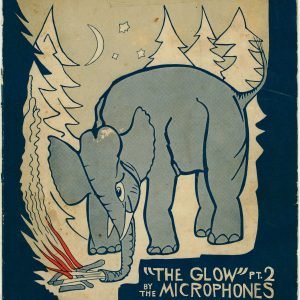
By the time The Glow Pt. 2 arrived in 2001, Phil Elverum—recording under the name The Microphones—had already carved out a unique space within the lo-fi and indie folk scenes. His earlier work, particularly It Was Hot, We Stayed in the Water, hinted at his fascination with natural imagery, tape hiss, and emotional vulnerability. But The Glow Pt. 2 didn’t just build on those foundations—it cracked them open and expanded in every direction.
This album was not just a continuation but a transformation. While previous efforts toyed with abstraction and homemade textures, this project embraced those elements on a much larger scale. Elverum blended jagged noise, delicate acoustic passages, ambient drift, and distorted drums into something that felt as unstable as it was alive. The result was an album that didn’t just tell a story—it created a world.
In the early 2000s, much of indie music was leaning toward cleaner production or leaning hard into traditional songwriting. The Glow Pt. 2 rejected both approaches. It thrived on contradiction—moving from chaos to calm, intimacy to distance, often within the same track. Its place in the music landscape was singular. Few albums sounded like it then, and even fewer have managed to echo its scope and honesty since.
Sonic Exploration
From its very first notes, The Glow Pt. 2 makes it clear that polish is not the priority. Instead, it leans into a raw, lo-fi aesthetic that gives the album its haunting intimacy. The production feels deliberately unrefined. There are moments of distortion, abrupt transitions, and background noise that might seem accidental on a different record, but here they feel intentional—integral to the experience. This gritty approach doesn’t detract from the music; it enhances it. The imperfections mirror the emotional instability at the heart of the album, making the listening experience feel deeply personal and sometimes even intrusive, like stumbling upon someone else’s audio diary.
Musical Arrangements
The arrangements are equally unpredictable and compelling. Songs often start in one place and end in another, shifting tempo, mood, or instrumentation without warning. Acoustic guitars drift in and out. Crashing drums appear suddenly, then fade. Loops and ambient textures blur into field recordings, tape hiss, or silence. Vocals are layered and treated with varying effects—sometimes close and dry, other times distant and drenched in echo. This dynamic treatment gives the record an unstable but strangely cohesive feel, as if the entire album is breathing.
Innovation shines in the way Elverum constructs songs less like pop compositions and more like sonic collages. Tracks such as “I Want Wind to Blow” and “The Moon” show how he uses space and repetition to shape emotional tension. Some arrangements are sparse and open, while others are dense and claustrophobic. Instruments like organ, distorted bass, and clattering percussion are used not just for melody or rhythm, but for texture and atmosphere.
Genre Elements
In terms of genre, the album sits loosely within indie rock and folk, but it doesn’t stay there for long. It touches on ambient, noise rock, drone, and even post-rock sensibilities. There are flashes of black metal’s intensity in some of the distorted passages, and moments of quiet introspection that recall early bedroom pop. What makes the album stand out is how naturally these influences are blended. It doesn’t feel like a genre experiment—it feels like one unified sound that happens to draw from many sources.
Lyrical Analysis

The lyrics of The Glow Pt. 2 carry the same fragmented, dreamlike quality as its music. Rather than telling a linear story, the album unfolds through a series of emotional snapshots—moments of reflection, confusion, desire, and heartbreak. At its core, the record is a meditation on the breakdown of a relationship, but it treats that subject less like a diary entry and more like a myth being quietly retold through the lens of nature and memory.
Recurring themes include impermanence, isolation, longing, and the search for meaning in the face of loss. Natural imagery plays a major role throughout—wind, water, fire, the moon, fog, and forests all make frequent appearances. These aren’t just decorative. They serve as metaphors for shifting emotional states, as if the internal world of the narrator is mirrored by the changing seasons and weather.
Lyrical Depth
Lyrically, Elverum avoids directness. His words often feel like thoughts caught mid-formation, abstract and open-ended. Some verses are vivid and poetic, while others seem almost mundane—but even the plainest lines carry weight when set against the backdrop of such emotionally raw music. This balance between clarity and obscurity makes the lyrics deeply engaging. Listeners are invited to interpret, to fill in gaps, and to project their own experiences onto the songs.
The emotional impact of the lyrics is significant. They don’t aim for grand declarations or cathartic release. Instead, they linger in moments of quiet confusion, in the spaces between feelings. This subtlety makes the sorrow more relatable. It’s not dramatic heartbreak—it’s the ache of memories resurfacing when you didn’t ask for them, the discomfort of realizing you’re still haunted by someone who’s gone. These feelings are hard to articulate, but the album captures them in a way that feels both deeply personal and strangely universal.
Cohesion and Flow
Despite its rough edges and experimental nature, The Glow Pt. 2 maintains a surprising sense of cohesion. It doesn’t follow a clear, linear storyline, but it does carry an emotional arc that unfolds across its long runtime. The transitions between tracks often feel organic—sometimes seamless, sometimes intentionally abrupt—reflecting the unpredictability of grief, reflection, and emotional change.
The album begins with “I Want Wind to Blow,” a slow, meditative opening that sets the tone for what follows. From there, the songs spiral outward, moving through waves of noise and calm, intimacy and distance. There’s a deliberate push and pull in the track progression. Moments of clarity—like the sparse and soft “Instrumental” or “I Felt My Size”—are surrounded by more chaotic, layered compositions like “The Moon” or “Samurai Sword.” These contrasts give the album its shape. It never settles into one mood for too long, yet it avoids feeling scattered or directionless.
Even with these shifts, there’s a consistent emotional thread. Every track feels like a different expression of the same internal conflict. Whether it’s a quiet reflection or a storm of distortion, each piece contributes to the same overarching atmosphere of uncertainty and longing. This emotional consistency helps tie the record together, even when the sounds themselves vary widely.
Thematic Consistency
Thematically, the album stays anchored in its exploration of nature, memory, and emotional dislocation. The same images and phrases return across songs, creating a sense of continuity. The repetition of certain motifs—wind, light, cold, shadows—not only strengthens the cohesion but reinforces the sense that these songs are all part of the same emotional landscape.
There are moments that may feel jarring on a first listen, particularly for those expecting a more traditional structure. Some songs end abruptly or dissolve into noise, while others feel like sketches rather than fully formed compositions. But in the context of the whole album, these choices feel purposeful. They reflect the fractured emotional state being portrayed and make the smoother, quieter passages feel all the more impactful.
Standout Tracks and Moments
While The Glow Pt. 2 is best experienced as a whole, several tracks rise to the surface for their emotional clarity, inventive structure, or sonic daring. These songs capture the essence of the album and reveal Phil Elverum’s ability to distill complex emotions into raw, affecting moments.
I Want Wind to Blow
“I Want Wind to Blow” opens the album with a slow-building sense of anticipation. Its repetition and gradual layering create a quiet storm of sound that perfectly sets the tone. The simplicity of the lyrics—longing for change, for movement—mirrors the slowly escalating instrumentation. It’s not just an introduction; it’s a mission statement.
The Moon
“The Moon” is perhaps the most iconic track on the album, and for good reason. Its looping melody, paired with fragmented yet poignant lyrics, conveys both distance and desire.
Map
“Map” stands out for its haunting use of quiet. The near-whispered vocals and minimal instrumentation make it one of the album’s most intimate moments. There’s a vulnerability here that feels completely unfiltered, like listening in on a private thought that was never meant to be shared.
Memorable Moments
One of the album’s most memorable moments arrives not with a lyric, but with a sound: the sudden, crashing drums in “The Glow Pt. 2” (the title track) hit like a wave, breaking through the softer tones that precede it. It’s both startling and exhilarating, a moment that shows how the album thrives on contrast. Similarly, the brief but beautiful “My Warm Blood” closes the album in near silence, stretching a quiet drone into something deeply emotional. That restraint—choosing to end not with resolution, but with ambiguity—sums up the record’s refusal to offer easy answers.
Artistic Contribution and Innovation
At the time of its release, The Glow Pt. 2 didn’t make a splash in the mainstream, but within independent music circles, it quickly became a landmark. It arrived at a moment when lo-fi and DIY aesthetics were being reclaimed by a new generation of artists, yet it stood apart by refusing to follow a clear template. Instead of offering a clean, easily digestible version of indie folk, Phil Elverum delivered something more fractured, immersive, and emotionally raw. The album’s influence has only grown with time, often cited as a foundational text for later experimental folk and lo-fi artists.
Within its genre, The Glow Pt. 2 straddles a curious space. It leans into indie rock, ambient, folk, and noise without fully belonging to any of them. This genre-fluid approach was ahead of its time. While many artists were content to color within established lines, Elverum blurred the boundaries completely. He didn’t just combine sounds—he created an entire sonic environment, where production quirks and tape hiss weren’t flaws but features, contributing to the emotional and thematic layers of the work.
Innovation
The album’s innovation lies not in any single technique, but in how those techniques come together. Its use of lo-fi recording methods to create vast emotional depth feels paradoxical but deeply effective. Elverum takes the limitations of analog tape—dropouts, distortion, inconsistencies—and turns them into expressive tools. His dynamic range is also unusually wide for this kind of music. Moments of soft, hushed introspection crash suddenly into explosive bursts of sound, creating a sense of unpredictability that mirrors the turbulence of the lyrics.
Lyrically and thematically, the album is also innovative. While many breakup albums lean on confessional storytelling, The Glow Pt. 2 abstracts emotional pain into elements of the natural world. The use of repeated motifs and non-linear storytelling gives the album a circular, meditative structure rather than a clear narrative arc. In doing so, it opened the door for more introspective and unconventional songwriting in the indie scene.
Moreover, Elverum’s willingness to make an album that feels deliberately unfinished in places—where songs cut off suddenly or drift without resolution—was a bold move in an era that still favored more polished releases. That decision helped redefine what emotional honesty could sound like in recorded music. It wasn’t about perfection, but presence.
Closing Thoughts
The Glow Pt. 2 is not an album that seeks to please. It doesn’t offer instant gratification or easy answers. Its songs are messy, its production is unpolished, and its lyrics are often elusive. But these choices aren’t shortcomings—they are what make the album feel alive. Phil Elverum’s willingness to embrace imperfection results in a record that captures something rare in music: emotional truth in all its contradictions.
Among its many strengths is the way it builds an immersive world from minimal resources. The raw, lo-fi textures never feel like a compromise. Instead, they reflect the vulnerability and instability that sit at the heart of the album. The layered arrangements, shifting dynamics, and deeply personal (yet cryptic) lyrics create a listening experience that is both intimate and expansive. It’s a record that invites you to sit with discomfort, to reflect, and to find meaning in the unresolved.
That said, the album’s strengths may also be seen as barriers for some listeners. Its lack of conventional structure, lo-fi sound, and abstract lyricism require patience. It’s not background music. It asks for attention, and not everyone will be in the mood to give it. But for those willing to enter its world, the reward is a connection that feels deeply personal and strangely profound.
In terms of its place in Phil Elverum’s career, The Glow Pt. 2 is a turning point—a bold statement that helped shape the rest of his musical journey. It captures an artist fully immersed in process, using music not just as a form of expression, but as a way of understanding the self and the world.
Official Rating: 10/10
This rating isn’t about technical perfection. It’s about artistic impact. The Glow Pt. 2 is a singular achievement—an album that expanded the boundaries of indie folk, redefined what lo-fi could sound like, and left an emotional imprint that still resonates more than two decades later. Its flaws are part of its power. Few records feel this intimate, this strange, and this honest. For that reason, it deserves nothing less than a perfect score.