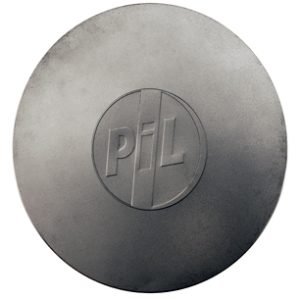
In 1979, Public Image Ltd didn’t just release a new album. They dropped a metal object into the music world. Metal Box didn’t come in a sleeve or gatefold. Instead, it arrived in a round, brushed steel film canister. It looked more like something you’d find in a storage vault than in a record shop.
The design was cold, industrial, and completely at odds with the flashy artwork of the time. It stood out immediately. Fans had to twist the lid off to get to the three 12-inch records inside, often struggling to avoid scratching them. It was awkward, bold, and unforgettable. And it signaled that PiL had no interest in playing by the usual rules.
The Tin Can: Industrial Anti-Design
The Metal Box packaging is exactly what the name suggests. It’s a metal tin, modeled after a 16mm film canister. Roughly 12 inches in diameter, with a plain, brushed steel finish, it carried no artwork, no text—just a cold, mechanical shell holding three records inside.
This wasn’t just a design choice. It was a statement. Public Image Ltd wanted to break away from the polished, commercial look of most album covers. The can’s industrial feel matched the band’s stripped-down, abrasive sound. It looked more like a piece of factory equipment than a music product.
Opening it was part of the experience, for better or worse. The lid was tight and stubborn. The records were stacked on top of each other without sleeves, making them easy to scratch. It was impractical, even frustrating. But that was the point. PiL wasn’t aiming for convenience. They were pushing a message: this music isn’t here to please you.
Who Came Up With It?
The idea for the Metal Box canister came from designer Dennis Morris, who worked closely with John Lydon on the project. Both wanted something that would set the release apart—not just on sound, but on sight and feel too.
For Lydon, the packaging was another way to reject the music industry’s glossy traditions. He saw album sleeves as marketing tools, not art. The metal tin stripped that away. It gave no hint of what was inside, forcing listeners to approach the music with no expectations.
Morris backed that vision. He viewed the can as a blend of art and provocation. It was a clear break from the past and a middle finger to the norm. Was it a gimmick? Maybe. But it was also a statement. The kind you could feel in your hands.
Production Nightmares
Making the Metal Box was no simple task. The custom metal tins were expensive to produce and didn’t follow any standard packaging rules. Pressing three 12-inch records and stacking them without sleeves inside a tight can created problems fast. Many records warped. Others got scratched just from being removed.
The initial run was limited, partly due to cost and partly because of how hard it was to get everything right. Distributors weren’t thrilled. Some shops found the cans hard to stock on shelves, and a few even refused to carry them.
But while the design annoyed retailers, it fascinated fans. The Metal Box gained a cult status almost instantly. Its flaws only added to its myth. It wasn’t meant to be convenient—it was meant to be remembered.
Symbolism and Subversion
The Metal Box doesn’t just house the music—it mirrors it. The tin feels cold, heavy, and stripped of decoration. Just like the sound inside. PiL’s second album is full of sharp edges and empty spaces. It’s post-punk at its most mechanical, with dub-influenced basslines and fractured rhythms. The packaging reflects that mood perfectly.
This wasn’t just clever design. It was a challenge to the whole idea of what an album could be. Where most records used cover art to sell an image or identity, Metal Box offered none. No band photos. No text. No pitch to the buyer. Just steel.
It flipped the rules of music marketing. Instead of drawing people in, it dared them to open it. It refused to make things easy. And in doing so, it pushed back against the growing commercial gloss that was creeping into punk and pop.
Legacy: Influence and Imitation
The Metal Box set a new standard for what album packaging could be. It showed that a record sleeve didn’t have to follow the rules. Over the years, artists across genres have drawn from its bold approach—releasing albums in cans, boxes, or other non-traditional formats. Few matched the raw industrial feel of PiL’s original, but many tried.
In vinyl collector circles, the Metal Box became a prized item. Early pressings are rare and often go for high prices, especially if the tin and records are in good shape. Reissues have kept the design alive, with some staying true to the original can and others using simpler packaging.
Still, nothing touches the impact of that first release. It wasn’t just a record. It was a statement piece—part sculpture, part sabotage. And it continues to echo in how artists think about the physical side of music.
More Than a Gimmick
Metal Box wasn’t just an album in a can. It was a complete idea—art, music, and product fused into one. It rejected the polished image-making of the music industry and replaced it with something cold, raw, and hard to ignore.
As a visual statement, it captured everything PiL stood for at the time: anti-mainstream, anti-commercial, and fully committed to breaking the mold. It didn’t ask for attention. It demanded it. And decades later, it still stands as one of the boldest packaging choices in music history.