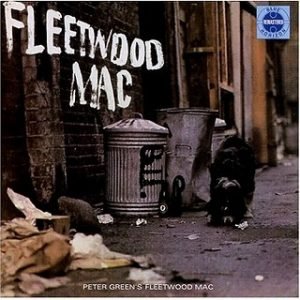
Released in 1968, Peter Green’s Fleetwood Mac marked the official debut of a band that would later become one of rock’s most commercially successful acts. At this point, however, Fleetwood Mac was a very different beast. With blues guitarist Peter Green at the helm, the band carved out its identity not through radio-ready hits or polished pop production, but through a raw, unfiltered devotion to British blues.
Coming off his stint with John Mayall’s Bluesbreakers, where he had the unenviable task of replacing Eric Clapton, Green sought to form a group that would channel the emotional weight and technical brilliance of traditional American blues. Alongside drummer Mick Fleetwood and bassist John McVie, who both followed him from the Bluesbreakers, Green crafted an album that aimed to be both a homage to blues legends and a canvas for his own emerging voice.
This debut doesn’t try to reinvent the genre. Instead, it immerses itself in it. The album leans heavily on covers and blues standards, reflecting a respect for the roots rather than a desire to break from them. Yet within this framework, Green’s playing and songwriting begin to hint at something more distinct. His goal, it seems, was not innovation but immersion — to inhabit the spirit of the blues as sincerely as possible.
Sonic Exploration

The production on Peter Green’s Fleetwood Mac is unvarnished and straightforward, a choice that fits the album’s deep blues roots. Recorded in just a few days at CBS Studios in London, the sound is intentionally rough around the edges. There’s little studio gloss here. The guitars have a dry, biting tone, the drums are upfront but not overpowering, and the vocals carry a natural, room-like quality. It’s a live-in-the-room feel that mirrors the immediacy of the band’s club performances.
This lo-fi approach works well in conveying the grit and soul of traditional blues. There’s an honesty to the recording that gives it charm, especially when Peter Green leans into the emotional weight of a guitar solo or Jeremy Spencer wails through a slide part. But this same rawness can also be limiting. At times, the mix feels flat, with little dynamic range to lift certain tracks above others. The production does its job, but it rarely elevates the material.
Musical Arrangements
Musically, the arrangements are tight but minimal. The trio format — guitar, bass, and drums — is occasionally augmented by piano or second guitar, but there’s a sense of restraint throughout. Green’s lead guitar work is the clear focal point, often taking extended solos that walk the line between technical precision and emotional expression. Spencer, meanwhile, handles much of the slide guitar duties and contributes a few lead vocals, offering contrast but also inconsistency in tone.
Vocally, the album is solid if not spectacular. Green’s voice is understated, almost humble, which works in tracks where emotion trumps theatrics. Spencer’s delivery is more animated, but sometimes veers into caricature, especially on his Elmore James-style numbers.
In terms of genre, this is British blues through and through. There’s no attempt here to cross into psychedelic rock, jazz fusion, or folk — genres that were blossoming in parallel scenes. Instead, the album sticks closely to electric blues and boogie-woogie traditions. While that dedication gives the record cohesion, it also narrows its appeal. There’s little experimentation, and for listeners outside the blues circuit, the songs may start to blend together.
Lyrical Analysis

Lyrically, Peter Green’s Fleetwood Mac stays rooted in the traditions of the blues. The themes are familiar: heartbreak, longing, betrayal, and restlessness. Most of the songs stick to personal narratives or emotional snapshots, echoing the classic blues formula without much deviation. There are no grand metaphors or experimental wordplay here — just straight talk about pain, love, and regret.
One of the album’s recurring motifs is the feeling of being wronged or left behind. Tracks like “My Heart Beat Like a Hammer” and “I Loved Another Woman” present variations on the classic story of romantic despair. In these songs, Green’s lyrics are plainspoken and sincere, but they rarely offer deeper insight beyond the surface emotion. It’s not that the words lack authenticity — they clearly come from a place of real feeling — but they don’t stretch far in terms of poetic range.
Lyrical Depth
Jeremy Spencer’s lyrical contributions, particularly on the Elmore James-styled numbers, often border on imitation rather than innovation. His songs tend to stick closely to blues tropes, with lines about women, whisky, and woe that feel lifted from older records rather than drawn from personal experience. While this gives the album a sense of stylistic continuity, it also highlights a lack of lyrical diversity.
That said, there are moments where the lyrics carry real weight. “Looking for Somebody” uses repetition and a slow, hypnotic delivery to create a sense of quiet desperation. The words may be simple, but their delivery adds depth. Similarly, “Long Grey Mare” captures a biting tone of frustration and defiance in just a few compact verses.
Cohesion and Flow

As a collection of songs, Peter Green’s Fleetwood Mac holds together more by mood than by narrative. There is no overarching story or emotional arc guiding the listener from start to finish. Instead, the album relies on a steady adherence to its chosen style — electric blues — to create a sense of unity. This consistency is both a strength and a limitation.
Track Progression
From the opening track, “My Heart Beat Like a Hammer,” the album establishes a raw and direct tone. The songs that follow mostly stick to this blueprint. The transitions between tracks feel smooth enough, largely because the arrangements and tempos are similar. But this also leads to a certain predictability. Without much variation in rhythm, instrumentation, or subject matter, the album can begin to feel repetitive by the halfway mark.
There are small attempts to break the pattern. “Looking for Somebody” slows the pace and brings a slightly darker, more atmospheric tone. “I Loved Another Woman” introduces a touch of melancholy that contrasts with the more upbeat blues shuffles. Yet these moments are scattered rather than woven into a broader structure. There’s no clear build-up or climax to the album — each track functions more like a standalone performance than a chapter in a larger journey.
Thematic Consistency
Thematic consistency is strong. Almost every song revolves around personal struggle, lost love, or inner turmoil. The band’s dedication to the blues tradition ensures that the emotional tone remains grounded and sincere. However, this thematic focus can also make the listening experience feel narrow. There’s little in the way of surprise, contrast, or development across the record.
Standout Tracks and Moments
While Peter Green’s Fleetwood Mac often plays it safe within its stylistic boundaries, there are a few tracks and moments that rise above the rest, offering glimpses of the emotional depth and technical skill that the band would later be known for.
Looking for Somebody
One clear standout is “Looking for Somebody.” Its moody, slower tempo sets it apart from the more typical blues shuffles that dominate the record. The track leans into atmosphere, with a haunting vocal echo and a stripped-back arrangement that allows Peter Green’s guitar work to breathe. The song’s refrain, built around the simple line “I’m looking for somebody,” captures a quiet sense of isolation that’s more subtle than much of the album’s overt emotional tone.
I Loved Another Woman
“I Loved Another Woman” is another highlight. Its mournful melody and understated delivery show Green’s ability to tap into a softer, more introspective side of the blues. Unlike some of the louder, flashier tracks, this one lingers because of its restraint. The clean, melancholic guitar lines give it an emotional edge that feels genuine rather than performative.
Long Grey Mare
“Long Grey Mare” provides a moment of levity with its upbeat swing and catchy chorus. While not as emotionally deep as some other songs, its tight arrangement and confident energy make it one of the more replayable tracks. The band locks into a solid groove here, and Spencer’s slide guitar adds a playful, infectious character.
The World Keep on Turning
A memorable moment comes in “The World Keep on Turning,” one of the album’s few acoustic tracks. This song offers a rare shift in texture, and Green’s solo performance brings a personal, almost confessional quality to the recording. His voice sounds more exposed here, and the simplicity of the acoustic guitar creates a pause in the album’s otherwise electric pace.
Artistic Contribution and Innovation

In the broader landscape of late 1960s music, Peter Green’s Fleetwood Mac stands as a solid, if conservative, entry into the British blues boom. It doesn’t aim to disrupt the genre or challenge expectations, but rather to affirm a deep respect for the American blues tradition. At a time when many British acts were bending the blues into psychedelic or progressive shapes, Fleetwood Mac took a more purist route.
This decision gave the band a certain credibility among blues aficionados, and Peter Green’s reputation as a guitarist only grew as a result. His playing throughout the album showcases taste and control rather than flamboyance. Where others leaned into extended solos and flashy effects, Green favored phrasing and tone. That subtlety, while perhaps easy to overlook, set him apart from his peers.
Innovation
In terms of innovation, the album doesn’t offer many bold moves. Most of the songs stick closely to blues structures, with predictable progressions and lyrical themes. The production avoids studio trickery, and the band’s arrangements rarely stray far from the basics. But there is value in this restraint. By focusing on authenticity and emotional delivery, the album helped set a standard for blues revivalism in Britain — not as a stepping stone to something else, but as a worthy end in itself.
Where the album does quietly innovate is in its mood. Songs like “Looking for Somebody” and “I Loved Another Woman” introduce a more introspective, almost meditative take on the blues. These tracks suggest that Green was already thinking beyond traditional forms, even if the album as a whole didn’t fully reflect that evolution yet.
Closing Thoughts

Peter Green’s Fleetwood Mac is an album rooted in tradition, and it wears that identity with pride. Its strengths lie in its sincerity, its tight musicianship, and Peter Green’s emerging voice as both a guitarist and bandleader. Tracks like “Looking for Somebody” and “I Loved Another Woman” show a thoughtful touch, while the band’s dedication to the blues gives the album a clear sense of purpose.
However, that same dedication also becomes its limitation. The record often plays it too safe, sticking closely to genre conventions without pushing into new or unexpected territory. The production, while fitting for the style, can feel flat over the course of the album, and the lyrics, though emotionally honest, rarely dig beneath the surface. For listeners unfamiliar with blues or seeking variety, the album might feel repetitive or lacking in dynamism.
In the context of Fleetwood Mac’s later evolution, this debut stands as a very specific document — the foundation of a band still finding its voice. It doesn’t hint at the global stardom or stylistic shifts to come, but it does capture the essence of a moment when British blues was having its say.
Official Rating: 6/10
This score reflects the album’s solid craftsmanship and emotional authenticity, balanced against its lack of risk and limited range. It’s a respectable debut, especially for blues purists, but not one that leaves a lasting impression beyond its genre confines. As a piece of Peter Green’s legacy, it matters. As a standalone listen, it’s competent but not essential.