By the end of the 1970s, Pink Floyd had become one of the world’s most successful rock bands, yet the distance between their extraordinary fame and the personal lives of the musicians was becoming increasingly difficult to ignore. Following the bitter social commentary of Animals (1977), the band turned towards something even more ambitious: a double album that transformed childhood trauma, alienation and emotional isolation into an unsettling psychological narrative.
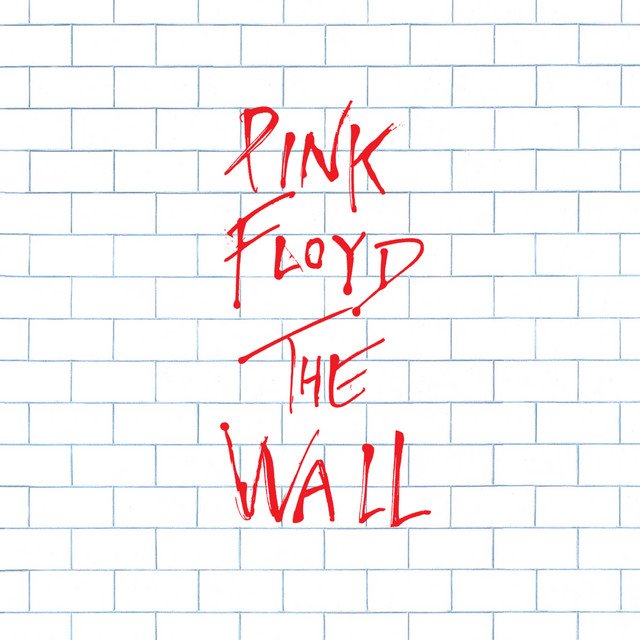
Released on 30 November 1979, The Wall tells the story of Pink, a troubled rock star who gradually withdraws from the world behind a metaphorical barrier constructed from the painful experiences of his life. Drawing partly upon Roger Waters’ personal history, the album explores the consequences of war, authoritarian education, damaged relationships and the destructive pressures of fame. As Pink becomes increasingly isolated, his attempts to protect himself from suffering begin to threaten his remaining connection with reality.
Musically, The Wall represents a significant departure from Pink Floyd’s earlier work. Rather than relying predominantly on extended instrumental compositions, the band combine concise rock songs, intimate acoustic passages, orchestral arrangements and theatrical interludes into a continuous narrative. David Gilmour’s expressive guitar playing provides some of the album’s most extraordinary moments, while Waters’ increasingly dramatic songwriting gives the music an intensely personal character.
Yet beneath its elaborate production and unforgettable songs lies a deeply uncomfortable question: when someone builds emotional barriers to protect themselves from the world, at what point does that protection become a prison?
The Wall is both an extraordinary musical achievement and a disturbing examination of the human desire to escape suffering. Its greatest power lies not simply in the scale of its ambition, but in the way Pink Floyd transform one man’s psychological collapse into a story about the consequences of losing our connection with others.
The Making of The Wall
From the In the Flesh Tour to a New Concept
The origins of The Wall can be traced to Pink Floyd’s 1977 In the Flesh tour, when the band’s enormous commercial success collided with Roger Waters’ growing discomfort at performing before increasingly vast audiences.
Stadium concerts had become elaborate spectacles, attracting tens of thousands of people and creating a physical and emotional distance between the musicians and their listeners. Waters grew frustrated with audiences he perceived as more interested in the excitement of a major rock event than the music itself.
These feelings reached a notorious climax at Montreal’s Olympic Stadium on 6 July 1977, when Waters spat at a disruptive audience member near the stage. The incident subsequently troubled him, exposing the hostility he had begun to feel towards the very people who had made Pink Floyd successful.
From this experience emerged the image of a wall separating a performer from an audience. What began as a metaphor for the alienation of stadium concerts gradually developed into a more personal concept: an individual constructing psychological barriers in response to painful experiences.
Waters imagined a fictional rock star whose childhood losses, difficult relationships and experiences of fame would gradually drive him into isolation. The character, Pink, drew partly upon Waters’ own life, particularly the death of his father during the Second World War, while elements of the story also reflected the experiences of former Pink Floyd frontman Syd Barrett.
Pink was never simply a portrait of either musician. He became a fictional character through whom Waters could examine the destructive consequences of emotional withdrawal.
Developing the Story
During 1978, Waters developed demos for two substantial projects: The Wall and a separate concept that would eventually become his solo album The Pros and Cons of Hitch Hiking (1984).
Pink Floyd chose to pursue The Wall, although transforming Waters’ initial ideas into a coherent double album required considerable development.
Producer Bob Ezrin played a significant role in that process. Having previously worked with artists including Alice Cooper, Ezrin brought experience in theatrical rock production and helped organise the material into a more clearly structured narrative.
The early demos contained many of the compositions that would appear on the finished album, but the storyline required refinement. Ezrin helped establish the dramatic sequence, identify gaps and shape the transitions between different stages of Pink’s life.
This represented an important change in Pink Floyd’s creative approach. Earlier albums had frequently developed through extended instrumental experimentation, whereas The Wall increasingly required individual compositions to serve the demands of a larger story.
David Gilmour remained a crucial musical contributor, co-writing “Young Lust”, “Comfortably Numb” and “Run Like Hell”. His melodic instincts provided an important contrast to Waters’ increasingly theatrical songwriting, while Ezrin also received a songwriting credit for “The Trial”.
Although Waters supplied the overarching concept and most of the compositions, the finished album depended upon contributions from several musicians and producers.
Recording and Growing Tensions
Preparatory recording work took place at Britannia Row Studios in London during late 1978, before the main sessions moved to France in early 1979. Pink Floyd worked at Super Bear Studios and Studio Miraval, with further recording and production subsequently taking place in New York and Los Angeles.
The project was produced by Waters, Gilmour and Ezrin, with James Guthrie serving as co-producer and engineer. Its elaborate arrangements also involved orchestral contributions developed by Michael Kamen and Ezrin, alongside additional musicians, vocalists and sound-effects recordings.
The scale of the production was considerable. Rather than simply recording a sequence of songs, Pink Floyd were constructing a continuous dramatic experience in which instrumental performances, dialogue and environmental sounds would frequently overlap.
The sessions also exposed increasingly difficult relationships within the band.
Waters’ determination to realise his concept placed him at the centre of the creative process, while disagreements over musical contributions and working methods intensified. Richard Wright’s relationship with Waters became particularly strained, culminating in Wright’s dismissal from the group during the album’s production. He subsequently performed on the original Wall tour as a salaried musician.
This development marked a significant turning point in Pink Floyd’s history. Although all four members contributed to the recording, the balance of creative authority had shifted decisively towards Waters.
Nevertheless, The Wall should not be regarded simply as a Waters solo project in everything but name. Gilmour’s guitar playing, vocals and songwriting are essential to its identity, while Wright’s keyboards and Nick Mason’s drumming remain important elements of the arrangements.
The finished record reflects this complicated relationship between individual vision and collective musicianship. Its narrative emerged primarily from Waters’ experiences, but its musical achievements depended upon the contrasting abilities of the people working alongside him.
The Sound of The Wall

A Different Kind of Pink Floyd Album
Musically, The Wall represents one of the most significant transformations in Pink Floyd’s career.
The lengthy compositions that dominated Wish You Were Here and Animals largely give way to shorter songs designed to function within a continuous narrative. Rather than allowing instrumental ideas to develop over extended passages, the band frequently use changes in arrangement, rhythm and atmosphere to establish particular scenes or emotional conditions.
The result is remarkably diverse.
Hard rock, acoustic ballads, theatrical orchestration and disco-influenced rhythms coexist within the same recording. The aggression of “In the Flesh?” and “Young Lust” contrasts sharply with the vulnerability of “Goodbye Blue Sky” and “Nobody Home”, while “The Trial” ventures into territory closer to musical theatre than conventional progressive rock.
These contrasting styles are not simply demonstrations of versatility. They reflect the changing circumstances of Pink’s life, allowing the music to move between childhood memories, emotional withdrawal and increasingly disturbing fantasies.
This approach occasionally sacrifices the spacious instrumental development associated with Pink Floyd’s earlier recordings. However, it introduces a different kind of sophistication, one concerned with dramatic structure rather than the complexity of individual compositions.
Gilmour’s Guitar and the Band’s Contributions
David Gilmour’s performances provide much of the album’s musical character.
His guitar playing ranges from restrained acoustic accompaniment to aggressive rock riffs and soaring melodic solos. Although his contributions are often more concise than on earlier Pink Floyd albums, their emotional impact is rarely diminished.
Indeed, the shorter arrangements frequently encourage greater precision. Rather than developing ideas across lengthy instrumental passages, Gilmour concentrates his phrasing into performances that communicate their purpose almost immediately.
His vocals are equally important. Waters frequently adopts a strained, theatrical delivery, while Gilmour’s smoother voice introduces moments of melodic warmth and vulnerability. The contrast becomes an expressive device, allowing the music to move between confrontation and introspection.
Richard Wright’s keyboards provide harmonic depth and atmosphere, although his contributions are less prominent than on the band’s earlier recordings. Mason’s drumming is similarly shaped by the needs of the compositions, favouring rhythmic precision and dramatic timing over extended instrumental display.
Additional musicians also contribute to the album’s unusually varied sound. Session drummer Jeff Porcaro performs on “Mother”, while backing vocalists, orchestral players and the children’s choir on “Another Brick in the Wall, Part 2” expand the musical palette beyond the familiar four-piece arrangement.
These contributions occasionally make The Wall feel less like a conventional band performance. Nevertheless, the interaction between Waters’ narrative vision and Gilmour’s melodic sensibility remains one of its greatest strengths.
Production as Storytelling
One of The Wall‘s most distinctive achievements is its use of production as an essential part of the narrative.
Aircraft, helicopters, television broadcasts, spoken dialogue and other environmental sounds appear throughout the album, creating a world in which memories, present experiences and imagined events increasingly overlap.
These effects do more than establish atmosphere. They connect compositions, suggest locations and reveal aspects of Pink’s psychological state that are not always expressed directly through the lyrics.
The seamless movement between tracks is particularly effective. Rather than ending each song with a clear sense of resolution, Pink Floyd frequently allow musical fragments or sound effects to carry the listener into the next scene.
Orchestration introduces another dimension. Arrangements by Michael Kamen and Bob Ezrin give selected compositions a theatrical scale, with strings, brass and choral passages expanding the emotional range of the recording.
Yet the most elaborate moments often derive their power from the quieter music surrounding them. The intimacy of an acoustic passage can make the following explosion of sound feel overwhelming, while a sudden withdrawal of instrumentation exposes the vulnerability concealed beneath the spectacle.
Recurring musical ideas also help connect different stages of the narrative. Familiar melodies and rhythmic figures return in altered circumstances, acquiring new significance as Pink’s experiences accumulate.
This careful integration of composition, performance and production makes The Wall feel less like a conventional collection of songs than a sustained dramatic experience.
Its achievement lies not in the complexity of every individual track, but in the precision with which contrasting elements contribute to a larger musical and psychological journey.
Behind the Wall: Pink’s Story

Childhood: The First Bricks
At the centre of The Wall is the idea that emotional isolation develops gradually. Painful experiences accumulate until withdrawing from the world begins to feel safer than confronting it.
Pink’s story unfolds through memories, fantasies and increasingly distorted perceptions. Although the album opens with the spectacle of “In the Flesh?”, its narrative soon retreats into childhood, where the foundations of his psychological isolation are established.
The first major trauma is the death of his father during the Second World War. In “Another Brick in the Wall, Part 1”, that absence becomes the beginning of a lifelong struggle with abandonment and emotional security.
This element draws directly upon Waters’ experiences. His father, Eric Fletcher Waters, was killed in Italy in 1944, when Roger was an infant. Within the album, however, the loss becomes part of a fictional narrative whose emotional consequences extend beyond Waters’ autobiography.
Education introduces another source of alienation. “The Happiest Days of Our Lives” and “Another Brick in the Wall, Part 2” portray teachers as authoritarian figures who humiliate children and suppress individuality.
The criticism is directed less towards education itself than towards institutions built upon intimidation and conformity. Pink learns to associate authority with humiliation, reinforcing his growing distrust of the outside world.
His relationship with his mother introduces a more complicated form of emotional pressure.
In “Mother”, affection becomes inseparable from anxiety and control. Her desire to protect him is understandable, particularly following the loss of his father, but her excessive involvement threatens to prevent him from developing independence.
What makes this relationship unsettling is that its damage does not arise from straightforward cruelty. Her protection appears rooted in love, yet it contributes to the same isolation created by more openly hostile experiences.
Together, these episodes establish the album’s central tragedy. Pink begins constructing emotional defences long before he understands their consequences, treating each painful encounter as another reason to distrust the world.
Fame, Relationships and the Completion of the Wall
As Pink reaches adulthood, his circumstances change dramatically, but the insecurities established during childhood remain.
He becomes a successful rock musician, apparently possessing the recognition and freedom that might be expected to provide personal fulfilment. Yet fame offers little protection against loneliness, and the pressures of touring intensify his inability to sustain meaningful relationships.
His marriage deteriorates amid emotional withdrawal and infidelity. Songs such as “Empty Spaces” and “Don’t Leave Me Now” reveal a relationship increasingly defined by resentment, dependency and estrangement.
Importantly, Pink is not presented as an entirely innocent victim.
In “One of My Turns”, his emotional detachment erupts into intimidation and violent destruction. The episode exposes the anger concealed beneath his apparent indifference, suggesting that withdrawing from emotional responsibility has allowed his suffering to become destructive towards others.
The collapse of his marriage provides the final impetus for completing the wall.
In “Another Brick in the Wall, Part 3”, Pink rejects the possibility of relying upon other people, treating emotional isolation as though it were a form of independence. By “Goodbye Cruel World”, he has withdrawn behind the barrier he has spent his life constructing.
The contradiction is devastating. By excluding the people who might cause him pain, Pink also removes the possibility of affection, understanding and companionship.
The wall has become a prison disguised as protection.
Isolation and Psychological Collapse
The second half of the album examines the consequences of Pink’s withdrawal.
Having separated himself from the outside world, he discovers that isolation offers little of the security he imagined. Instead, his thoughts become dominated by memories, regret and an increasingly desperate need for human contact.
“Hey You” introduces this contradiction with particular clarity. Pink attempts to communicate beyond the barrier he has constructed, but meaningful connection appears increasingly remote.
“Is There Anybody Out There?” develops that uncertainty, while “Nobody Home” presents his possessions and familiar routines as inadequate substitutes for genuine relationships.
His thoughts also return to the war that shaped his childhood. “Vera” and “Bring the Boys Back Home” reconnect his private suffering with a wider history of separation and loss, suggesting that the consequences of conflict extend far beyond the battlefield.
By “Comfortably Numb”, Pink’s psychological detachment has reached a disturbing point.
The song depicts him in a state of profound disconnection as outside figures attempt to make him sufficiently responsive to continue performing. His personal suffering becomes secondary to the demands of his public identity.
The irony is unmistakable. Even when Pink is barely capable of confronting his own existence, the machinery surrounding his career remains concerned with returning him to the stage.
The performer must continue performing, regardless of the person behind the spectacle.
From Isolation to Authoritarian Fantasy
The final stage of Pink’s collapse introduces one of the album’s most disturbing developments.
During “In the Flesh”, the theatrical imagery of the opening returns in a radically altered form. Pink imagines himself as an authoritarian leader, transforming a rock concert into a fascistic rally built upon intimidation, exclusion and persecution.
Having spent much of his life feeling powerless, he adopts the identity of someone exercising absolute control over others.
This transformation is not presented as a coherent political conversion. Rather, the sequence uses authoritarianism as an image of psychological and moral corruption, exposing how resentment and the desire for control can develop into something profoundly destructive.
In “Run Like Hell” and “Waiting for the Worms”, the fantasy becomes increasingly threatening, replacing Pink’s earlier vulnerability with collective aggression.
The imagery also creates an uncomfortable connection with his childhood. Having suffered under figures who demanded obedience and conformity, Pink now imagines imposing those same conditions upon others.
The victim of oppressive authority has become its grotesque imitation.
Yet the fantasy cannot sustain itself. In “Stop”, Pink abruptly interrupts its momentum, leading towards a confrontation with the experiences that have shaped him.
The Trial: Breaking Down the Wall
“The Trial” brings Pink’s psychological journey to its theatrical conclusion.
In an imagined courtroom, figures associated with his past return to confront him. His former teacher, wife and mother become witnesses within a grotesque internal proceeding, each representing experiences that contributed to his isolation.
The scene is deliberately exaggerated. Rather than presenting a realistic account of psychological recovery, Waters transforms Pink’s internal conflict into an absurd and unsettling spectacle.
The central accusation is particularly revealing: Pink has demonstrated the capacity for human feeling.
Within the distorted logic of the courtroom, emotional vulnerability becomes something almost criminal. The very quality he has attempted to suppress is presented as the reason his defences must finally be destroyed.
The judge orders the wall to be torn down, exposing Pink to the outside world once again.
Yet the conclusion offers no uncomplicated triumph.
The destruction of the wall suggests the possibility of renewed connection, but the album provides little certainty about whether Pink has developed the understanding necessary to avoid rebuilding it.
“Outside the Wall” returns attention to those who continue attempting to reach people who have withdrawn from them. Its closing words also connect with the album’s opening, suggesting a circular structure in which the process of constructing emotional barriers may begin again.
This ambiguity gives The Wall much of its lasting psychological power.
Pink’s story is not simply about the destructive effects of trauma, institutional cruelty or fame. It also examines the danger of allowing those experiences to define every subsequent relationship.
The album recognises that emotional barriers can emerge from genuine suffering while revealing how those same barriers may eventually perpetuate the damage they were intended to prevent.
Standout Tracks and Musical Highlights
In the Flesh?: An Opening Built for the Stage
Few Pink Floyd albums begin with the theatrical force of “In the Flesh?”.
After a barely audible fragment of music, the opening erupts into distorted guitars, pounding drums and dramatic orchestration, immediately establishing the scale of the experience ahead.
Gilmour’s commanding guitar work and Mason’s forceful drumming create the atmosphere of an enormous rock concert, while Waters adopts the exaggerated persona of a performer addressing his audience.
Yet beneath the excitement lies an unmistakable threat. The music is exhilarating, but its confrontational character suggests that something deeply uncomfortable exists beneath the spectacle.
The composition becomes more disturbing when its musical identity returns later in the album. What initially resembles a conventional concert introduction is transformed into part of Pink’s authoritarian fantasy.
This repetition demonstrates the effectiveness of The Wall‘s recurring musical ideas. A familiar arrangement acquires an entirely different meaning through its changing narrative context.
Another Brick in the Wall, Part 2: Rebellion Becomes a Hit Single
“Another Brick in the Wall, Part 2” is among Pink Floyd’s most recognisable recordings, yet its commercial accessibility disguises an unusually confrontational subject.
Built around a steady, disco-influenced groove, the arrangement represented a significant departure from the band’s earlier progressive rock compositions. Bob Ezrin encouraged the rhythmic approach, recognising the potential of a stronger dance-oriented foundation.
The result is remarkably effective. The song’s repetitive rhythm gives it an immediate physical momentum, while the children’s choir transforms a personal recollection of oppressive schooling into something resembling collective protest.
The choir, featuring pupils from Islington Green School, is particularly important to the recording’s identity. Rather than delivering the message exclusively through adult voices, Pink Floyd allow children to express the frustration at the centre of the song.
Gilmour’s guitar solo provides a contrasting sense of freedom. His fluid phrasing and expressive bends introduce an individual musical voice into an arrangement concerned with conformity.
Crucially, the lyrics are not a straightforward rejection of learning. Their target is humiliation, authoritarian teaching and an environment in which individuality is treated as an inconvenience.
As a standalone recording, the song is an exceptionally effective rock single. Within The Wall, its apparent rebellion carries a darker significance, revealing another experience that contributes to Pink’s withdrawal.
Its achievement lies in making a disturbing episode of the narrative musically irresistible without diminishing the bitterness beneath it.
Mother: When Protection Becomes Control
“Mother” is one of the album’s most emotionally complex compositions, largely because its restrained arrangement contrasts so effectively with the increasingly troubling relationship at its centre.
Waters’ exposed vocal and acoustic guitar establish an atmosphere of vulnerability. His performance conveys uncertainty and dependence, suggesting someone who has never developed the confidence to confront the outside world without reassurance.
Gilmour’s contrasting vocal sections introduce a warmer, more soothing quality. On the surface, the responses appear comforting, yet their implications become increasingly unsettling.
The difference between the two singers reflects the complicated nature of the relationship. What sounds affectionate also carries the suggestion of emotional control, blurring the distinction between genuine care and the prevention of independence.
The arrangement develops with considerable sensitivity, with additional instrumentation entering without overwhelming the intimacy of the opening. Gilmour’s electric guitar provides a brief but expressive release from the restrained atmosphere.
One of the song’s greatest strengths is its refusal to reduce the mother to a straightforward villain. Her protective instincts are understandable, but the consequences of that protection become increasingly damaging.
“Mother” demonstrates that The Wall does not require overwhelming production to achieve its emotional impact. Sometimes its most disturbing moments emerge from music that initially appears reassuring.
Hey You: The Desperation of Isolation
“Hey You” is among the album’s most powerful expressions of loneliness, combining an unusually direct emotional appeal with one of its most carefully developed arrangements.
The song begins quietly, with acoustic guitar establishing a fragile atmosphere. Gilmour’s opening vocal is intimate and searching, capturing the uncertainty of someone attempting to communicate across a distance that may already be impossible to overcome.
As the arrangement develops, electric guitars and a stronger rhythmic foundation introduce tension. Waters’ more forceful vocal delivery shifts the emotional character from quiet longing towards desperation.
The transition between the singers is particularly effective. Gilmour conveys vulnerability, while Waters intensifies the sense of frustration and psychological confinement.
The instrumental passages deepen this progression, combining melodic restraint with moments of considerable intensity. Rather than building towards an uncomplicated release, the music sustains a feeling of unresolved longing.
Unlike the overt theatricality of several other compositions, “Hey You” communicates its emotional purpose with remarkable directness.
Its power lies in recognising that isolation does not eliminate the need for companionship, even when the person experiencing it has helped create the circumstances of their loneliness.
Nobody Home: The Emptiness Behind Success
Among the album’s quieter compositions, “Nobody Home” stands out for its extraordinary ability to convey emotional exhaustion through comparatively simple musical means.
The arrangement centres on piano and Waters’ restrained vocal performance, supported by orchestral textures that introduce a melancholy, almost old-fashioned theatrical quality.
Unlike the aggressive rock passages elsewhere on the album, the music unfolds with deliberate patience. Its understated character allows the lyrics to remain central, creating the impression of someone taking inventory of a life that has become increasingly meaningless.
Pink’s possessions and familiar routines provide superficial comfort, but none can compensate for the absence of genuine human connection.
Waters delivers the material with weary resignation rather than explosive anger, while the orchestral accompaniment introduces a sense of faded grandeur.
The contrast between Pink’s public success and private desolation is especially affecting. Rather than observing him through elaborate symbolism, the listener encounters him in a moment of almost mundane loneliness.
This makes “Nobody Home” one of the album’s most human performances, demonstrating how effectively The Wall can communicate its themes without relying upon aggression or spectacle.
Comfortably Numb: The Album’s Musical Masterpiece
If one composition demonstrates the extraordinary musical possibilities of The Wall, it is “Comfortably Numb”.
Co-written by Gilmour and Waters, the song brings together two contrasting musical sensibilities with exceptional results. Gilmour’s expansive melodic writing provides the emotional foundation, while Waters’ lyrics and vocal performance introduce the unsettling circumstances surrounding Pink’s condition.
The contrast between the verses and choruses is central to its impact.
Waters’ sections possess a detached, almost clinical quality, reinforced by an arrangement that feels restrained and slightly unreal. His delivery suggests an external figure attempting to communicate with someone whose emotional awareness has become severely diminished.
When Gilmour enters, the music opens into something considerably more expansive. His voice carries a sense of vulnerability and distant recollection, while the harmonic movement introduces an emotional richness largely absent from the surrounding verses.
The effect is extraordinary. The song appears to move between different psychological spaces, using melody, instrumentation and vocal character to express the separation between Pink’s internal experience and the world attempting to reach him.
Yet it is Gilmour’s guitar playing that elevates “Comfortably Numb” into one of Pink Floyd’s defining achievements.
The first solo is lyrical and controlled, extending the emotional atmosphere of the chorus through beautifully sustained notes and expressive phrasing. Rather than overwhelming the composition, it seems to give voice to feelings that Pink can no longer articulate.
The closing solo takes a different approach.
Emerging from the final chorus, Gilmour develops a performance of remarkable intensity, combining soaring melodic lines with increasingly forceful passages. His phrasing remains precise, but the emotional character becomes more urgent as the music progresses.
What makes the solo so extraordinary is its sense of development. It does not simply repeat impressive guitar techniques; each phrase feels connected to the emotional circumstances of the song.
There is a compelling contradiction in the experience. While the lyrics describe numbness and psychological detachment, the guitar communicates an overwhelming intensity of feeling.
The music appears to express what Pink himself has become incapable of experiencing or communicating.
It is tempting to regard “Comfortably Numb” primarily as a showcase for Gilmour’s guitar playing, but doing so would overlook the precision of its construction. The contrasting vocals, orchestral textures and carefully controlled arrangement all contribute to its emotional impact.
The composition represents one of the clearest demonstrations of what Pink Floyd could achieve when Waters’ psychological storytelling and Gilmour’s melodic instincts operated in perfect balance.
Run Like Hell: Rhythm, Fear and Aggression
“Run Like Hell” introduces a different kind of intensity, replacing the emotional vulnerability of “Comfortably Numb” with an atmosphere of relentless threat.
Built around Gilmour’s distinctive delay-treated guitar pattern, the song creates a driving rhythmic texture that gives the impression of continuous forward movement. The repeated figures are deceptively intricate, with the delay effect adding pulses that interact with the underlying beat.
Mason’s drumming reinforces this momentum, while the bass and keyboards provide a forceful foundation for the aggressive vocal delivery.
Rather than relying upon extended solos or dramatic changes in tempo, Pink Floyd sustain tension through repetition and rhythmic precision.
This approach complements the song’s disturbing position within Pink’s authoritarian fantasy. The relentless guitar pattern suggests movement without escape, while the driving rhythm creates an atmosphere of pursuit and intimidation.
The music is exhilarating, but its energy carries a threatening character.
Like “In the Flesh”, “Run Like Hell” demonstrates how Pink Floyd can use the excitement of a powerful rock performance to explore something deeply uncomfortable.
The Trial: Rock Opera at Its Most Theatrical
“The Trial” represents the album’s most radical departure from conventional Pink Floyd songwriting.
Co-written by Waters and Ezrin, the composition adopts the language of musical theatre, combining elaborate orchestration with exaggerated vocal characterisations and abrupt changes in mood.
Michael Kamen’s orchestral arrangements are central to its identity, giving the music a grotesque, almost cartoon-like quality that reflects the absurdity of Pink’s imagined courtroom.
Waters delivers a remarkable sequence of theatrical performances, adopting different voices to represent the figures who have shaped Pink’s life.
Rather than following a conventional verse-and-chorus structure, the music develops according to the demands of the dramatic scene, moving rapidly between threatening passages, mocking interjections and moments of apparent vulnerability.
Its theatricality may prove divisive, particularly for listeners who prefer Pink Floyd’s more restrained and atmospheric work. Yet within the context of The Wall, the exaggerated approach feels appropriate.
The orchestral climax, culminating in the order to tear down the wall, provides an overwhelming conclusion to the narrative’s central metaphor.
Nevertheless, the destruction is presented through the language of punishment and public humiliation rather than gentle understanding, leaving the listener to question whether Pink’s confrontation with his past represents genuine liberation.
“The Trial” succeeds because it embraces the album’s theatrical ambitions without restraint. Strange, unsettling and occasionally grotesque, it gives the conclusion a character that few conventional rock compositions could achieve.
The Importance of the Smaller Songs
Although these compositions provide many of The Wall‘s most memorable moments, the album’s achievement cannot be measured solely through its celebrated tracks.
Shorter pieces such as “The Thin Ice”, “Goodbye Blue Sky”, “Empty Spaces” and “Vera” establish emotional connections essential to the listening experience.
“Goodbye Blue Sky” is particularly effective, contrasting delicate acoustic guitar and restrained vocal harmonies with disturbing imagery associated with war and destruction. Its apparent gentleness makes the underlying anxiety considerably more affecting.
Elsewhere, “Empty Spaces” uses electronic textures to suggest emotional absence, while “Vera” briefly introduces a vulnerable reflection on loss and separation.
Even the shortest transitions contribute to the album’s pacing, allowing moments of intimacy or unease to emerge between its larger compositions.
This is why The Wall works most effectively as a complete recording. Individual songs can be extraordinary, but their significance is frequently deepened by the material surrounding them.
Does The Wall Have Any Weaknesses?
For all its ambition, The Wall is not without imperfections. Its sprawling narrative, theatrical excesses and occasionally uneven pacing make it one of Pink Floyd’s most demanding albums.
At approximately 81 minutes, the double album requires a considerable commitment. Not every composition possesses the musical depth of “Comfortably Numb” or “Hey You”, and several shorter pieces function primarily as narrative transitions rather than fully developed songs.
While these moments are essential to the story, they can feel less rewarding when heard independently.
The pacing also becomes increasingly fragmented during the second half, moving between intimate reflections, aggressive rock performances and elaborate theatrical sequences. Although this instability reflects Pink’s deteriorating condition, it occasionally disrupts the musical momentum.
Another potential weakness lies in Waters’ increasingly dominant creative role. His vision gives the album its coherence, but the emphasis on narrative sometimes restricts the instrumental freedom that characterised Pink Floyd’s earlier masterpieces.
The treatment of Pink also raises uncomfortable questions. His suffering is portrayed sympathetically, yet his behaviour becomes increasingly cruel and destructive. Although this complexity is intentional, the narrative occasionally risks allowing his experiences to overshadow the harm he causes.
Similarly, the authoritarian fantasy of the final act is deliberately grotesque, but its theatrical exaggeration may feel excessive to listeners who prefer the album’s quieter psychological storytelling.
Nevertheless, these criticisms must be considered alongside what The Wall attempts to achieve.
Its fragmented structure and dramatic contrasts are inseparable from the experience it portrays. Rather than presenting a collection of individually satisfying compositions, Pink Floyd construct a continuous narrative in which even the less memorable moments contribute to the larger work.
The imperfections are real, but they do little to diminish the achievement of the finished album.
Legacy and Lasting Significance

Commercial Success and Cultural Impact
When The Wall appeared in November 1979, Pink Floyd were already among the world’s most successful rock bands. Nevertheless, its commercial achievements were extraordinary for a double album built around such a bleak and psychologically demanding concept.
It reached number one on the US Billboard album chart and number three in the United Kingdom, eventually becoming one of the best-selling recordings in the band’s catalogue.
Much of its wider popularity was driven by “Another Brick in the Wall, Part 2”, which became Pink Floyd’s first UK number-one single and also topped the American Billboard Hot 100.
The single’s success was remarkable given its subject matter. A song criticising authoritarian education had become an international pop phenomenon, demonstrating that Pink Floyd’s increasingly confrontational songwriting could reach an audience far beyond progressive rock.
Yet the album’s significance cannot be explained through sales figures alone.
Although rock operas and concept albums were well established by 1979, Pink Floyd brought an unusual combination of commercial reach, musical sophistication and theatrical ambition to the format.
Rather than presenting loosely connected themes, The Wall follows a central character through a continuous narrative, encouraging listeners to experience the recording as a complete work.
Its success demonstrated that ambitious storytelling could achieve enormous mainstream popularity without abandoning challenging subject matter.
The Wall on Stage
The original Wall concerts transformed the album’s central metaphor into one of the most ambitious theatrical productions in rock history.
Beginning in February 1980, Pink Floyd presented the work through performances featuring projected animation, large puppets, elaborate lighting and an enormous wall constructed across the stage.
As the concert progressed, individual sections of the wall were assembled between the musicians and the audience. By the end of the first half, the barrier had effectively separated the performers from the people watching them.
The symbolism was unusually direct, but its impact was remarkable. Waters’ original frustration with the distance between rock stars and their audiences had become the defining visual feature of an entire concert.
During the second half, the wall became a surface for Gerald Scarfe’s disturbing animated imagery, while the musicians performed through openings, from elevated positions or from behind the structure.
The performance culminated in the dramatic destruction of the wall, transforming the album’s psychological conclusion into an overwhelming theatrical spectacle.
Scarfe’s grotesque character designs were essential to the production. His exaggerated teachers, authority figures and other creations gave visual form to the fears and resentments explored in Waters’ lyrics.
The scale of the undertaking also presented practical difficulties. Transporting and operating such an elaborate production was expensive and technically demanding, limiting the original performances to a relatively small number of venues.
Nevertheless, the concerts established an important precedent for the relationship between rock music and theatrical presentation.
Pink Floyd had long incorporated visual effects into their performances, but The Wall went further by making the staging inseparable from the meaning of the music.
The production was not simply designed to impress. Its central visual device communicated the album’s themes with an immediacy that conventional concert staging could never have achieved.
Pink Floyd – The Wall: The 1982 Film
The concept reached another audience in 1982 with the release of Pink Floyd – The Wall, a feature film directed by Alan Parker and starring Bob Geldof as Pink.
Rather than presenting a conventional concert film, Parker transformed the album into a disturbing psychological drama, combining live-action sequences with Gerald Scarfe’s striking animation.
The film expands upon the record’s narrative through images of wartime destruction, childhood alienation, authoritarian schooling and Pink’s increasingly unstable mental state.
Its visual approach is frequently surreal, allowing memories, fantasies and present experiences to overlap without always distinguishing clearly between them.
Bob Geldof’s largely physical performance is central to the atmosphere. Rather than relying upon extensive dialogue, he portrays Pink through expressions, gestures and increasingly detached behaviour, allowing the music and imagery to carry much of the storytelling.
Scarfe’s animation provides some of the film’s most memorable moments. His distorted figures, marching hammers and unsettling transformations give it an identity that extends beyond conventional music cinema.
The result is not always comfortable viewing. Its relentless imagery and limited dialogue can make it difficult to approach, particularly for audiences unfamiliar with the album.
Yet these qualities are also fundamental to its achievement.
By refusing to soften the story into a straightforward musical drama, Parker created a film that retained much of the original work’s hostility and psychological intensity.
Although the film and record are distinct interpretations of the same concept, their relationship strengthened The Wall‘s cultural identity, allowing its imagery to become almost as recognisable as its music.
A Turning Point in Pink Floyd’s History
The success of The Wall concealed a band experiencing increasingly serious internal divisions.
Waters’ central role in developing the concept reflected a creative shift that had been growing throughout the 1970s. While Gilmour remained an essential contributor, the collaborative balance associated with earlier Pink Floyd albums was becoming increasingly difficult to maintain.
Wright’s departure during the recording sessions was the clearest indication of those tensions. Although he subsequently participated in the live performances, his position within the group had fundamentally changed.
The difficulties continued into The Final Cut (1983), an album dominated even more heavily by Waters’ songwriting and conceptual direction.
Waters left Pink Floyd in 1985, leading to a prolonged dispute over the band’s future and use of its name.
In retrospect, The Wall therefore occupies a complicated position within the group’s history.
It represents one of Pink Floyd’s greatest commercial and artistic achievements, yet it also reveals the divisions that would eventually bring their classic four-member era to an end.
The irony is difficult to ignore. An album examining emotional isolation and the breakdown of relationships emerged from a creative environment in which communication and collaboration were becoming increasingly strained.
Nevertheless, reducing The Wall to a product of internal conflict would overlook the musical contributions that made it possible.
Waters supplied the narrative vision, but Gilmour’s melodic instincts, the band’s instrumental performances and the work of producers, arrangers and additional musicians were essential to transforming that vision into a finished recording.
Why The Wall Still Matters
More than four decades after its release, The Wall remains one of rock music’s most recognisable explorations of alienation and the destructive consequences of emotional withdrawal.
Its themes extend beyond the circumstances of the late 1970s. The pressures of conformity, the long-term consequences of childhood experiences and the difficulty of maintaining genuine relationships remain familiar concerns.
The album’s portrayal of fame also retains its relevance. Pink’s public success provides little protection against loneliness, while the demands of performance repeatedly conflict with his deteriorating emotional condition.
Perhaps most importantly, The Wall challenges the assumption that withdrawing from others necessarily provides safety.
Its central metaphor remains effective because it captures a recognisable contradiction: the barriers people construct to avoid further suffering can eventually prevent them from experiencing the relationships that might offer comfort and understanding.
The work has also maintained a substantial presence beyond Pink Floyd’s original recording.
Waters revisited the concept through later productions, most notably the enormous 1990 performance in Berlin and his extensive The Wall Live tour beginning in 2010. These reinterpretations introduced the album to new audiences while demonstrating the continuing possibilities of its theatrical presentation.
Yet the original recording remains the foundation of that legacy.
The Wall did not invent the rock opera, nor was it the first album to unite music with an ambitious theatrical concept. Its significance lies in the scale and conviction with which Pink Floyd brought those elements together.
Few albums have transformed an intensely personal idea into a cultural work recognised across generations with such remarkable success.
Final Verdict: Pink Floyd’s Most Ambitious Masterpiece

The Wall is one of Pink Floyd’s most extraordinary achievements, transforming psychological suffering, alienation and the destructive consequences of emotional withdrawal into an unforgettable musical experience.
Its ambition is remarkable, but what makes the album exceptional is the conviction with which that ambition is realised. Across 26 compositions, Pink Floyd construct a narrative that moves from childhood vulnerability to emotional collapse, using contrasting musical styles, recurring motifs and elaborate production to reveal the gradual disintegration of its central character.
Waters’ songwriting provides the album with its psychological intensity, yet its musical brilliance depends just as heavily upon the contributions of those surrounding him.
Gilmour delivers some of his finest performances, particularly on “Comfortably Numb”, where his extraordinary guitar playing communicates an emotional depth that words alone could scarcely achieve. Elsewhere, the vulnerability of “Mother”, the desperation of “Hey You” and the quiet resignation of “Nobody Home” demonstrate the remarkable range of an album often remembered primarily for its theatrical spectacle.
There are imperfections. The narrative occasionally sacrifices musical momentum, some shorter compositions struggle to stand independently, and Waters’ increasingly dominant role leaves less room for the collective instrumental exploration that characterised Pink Floyd’s earlier masterpieces.
Yet these limitations do not undermine the album’s achievement. Its fragmented structure and dramatic contrasts are essential to the psychological world it creates, while its most ambitious moments demonstrate how effectively rock music can communicate complex emotions through storytelling.
What makes The Wall particularly compelling is its refusal to offer an easy resolution. Pink’s suffering helps explain his withdrawal, but it does not excuse the cruelty that follows. Even when his emotional barriers are finally destroyed, the possibility of genuine recovery remains uncertain.
For Tune Tempest, The Wall stands alongside The Dark Side of the Moon, Wish You Were Here and Animals as one of Pink Floyd’s defining masterpieces. It may be less musically cohesive than some of its predecessors, but few albums can rival its combination of emotional intensity, narrative ambition and extraordinary songwriting.
It is an album that demands to be experienced in its entirety, rewarding that commitment with one of the most compelling psychological narratives in rock music.
Official Tune Tempest Rating: 10/10
An ambitious, emotionally devastating masterpiece that pushes the boundaries of rock music, transforming personal isolation into an extraordinary fusion of storytelling, theatrical spectacle and unforgettable songs.