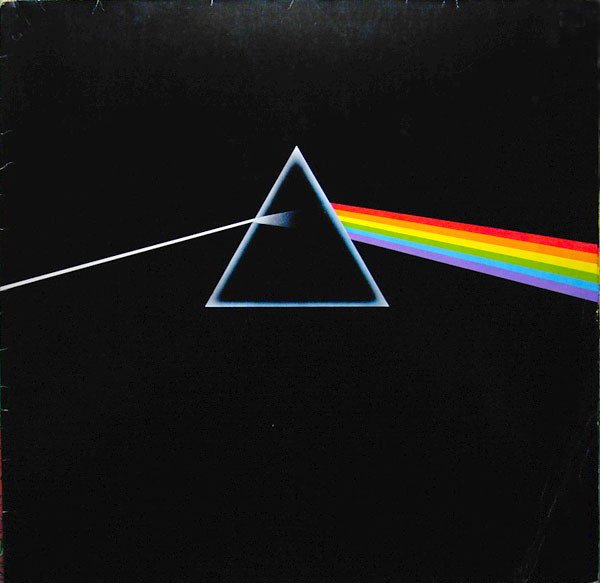
Few albums have become as inseparable from the history of popular music as Pink Floyd’s The Dark Side of the Moon (1973). Its prism artwork is instantly recognisable, its songs have endured across generations, and its reputation extends far beyond the progressive rock movement from which it emerged. Yet beneath that extraordinary success lies something surprisingly intimate: an album preoccupied with the anxieties, pressures and uncertainties of ordinary human existence.
Released at a pivotal moment in the band’s career, The Dark Side of the Moon brought together years of musical experimentation into a remarkably cohesive work. The atmospheric ambition of Meddle (1971), the electronic textures of their earlier recordings and Roger Waters’ increasingly focused songwriting converged in a collection exploring time, mortality, conflict, greed and the fragility of the human mind.
What makes the album exceptional is not simply the importance of those subjects, but the way Pink Floyd express them. A ticking clock becomes a warning about wasted opportunities. A bass line transforms the pursuit of wealth into something almost irresistibly seductive. A wordless vocal performance communicates the fear and uncertainty of death more powerfully than an elaborate lyric might have done.
More than half a century later, the album’s influence and commercial achievements are beyond dispute. But its enduring fascination rests on something more compelling than statistics or reputation. How did four musicians transform the pressures of everyday life into one of rock music’s most immersive listening experiences?
The Making of The Dark Side of the Moon
The story of The Dark Side of the Moon begins not with a recording session, but with Pink Floyd’s determination to give their increasingly ambitious music a clearer sense of direction.
By the early 1970s, the band had established a reputation for atmospheric compositions, unconventional instrumentation and elaborate live performances. Meddle had demonstrated the possibilities of this approach, particularly through the side-long “Echoes“, but their albums could still feel like collections of contrasting experiments rather than unified statements.
Roger Waters proposed an alternative: a work organised around the pressures that shape everyday life.
Instead of an elaborate fictional narrative, the new material would examine subjects familiar to almost everyone. The passage of time, the pursuit of money, conflict, death and psychological instability would provide the foundations for a connected musical experience.
This framework gave Pink Floyd something their earlier experimentation had sometimes lacked: a common purpose. The musicians could continue exploring unusual sounds and extended arrangements, but those ideas now served a recognisable collection of themes.
From the Rehearsal Room to the Stage
The project developed during rehearsals in late 1971 and early 1972, with the band drawing upon both new compositions and previously unused material.
Richard Wright’s “Us and Them”, for example, grew from music originally proposed for Michelangelo Antonioni’s film Zabriskie Point (1970). Other pieces underwent considerable changes before reaching their familiar recorded forms.
On 20 January 1972, Pink Floyd attempted to present the new suite at Brighton Dome. Technical problems interrupted the performance during “Money”, preventing the audience from hearing the complete work.
The following evening marked the beginning of a UK tour featuring full performances of the developing composition.
This period of live experimentation proved invaluable. Rather than constructing the entire album in the studio, Pink Floyd were able to test its pacing, refine the arrangements and assess how individual passages worked together before audiences.
The early performances were not identical to the finished record. “On the Run”, for instance, began as a more conventional instrumental piece before its transformation into an electronic soundscape. “The Great Gig in the Sky” also evolved considerably, developing from an instrumental meditation on mortality into something more emotionally immediate.
The album was therefore shaped by an unusual combination of preparation and experimentation. Its conceptual direction was established early, but the musicians remained willing to change individual compositions as stronger ideas emerged.
Recording at Abbey Road Studios
The principal studio sessions began at EMI Studios on Abbey Road in May 1972, continuing intermittently until February 1973.
This schedule contrasted with the comparatively rapid creation of Obscured by Clouds, the soundtrack Pink Floyd had recorded earlier in 1972 for Barbet Schroeder’s film La Vallée.
Where that album often embraced spontaneity and relatively direct arrangements, The Dark Side of the Moon demanded greater precision.
Working with engineer Alan Parsons, Pink Floyd combined conventional rock instrumentation with synthesisers, tape effects, spoken voices and elaborate transitions. The band produced the album themselves, while Chris Thomas contributed to the mixing process.
The recording’s clarity remains one of its defining qualities. Even during densely arranged passages, the instruments retain distinct identities, allowing the listener to appreciate both the overall composition and its smaller musical details.
Importantly, the technical experimentation was rarely detached from the music’s purpose.
The clocks introducing “Time” create an immediate sense of urgency. The rhythmic cash registers of “Money” establish the song’s subject before the vocals begin. The electronic pulses of “On the Run” evoke movement and anxiety without requiring conventional lyrics.
These effects are memorable because they contribute to the compositions rather than merely demonstrating the possibilities of the recording studio.
The Voices Behind the Music
Among the album’s most distinctive additions are the fragments of conversation scattered throughout its running time.
Waters arranged informal interviews with people associated with the band and Abbey Road Studios, asking questions about subjects including violence, death and personal experience.
Their responses introduced an unpredictable human element into an otherwise meticulously constructed recording.
Some voices express humour or defiance; others reveal uncertainty, anxiety or resignation. They emerge briefly from the music, creating the impression of private thoughts becoming part of a wider collective experience.
One particularly memorable contribution came from Abbey Road doorman Gerry O’Driscoll, whose reflections on death and the dark side of the moon became part of the album’s closing atmosphere.
The effect is subtle but important. Rather than presenting the album’s concerns exclusively through Waters’ lyrics, Pink Floyd allowed other people to articulate them in their own words.
It reinforces the idea that these anxieties belong not simply to the musicians, but to the wider human experience.
Clare Torry and The Great Gig in the Sky
Another crucial contribution arrived during the recording of “The Great Gig in the Sky”.
Richard Wright had developed the composition around a gentle piano progression, but the band wanted a vocal element capable of communicating its emotional subject without conventional lyrics.
Session singer Clare Torry came to Abbey Road on 21 January 1973 and improvised over the instrumental backing.
Her performance transformed the piece.
Rather than following a fixed melody, Torry moved between restrained phrases, sustained notes and sudden bursts of intensity. The result sounded simultaneously spontaneous and perfectly suited to Wright’s measured arrangement.
Her contribution was later recognised through a shared songwriting credit with Wright.
The recording illustrates something essential about the album’s creation. Pink Floyd’s careful preparation did not prevent unexpected ideas from becoming decisive. In this instance, a single session provided one of the most memorable performances in their catalogue.
The finished master was completed on 9 February 1973, bringing together more than a year of live development and several months of intermittent studio work.
What emerged was neither a purely spontaneous rock album nor a sterile exercise in technical perfection. It retained the chemistry of four musicians who had spent years learning how to make experimentation and songwriting complement one another.
The Sound of The Dark Side of the Moon

Musically, The Dark Side of the Moon occupies a fascinating position between progressive rock, blues, jazz-influenced harmony and electronic experimentation.
Its arrangements can be elaborate, yet the individual compositions are often built around surprisingly economical ideas. A memorable bass figure, a carefully voiced chord progression or a sustained guitar note can carry as much expressive weight as a lengthy instrumental passage.
The band’s greatest strength is knowing when to develop those ideas and when to leave them alone.
Four Musicians, One Distinctive Identity
David Gilmour’s guitar playing gives the album much of its emotional immediacy.
His style is rooted in blues phrasing, but his approach is rarely confined to conventional blues-rock vocabulary. Sustained notes, controlled bends and carefully shaped melodic lines allow his performances to develop a vocal quality of their own.
On “Breathe”, his gently floating guitar textures contribute to the song’s almost weightless atmosphere. Elsewhere, particularly on “Time” and “Money”, he introduces a far more aggressive sound without abandoning that melodic sensitivity.
Richard Wright is equally important to the album’s identity.
His piano, organ, electric piano and synthesiser performances provide much of its harmonic sophistication. The jazz-influenced chords of “Breathe” and “Us and Them” introduce subtle tension into otherwise soothing arrangements, creating an atmosphere that feels contemplative without becoming entirely reassuring.
Wright’s playing is rarely ostentatious. His greatest contribution lies in establishing the emotional conditions in which the other musicians can operate.
Waters’ bass provides a strong rhythmic foundation, most memorably through the distinctive opening figure of “Money”. His playing elsewhere is often more restrained, supporting the compositions without competing for attention.
Nick Mason demonstrates a similar understanding of musical space. His understated rhythms on “Breathe” contrast with the powerful drumming of “Time”, while his ability to maintain a convincing groove through the unusual metre of “Money” is central to that song’s appeal.
None of these contributions would have the same impact in isolation.
Gilmour’s guitar frequently supplies the expressive release to Wright’s harmonic tension. Waters and Mason establish rhythmic patterns that allow the arrangements to develop without losing direction.
The result is a band performing with a shared musical vocabulary, even as individual compositions move between markedly different styles.
Electronic Experimentation and Atmosphere
The album’s electronic passages demonstrate how far Pink Floyd had travelled from their earlier psychedelic experimentation.
“On the Run” is particularly striking. Built around a rapidly repeating sequence produced using an EMS Synthi AKS synthesiser, the composition generates tension through rhythm, texture and gradual changes in intensity.
Footsteps, voices and other effects contribute to an atmosphere of restless movement. The music offers little melodic reassurance, replacing conventional development with an increasingly oppressive sense of momentum.
“Any Colour You Like” explores a different possibility.
Here, synthesiser textures interact with Gilmour’s guitar in a flowing instrumental arrangement. Rather than creating anxiety, the electronics provide a colourful musical environment in which melodic ideas can overlap and develop.
The contrast between these pieces reveals the versatility of Pink Floyd’s approach.
Electronic instruments are not treated as novelties or replacements for conventional musicianship. They expand the band’s expressive vocabulary, allowing different compositions to establish distinctive emotional worlds.
Production, Space and Dynamics
Perhaps the album’s most impressive sonic characteristic is its control of space.
The quieter passages are rarely empty. Wright’s keyboards, Gilmour’s guitar and Mason’s percussion occupy carefully defined positions, giving the arrangements depth without unnecessary clutter.
When the music expands, the contrast is striking.
The choruses of “Us and Them” feel immense partly because the verses are so restrained. “Time” achieves a similar effect by allowing its atmospheric introduction to develop before the full band enters.
These changes in intensity are central to the album’s emotional character. Pink Floyd understand that grandeur is more effective when it follows intimacy, and that a sustained note can be more affecting than a flurry of technical display.
The recording is undoubtedly sophisticated, but its lasting appeal does not depend on listeners recognising every production technique.
Its greatest achievement is making those techniques feel inseparable from the performances themselves.
Lyrics and Themes: The Pressures of Being Human

For all its musical sophistication, The Dark Side of the Moon would not possess the same enduring power without Roger Waters’ lyrics.
Rather than constructing a complicated narrative, Waters examines a series of recognisable anxieties. Time passes, money becomes an obsession, conflict divides people and the certainty of death casts a shadow over ordinary life.
These subjects are not unusual individually. What distinguishes the album is the suggestion that they are connected, with the pressures of modern society contributing to the psychological strain experienced by individuals.
Waters’ writing is frequently direct, sometimes satirical and occasionally unsettling. Its accessibility allows the album’s concerns to resonate without requiring an elaborate explanation.
Time, Mortality and the Fear of Wasted Life
“Time” confronts one of the most uncomfortable aspects of human existence: the realisation that life can pass while people are waiting for it to begin.
Waters describes the tendency to postpone meaningful experiences, assuming that opportunities will remain available indefinitely. The anxiety emerges not from extraordinary circumstances, but from familiar routines and the gradual accumulation of ordinary days.
The song’s central concern is therefore more specific than mortality alone.
Death is inevitable, but wasted time carries the additional fear that life might have been experienced differently.
“Breathe” approaches a related subject through the language of movement and repetition. Its apparently reassuring atmosphere conceals a world in which existence can become defined by constant activity without meaningful progress.
The contrast is revealing. “Breathe” sounds tranquil, while “Time” eventually erupts with frustration. Yet both question the routines through which people organise their lives.
“The Great Gig in the Sky” brings mortality into sharper focus, expressing the uncertainty surrounding death through music rather than a conventional lyrical argument.
Together, these compositions suggest that the passage of time is not merely something people experience. It is a pressure that shapes their decisions, ambitions and regrets.
Money, Greed and the Illusion of Success
“Money” shifts the album’s attention towards material ambition.
Waters adopts a deliberately satirical perspective, presenting wealth through the language of someone increasingly absorbed by possessions, privilege and personal comfort.
The exaggerated enthusiasm is entertaining, but its implications are less reassuring.
The pursuit of money gradually reveals a worldview in which individual gain takes precedence over wider responsibility. Financial success promises security and freedom, yet the song questions whether those promises necessarily produce satisfaction.
There is an additional irony in the album’s subsequent commercial achievements.
Pink Floyd were about to experience extraordinary financial success themselves, giving their criticism of materialism a complicated relationship with the circumstances that followed its release.
That contradiction does not invalidate the song. If anything, it reinforces the difficulty of separating individuals from the economic systems they criticise.
Within the album’s broader concept, money becomes another source of pressure rather than a reliable escape from it.
Conflict, Division and the Absurdity of Violence
“Us and Them” broadens the perspective from personal anxiety to the divisions that shape society.
Its lyrics examine the tendency to separate people into opposing groups, whether through war, inequality or everyday prejudice.
The references to military conflict are especially effective because they emphasise the distance between those exercising authority and those living with the consequences.
Rather than presenting war through heroic imagery, Waters exposes its apparent absurdity. Individuals become caught within systems that reduce complicated human lives to opposing sides.
Yet the song is not exclusively about warfare.
Its wider concern is the ease with which social distinctions become moral boundaries. People who share similar fears and vulnerabilities can nevertheless be persuaded to regard one another as fundamentally different.
The title captures that contradiction with extraordinary economy.
Within the album’s concept, conflict is another manifestation of the pressures that prevent people from recognising their shared humanity.
Mental Health and Syd Barrett’s Shadow
The psychological dimension of the album becomes most explicit in “Brain Damage”.
Waters explores the boundary between socially accepted behaviour and what society labels as madness, using unsettling imagery to question how secure that distinction really is.
The song’s association with Syd Barrett gives it particular emotional significance.
Barrett’s mental health difficulties and departure from Pink Floyd remained an important part of the band’s history. His experiences informed the musicians’ understanding of psychological vulnerability and would continue to influence their later work.
However, interpreting “Brain Damage” solely as a song about Barrett would narrow its meaning unnecessarily.
Waters also questions the expectations through which society defines normality. The lyrics suggest that psychological instability cannot always be separated neatly from the pressures and contradictions of everyday existence.
This interpretation becomes especially compelling when the song is considered alongside the preceding material.
After examining time, wealth and conflict, the album turns towards the individual’s capacity to withstand those pressures.
There is sympathy in this perspective, but also uncertainty. Waters does not provide a clinical explanation of mental illness, nor does he attempt to resolve its complexities.
Instead, he presents psychological vulnerability as something closer to ordinary human experience than many listeners might comfortably acknowledge.
Eclipse: A Shared Human Experience
The album’s closing lyrics bring these apparently separate concerns together.
“Eclipse” moves through a succession of ordinary activities, relationships, achievements and disappointments, creating an increasingly comprehensive picture of human existence.
Its accumulation of experiences is important.
After an album concerned with divisions and anxieties, Waters suggests that apparently different lives remain connected by the same fundamental conditions.
Yet the conclusion is not wholly reassuring.
The image of darkness overwhelming light introduces an unsettling final ambiguity. Happiness and suffering, connection and isolation, achievement and disappointment are not presented as problems that can be permanently separated.
They exist alongside one another.
The result is a conclusion that acknowledges life’s contradictions rather than offering an artificial resolution.
That is why the album’s lyrics remain so affecting.
Waters does not claim to possess answers to the anxieties he identifies. His achievement is recognising experiences that listeners can understand for themselves, then placing them within a musical framework that makes those experiences feel immediate.
Standout Tracks and Musical Highlights
Although The Dark Side of the Moon was conceived as a complete listening experience, its strongest compositions retain considerable power when heard individually.
What distinguishes them is not simply their memorable melodies or ambitious arrangements, but the precision with which Pink Floyd combine musical technique and emotional expression.
Time
Few Pink Floyd compositions make such a dramatic entrance.
The sudden eruption of clocks and alarms creates an immediate sense of disorientation before giving way to Nick Mason’s carefully measured percussion.
The introduction is unusually patient. Rather than rushing towards the song’s principal melody, Pink Floyd allow rhythm and atmosphere to establish tension.
When the full band finally enters, the effect is tremendous.
Mason’s forceful drumming gives the music urgency, while Wright’s keyboards provide a spacious harmonic foundation. Gilmour’s vocal performance introduces a sense of frustration that complements the subject without becoming theatrical.
His guitar solo is the composition’s defining instrumental moment.
The performance develops through sustained notes, expressive bends and increasingly forceful phrases. It possesses technical sophistication, but its impact comes from the feeling that every note has been deliberately chosen.
The solo sounds almost like a confrontation with the passage of time itself, alternating between anger and melancholy.
Equally important is the return to “Breathe” near the conclusion.
The familiar melody provides relief from the preceding intensity, yet its emotional character has changed. What once felt tranquil now carries a sense of exhaustion and resignation.
This transformation gives “Time” an unusually satisfying structure. The song does not merely describe regret; its arrangement allows the listener to experience something resembling that emotional progression.
It remains one of the band’s finest compositions.
The Great Gig in the Sky
“The Great Gig in the Sky” is remarkable for the emotional range it achieves without conventional lyrics.
Richard Wright’s piano establishes an atmosphere of quiet reflection, its measured harmonic movement creating a foundation that feels both delicate and inevitable.
Clare Torry’s vocal performance then introduces an entirely different kind of expression.
Her improvisation moves between fragile phrases, powerful sustained notes and sudden changes in intensity. At moments, the voice suggests fear or resistance; elsewhere, it conveys grief, defiance or acceptance.
The ambiguity is central to its power.
Without specific words to determine the meaning, listeners are free to respond to the performance instinctively. The voice becomes an instrument capable of communicating emotions that resist straightforward description.
Wright’s accompaniment is essential to this effect.
His piano remains comparatively restrained, allowing Torry’s unpredictable vocal movement to dominate without losing the composition’s underlying direction.
The result is an extraordinary balance between control and spontaneity.
What might have been a relatively modest instrumental meditation becomes one of the album’s most affecting moments, demonstrating that Pink Floyd’s greatest achievements did not always depend on elaborate arrangements.
Money
“Money” is arguably the album’s most immediately accessible composition, despite possessing one of its most unusual rhythmic structures.
Waters’ instantly recognisable bass line establishes a groove in 7/4, giving the song a distinctive momentum that feels natural even when its metre is unfamiliar.
Mason’s drumming reinforces the pattern without making its complexity unnecessarily conspicuous, while Gilmour delivers the lyrics with a sharp, confrontational edge.
The instrumental passages reveal another dimension of the band’s musicianship.
Dick Parry’s saxophone solo introduces a strong jazz and blues character, its melodic freedom contrasting with the precision of the underlying rhythm.
Gilmour’s guitar solo subsequently pushes the composition towards a more aggressive rock sound.
During the instrumental break, the music moves into 4/4, providing a different rhythmic framework for the solo before returning to the familiar bass-driven groove.
The change is handled so convincingly that it feels like a natural expansion of the song rather than a display of technical cleverness.
“Money” succeeds because its musical sophistication never obstructs its immediacy.
The riff is memorable, the performances are energetic and the arrangement contains enough detail to remain rewarding after repeated listens.
It demonstrates how progressive ideas can become part of a compelling rock song without demanding that listeners consciously analyse them.
Us and Them
Where “Money” thrives on rhythmic energy, “Us and Them” derives its power from patience.
Richard Wright’s jazz-influenced harmonies establish a reflective atmosphere, while Gilmour’s restrained vocal delivery gives the verses an almost conversational intimacy.
The arrangement allows individual notes to linger. Piano, guitar and percussion occupy the space without filling every moment, creating an atmosphere in which the listener becomes unusually aware of the music’s subtle movements.
The choruses provide a striking contrast.
Backing vocals and fuller instrumentation expand the sound dramatically, transforming the restrained verses into moments of immense emotional intensity.
Yet these changes never feel excessive. Pink Floyd allow the arrangement to grow naturally, making its moments of grandeur more powerful because they emerge from such delicate foundations.
Dick Parry’s saxophone playing is another essential contribution.
His melodic phrases bring warmth and a soulful character to the recording, complementing Wright’s harmonic approach without overwhelming it.
At more than seven minutes, “Us and Them” could easily have become repetitive. Instead, its subtle changes in dynamics and instrumentation sustain an atmosphere that remains absorbing throughout.
It is one of the finest demonstrations of Pink Floyd’s ability to create musical grandeur without sacrificing intimacy.
Brain Damage and Eclipse
The closing pairing of “Brain Damage” and “Eclipse” provides one of the most satisfying conclusions in progressive rock.
“Brain Damage” begins with a comparatively gentle arrangement, its acoustic guitar and measured rhythm creating an atmosphere that initially feels reassuring.
Waters’ vocal delivery is particularly effective.
Rather than approaching the unsettling lyrics with exaggerated intensity, he sings with a calmness that makes their implications more disturbing.
As the composition develops, Wright’s keyboards and the backing vocals introduce greater harmonic weight, preparing the listener for the final transition.
“Eclipse” then transforms that tension into an overwhelming musical statement.
Its organ-led arrangement, forceful drumming and layered vocals create a sense of scale that contrasts dramatically with the preceding song.
Rather than relying on an elaborate instrumental solo, the composition builds through accumulation. Each successive lyrical phrase adds to the momentum, while the music becomes increasingly expansive.
The effect is extraordinary.
The album’s apparently separate concerns seem to converge within a single closing statement, giving the final moments a sense of inevitability.
Yet Pink Floyd do not extend the climax unnecessarily.
The music eventually recedes, allowing the familiar heartbeat to return.
It is a simple conclusion to an ambitious recording, and precisely because of that simplicity, it feels complete.
The Instrumental Passages
The album’s shorter instrumental compositions deserve recognition beyond their role as transitions.
“Speak to Me” establishes anticipation through a collage of sounds that will recur throughout the record. “On the Run” creates a disturbing atmosphere through electronic rhythm and texture, while “Any Colour You Like” offers a more fluid exchange between synthesiser and guitar.
These pieces do not all possess the standalone appeal of the album’s major songs.
Their importance lies in the different musical experiences they introduce.
Without them, The Dark Side of the Moon would remain a collection of exceptional compositions, but it would lose much of the contrast and atmosphere that distinguish the complete recording.
A Continuous Musical Journey

One of the album’s defining achievements is the way its contrasting compositions form a connected musical experience.
Pink Floyd had already explored extended structures, most notably on “Echoes”, but The Dark Side of the Moon applies that ambition across an entire record without requiring every song to adopt the same musical style.
The sequencing is particularly effective.
“Speak to Me” gradually introduces the listener to the album’s sonic world before opening into the tranquillity of “Breathe”. That calm gives way to the relentless movement of “On the Run”, followed by the explosive arrival of “Time”.
The sequence establishes a progression from apparent reassurance towards mounting anxiety.
Later, the transition from “Time” into the reprise of “Breathe” returns to familiar musical material, but the preceding experience changes its emotional significance.
This technique allows Pink Floyd to create continuity without making the compositions sound interchangeable.
The original vinyl format also plays an important role.
Side one concludes with the emotional intensity of “The Great Gig in the Sky”, while side two begins with the rhythmic cash registers of “Money”. Rather than attempting an uninterrupted progression across the physical break, the band uses the contrast to establish renewed momentum.
The heartbeat that opens and closes the album provides another connection.
Against the elaborate instrumentation heard elsewhere, its steady pulse is strikingly simple. It evokes life itself, while the return at the conclusion suggests a circular structure that listeners can interpret in different ways.
The fragments of conversation, clocks and mechanical noises also contribute to this sense of continuity. Their significance depends not merely on what they represent, but on when they appear and how they alter the listener’s expectations.
Importantly, the album’s cohesion does not come at the expense of variety.
Blues-rock, electronic experimentation, jazz-influenced harmony and wordless vocal improvisation coexist within a running time of approximately 43 minutes.
Pink Floyd allow each composition sufficient space to establish its identity, while ensuring that the sequence never loses its direction.
That balance is why the album continues to reward uninterrupted listening.
Its songs are impressive individually, but their arrangement creates an emotional experience that cannot be fully reproduced by hearing them in isolation.
Is The Dark Side of the Moon Flawless?
Few albums carry the weight of expectation surrounding The Dark Side of the Moon.
Its extraordinary reputation can make it difficult to approach without anticipating a masterpiece, while its cultural familiarity sometimes threatens to overshadow the music itself.
Yet historical importance should never make an album immune from criticism.
Despite its accessible songwriting, The Dark Side of the Moon is not an entirely straightforward listening experience.
Its instrumental passages demand patience, particularly from listeners expecting a continuous succession of conventional rock songs.
“On the Run”, for example, offers little melodic development when heard independently. Its appeal depends heavily on atmosphere, repetition and its relationship with the surrounding compositions.
Similarly, “Speak to Me” functions primarily as an introduction, while “Any Colour You Like” prioritises instrumental texture over traditional song structure.
These qualities may limit the immediate appeal of individual tracks, but they are essential to the complete recording.
Waters’ lyrics also leave room for debate.
His observations about materialism, conflict and mortality are frequently direct, occasionally approaching bluntness. Listeners who favour greater ambiguity may find some of his arguments more explicit than necessary.
“Money” is particularly uncompromising in its satire, although the sophistication of its musical arrangement provides an effective counterbalance.
There is also the question of whether the album’s production remains as revolutionary as its reputation suggests.
Many of its techniques have become familiar through decades of subsequent recordings. Electronic sequences, spoken voices and environmental sound effects no longer possess the novelty they once did.
However, technical novelty is a poor measure of lasting artistic quality.
The clocks introducing “Time” remain effective because of the composition that follows. The electronic experimentation of “On the Run” succeeds because it creates genuine tension. Clare Torry’s performance continues to move listeners because its emotional force is independent of the recording technology surrounding it.
The album’s achievement lies in how successfully these elements work together.
Not every listener will value its quieter or more abstract passages equally, and there are individual Pink Floyd compositions elsewhere in the catalogue that offer greater musical complexity.
But a 10/10 rating need not imply that an album is incapable of improvement or that every moment will appeal to everyone.
It should recognise an exceptional artistic achievement whose strengths overwhelmingly justify the highest recommendation.
By that standard, The Dark Side of the Moon earns its reputation.
The Album That Changed Pink Floyd Forever

When The Dark Side of the Moon appeared in March 1973, Pink Floyd were already an established progressive rock band with a devoted following.
What followed transformed their position within popular music.
Released in the United States on 10 March and the United Kingdom on 23 March, the album reached number one on the American Billboard 200 and number two on the UK Albums Chart.
Its success extended far beyond the initial release.
During its original chart history from 1973 to 1988, the album accumulated 741 weeks on the Billboard 200, an extraordinary achievement that reflected its continuing appeal across successive generations of listeners.
“Money” also became a successful American single, reaching audiences beyond those already familiar with Pink Floyd’s albums.
What makes this commercial breakthrough particularly interesting is that the record was hardly a conventional attempt at mainstream success.
Its extended instrumental passages, connected structure and philosophical concerns were unusual ingredients for an international bestseller.
Yet its memorable songwriting and emotional accessibility allowed Pink Floyd to reach a much wider audience without abandoning the qualities that had established their reputation.
The consequences would shape the band’s subsequent career.
Their concerts became increasingly elaborate, their albums arrived with greater expectations, and the pressures associated with extraordinary success would influence later recordings, particularly Wish You Were Here (1975).
There is a striking irony in that development.
An album examining the anxieties of modern existence helped create an entirely new set of pressures for the musicians responsible.
Influence Beyond Progressive Rock
The Dark Side of the Moon did not invent the concept album, electronic experimentation or ambitious studio production.
Those approaches were already well established by 1973, and Pink Floyd were among several artists exploring the possibilities of the long-playing record.
Their achievement was to bring these elements together with unusual clarity and accessibility.
The album demonstrated that sophisticated arrangements and conceptual ambition could coexist with songs capable of reaching a mainstream audience.
Its influence can be heard in the atmospheric production, electronic textures and extended musical structures subsequently explored by artists across progressive rock and beyond.
Yet its most important lesson is arguably less technical.
Pink Floyd demonstrated that experimentation becomes more powerful when it serves a recognisable emotional purpose.
The unusual sounds are not the destination. They are part of the language through which the music communicates.
The Prism and the Album’s Cultural Identity
The album’s artwork has become almost as famous as the music.
Created by Hipgnosis, with illustration by George Hardie, the cover depicts white light passing through a triangular prism and emerging as a spectrum of colour.
Its stark simplicity distinguished it from many of the elaborate illustrations and photographic sleeves associated with rock music at the time.
The image also reflected Pink Floyd’s interest in light and visual spectacle, connecting the record with the increasingly ambitious stage presentations that had become central to their performances.
Over the decades, the prism has developed a cultural identity extending far beyond the album itself.
Its appearance on posters, clothing and countless other objects demonstrates how completely the artwork has entered popular consciousness.
Yet the design remains effective because it does not attempt to explain the record literally.
Instead, its visual contrast and geometric precision provide a memorable counterpart to music concerned with complexity, perception and the contradictions of human experience.
Why The Dark Side of the Moon Still Matters
Commercial records and iconic artwork can establish an album’s place in history, but neither guarantees lasting musical relevance.
The continuing appeal of The Dark Side of the Moon rests on the strength of its compositions and the familiarity of its concerns.
The fear of wasted time, the pursuit of financial security, the consequences of conflict and the vulnerability of the human mind remain recognisable experiences.
Although the world has changed considerably since 1973, the album rarely feels trapped within its original historical moment.
Its production reflects the technology of the early 1970s, but the performances retain an emotional immediacy that transcends those limitations.
There is also something valuable about the record’s insistence on being experienced as a complete work.
Individual songs may be encountered through playlists or radio, but the album continues to reveal different qualities when heard uninterrupted, from its opening heartbeat to its final fading pulse.
Its greatest legacy is therefore not simply that it sold extraordinary numbers of records or influenced subsequent musicians.
It is that the music remains capable of communicating something meaningful long after the circumstances of its creation have passed into history.
Final Verdict: A Masterpiece of Modern Music

Few albums achieve the balance of musical ambition, accessibility and emotional depth found on The Dark Side of the Moon.
Pink Floyd’s eighth studio album represents the culmination of years spent exploring the possibilities of rock music, bringing together four distinctive musicians whose individual strengths became inseparable from the finished work.
Gilmour’s expressive guitar playing, Wright’s harmonic imagination, Waters’ incisive songwriting and Mason’s rhythmic restraint create an album that moves confidently between intimacy and grandeur.
Its finest moments remain extraordinary.
“Time” transforms the fear of wasted life into a powerful musical experience. “The Great Gig in the Sky” communicates the uncertainty of mortality without conventional lyrics. “Us and Them” combines lyrical reflection with remarkable musical sensitivity, while “Brain Damage” and “Eclipse” provide a conclusion of immense emotional force.
There are passages that demand patience, and its conceptual ambitions will not appeal equally to every listener. Yet those qualities are essential to the album’s identity rather than obstacles to its greatness.
What distinguishes The Dark Side of the Moon is its ability to make substantial ideas feel personal.
Beneath the synthesisers, elaborate production and instantly recognisable artwork lies a record concerned with the contradictions of ordinary existence.
Pink Floyd offer no definitive answers to those anxieties. Instead, they create a musical experience in which listeners can recognise something of themselves.
Its historical achievements are undeniable, but the music does not need those statistics to justify its reputation.
More than fifty years after its release, The Dark Side of the Moon remains one of the defining albums of popular music: an imaginative, deeply affecting work whose greatest accomplishment is making the complexities of being human feel universal.
Official Tune Tempest Rating: 10/10
A timeless masterpiece that transforms everyday anxieties into one of the most cohesive and emotionally powerful albums ever recorded.