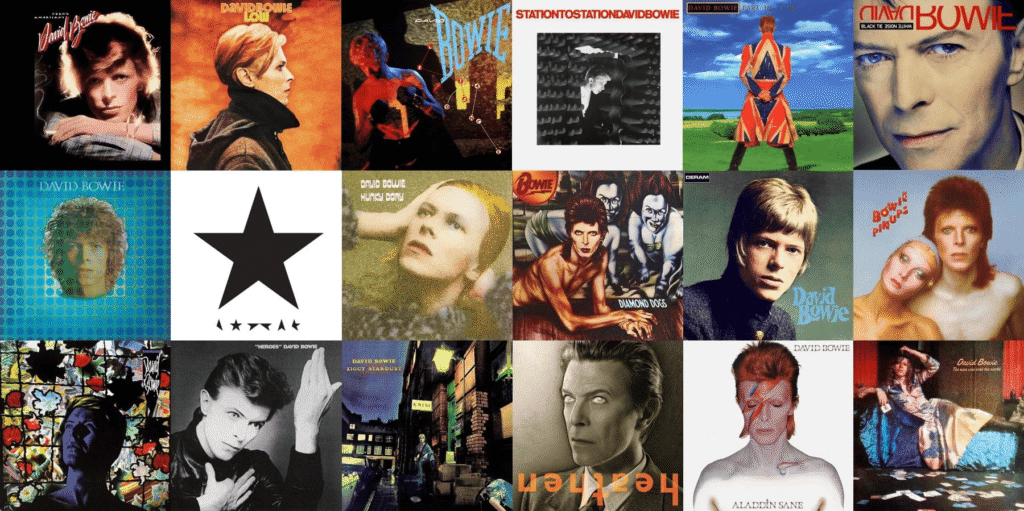
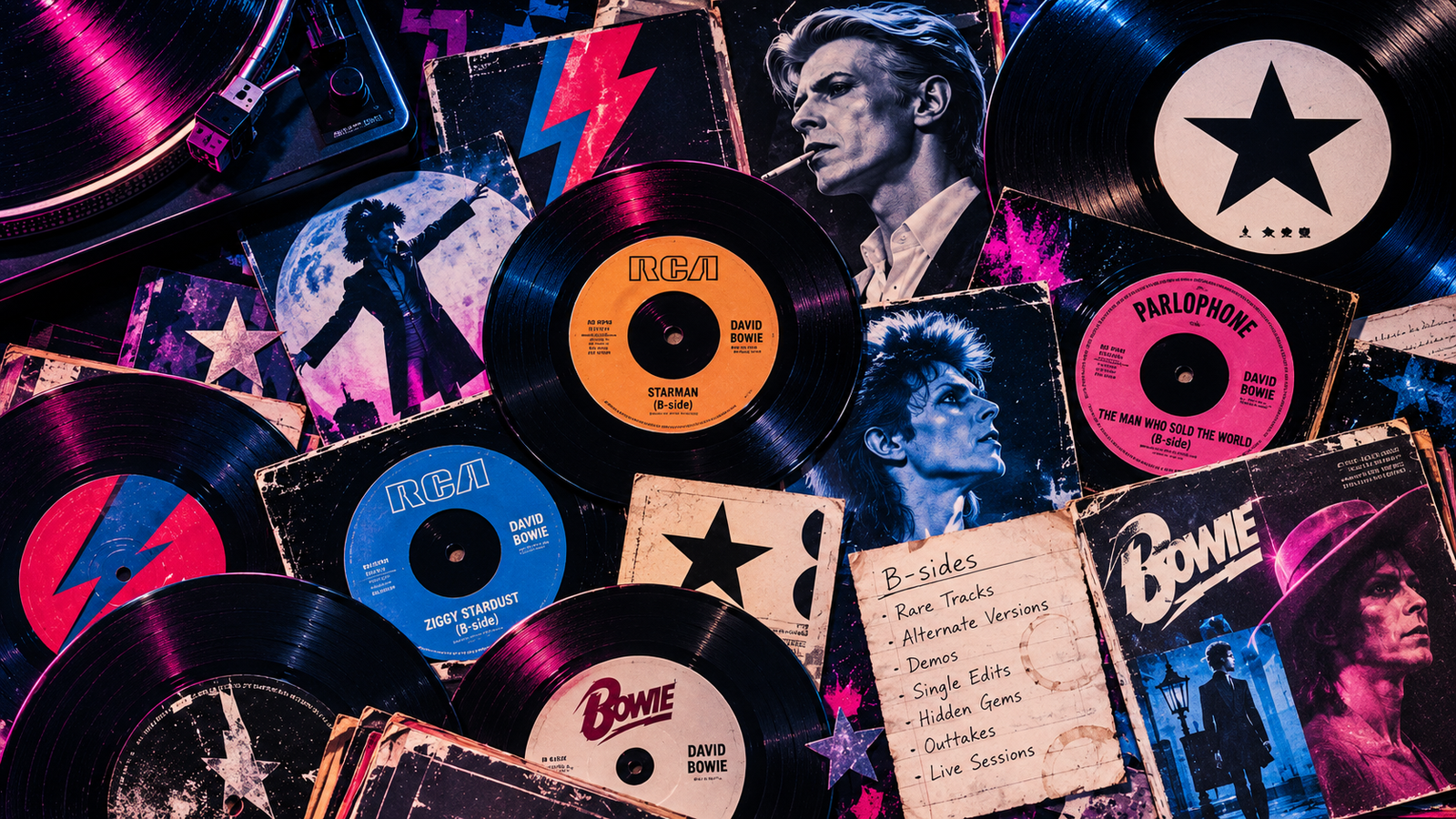
David Bowie didn’t just change with the times, he often changed the times themselves. Across five decades, he moved through personas, sounds, and cultural moments with uncanny precision, building one of the most adventurous discographies in popular music. From glam rock to Berlin minimalism, soul, industrial, and beyond, Bowie never settled, and his catalogue reflects that constant evolution.
David Bowie (1967)
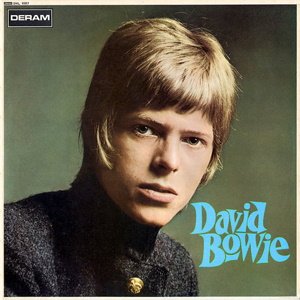
Bowie’s debut was far from the glam icon he’d become. Released during the peak of psychedelia, the album leaned into English vaudeville and baroque pop, with theatrical songs like “Love You Till Tuesday” and “Rubber Band.” It flopped commercially and felt disconnected from the emerging rock scene. Produced by Mike Vernon for Deram Records, it’s now more of a historical footnote than a musical landmark.
David Bowie / Space Oddity (1969)
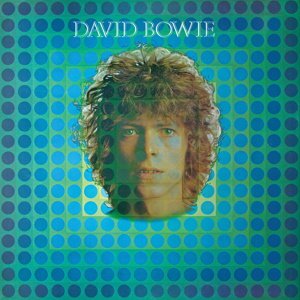
This second self-titled album introduced Major Tom and hinted at the ambition to come. “Space Oddity” was a surprise hit, tied to the moon landing’s cultural moment. The rest of the album veers between folk rock and hazy psychedelia, with tracks like “Janine” and “Unwashed and Somewhat Slightly Dazed” showing range but inconsistency. Produced by Gus Dudgeon, it marked Bowie’s first step toward real artistic identity.
The Man Who Sold the World (1970)
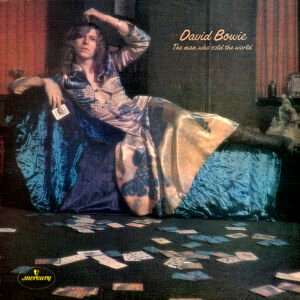
Bowie embraced a heavier rock sound here, teaming up with Mick Ronson and Tony Visconti to craft a darker, more guitar-driven record. Songs like “All the Madmen” and the title track dive into psychological themes with a harder edge. Initially overlooked, it’s now seen as the true start of his 70s evolution.
Hunky Dory (1971)
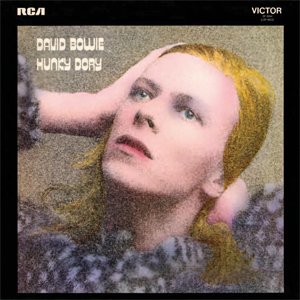
Hunky Dory was Bowie’s first great album. With sweeping piano-led tracks and sharp lyricism, it blended art pop with glam hints. “Changes,” “Oh! You Pretty Things,” and “Life on Mars?” are career-defining. Produced by Ken Scott and backed by Ronson and Rick Wakeman, it set the stage for Ziggy while standing strong on its own.
The Rise and Fall of Ziggy Stardust and the Spiders from Mars (1972)
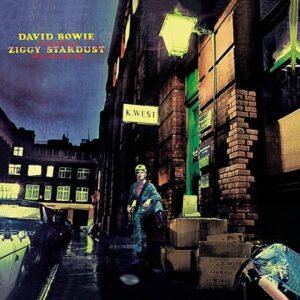
This is the record that made Bowie a star. Adopting the Ziggy persona, he leaned fully into glam rock with theatrical flair and a sci-fi narrative arc. “Starman,” “Ziggy Stardust,” and “Suffragette City” brought style, swagger, and substance. Backed by the Spiders from Mars and produced with Ken Scott, the album became a blueprint for glam and a cornerstone of 70s rock.
Aladdin Sane (1973)

Recorded during his U.S. tour, Aladdin Sane reflected Bowie’s growing fame and fractured state of mind. It kept Ziggy’s glam core but added American influences and experimental touches, especially in Mike Garson’s manic piano work. “The Jean Genie,” “Time,” and “Drive-In Saturday” stand out. It’s often seen as a darker, rawer companion to Ziggy.
Pin Ups (1973)
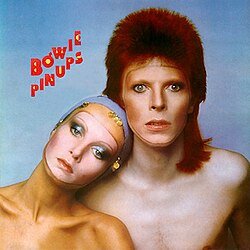
A detour rather than a step forward, Pin Ups is a collection of 60s covers paying tribute to Bowie’s London roots. Backed by the Spiders from Mars, he reworks songs by The Who, Pink Floyd, and others with glam sheen. It’s more style than substance but shows Bowie’s ability to reshape even familiar material.
Diamond Dogs (1974)
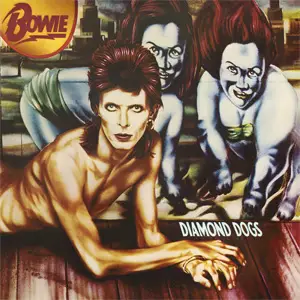
Originally conceived as a George Orwell adaptation, Diamond Dogs emerged as a gritty, dystopian glam-rock opera. With the Spiders disbanded, Bowie handled much of the guitar himself. “Rebel Rebel” is a classic riff-driven anthem, while “Sweet Thing/Candidate” and the title track dive into theatrical, post-apocalyptic territory. It marked the end of his glam phase and hinted at the soul influence to come.
Young Americans (1975)
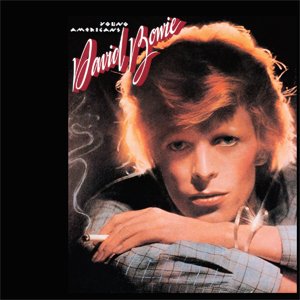
Bowie pivoted hard into soul and R&B with Young Americans, leaving glam behind in favor of what he called “plastic soul.” Recorded in Philadelphia and New York, it features smoother grooves and a polished sound. The title track blends political commentary with funk, “Fame” (co-written with John Lennon) became his first U.S. number one, and “Win” shows his growing vocal finesse. This album marked his full immersion into American black music culture.
Station to Station (1976)
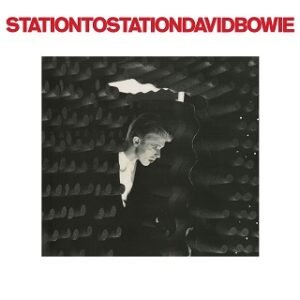
Straddling funk, krautrock, and cold European art rock, Station to Station introduced the Thin White Duke persona. The 10-minute title track is one of his most ambitious, building from slow-burning drone to rhythmic frenzy. “Golden Years” and “Wild Is the Wind” show his range, blending dancefloor energy and emotional depth. Recorded in a haze of drugs and isolation, it’s the bridge between the soul era and the Berlin years.
Low (1977)
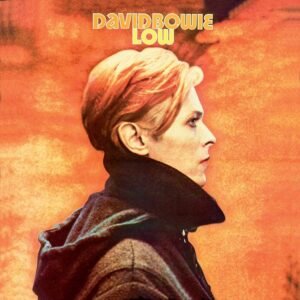
The first of the Berlin Trilogy, Low was a radical break. Side A features fractured, minimalist pop songs like “Sound and Vision” and “Breaking Glass,” while Side B dives into ambient instrumentals shaped by Brian Eno’s influence. It was a risky move after Station to Station, but one that paid off creatively and influenced post-punk and electronic music for decades.
“Heroes” (1977)
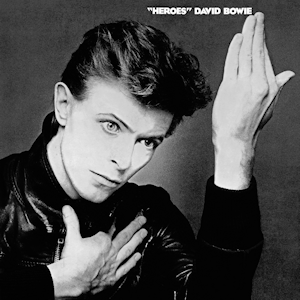
Continuing the Berlin experiments, “Heroes” combined icy textures with more direct emotion. The title track became one of Bowie’s defining songs, an anthem of defiant love under pressure. Elsewhere, “Beauty and the Beast” and “Joe the Lion” deliver angular art rock, while the instrumental pieces on Side B push deeper into ambient terrain. Recorded at Hansa Studios near the Berlin Wall, the album is both romantic and mechanical.
Lodger (1979)

Often the most overlooked of the Berlin Trilogy, Lodger fused world music influences with experimental pop. Unlike the ambient-heavy Low and “Heroes”, this one returns to a song-driven format but retains a disjointed, restless energy. “Boys Keep Swinging” is a gender-twisting glam throwback, while “DJ” and “Fantastic Voyage” blend satire and anxiety. It didn’t hit as hard on release but has grown in stature as a precursor to 80s art pop.
Scary Monsters (1980)
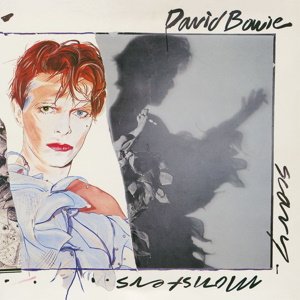
Scary Monsters was Bowie’s last truly great album before his commercial pivot. It revisited earlier personas while pushing forward with sharp production and an anxious, post-punk edge. “Ashes to Ashes” reimagined Major Tom in darker terms, “Fashion” skewered trends with a killer groove, and “Teenage Wildlife” channeled raw emotion through theatrical rock. Co-produced with Tony Visconti and featuring Robert Fripp on guitar, it wrapped up the 70s with one eye on the chaos ahead.
Let’s Dance (1983)
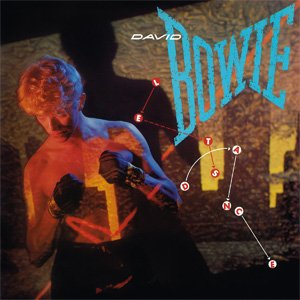
This was Bowie’s commercial zenith. Produced by Nile Rodgers, Let’s Dance was sleek, radio-ready, and massively successful, with a sound built on rhythm and clean production. The title track, “Modern Love,” and “China Girl” dominated charts, while introducing Stevie Ray Vaughan’s fiery guitar to the mix. Though artistically safer than his 70s work, it brought Bowie to a global mainstream audience like never before.
Tonight (1984)
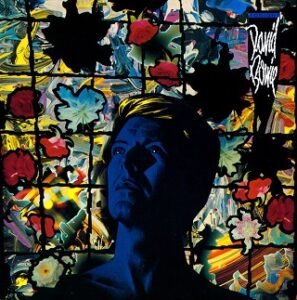
Following the success of Let’s Dance, Tonight felt like a rushed sequel. While Bowie aimed for a similar polished pop sound, the songwriting didn’t match the ambition. “Blue Jean” is the standout — catchy and character-driven — but covers like “God Only Knows” and duets with Tina Turner feel uninspired. It’s one of his least critically respected albums, often seen as a misstep in an otherwise bold career.
Never Let Me Down (1987)
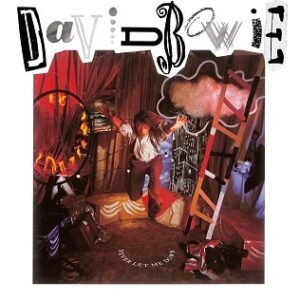
Trying to reclaim creative control, Bowie wrote more personal songs for Never Let Me Down, but overproduction drowned many of them. “Time Will Crawl” remains a strong entry, touching on environmental collapse, and “Day-In Day-Out” takes on social injustice. Despite some good ideas, it suffered from an overbearing 80s gloss. Bowie himself later distanced from the album, eventually overseeing a reimagined version decades later.
Black Tie White Noise (1993)
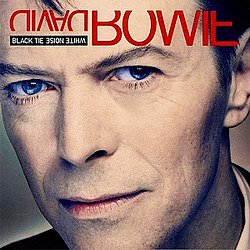
After the commercial and creative lull of the late 80s, Black Tie White Noise marked Bowie’s return to solo work and a conscious reset. Drawing on soul, electronic, and jazz elements, it reflects his renewed clarity post-marriage and post-Tin Machine. “Jump They Say” tackles mental illness and paranoia with slick production, while the title track and “Miracle Goodnight” blend sincerity with sleek 90s style. Produced with Nile Rodgers, it’s more refined than revolutionary, but signaled Bowie was creatively reengaged.
Outside (1995)
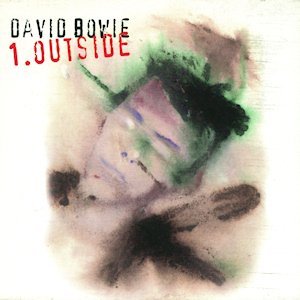
Outside was a bold conceptual leap back into art rock and industrial soundscapes, teaming Bowie again with Brian Eno. Structured around a dystopian narrative involving “art crimes,” the album is dense and sprawling, with abstract lyrics and abrasive textures. “The Hearts Filthy Lesson,” “Hallo Spaceboy,” and “I’m Deranged” stand out among the chaos. Though divisive at release, it’s now recognized as a vital work that foreshadowed the darker aesthetics of the late 90s.
Earthling (1997)
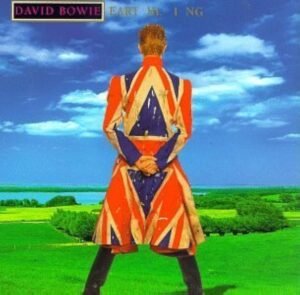
Earthling was Bowie’s most direct engagement with contemporary trends, namely drum and bass, jungle, and industrial rock. Dressed in Union Jack chic, he leaned into digital culture and sonic aggression. “Little Wonder” and “Dead Man Walking” blend electronic beats with classic Bowie hooks. It’s more style-driven than deep, but the energy and willingness to experiment made it a striking entry in his late 90s phase.
Hours… (1999)
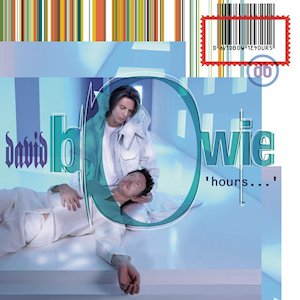
Bowie slowed things down on Hours…, favoring reflective ballads and a more subdued, mature tone. It’s one of his most introspective records, written in part for a video game soundtrack but expanded into a full album. Tracks like “Thursday’s Child,” “Survive,” and “Seven” are emotionally direct, stripped of persona. While not groundbreaking, it showed a more vulnerable, human Bowie rarely seen in earlier eras.
Heathen (2002)
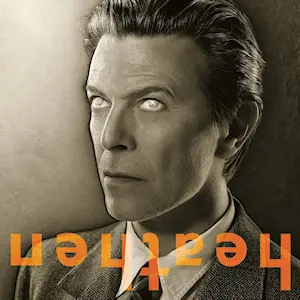
Heathen marked a creative renewal for Bowie, blending the emotional weight of his later work with the sonic richness of his classic eras. Reuniting with producer Tony Visconti for the first time in over two decades, the album moves between spiritual unease and quiet resilience. “Slow Burn,” featuring Pete Townshend on guitar, is a highlight, while “Slip Away” and “Everyone Says ‘Hi’” offer wistful, melodic reflections on memory and loss. Subtle, textured, and deeply personal, Heathen reasserted Bowie as a serious creative force in the 21st century.
Reality (2003)

Released just a year later, Reality continued Bowie’s mature phase with more immediacy and bite. The production is leaner, the tone more grounded, and the lyrics more confrontational. “New Killer Star” and “Never Get Old” combine hooks with commentary, while his cover of George Harrison’s “Try Some, Buy Some” adds spiritual depth. It was also the basis for his last major tour before his decade-long retreat from the public eye. Reality doesn’t aim for reinvention but stands as a confident and solid late-career statement.
The Next Day (2013)
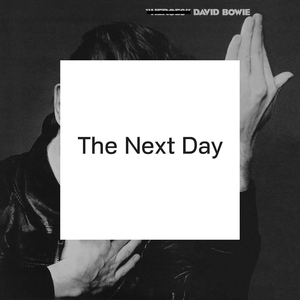
After a ten-year silence, The Next Day arrived without warning and reignited global interest in Bowie’s work. Recorded in secret with longtime producer Tony Visconti, the album looks back on past personas while refusing to dwell in nostalgia. The sound is sharp and guitar-driven, with tracks like “The Stars (Are Out Tonight)” and “Valentine’s Day” balancing accessibility with tension. The cover, a defaced version of “Heroes”, sets the tone — Bowie revisiting his legacy with distance and defiance. It’s not a reinvention but a fiercely intelligent return, reminding the world he still had something to say.
Blackstar (2016)

Released just two days before his death, Blackstar is Bowie’s final masterpiece — a haunting, jazz-inflected meditation on mortality, transformation, and legacy. Working with a New York jazz quintet led by Donny McCaslin, Bowie pushed his sound into unfamiliar territory while maintaining his lyrical ambiguity. The title track is sprawling and otherworldly, “Lazarus” feels like a farewell in real time, and “I Can’t Give Everything Away” closes the record with grace and acceptance. Both a parting gift and a bold artistic statement, Blackstar stands among the most powerful swan songs in music history.
Non-Album B-Sides and Standalone Singles
Early Era (1967–1973)
Before Bowie became a household name, many of his most interesting early ideas never made it onto albums. Songs like “The London Boys” and “Holy Holy” show him in a state of creative flux — ambitious, theatrical, and still chasing a breakthrough. These tracks, along with others like “Velvet Goldmine,” existed as singles, B-sides, or shelved recordings, offering a glimpse into the formative years of a restless artist not yet locked into a singular identity.
Ziggy and Aftermath (1974–1980)
As Bowie’s stardom exploded, he continued releasing material that sat outside the main studio albums. “John, I’m Only Dancing (Again)” turned a glam-era single into a funky, loose-limbed jam. “Crystal Japan,” an instrumental originally intended for a commercial, is minimalist and haunting. During the Berlin period, B-sides like “V-2 Schneider” and “Abdulmajid” complemented the experimental edge of albums like Low and “Heroes”, adding further texture to an already boundary-pushing phase.
The ’80s (1981–1992)
Though the 1980s are often seen as Bowie’s most commercial era, he still released some intriguing one-offs and B-sides. “This Is Not America,” a moody collaboration with Pat Metheny, was made for a film and became a hit in its own right. Lesser-known tracks like “Julie” and “Girls” show that even in his pop-focused years, Bowie kept creating material that didn’t always fit neatly into album frameworks. These songs offer small but revealing windows into his evolving creative priorities.
The Later Years (1993–2016)
Bowie’s later period was filled with subtle, often overlooked gems that surfaced on compilations, soundtracks, or as B-sides. Tracks like “Safe,” “Your Turn to Drive,” “Wood Jackson,” and “Planet of Dreams” reflect a more introspective, often experimental artist. While not tied to major album campaigns, these songs round out the story of a musician still probing new territory. Compilations like Nothing Has Changed and Legacy helped bring these scattered pieces together, reminding listeners just how much of Bowie’s brilliance lived outside the spotlight.
Closing Thoughts
David Bowie built his legend through bold albums and larger-than-life personas, but some of his most fascinating work lives in the margins. Across decades, he left behind a trail of B-sides, non-album singles, and unreleased gems that expand and complicate the official narrative. These tracks reveal different angles — moments of experimentation, vulnerability, or transition that might not have fit the album vision but still carry his unmistakable voice.
For anyone who thinks they know Bowie through the hits alone, these lesser-known songs offer a deeper kind of discovery. They show an artist constantly in motion, never content to stay in one sound or persona for long. Digging into these hidden corners isn’t just for completists — it’s for anyone curious about the full arc of one of music’s most shape-shifting and visionary figures. There’s more than one Bowie to find.