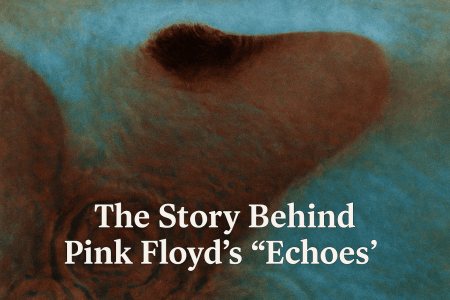
“Echoes” is one of Pink Floyd’s most ambitious and defining tracks. Clocking in at over 23 minutes, it closes out their 1971 album Meddle with a sweeping journey through sound, space, and mood. More than just a long song, it marked a turning point for the band. “Echoes” showed how far they had come from their psychedelic roots and pointed to the tightly crafted concept albums that would soon follow. It blends improvisation with structure and atmosphere with melody, setting the stage for the next chapter in Pink Floyd’s evolution.
The Context: Where Pink Floyd Stood in 1971
By 1971, Pink Floyd was a band in transition. Syd Barrett, their founding member and original frontman, had left due to mental health struggles just a few years earlier. Without him, the group spent time searching for a new direction. Albums like More and Ummagumma saw them leaning into experimentation, testing the limits of sound and structure without fully landing on a clear identity.
During this period, they moved away from Barrett’s whimsical style and leaned into more instrumental and atmospheric work. While Ummagumma gave each member a solo spotlight, it felt more like a collection of ideas than a complete album. Atom Heart Mother followed, with a more unified sound but still felt like a band trying to piece together its voice.
In the wider music world, the early ’70s were full of change. Progressive rock was rising, bands like King Crimson and Yes were pushing boundaries, and audiences were ready for longer, more complex compositions. Pink Floyd was right in the middle of it, ready to step into their own.
The Birth of “Echoes”
“Echoes” began as a studio experiment. The band didn’t have a full song written—just fragments of sound and loose ideas. They gave it the working title “Nothing, Parts 1–24,” reflecting how disconnected and raw the early takes were. The track grew piece by piece during jam sessions at Abbey Road Studios.
One of the first sparks came from a single note. Richard Wright played a piano through a Leslie speaker, which gave it a soft, echoing “ping.” That sound became the song’s opening and one of its most memorable features. It was haunting, simple, and set the tone for what followed.
Rather than writing it from start to finish, the band layered the song over time. They tried different textures, built parts through improvisation, and shaped the piece by feel. The result was not just a song but a soundscape—built from instinct, not a plan.
Musical Composition & Structure
“Echoes” stretches across 23 minutes, but it never feels aimless. The piece is divided into distinct sections, each flowing naturally into the next. It opens with that iconic “ping,” a clean piano note that drifts into space. From there, the verses begin, carried by David Gilmour’s vocals and guitar, paired with Richard Wright’s lush organ textures.
As the song moves forward, it shifts into a long ambient section. This part drops rhythm and melody in favor of mood—dense, eerie, and open-ended. Gilmour uses a wah pedal and slide technique to create what sounds like seagulls calling across an empty sky. It’s one of the most unusual and striking moments in Pink Floyd’s catalogue.
The band slowly rebuilds from that quiet space, leading into a powerful climax driven by drums and layered guitar. It then returns to the main vocal theme in a soft reprise, tying the journey together.
Throughout the track, Pink Floyd blends psychedelic rock with progressive form and ambient sound. The transitions feel smooth, yet each section has its own voice. Wright’s keys provide both the structure and the atmosphere, often guiding the emotional tone. The whole piece plays like a conversation between instruments, more than a traditional song.
Lyrical Themes
The lyrics of “Echoes” are open to interpretation, which is part of their lasting appeal. At their core, they explore themes of connection, awareness, and the shared experience of being alive. There’s a quiet sense of searching in the words—an invitation to look inward while reaching outward.
Some listeners see the lyrics as a meditation on human consciousness. Others read them as a metaphor for life underwater, especially given lines like “And no one showed us to the land / And no one knows the wheres or whys.” The imagery is fluid and dreamlike, suggesting movement through unknown space, whether it’s the ocean or the mind.
The chorus—“Strangers passing in the street / By chance two separate glances meet / And I am you and what I see is me”—gets to the heart of the song. It’s about seeing yourself in others, even if only for a moment. That simple idea makes “Echoes” feel deeply human, even as the music drifts far beyond the ordinary.
Recording Techniques & Innovation
The making of “Echoes” saw Pink Floyd pushing the limits of what they could do in the studio. They recorded the track at Abbey Road, using a mix of traditional instruments and experimental setups to shape its unique sound.
One of the most famous techniques was Richard Wright’s use of a Leslie speaker on his grand piano. It gave the opening “ping” its swirling, underwater feel. David Gilmour also ran his guitar through a wah pedal and reversed it to create the seagull-like cries in the middle section—an effect discovered by accident during a session.
The band made use of tape manipulation, layering sounds and fading them in and out to stretch time and space within the song. Long reverb tails, careful panning, and subtle shifts in texture gave the track its sense of movement.
These choices weren’t just for show. They helped turn the studio itself into an instrument. At a time when many bands were sticking to traditional recording methods, Pink Floyd treated the studio as a creative tool. With “Echoes,” they weren’t just writing music—they were building an environment.
Reception and Legacy
When Meddle was released in 1971, “Echoes” stood out, but it didn’t make a huge splash with critics. Some praised its ambition, while others saw it as self-indulgent. It wasn’t a radio hit, and its length made it hard to market. Still, fans connected with it, especially during live performances where the track came fully alive.
Over time, “Echoes” gained a new level of respect. Today, it’s often seen as the bridge between early Floyd and the polished concept albums that followed. Its layered structure, sonic detail, and emotional reach all point directly to The Dark Side of the Moon. Without “Echoes,” that album likely wouldn’t have taken the same shape.
The song also left a mark on progressive rock as a whole. It proved that long-form tracks could be immersive and meaningful, not just technical exercises. Its live performance in Live at Pompeii became iconic, showing how music and space could work together to create something timeless. For many, “Echoes” isn’t just a song—it’s an experience.
Closing Thoughts
“Echoes” is more than a long track tucked at the end of an album—it’s a turning point in Pink Floyd’s story. It captures a band finding its voice through sound, space, and feeling. Every layer of the song reflects their growing confidence and curiosity, setting the tone for the classics that followed.
If it’s been a while since you’ve heard it, now’s a good time to listen again. Put on headphones, block out some time, and let it unfold. “Echoes” rewards patience. It invites you to get lost, and maybe even find something new.