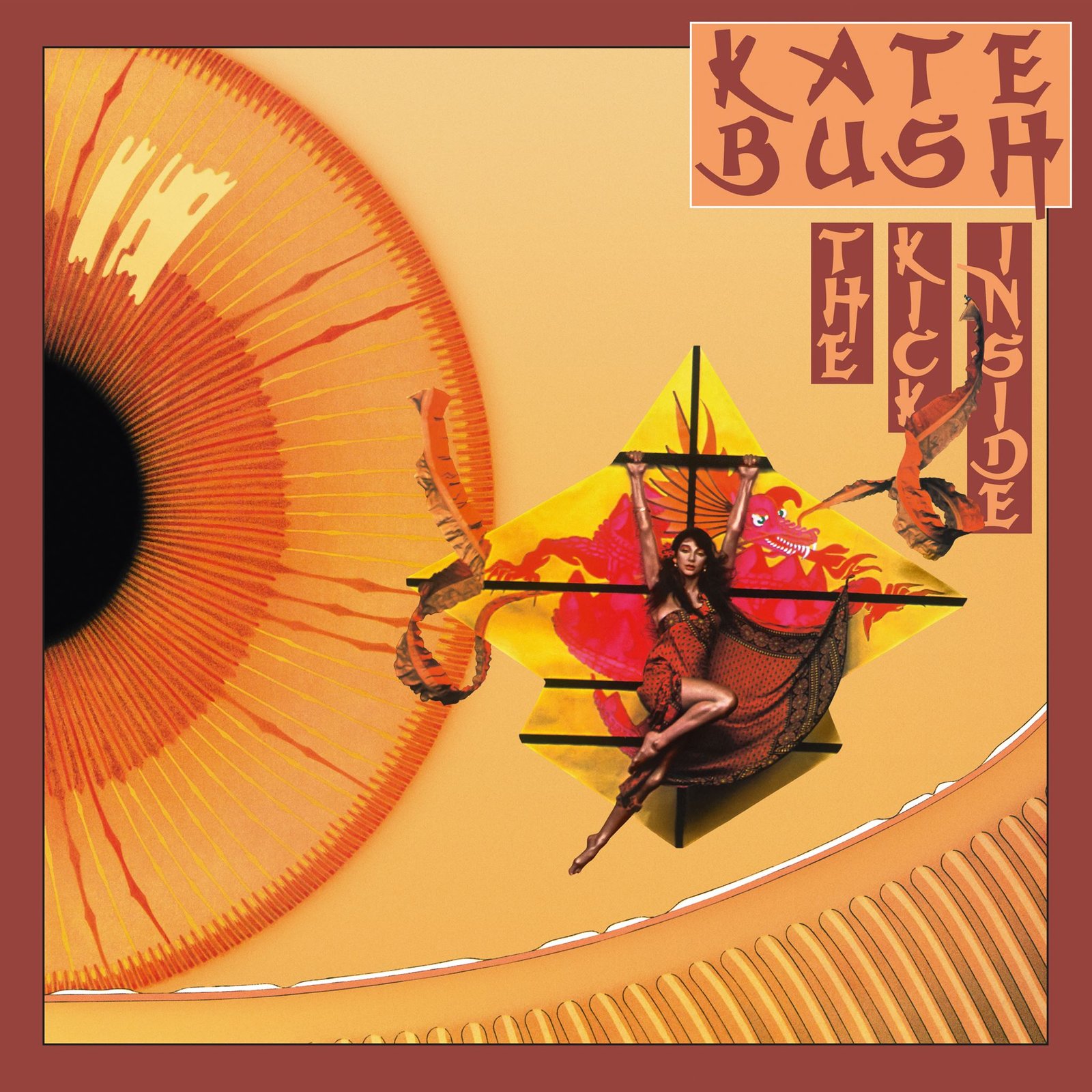
Few debut albums announce the arrival of an artist quite like The Kick Inside. Released on 17 February 1978, the album introduced Kate Bush as one of Britain’s most distinctive young songwriters. Combining theatrical vocals, imaginative storytelling and richly layered arrangements, it remains one of the most compelling debuts of its era.
Bush was just 19 when the album was released, yet her songwriting already displayed an unusual maturity. From the haunting drama of “Wuthering Heights” to the delicate intimacy of “The Man with the Child in His Eyes”, The Kick Inside revealed an artist capable of transforming complex emotions and unconventional ideas into captivating music. Its combination of accessible melodies and ambitious storytelling distinguished it from much of the contemporary pop landscape.
Produced by Andrew Powell, the album brought together elements of art pop, progressive rock and classical music, creating a sound that could be playful and theatrical one moment, intimate and unsettling the next. Beneath its elegant arrangements lay surprisingly challenging themes, including love, sexuality, spirituality and death, explored with a curiosity that would remain central to Bush’s work.
More than simply an introduction to one of Britain’s most original musicians, The Kick Inside established foundations she would continue to develop throughout her discography. Nearly five decades later, its songs remain captivating not because of the youth of their creator, but because of the confidence and imagination with which they were conceived.
The Making of The Kick Inside (1978)
The origins of The Kick Inside stretch back several years before its release, when a teenage Kate Bush was already writing and recording her own compositions at her family’s home in Kent. Encouraged by her musical family, she began developing the songs that would eventually bring her talent to the attention of the music industry.
A significant turning point came when Bush’s early recordings reached David Gilmour, guitarist with Pink Floyd. Impressed by her songwriting, Gilmour financed professional recording sessions at London’s AIR Studios in 1975, working with producer Andrew Powell and engineer Geoff Emerick. These recordings helped demonstrate Bush’s potential to EMI, which subsequently signed her to the label.
Rather than immediately releasing an album, Bush spent the following years developing her musical and performance skills, including studying dance with Lindsay Kemp. When recording sessions for The Kick Inside took place in 1977, Powell returned as producer, helping develop her piano-led compositions into richly arranged recordings that combined orchestral textures with elements of rock and pop.
Reflecting on the experience, Bush later recalled:
“I’d been on a mission since my mid teens to make an album. This was it; The Kick Inside. The plan didn’t really go any further than that.”
Powell’s production provided a polished setting for songs whose melodies and subject matter frequently departed from mainstream expectations. That contrast between musical elegance and lyrical eccentricity became one of the record’s defining characteristics.
The Kick Inside: Sound and Production

Producer Andrew Powell brought warmth and sophistication to The Kick Inside, combining Bush’s piano-led compositions with orchestral instrumentation and the contributions of experienced session musicians, including guitarist Ian Bairnson and drummer Stuart Elliott. The recordings are carefully arranged, but rarely static: small changes in instrumental texture, rhythm and vocal phrasing frequently alter the emotional direction of a song.
Piano, Orchestration and Musical Arrangements
The piano forms the foundation of much of The Kick Inside, providing both a melodic anchor and a means of expressing the changing emotions within Bush’s songs. On “The Man with the Child in His Eyes”, gentle piano accompaniment and sweeping strings create an intimate, almost dreamlike atmosphere, allowing the vulnerability of the lyrics to take centre stage. By contrast, “The Saxophone Song” incorporates jazz-influenced textures and a prominent saxophone passage, introducing a more sensual and rhythmically flexible sound.
Elsewhere, the album embraces a more energetic approach. “Kite” combines a reggae-influenced rhythm with playful, swooping vocal passages that give the song an almost weightless quality. Its rising and falling melodic phrases seem to imitate the movement suggested by its title. “James and the Cold Gun”, meanwhile, moves into harder rock territory, with prominent electric guitar, driving percussion and a more forceful vocal performance. Its directness provides a striking contrast to the intricate arrangements of the album’s ballads.
Powell’s production helps accommodate these contrasting approaches. Instruments are generally given sufficient space to remain distinct, while the orchestral passages reinforce the emotional direction of the compositions. At times, the polished sound places Bush’s more unusual ideas within a conventional late-1970s setting, but the arrangements also give her songs a clarity that makes their complexities easier to appreciate.
Kate Bush’s Distinctive Vocal Style
Perhaps the album’s most immediately recognisable feature is Bush’s voice. Her unusually high register, dramatic phrasing and ability to move between contrasting emotional expressions make her performances central to the music’s impact. Rather than simply following the melodies, she frequently adopts the perspectives of the characters within her songs, adjusting her tone and delivery to communicate their emotions.
This approach is particularly effective on “Wuthering Heights”, where her soaring upper register captures the desperation and ghostly presence of Catherine Earnshaw. The performance moves between fragile passages and dramatic vocal peaks, with elongated phrases heightening the sense of yearning. Bush’s delivery becomes part of the storytelling itself, making the character’s emotional state audible even apart from the lyrics.
On “Them Heavy People”, however, she adopts a more playful, rhythmically expressive approach, shaping her phrasing around the song’s bouncing groove. Elsewhere, the restrained delivery of “The Man with the Child in His Eyes” demonstrates her ability to communicate vulnerability without relying on the more extravagant techniques heard throughout the album.
These contrasting performances reveal an impressive degree of vocal control. Bush can move from delicacy to forceful expression without making those transitions feel arbitrary, giving individual songs their own dramatic character. Her voice is not merely an instrument placed within the arrangements; it frequently determines how the music unfolds around her.
Lyrics and Themes: Love, Literature and the Unconventional

Across its thirteen tracks, The Kick Inside explores love, sexuality, spirituality and death, frequently approaching familiar emotions through unusual characters and imaginative narratives. Bush’s interest lies not only in the subjects themselves but also in the perspectives through which they are presented, allowing her to move between personal reflection, literary adaptation and darker forms of storytelling.
Literary Influences and Storytelling
Perhaps the most celebrated example is “Wuthering Heights“, inspired by Emily Brontë’s 1847 novel of the same name. Rather than simply retelling the story, Bush adopts the perspective of Catherine Earnshaw, whose ghost calls out to Heathcliff. By presenting the narrative through Catherine’s desperate pleas, she transforms a classic work of literature into an intensely personal expression of longing, capturing the obsessive romance and supernatural atmosphere of Brontë’s original story.
Elsewhere, Bush finds inspiration in more unexpected places. “Moving”, the album’s opening track, was written as a tribute to her dance teacher Lindsay Kemp, whose expressive approach to movement influenced her developing artistic identity. The song reflects the emotional and physical freedom Bush associated with dance, demonstrating how her songwriting could draw upon experiences beyond conventional romantic relationships.
“Strange Phenomena” explores coincidence, superstition and the mysterious patterns that seem to connect everyday experiences. Its references to recurring events and unexplained synchronicities reveal Bush’s fascination with subjects rarely explored in mainstream pop, while its playful tone prevents the song from becoming overly serious.
Love, Sexuality and Darker Subject Matter
Although love is a recurring theme throughout The Kick Inside, Bush rarely approaches it in a straightforward manner. “Oh to Be in Love” captures the excitement and uncertainty of romantic attraction, while “Feel It” addresses physical intimacy with a directness that contrasts with the album’s more elaborate storytelling. These songs are comparatively simple in their lyrical approach, but their emotional immediacy provides a counterbalance to Bush’s more intricate narratives.
Other compositions venture into considerably darker territory. The closing title track, “The Kick Inside”, draws upon the traditional folk ballad “Lucy Wan”, telling the story of a young woman facing the consequences of an incestuous relationship and pregnancy. The song’s restrained, almost tender presentation contrasts sharply with its disturbing subject matter, allowing the tragedy to emerge through the narrative rather than through exaggerated musical drama.
“The Man with the Child in His Eyes”, meanwhile, explores romantic idealisation and the uncertainty surrounding an intimate emotional connection. Its narrator describes a mysterious figure who appears to understand her inner world, leaving room for different interpretations of whether the relationship is real, imagined or somewhere between the two. This ambiguity gives the song a depth that extends beyond its apparently straightforward romantic subject.
Spirituality and Personal Discovery
Bush’s interest in spirituality emerges most clearly on “Them Heavy People”, which references figures including the spiritual teacher G. I. Gurdjieff and Jesus. Rather than presenting enlightenment as something distant or inaccessible, the song approaches personal growth through curiosity, questioning and the influence of those who challenge established ways of thinking.
Its playful tone is particularly effective, preventing the subject from becoming overly solemn. Nevertheless, the lyrical ideas are less fully developed than those of “Wuthering Heights” or the title track, relying more on references and suggestions than a sustained narrative. This does not diminish the song’s charm, but it highlights the difference between Bush’s more direct compositions and her most sophisticated storytelling.
The breadth of these subjects is one of the album’s most compelling qualities. Whether inhabiting a literary character, examining desire or contemplating spiritual discovery, Bush approaches her material with curiosity and emotional conviction. Not every idea is developed with equal depth, but even the less ambitious songs contribute to a record unusually rich in contrasting perspectives.
Cohesion and Flow: How The Kick Inside Works as an Album

Despite its variety of musical styles and lyrical subjects, The Kick Inside maintains a recognisable character across its thirteen tracks. Bush moves between delicate piano ballads, theatrical pop and harder-edged rock, with her expressive vocals providing a thread through otherwise contrasting arrangements. Yet this diversity raises an interesting question: does the album function as a carefully constructed listening experience, or is its appeal found primarily in the individuality of its songs?
The opening track, “Moving”, establishes an atmosphere of mystery with its whale-song introduction and graceful arrangement. It is an unconventional beginning for a debut album, immediately signalling Bush’s willingness to experiment with sound and structure. From there, “The Saxophone Song” and “Strange Phenomena” develop the record’s more adventurous qualities before “Kite” introduces a playful burst of energy.
The middle of the album is less consistent in its pacing, although its contrasts are often fascinating. After the emotional intensity of “Wuthering Heights”, the driving guitars of “James and the Cold Gun” introduce a more aggressive sound. Its forceful delivery then gives way to the intimate atmosphere of “Feel It”, creating one of the record’s more abrupt changes in mood. “Oh to Be in Love” subsequently restores a sense of melodic brightness, while “L’Amour Looks Something Like You” introduces a more urgent expression of romantic desire. These transitions demonstrate Bush’s stylistic range, but they can also make the record feel more like a collection of individually conceived compositions than a deliberately unified musical journey.
The final three tracks provide a particularly revealing contrast. “Them Heavy People” brings a burst of rhythmic energy and humour, while “Room for the Life” offers a warmer, more reflective perspective. The closing title track then moves into much darker territory, its gentle musical setting accompanying a tragic narrative. Rather than ending with the theatrical grandeur of “Wuthering Heights” or the exuberance of the album’s more playful songs, Bush leaves listeners with an unexpectedly sombre conclusion.
The album’s cohesion therefore comes less from a consistent musical style than from the personality of its performances and the recurring tension between innocence and darker experience. Its occasional unevenness is understandable for a debut assembled from songs written across several formative years. The Kick Inside may not flow with the precision of Bush’s later, more conceptually unified albums, but its changing moods make the listening experience difficult to predict and consistently engaging.
Standout Tracks and Moments from The Kick Inside
Although The Kick Inside is best remembered for its breakthrough singles, some of its most rewarding moments lie beyond its best-known songs. Its highlights demonstrate different approaches to composition and performance, from the dramatic scale of “Wuthering Heights” to the intimacy of “The Man with the Child in His Eyes” and the playful energy of “Them Heavy People”.
Wuthering Heights: A Remarkable Debut Single
Few debut singles have made quite the impression of “Wuthering Heights”. Inspired by Emily Brontë’s novel, the song transforms a Gothic love story into an extraordinary piece of pop music, driven by Bush’s soaring vocals, expressive piano playing and dramatic arrangement.
Released in January 1978, “Wuthering Heights” became the first entirely self-written song by a female artist to reach number one on the UK Singles Chart, remaining at the summit for four weeks. Its success was particularly striking given its unconventional structure, unusual vocal delivery and literary subject matter.
The song’s greatest achievement is how naturally these elements come together. Bush’s dramatic shifts in pitch and phrasing bring Catherine Earnshaw’s desperation to life, while the sweeping instrumentation sustains the emotional tension. Ian Bairnson’s expressive closing guitar solo provides a memorable conclusion, allowing the music to carry the song’s sense of longing beyond its final vocal passages.
Rather than compromising her unusual artistic instincts for commercial appeal, Bush demonstrated that those very qualities could make a pop song unforgettable.
The Man with the Child in His Eyes: Extraordinary Early Songwriting
“The Man with the Child in His Eyes” offers a striking contrast to the intensity of “Wuthering Heights”. Its delicate piano accompaniment, orchestral strings and restrained vocal performance reveal Bush’s ability to communicate complex emotions through comparatively simple musical ideas.
Bush is widely reported to have written the song at just 13 years old, several years before recording it at London’s AIR Studios in 1975. Its exploration of romantic idealisation and emotional uncertainty displays an extraordinary sensitivity for such a young songwriter, although its enduring appeal extends well beyond the circumstances of its creation.
The arrangement allows the melody to unfold without unnecessary embellishment. Gentle piano phrases provide the foundation, while the strings gradually deepen the emotional atmosphere. Rather than building towards an overwhelming climax, the song maintains a sense of intimacy, with Bush’s controlled phrasing allowing its uncertainties to remain unresolved.
Where “Wuthering Heights” finds its power in drama, “The Man with the Child in His Eyes” demonstrates how effective Bush can be when exercising restraint.
Them Heavy People: Playfulness and Musical Experimentation
“Them Heavy People” captures another side of Bush’s musical personality, combining a buoyant, reggae-influenced rhythm with playful vocals and unconventional lyrical references. Its lively arrangement provides a welcome contrast to the album’s more introspective compositions.
The song approaches spiritual enlightenment and personal discovery with humour rather than solemnity. Bush’s animated vocal phrasing follows the rhythmic movement of the music, giving the performance an infectious sense of energy. The result is a composition whose musical character is considerably lighter than its philosophical references might suggest.
Although it lacks the emotional intensity of the album’s strongest ballads, “Them Heavy People” succeeds through its personality, melodic charm and willingness to approach an unusual subject with genuine playfulness.
Overlooked Highlights: Moving and The Saxophone Song
Beyond the singles, “Moving” provides one of the album’s most atmospheric moments. Opening with a recording of whale song, it gradually develops into a graceful tribute to Bush’s dance teacher, Lindsay Kemp. Its flowing melody and measured pace create a sense of suspended movement, making it an effective introduction to the record’s more reflective side.
“The Saxophone Song” takes a different approach, incorporating jazz-influenced instrumentation and prominent saxophone passages. The contrast between the fluid saxophone lines and Bush’s vocal melody creates a sensual, slightly mysterious atmosphere, giving the song a character distinct from the album’s piano-led ballads.
Neither composition achieved the commercial recognition of the album’s singles, yet both demonstrate the rewards of exploring The Kick Inside beyond its most celebrated tracks. They also help establish the album’s musical breadth without relying on the dramatic vocal extremes for which Bush would become especially well known.
Artistic Innovation and Legacy of The Kick Inside

When The Kick Inside arrived in February 1978, British popular music was undergoing considerable change. Punk and new wave were challenging established rock conventions, while disco remained a major commercial force. Against this backdrop, Bush’s combination of literary storytelling, theatrical performance and sophisticated arrangements offered something distinctly different. Her debut occupied an unusual space between accessible pop and more adventurous musical traditions.
Challenging the Conventions of Popular Music
One of the album’s most significant achievements was demonstrating that unconventional songwriting could reach a mainstream audience. Bush frequently departed from familiar pop subjects, incorporating literary characters, spiritual references and complex emotional perspectives without abandoning memorable melodies.
The success of “Wuthering Heights” was particularly significant. Its four-week reign at the top of the UK Singles Chart demonstrated that a song with an unusual vocal style and a narrative inspired by a nineteenth-century novel could achieve widespread commercial success. The qualities that made it unconventional were also central to its appeal.
Her emergence was notable in an industry where young female performers were often promoted primarily as singers rather than songwriters. Bush arrived with a collection of self-written compositions and a clear sense of the subjects she wanted to explore. Although experienced musicians and producer Andrew Powell helped shape the recordings, the narratives and melodies at their centre originated with her.
Commercial Success and Recognition
The Kick Inside reached number three on the UK Albums Chart, confirming that Bush’s appeal extended beyond her breakthrough single. The album’s success was particularly impressive for a debut that combined accessible melodies with such unusual subject matter.
Commercial success did not necessarily mean that every aspect of Bush’s music appealed equally to listeners. Her high-register vocals and theatrical presentation were sufficiently unusual to divide opinion, while some of the arrangements retained the polished character of late-1970s mainstream pop.
Nevertheless, the album provided a substantial foundation for her subsequent career. It introduced listeners to a songwriter capable of balancing emotional immediacy with challenging ideas, while giving Bush the opportunity to pursue increasingly ambitious musical projects.
The Foundations of Kate Bush’s Artistic Development
The significance of The Kick Inside becomes clearer when viewed alongside Bush’s subsequent recordings. Never for Ever (1980) expanded her interest in unusual narratives and increasingly adventurous arrangements, while The Dreaming (1982) pursued a far more experimental approach to rhythm, vocal performance and production. By Hounds of Love (1985), these ambitions had developed into a sophisticated musical vision that combined commercial appeal with considerable creative freedom.
These albums, explored further throughout Bush’s discography, also reveal an important distinction between her debut and later work. On The Kick Inside, her compositions were developed through Andrew Powell’s production and the contributions of experienced session musicians. As her career progressed, Bush assumed greater control over the recording process, eventually producing her own albums and developing an increasingly adventurous studio sound.
That progression makes the debut particularly fascinating. It captures an early stage in Bush’s development, before she had acquired the technical independence associated with her later recordings, but with many of her central musical interests already present. Its achievements deserve recognition on their own terms rather than simply as preparation for the albums that followed.
Closing Thoughts: A Remarkable Beginning

Few debut albums balance youthful ambition and accomplished songwriting as effectively as The Kick Inside. At just 19 years old, Kate Bush had assembled thirteen compositions that explored a striking range of emotions, characters and musical approaches. The record is not merely impressive because of her age; its strongest songs would be exceptional achievements at any stage of an artist’s career.
Its finest moments reveal an ability to make unusual ideas emotionally convincing. “Wuthering Heights” transforms a supernatural literary narrative into an unforgettable pop song, while “The Man with the Child in His Eyes” achieves a comparable emotional impact through simplicity and restraint. Elsewhere, compositions such as “Moving” and “The Saxophone Song” demonstrate that the album’s appeal extends well beyond its most celebrated singles.
The record is not without limitations. Powell’s polished production occasionally places Bush’s more adventurous ideas within arrangements closely associated with their era, while the shifts between contrasting musical styles can interrupt its momentum. Some songs are also less fully realised than others, particularly when measured against the emotional depth of its strongest material.
These imperfections are relatively minor when considered alongside the album’s achievements. Its unpredictable character, melodic strength and unusually imaginative songwriting create an experience that remains compelling from its opening moments to its sombre conclusion. A masterpiece need not be technically flawless; what matters is whether its artistic accomplishments are exceptional enough to transcend its weaknesses.
Nearly five decades after its release, The Kick Inside continues to stand on its own merits. Its finest compositions retain their emotional power, and the contrasts between its songs make it rewarding to revisit. More than a promising beginning, it is an outstanding record that deserves its place among the great debut albums of popular music.
Official Tune Tempest Rating
10/10 — A Masterpiece
With its unforgettable melodies, extraordinary performances and fearless imagination, The Kick Inside remains one of Kate Bush’s defining achievements. Its occasional imperfections are eclipsed by the originality and emotional power of its songwriting, making it a debut worthy of the highest acclaim.