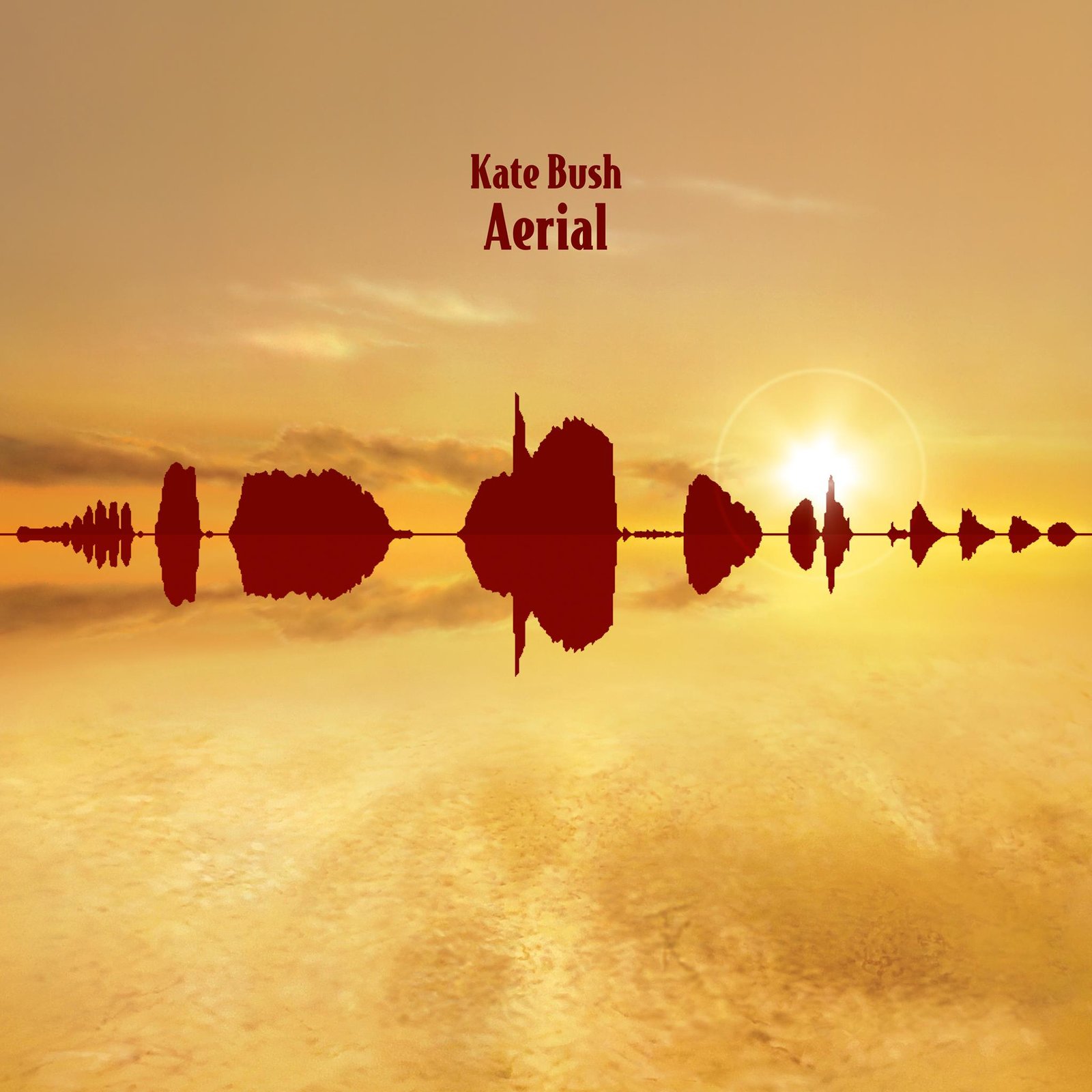
Few musical comebacks have been as quietly extraordinary as Kate Bush’s Aerial. Released on 7 November 2005, her eighth studio album arrived twelve years after The Red Shoes, ending a prolonged absence that had generated considerable speculation about her future as a recording artist. Yet Bush returned with something more contemplative than a conventional comeback: an expansive double album exploring the beauty, mystery and emotional significance of everyday existence.
Across its two distinct halves, A Sea of Honey and A Sky of Honey, Bush examines subjects ranging from motherhood and personal loss to mathematical fascination, artistic creation and the changing rhythms of the natural world. These contrasting ideas are united by a patient approach to composition, revealing an artist whose musical imagination had evolved considerably since her previous release.
Piano-led arrangements, richly textured instrumentation and moments of near-silence frequently take precedence over dramatic musical gestures. This apparent simplicity conceals considerable sophistication, particularly throughout the interconnected compositions of A Sky of Honey, where individual ideas develop into an extended exploration of light, nature and the passage of time.
The album’s achievement lies in the confidence with which Bush allows these ideas to unfold. Without abandoning the experimentation that defined her earlier career, she discovers new expressive possibilities in restraint, observation and the gradual development of musical atmosphere.
Aerial stands among Kate Bush’s greatest artistic achievements: a work of imagination, emotional maturity and compositional ambition whose richness becomes increasingly apparent with repeated listening.
The Making of Aerial: Twelve Years of Change
Bush’s years away from releasing albums were not simply a period of creative inactivity. Her personal priorities changed, and the work that eventually emerged reflected a different relationship with music, family and the world beyond the studio.
The birth of her son, Albert, affectionately known as Bertie, in 1998 marked an especially significant change. Motherhood became central to her life, providing experiences that would eventually find expression in the intimate domestic imagery of Aerial. Her experience of family life would inform the intimacy of songs such as “Bertie”, alongside a growing interest in the overlooked details of daily experience.
A Return on Her Own Terms
Throughout her career, Bush had maintained an unusually high degree of control over her recordings, frequently allowing years to pass between releases. With Aerial, that independence became particularly important.
The album emerged without any obvious attempt to recreate the commercial formula of Hounds of Love or respond to contemporary musical trends. Instead, Bush pursued an increasingly patient approach to composition, allowing individual musical ideas to unfold gradually.
Her new material did not reject the elaborate arrangements of earlier albums, but it placed greater trust in the expressive power of space and sustained atmosphere. That shift would become clearest in the way individual pieces were allowed to develop.
Finding Inspiration in Everyday Life
One of Aerial‘s defining characteristics is its fascination with experiences that might initially appear too ordinary to inspire ambitious musical compositions.
Domestic routines, changing daylight and birdsong became starting points for songs whose scale and emotional reach often exceeded their modest premises. This attention to the natural world was especially important to the album’s second half.
Bush’s fascination with birdsong and its relationship with light provides a particularly revealing insight into the project’s inspiration.
As she explained:
“I wanted to explore the idea of birdsong as a language and the idea that light is a trigger for their extraordinary song. Why do they all start to sing at dawn? Why do they sing so strongly as the sun starts to set?”
— Kate Bush, discussing Aerial
Her observations reveal an artist increasingly interested in the natural rhythms that humans frequently overlook. Birdsong becomes more than an atmospheric detail; it represents a form of communication whose relationship with light and time remains both mysterious and compelling.
These ideas would become fundamental to A Sky of Honey, where birdsong and recurring musical motifs help connect individual compositions into a continuous experience. Rather than merely imitating the natural world, Bush uses its sounds and rhythms to explore the relationship between observation, imagination and artistic creation.
The Ambition of a Double Album
Despite its frequently understated musical language, Aerial was an exceptionally ambitious undertaking.
Bush divided the album into two complementary parts, each with a distinct artistic purpose. A Sea of Honey presents seven largely independent compositions, exploring subjects as varied as motherhood, mathematical imagination, fame and personal loss.
A Sky of Honey, by contrast, unfolds as a continuous musical sequence, using the changing light and atmosphere of a single day to create an extended meditation on nature, creativity and the passage of time.
This structure allowed Bush to accommodate contrasting approaches to songwriting without sacrificing the larger album’s identity. The first half demonstrates her ability to transform unusual individual subjects into compelling compositions, while the second reveals her remarkable command of sustained musical development.
The division gives each disc room to pursue its own logic, a decision whose significance becomes clearer when the album is heard from beginning to end.
A Changing Musical Landscape: The Sound of Aerial

Musically, Aerial represents a remarkable evolution in Kate Bush’s approach to composition and production. Where The Red Shoes frequently embraced prominent percussion, guitar-driven arrangements and abrupt stylistic contrasts, its successor favours a more measured musical language. Piano, acoustic instrumentation, subtle electronic textures and carefully layered vocals create an atmosphere that feels expansive without becoming unnecessarily elaborate.
Yet Aerial is far from a uniformly restrained record. Its quieter passages are balanced by moments of rhythmic exuberance, dramatic instrumental development and richly orchestrated arrangements. What distinguishes the album is Bush’s ability to integrate these contrasting elements into compositions that feel purposeful rather than overcrowded.
The distinction is audible in the smallest changes of texture, harmony and rhythm.
A More Patient Approach to Composition
Many of the album’s compositions resist the pressure to make an immediate impact.
“King of the Mountain” establishes this approach immediately. Released as the album’s lead single, it offered listeners their first substantial indication of Bush’s musical direction after twelve years without a new studio album.
Its relatively straightforward structure could initially seem underwhelming against the anticipation surrounding Bush’s return. Given the expectations attached to the single, its understated character was a provocative first impression.
Heard as the album’s opening statement, however, the restraint acquires a different significance.
Built around a measured rhythmic pulse, atmospheric keyboards and expressive guitar textures, “King of the Mountain” creates a sense of mystery without relying on dramatic instrumental excess. Bush’s vocal performance moves between intimate restraint and greater intensity, while the arrangement maintains a carefully controlled tension.
What might initially appear comparatively simple is, in many respects, an introduction to the musical philosophy that shapes the wider album. Rather than overwhelming listeners with instrumental complexity, Bush allows individual sounds and melodic ideas sufficient space to establish their character.
Its accessible form establishes a principle that the longer compositions will take much further: complexity can arise from the relationship between carefully chosen elements, not merely from their number.
Elsewhere, “Mrs. Bartolozzi” demonstrates the effectiveness of an even more minimal approach. Centred largely on piano and voice, the composition transforms the familiar imagery of domestic washing into something unexpectedly absorbing. The repetitive musical patterns mirror the circular movement of the washing machine, while Bush’s restrained delivery allows the song’s more ambiguous emotional undertones to emerge gradually.
The arrangement initially appears deceptively simple. Yet its subtle shifts in vocal emphasis and harmonic colour demonstrate how effectively Bush can sustain interest without elaborate instrumentation.
The same compositional confidence extends beyond individual songs, with motifs on A Sky of Honey finding their resolution across several movements.
Organic Instrumentation and Electronic Textures
Although Aerial frequently feels more organic than its predecessor, Bush does not abandon electronic instrumentation. Instead, synthesizers and processed sounds are integrated into arrangements that place greater emphasis on atmosphere and musical continuity.
“Joanni” provides an effective example. Its combination of electronic textures, rhythmic percussion and melodic vocal lines creates a distinctive sound that feels simultaneously modern and rooted in Bush’s earlier experimental work.
The song’s arrangement possesses a sense of forward movement without becoming excessively dense. Rather than competing for attention, the instrumental layers contribute to a carefully constructed musical atmosphere.
“Aerial Tal” offers a more unusual approach, blurring the distinction between human vocalisation and birdsong. Bush imitates the melodic patterns of birds, transforming natural sounds into musical material and challenging conventional ideas about where composition ends and environmental sound begins.
These exchanges between voice, electronics and environmental sound help the second disc move between recognisable song forms and something closer to a continuous soundscape.
Rhythm, Movement and Musical Transformation
Despite its contemplative reputation, Aerial contains some of Bush’s most exhilarating rhythmic passages.
“Sunset” begins with a relaxed, almost conversational musical character, its delicate piano and guitar accompaniment evoking the warmth of a fading afternoon. As the composition develops, however, the arrangement undergoes a striking transformation.
Spanish-influenced guitar and increasingly animated percussion introduce a burst of rhythmic energy, turning the song into an exuberant celebration of movement and changing light.
The transition is particularly effective because it feels earned. Rather than introducing an abrupt stylistic change for its own sake, Bush allows the music to develop towards a natural release of energy.
“Nocturn” achieves something similarly impressive through a different musical approach. Its extended structure unfolds over a persistent rhythmic foundation, with layered keyboards, expressive vocals and gradually intensifying instrumental textures creating an extraordinary sense of momentum.
The composition’s power lies in its cumulative development. Individual elements are introduced patiently, allowing the music to expand towards a climactic passage that feels both exhilarating and emotionally satisfying.
The dramatic passages have such force partly because the surrounding music has taught the listener to notice quieter changes.
The Evolution of Bush’s Voice
By the time of Aerial, Bush’s voice had developed considerably from the strikingly high register associated with her earliest recordings.
Her singing is generally warmer, deeper and more measured, with an emphasis on expressive phrasing rather than vocal acrobatics. This change proves particularly effective on an album concerned with reflection, intimacy and the passage of time.
On “Bertie”, her affectionate delivery communicates the joy of motherhood with unusual directness. The composition’s Renaissance-inspired instrumental character gives it a distinctive musical setting, but its emotional sincerity comes primarily from the warmth of Bush’s performance.
“A Coral Room” offers an even more affecting example. Against a sparse piano accompaniment, Bush delivers one of the most intimate performances of her career. Her careful phrasing and understated expression allow the song’s reflections on memory and loss to emerge without unnecessary theatricality.
Elsewhere, her voice becomes part of the instrumental landscape itself. Throughout A Sky of Honey, layered harmonies, wordless passages and birdlike vocalisations blur the distinction between singer and surrounding environment.
Her voice can lead a composition, recede into its textures or briefly become another sound within the landscape.
Production: Space, Detail and Atmosphere
The production of Aerial is among its greatest strengths.
Bush demonstrates an exceptional understanding of how musical space can shape the listener’s experience. Instruments are frequently introduced with considerable clarity, allowing individual sounds to retain their character even within more elaborate arrangements.
This is particularly apparent in the contrast between “A Coral Room” and the expansive compositions of A Sky of Honey. The former derives much of its emotional impact from its sparse instrumentation, while the latter uses gradual layering and recurring motifs to create a richly detailed musical environment.
Natural sounds are also integrated with unusual sensitivity. Birdsong is not simply employed as decorative atmosphere but becomes an essential component of the album’s musical identity, particularly in its second half.
There are moments when the album’s deliberate pacing demands considerable patience. Some listeners may find its extended instrumental passages or gradual transitions less immediately engaging than Bush’s more concise compositions. Yet these choices are fundamental to the record’s artistic purpose, allowing its themes of observation, time and transformation to emerge through the music itself.
The production is therefore more than a matter of polish. The listener hears time passing through the arrangements themselves: the lingering decay of a piano note, the arrival of a new instrumental colour, or the gradual gathering of rhythm. The album’s atmosphere is built from these decisions rather than applied over the songs.
Lyrical Themes and Symbolism: Finding Wonder in the Everyday

Bush’s lyrics move freely between subjects rarely placed side by side in popular songwriting. Across its two halves, she explores motherhood, mathematical obsession, domestic routines, historical figures and the changing natural world, transforming these disparate ideas into an unusually thoughtful examination of human experience.
Where much of her earlier work embraced elaborate fictional narratives and dramatic characters, Aerial frequently adopts a more contemplative perspective. Bush remains fascinated by unusual subjects, but her approach is increasingly concerned with observation rather than spectacle. The extraordinary is no longer necessarily found in distant mythology or supernatural events; it can emerge from the smallest details of everyday existence.
Fame, Isolation and the Burden of Celebrity
“King of the Mountain” opens the album with an enigmatic meditation on fame, identity and the enduring fascination surrounding celebrated figures.
Its references to Elvis Presley and Orson Welles’ Citizen Kane bring together two seemingly different cultural icons, united by the relationship between public mythology and private experience.
Elvis becomes a figure whose extraordinary celebrity has almost overwhelmed his identity as an individual. Bush’s lyrical imagery plays upon the mystery and speculation surrounding his legacy, questioning the extent to which fame can transform a person into something resembling a modern myth.
The references to Citizen Kane introduce another dimension. Orson Welles’ film explores the relationship between material success, personal isolation and the impossibility of fully understanding another person’s life. Its central character possesses immense wealth and influence, yet remains emotionally distant and ultimately unknowable.
By bringing these ideas together, Bush examines the distance between public perception and private reality. The song’s deliberately elusive narrative resists offering a straightforward interpretation, reflecting the uncertainty that surrounds figures whose identities have become inseparable from their reputations.
It is a compelling opening statement, particularly from an artist who had spent much of the preceding decade outside the public spotlight.
Motherhood, Affection and Domestic Intimacy
Motherhood provides one of Aerial‘s most personal sources of inspiration.
“Bertie”, written for Bush’s son, offers an unusually direct expression of maternal affection. Its lyrics celebrate the simple pleasure of watching a child grow, presenting love not as an abstract ideal but as an immediate, deeply felt experience.
The song’s sincerity is central to its appeal. Bush makes little attempt to disguise her emotions through elaborate symbolism, instead allowing the warmth of her observations to carry the composition.
For some listeners, this directness may initially appear sentimental, particularly when compared with the psychological complexity of her more theatrical songwriting. Yet the absence of irony is precisely what makes the song distinctive. Bush approaches maternal love without embarrassment, finding artistic value in an experience that is intensely personal.
“Mrs. Bartolozzi” offers a more ambiguous examination of domestic life.
Its central imagery revolves around a washing machine, an apparently mundane subject that Bush transforms into a meditation on memory, absence and emotional uncertainty.
As the washing turns, familiar household objects acquire an almost dreamlike significance. Clothing becomes suggestive of the people who wear it, while the movement of water introduces imagery that extends beyond the immediate domestic setting.
The composition’s emotional meaning remains deliberately open. Its references to absence and intimacy suggest experiences that cannot be fully explained through the literal activity being described.
The washing machine is never merely a novelty: its endlessly turning contents give the song a physical image for thoughts that return without settling.
Mathematics, Obsession and the Search for Meaning
Perhaps the album’s most unconventional lyrical subject appears in “π”, a composition inspired by mathematical fascination and the seemingly endless possibilities contained within numbers.
Bush presents a character absorbed by the mathematical constant pi, incorporating an extended sequence of its digits into the song itself.
The concept initially appears playful, even eccentric. Yet beneath its unusual premise lies a more intriguing examination of obsession, intellectual curiosity and the human desire to discover patterns within an apparently infinite universe.
Pi is particularly appropriate to these concerns. Its decimal expansion continues indefinitely without settling into a repeating pattern, suggesting a form of mathematical order that remains impossible to express completely.
By transforming numbers into a melodic sequence, Bush creates an unexpected relationship between mathematical abstraction and musical expression. What might otherwise seem emotionally detached becomes strangely intimate through the character’s devotion to the subject.
The song also reveals her willingness to challenge conventional expectations of lyrical meaning. Rather than using mathematics merely as a metaphor, Bush allows the numbers themselves to become part of the musical experience.
Although the composition’s extended numerical passages may test the patience of some listeners, its imaginative premise demonstrates her continuing ability to discover artistic possibilities in unexpected places.
Grief, Memory and the Fragility of Existence
If much of Aerial celebrates the beauty of ordinary life, “A Coral Room” confronts its impermanence with extraordinary sensitivity.
The song’s imagery moves between an underwater city, submerged objects and deeply personal memories, creating a dreamlike meditation on the passage of time.
Its aquatic setting suggests a world in which familiar structures have become inaccessible, preserved beneath the surface yet separated from ordinary experience. The imagery provides a powerful expression of memory itself: experiences that remain present within the mind despite belonging to a world that can no longer be recovered.
As the composition develops, Bush’s reflections become increasingly personal, drawing upon memories of her late mother.
The transition from surreal imagery to intimate recollection is particularly affecting. Rather than presenting grief through direct declarations of sorrow, Bush allows apparently disconnected images to reveal their emotional significance gradually.
Memory here offers both consolation and a painful reminder of absence. The song never fixes its imagery into a single explanation, allowing the submerged city and intimate recollections to remain in dialogue.
Nature, Light and the Passage of Time
While A Sea of Honey explores individual experiences, A Sky of Honey develops a more sustained relationship between the natural world and human consciousness.
The changing light of a summer’s day provides the foundation for an extended meditation on observation, creativity and transformation.
Birdsong is particularly significant. Throughout the sequence, birds become both inhabitants of the natural environment and participants in its musical expression. Their calls suggest a form of communication that exists independently of human language, yet possesses its own rhythms, patterns and emotional associations.
The recurring imagery of sunlight, colour and shadow similarly transforms the passage of time into something tangible. Rather than treating the movement from afternoon to night as a simple narrative device, Bush explores how changes in light alter the atmosphere and emotional character of familiar surroundings.
Artistic creation becomes closely connected with this process of observation. The presence of a painter, whose work responds to the changing sky, introduces an intriguing parallel between the natural world and the human desire to capture its beauty.
Yet the album also recognises the limitations of representation. Light changes, colours fade and moments disappear, regardless of how carefully an artist attempts to preserve them.
This tension between experience and artistic expression gives A Sky of Honey much of its philosophical depth. Bush celebrates the beauty of the natural world while acknowledging its constant transformation.
The Value of Paying Attention
The richness of Bush’s writing lies in her willingness to leave these experiences open to interpretation. Whether contemplating mathematical infinity, a vanished loved one or the changing colours of the sky, she approaches each subject with curiosity rather than certainty. The listener is invited to share that curiosity, discovering connections between seemingly unrelated experiences and recognising how much significance can reside in the smallest details.
Cohesion and Flow: Two Halves of a Remarkable Whole

One of Aerial‘s greatest achievements is its extraordinary sense of musical purpose. Despite encompassing sixteen tracks across two discs, the album rarely feels unnecessarily expansive. Instead, Kate Bush uses its considerable length to explore two complementary approaches to songwriting, creating a work whose structure is fundamental to its artistic identity.
The distinction between A Sea of Honey and A Sky of Honey is particularly important. The former presents seven largely independent compositions, while the latter develops an interconnected musical sequence inspired by the changing light and atmosphere of a single day.
Rather than attempting to unite every song within a continuous narrative, Bush allows each half to establish its own identity. The result is an album that accommodates remarkable diversity without sacrificing its overall sense of direction.
A Sea of Honey: Seven Distinct Musical Worlds
The first half of Aerial demonstrates Bush’s ability to explore seemingly unrelated subjects while maintaining a recognisable musical character.
“King of the Mountain” provides an appropriately enigmatic opening, its restrained arrangement establishing an atmosphere of mystery and reflection. From there, the album moves into the mathematical fascination of “π” and the affectionate domestic intimacy of “Bertie”.
These transitions might appear unlikely on paper. Yet Bush’s measured arrangements and increasingly warm vocal performances establish a consistent atmosphere, allowing the songs to complement one another despite their contrasting subjects.
The stillness of “Mrs. Bartolozzi” is followed by the darker pulse of “How to Be Invisible”, a contrast that gives the first disc welcome momentum.
The latter provides a welcome change in momentum, demonstrating that the album’s contemplative character does not depend upon musical uniformity. Its insistent groove and carefully layered instrumentation introduce a darker, more elusive atmosphere without disrupting the wider sequence.
“Joanni” continues this rhythmic emphasis before “A Coral Room” brings the first disc to a profoundly affecting conclusion.
Placed last, “A Coral Room” changes the emotional weight of what precedes it. Its quietness provides resolution without a conventional climax, and the first disc ends in a reflective space from which the second can begin anew.
Although these seven songs do not form a conventional narrative, their sequencing produces a convincing emotional progression. Bush moves between contrasting perspectives while maintaining a carefully balanced relationship between introspection and musical variety.
A Sky of Honey: An Extended Musical Journey
If A Sea of Honey demonstrates Bush’s command of individual songwriting, A Sky of Honey reveals her extraordinary ability to sustain a musical idea across an extended sequence.
The second half follows the changing atmosphere of a summer’s day, beginning in the afternoon and progressing through sunset, night and the following dawn. Its nine interconnected tracks are best understood as movements within a larger composition rather than entirely independent songs.
The opening passages establish an atmosphere of quiet observation. Birdsong, atmospheric keyboards and carefully placed instrumental details create the impression of a world gradually revealing itself to the listener.
“An Architect’s Dream” introduces the figure of a painter responding to the changing colours of the sky, while “The Painter’s Link” develops the relationship between artistic creation and the natural environment.
These early movements unfold patiently, allowing the atmosphere to emerge through subtle changes in musical texture rather than dramatic shifts in arrangement.
When “Sunset” breaks into its Spanish-influenced rhythmic passage, the change feels earned by the quiet movements preceding it. The sequence has established a sense of afternoon warmth before letting that stillness give way to motion.
From Sunset to Dawn: The Power of Musical Continuity
The second half of A Sky of Honey demonstrates an exceptional understanding of musical pacing.
Following the exuberance of “Sunset”, “Aerial Tal” offers a brief but distinctive transition, with Bush’s birdlike vocalisations blurring the boundary between human expression and the natural world.
“Somewhere in Between” then introduces a more reflective atmosphere, capturing the uncertain period between daylight and darkness. Its measured arrangement and expressive vocals create a sense of suspension, as though time itself has momentarily slowed.
“Nocturn” then sustains the night-time passage on a much larger scale, its long rhythmic ascent supplying the momentum for the closing movement. Its duration matters structurally: a shorter piece would not create the same sense of travelling through darkness towards release.
Finally, “Aerial” brings the sequence to its conclusion with an extraordinary celebration of sound and movement. Bush’s increasingly exuberant vocals merge with birdsong and driving instrumentation, creating the impression of an artist becoming almost inseparable from the natural world she has spent the preceding compositions observing.
The ending is particularly satisfying because it feels earned through the gradual development of the entire sequence. What began as quiet contemplation has become an uninhibited expression of joy.
The Relationship Between the Two Halves
Although A Sea of Honey and A Sky of Honey differ considerably in structure, their relationship gives Aerial much of its broader significance.
The first half concentrates primarily on individual human experiences. Its songs explore personal relationships, memory, intellectual curiosity and the emotional complexity of everyday life.
The second expands this perspective, placing human creativity and perception within the larger rhythms of the natural world.
This progression from the intimate to the expansive is one of the album’s most compelling achievements. Bush does not abandon the personal concerns of the first disc; instead, she develops a wider musical perspective in which individual experiences become part of something more encompassing.
The contrast also helps explain why the double-album format is so successful. Neither half feels like an unnecessary extension of the other. Each explores a distinct approach to composition while contributing to the album’s overarching fascination with observation, time and transformation.
There are moments when the deliberately gradual pacing of A Sky of Honey requires patience, particularly during its quieter transitions. Yet these passages are essential to the sense of immersion Bush creates, allowing the more dramatic developments to emerge with greater emotional force.
The two discs consequently achieve something that many double albums struggle to accomplish: they feel equally necessary without having to resemble one another. A Sea of Honey offers a series of intimate, self-contained encounters, while A Sky of Honey invites the listener into a continuous experience. Together, they give Aerial a structural identity that could not have been achieved through either half alone.
Standout Tracks and Memorable Moments
Certain passages linger long after the album ends. Some are complete songs; others are changes of mood or a single unexpected gesture. Considered together, they reveal how differently Bush can make a moment memorable.
A Coral Room: The Beauty of Memory and Loss
“A Coral Room” stands among the most profoundly moving compositions of Bush’s career.
Its placement at the end of A Sea of Honey is as affecting as the song itself. After the disc’s curious, occasionally playful detours, its private recollections bring the listener into a startlingly intimate space. The restraint of the performance makes the emotion difficult to evade; it never has to announce its importance.
King of the Mountain: A Compelling Return
As a single, “King of the Mountain” could hardly have answered every expectation attached to Bush’s return. As an opener, however, its enigmatic atmosphere becomes an invitation into the album’s less hurried world. It sets the terms without revealing the scale of what is to come.
Sunset: A Moment of Pure Exhilaration
“Sunset” provides one of Aerial‘s most memorable musical transformations.
Its eruption into Spanish-influenced rhythm is one of the record’s great surprises, even when the listener knows it is coming. The music seems to catch the changing light in motion, replacing contemplation with a burst of communal exhilaration.
Nocturn: The Art of Musical Development
“Nocturn” is arguably the most extraordinary individual composition on Aerial.
The achievement of “Nocturn” is not just the scale of its climax but the physical sensation of being carried towards it. Its pulse becomes almost immersive, and the eventual surge feels less like a conventional chorus than the culmination of a long nocturnal journey.
Aerial: An Extraordinary Celebration of Life
The album’s title track provides a fitting conclusion to A Sky of Honey and the wider double album.
Here Bush’s laughter and birdlike cries push beyond conventional singing, as though the carefully observed world of the preceding movements has finally become impossible to describe in words. The performance is thrilling on its own; after the full journey of A Sky of Honey, it feels like an invitation to join in.
The Moments Between the Highlights
The briefest details matter, too: the rhythmic insistence of “How to Be Invisible”, the unguarded affection of “Bertie”, the melodic strangeness of the numbers in “π”, and the bird calls that join one movement of A Sky of Honey to another. These are not incidental embellishments. They are the connective tissue that makes the album feel inhabited rather than merely arranged.
The Legacy of Aerial: A Remarkable Artistic Return

The anticipation surrounding Aerial was considerable, but its subsequent reputation cannot be explained by the excitement of a long-awaited release. The album succeeded commercially, found a substantial critical audience and went on to occupy a distinctive place in Bush’s later career.
Commercial Success and Critical Acclaim
Despite its unconventional structure and frequently unhurried compositions, Aerial achieved considerable commercial success.
The album entered the UK Albums Chart at number three, demonstrating the remarkable loyalty of Bush’s audience after more than a decade without new studio material. It also performed strongly internationally, confirming that interest in her work extended well beyond the anticipation surrounding her return.
Its lead single, “King of the Mountain”, reached number four on the UK Singles Chart, becoming one of her most successful singles of the preceding two decades.
The album’s critical reception was particularly significant. Reviewers widely welcomed Bush’s return, praising the record’s imaginative songwriting, sophisticated arrangements and willingness to pursue an artistic direction largely independent of contemporary musical trends.
Its extended second half attracted particular admiration, with A Sky of Honey frequently recognised as one of the project’s defining achievements.
Nevertheless, the album’s reception was not entirely without reservations. Its considerable length, deliberately gradual pacing and occasionally unconventional subject matter presented challenges for listeners expecting the immediate melodic accessibility of Bush’s best-known singles.
These characteristics, however, were fundamental to its artistic identity. Aerial was not designed simply to provide a collection of individual songs, but to reward sustained attention through its carefully developed musical and thematic ideas.
A New Chapter in Bush’s Artistic Development
Within Bush’s discography, Aerial represents a particularly important turning point.
Her earlier albums had demonstrated an extraordinary ability to combine theatrical storytelling, innovative production and unconventional songwriting. Works such as The Dreaming and Hounds of Love established her reputation for transforming ambitious concepts into compelling musical experiences.
Aerial builds upon these achievements while revealing a noticeably different artistic temperament.
Its emphasis on patience, observation and gradual musical development suggests an artist increasingly comfortable with allowing compositions to unfold without the need for immediate dramatic impact.
The experimental instincts remained intact, but the emphasis had shifted towards musical space and the relationship between sound, emotion and imagery.
This evolution makes Aerial more than a successful comeback. It represents a significant development in her artistic language, demonstrating that creative ambition need not depend upon increasingly elaborate arrangements or overt experimentation.
An Enduring Reputation
In the years following its release, Aerial has become widely regarded as one of Bush’s most accomplished later works.
Its reputation rests partly upon the remarkable achievement of A Sky of Honey, whose extended structure offers one of the clearest demonstrations of her ability to sustain a complex musical vision across an entire sequence.
Yet the album’s lasting appeal extends beyond its most ambitious passages.
The emotional intimacy of “A Coral Room”, the unusual imagination of “π” and the affectionate sincerity of “Bertie” demonstrate the breadth of Bush’s songwriting, revealing an artist capable of finding compelling material in subjects rarely explored within popular music.
Perhaps most importantly, Aerial has acquired a significance that extends beyond its original status as a long-awaited return.
It stands as evidence that artistic development does not necessarily follow a predictable progression towards greater complexity or commercial accessibility. Sometimes, an artist’s most profound achievements emerge through a greater willingness to embrace simplicity, patience and personal reflection.
A Lasting Influence on Bush’s Later Career
The artistic direction established by Aerial would remain important to Bush’s subsequent work.
On 50 Words for Snow (2011), she explored similarly patient musical structures, allowing extended compositions to develop through atmosphere, repetition and subtle instrumental variation.
Although the later album possesses a colder, more subdued character, its willingness to sustain musical ideas over considerable lengths reflects an approach that Aerial had developed with exceptional confidence.
The importance of Aerial also became apparent during Bush’s Before the Dawn performances in 2014.
Rather than constructing a conventional concert around her most commercially successful songs, Bush devoted a substantial portion of the production to a theatrical presentation of A Sky of Honey, reaffirming the sequence’s central place within her artistic vision.
Its inclusion alongside The Ninth Wave from Hounds of Love was particularly revealing. Both works demonstrate her fascination with extended musical narratives, yet they approach their subjects through markedly different emotional and compositional perspectives.
The decision to revisit A Sky of Honey onstage nearly a decade after its release reinforced the importance of the album within Bush’s wider career.
What began as one of the most anticipated comebacks in British music has long since outgrown that description. Aerial deserves to be understood on its own terms, not as an unexpected return to recording but as a defining chapter in Bush’s creative development. Her decision to revisit A Sky of Honey during Before the Dawn shows how central the work remained to her artistic vision.
Final Verdict: One of Kate Bush’s Greatest Artistic Achievements

Aerial is far more than a successful return after twelve years. It captures an artist whose ambitions have changed without diminished imagination: Bush is as willing to follow an eccentric idea as ever, but now she gives it time and space to breathe.
The two discs demonstrate different strengths. A Sea of Honey moves between mathematical fascination, fame, maternal affection and grief, making room for songs that could scarcely belong to any other songwriter. A Sky of Honey offers a more sustained achievement, carrying the listener through changing light and atmosphere until observation gives way to ecstatic release. Their contrasting forms are precisely what make the double album necessary.
The record asks for patience. Its length, quiet transitions and unconventional subjects can feel elusive to listeners accustomed to the immediate drama of Bush’s earlier singles. Even admirers may connect more readily with one disc than the other. But the measured pacing is not an indulgence that needs excusing: it is central to the experience Bush has constructed. The climaxes matter because of the time spent reaching them, and the intimate songs linger because she refuses to force their emotional meaning.
It is difficult to think of many albums that combine such imaginative freedom with this degree of compositional control. Aerial belongs alongside The Dreaming and Hounds of Love among the defining works of Bush’s career, not because it resembles either album, but because it finds an equally distinctive way to express her vision.
Final Rating: 10/10
There is something deeply affecting about an album that asks us to listen more carefully to the world around us. Through its shifting moods, intimate reflections and exhilarating moments of release, Aerial captures the fleeting beauty of experiences that so often pass unnoticed. Its music seems to change alongside the listener, revealing different emotions and details with each return. Long after the final notes have faded, the sunlight, the birdsong and the ordinary rhythms of daily life can seem just a little more extraordinary.