Top 10 Pink Floyd Songs of All Time
Few bands have explored as much musical territory as Pink Floyd. From Syd Barrett’s psychedelic experiments to the ambitious compositions of their progressive rock years, their catalogue contains some of the most inventive and enduring music in rock history.
But what makes a truly great Pink Floyd song? Is it the songwriting, the atmosphere, the experimentation or the ability to evoke emotions without a single word?
This countdown brings together ten tracks that demonstrate the band’s remarkable range, balancing musical innovation, emotional impact and lasting significance. Some became worldwide anthems, while others reveal their greatest qualities through extended instrumental passages.
Here are our ten greatest Pink Floyd songs, ranked.
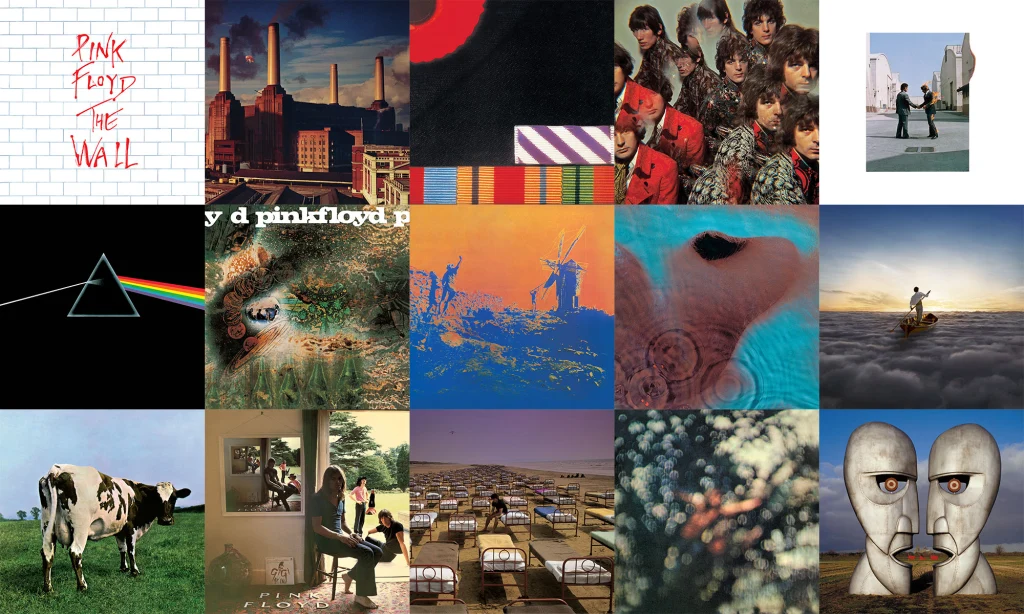
10. Astronomy Domine (1967) – The Piper at the Gates of Dawn
Pink Floyd’s debut album opens with one of Syd Barrett’s most imaginative compositions. From Peter Jenner’s distorted astronomical announcements to Richard Wright’s swirling organ and Barrett’s jagged guitar, “Astronomy Domine” captures the strange, unpredictable energy of the band’s psychedelic beginnings.
Its shifting rhythms and otherworldly imagery create the sensation of travelling through an unfamiliar universe, yet beneath the experimentation lies a surprisingly compelling melody. What makes the song remarkable is how confidently it establishes Pink Floyd’s identity before their progressive rock ambitions had fully emerged.
More than a psychedelic curiosity, “Astronomy Domine” remains a thrilling example of the creativity that launched the band’s extraordinary career.
9. Time (1973) – The Dark Side of the Moon
Few songs confront the passing of time as powerfully as Pink Floyd’s “Time”. Opening with a startling chorus of clocks and alarms, the track gradually unfolds into a driving rhythm, propelled by Nick Mason’s distinctive percussion and David Gilmour’s commanding guitar work.
Roger Waters’ lyrics capture the unsettling realisation that life can slip away while we wait for something meaningful to begin. Gilmour’s impassioned vocals and soaring guitar solo intensify that sense of urgency, while Richard Wright’s gentler closing passage introduces a poignant contrast.
What makes “Time” exceptional is its ability to turn an uncomfortable universal truth into something both musically exhilarating and deeply personal.
8. High Hopes (1994) – The Division Bell
Few songs capture the bittersweet nature of nostalgia quite like “High Hopes”. Closing The Division Bell, David Gilmour and Polly Samson’s composition reflects on lost youth, fading ambitions and the passage of time, drawing inspiration from Gilmour’s childhood in Cambridge.
The tolling bells, melancholic piano and sweeping orchestral arrangements gradually build towards one of Gilmour’s most expressive lap-steel guitar solos. Every element contributes to the song’s overwhelming sense of longing, creating an atmosphere that feels both intimate and expansive.
Released decades after Pink Floyd’s most celebrated work, “High Hopes” demonstrated that the band could still produce music of extraordinary emotional depth, making it a fitting farewell to their final major era of studio songwriting.
7. Us and Them (1973) – The Dark Side of the Moon
Few Pink Floyd songs balance beauty and social commentary as effortlessly as “Us and Them”. Built around Richard Wright’s delicate piano chords and Dick Parry’s expressive saxophone, the composition moves between tranquil verses and powerful, almost overwhelming choruses.
Roger Waters’ lyrics explore the divisions that separate people, from the brutality of war to the inequalities of everyday life. The contrast between the music’s gentle atmosphere and its unsettling subject matter gives the song much of its emotional impact.
Rather than relying on anger to communicate its message, “Us and Them” finds its power in restraint, demonstrating how Pink Floyd could make even the most uncomfortable themes sound extraordinarily beautiful.
6. Shine On You Crazy Diamond (Parts I–V) (1975) – Wish You Were Here
Few compositions capture the emotional weight of Pink Floyd’s history quite like “Shine On You Crazy Diamond”. Written as a tribute to former bandmate Syd Barrett, the piece unfolds patiently, beginning with Richard Wright’s atmospheric keyboards before David Gilmour introduces his unforgettable four-note guitar motif.
The gradual development allows the music to express a sense of absence and longing long before Roger Waters’ lyrics enter. When they do, the tribute becomes deeply personal, reflecting on Barrett’s creativity and the painful circumstances of his departure.
Balancing expansive instrumental passages with genuine emotional intimacy, “Shine On You Crazy Diamond” demonstrates Pink Floyd’s remarkable ability to communicate feelings that words alone could never fully express.
5. Wish You Were Here (1975) – Wish You Were Here
Sometimes Pink Floyd’s greatest achievements came from their simplest ideas. Built around a memorable acoustic guitar melody, “Wish You Were Here” strips away the band’s elaborate arrangements to deliver something remarkably intimate.
Its distinctive opening, with Gilmour’s guitar emerging from the sound of a radio, creates a sense of distance that perfectly complements Roger Waters’ lyrics. Although frequently associated with Syd Barrett, the song also explores broader feelings of absence, disillusionment and emotional disconnection.
What makes “Wish You Were Here” so enduring is its universality. Beneath its understated arrangement lies an emotional honesty that allows listeners to find their own meaning in the music, making it one of Pink Floyd’s most affecting and accessible compositions.
4. Dogs (1977) – Animals
At over 17 minutes, “Dogs” is one of Pink Floyd’s most ambitious compositions, combining intricate musicianship with Roger Waters’ ruthless examination of greed, manipulation and social ambition.
David Gilmour’s expressive guitar passages shift between melancholy and menace, while the song’s changing dynamics create an atmosphere of growing unease. The contrasting vocal performances of Gilmour and Waters reinforce its portrayal of a world where success demands cruelty, only for those pursuing power to become victims of the system themselves.
What makes “Dogs” extraordinary is how naturally its extended instrumental sections develop the narrative. Rather than simply filling time, every musical transition contributes to the tension, making it one of Pink Floyd’s most compelling progressive rock achievements.
3. Another Brick in the Wall, Part 2 (1979) – The Wall
Pink Floyd’s most commercially successful single transformed a protest against oppressive education into an international anthem. With its infectious disco-influenced rhythm, unmistakable guitar riff and defiant children’s chorus, “Another Brick in the Wall, Part 2” brought the band’s music to an entirely new audience.
Yet beneath its accessible sound lies a darker message. Roger Waters’ lyrics challenge an education system built around conformity and humiliation, reflecting the psychological isolation at the heart of The Wall.
What makes the song remarkable is its ability to communicate such a confrontational message through an irresistibly memorable arrangement. Both a biting piece of social criticism and an unlikely pop phenomenon, it remains one of Pink Floyd’s most culturally significant recordings.
2. Comfortably Numb (1979) – The Wall
Few songs demonstrate Pink Floyd’s emotional power as completely as “Comfortably Numb”. The contrast between Roger Waters’ detached, unsettling verses and David Gilmour’s soaring choruses captures the psychological isolation at the heart of The Wall.
Richard Wright’s atmospheric keyboards and the sweeping orchestral arrangement deepen that contrast, creating a sense of vulnerability beneath the song’s grandeur. But it is Gilmour’s guitar playing that elevates the composition to extraordinary heights.
His two solos are masterclasses in expression, particularly the climactic performance, where every sustained note seems to communicate something beyond the lyrics. Yet “Comfortably Numb” is more than a showcase for exceptional guitar playing. It is a remarkable marriage of songwriting, atmosphere and emotion, representing Pink Floyd at their creative peak.
1. Echoes (1971) – Meddle
At over 23 minutes, “Echoes” represents everything that makes Pink Floyd extraordinary. Beginning with Richard Wright’s mysterious, sonar-like piano note, the composition gradually unfolds into a remarkable exploration of melody, atmosphere and experimentation.
David Gilmour and Wright’s intertwined vocals introduce a rare sense of human connection, while the music moves from soaring guitar passages into an unsettling landscape of distorted sounds before returning to its opening themes. Despite its extraordinary length, every transformation feels part of a larger musical journey.
More importantly, “Echoes” marked a turning point in Pink Floyd’s development, bringing together the psychedelic experimentation of their early years and the ambitious, cohesive songwriting that would define their greatest albums.
It takes the top spot because no other Pink Floyd composition captures quite so completely their ability to transform musical experimentation into something profoundly moving.