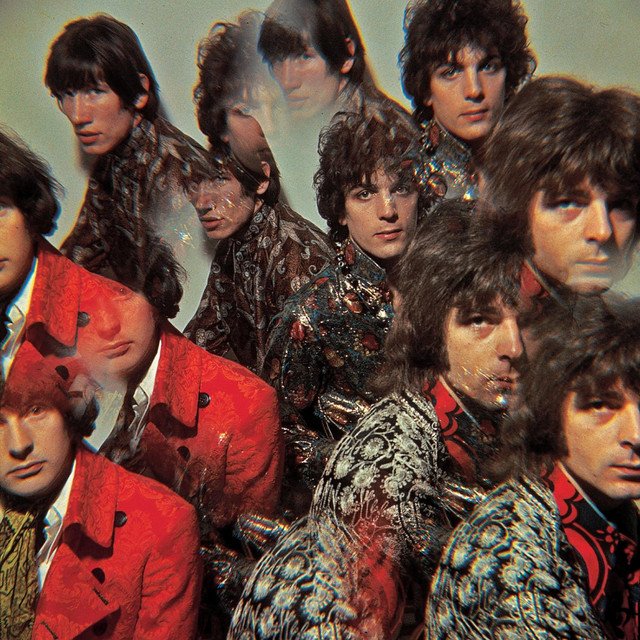
Before The Dark Side of the Moon, Wish You Were Here and The Wall, Pink Floyd were a very different band. At the centre of their early identity stood Syd Barrett, an imaginative songwriter whose fascination with childhood fantasy, surrealism and musical experimentation helped shape one of the most distinctive debut albums of the 1960s.
Released in the UK on 4 August 1967, The Piper at the Gates of Dawn emerged from London’s flourishing psychedelic underground, where Pink Floyd had established themselves through adventurous live performances and extended instrumental improvisations. Yet their debut was far more than a collection of psychedelic experiments. It brought together whimsical pop melodies, unsettling imagery and passages of musical exploration, often shifting between these contrasting worlds without warning.
From the cosmic intensity of “Astronomy Domine” to the peculiar charm of “Bike”, the album reveals a group seemingly unconcerned with conventional boundaries. Barrett’s songwriting gives the record its unmistakable personality, while Richard Wright, Roger Waters and Nick Mason provide the musical foundation for its stranger excursions.
Nearly six decades later, The Piper at the Gates of Dawn remains one of Pink Floyd’s most fascinating achievements. Its importance lies not simply in what the band would eventually become, but in the extraordinary music they created before that transformation.
Artistic Intentions & Making of the Album
From London’s Underground to Abbey Road
By early 1967, Pink Floyd had become a leading attraction in London’s underground music scene. Performances at venues such as the UFO Club and the Roundhouse combined extended improvisations with experimental lighting and projections, creating an immersive experience that went beyond a conventional rock concert.
At the centre of this experimentation was Syd Barrett. As the band’s principal songwriter and creative driving force, he brought an unusual combination of influences to Pink Floyd. His fascination with literature, fairy tales and surreal imagery informed compositions that could sound deceptively innocent one moment and deeply peculiar the next.
The group’s growing reputation attracted EMI, which signed Pink Floyd in February 1967. Their debut single, “Arnold Layne”, demonstrated Barrett’s talent for transforming unconventional subject matter into memorable pop music. Its follow-up, “See Emily Play”, brought further commercial recognition, reaching number six on the UK Singles Chart.
Neither single appeared on the original UK edition of The Piper at the Gates of Dawn. Instead, the album offered a broader picture of the band’s identity, combining Barrett’s concise songwriting with the exploratory music that had made their live performances so distinctive.
Recording a Psychedelic Debut
Pink Floyd recorded The Piper at the Gates of Dawn at EMI Studios on Abbey Road during the first half of 1967, with Norman Smith overseeing production. The sessions overlapped with The Beatles’ work on Sgt. Pepper’s Lonely Hearts Club Band, placing both groups in the same building during a remarkable period of British musical experimentation.
For the band, the challenge was translating the spontaneity of their live performances into a studio recording. Their concerts frequently allowed compositions to develop through improvisation, whereas the recording process demanded greater attention to timing, structure and arrangement.
Smith, a former Beatles recording engineer whose production approach was more conventional than Pink Floyd’s live experimentation, helped bring discipline to the sessions. His involvement created an interesting contrast between the band’s unconventional ambitions and the practical demands of recording.
The resulting album balanced relatively concise compositions such as “Lucifer Sam” and “The Gnome” with more expansive material, most notably “Interstellar Overdrive”. Rather than reproducing their concerts wholesale, Pink Floyd developed arrangements that could take advantage of the studio while retaining the unpredictable character of their performances.
By the time recording concluded in May, they had produced something that occupied an unusual position between psychedelic pop and experimental rock.
Syd Barrett’s Creative Vision
Although all four musicians contributed to the album’s sound, Barrett provided its central artistic direction. His compositions drew upon everything from childhood literature to astronomy and ancient philosophy, often placing familiar subjects within unfamiliar musical settings.
Even the album’s title reflected these interests. Taken from a chapter of Kenneth Grahame’s The Wind in the Willows, it evokes an enchanted natural world associated with the mysterious figure of Pan. The reference complements Barrett’s fascination with imagination and the boundaries between reality and fantasy.
Importantly, The Piper at the Gates of Dawn was not conceived as a continuous conceptual narrative in the manner of Pink Floyd’s later albums. Its identity emerged instead from Barrett’s individual songwriting and the group’s shared enthusiasm for experimentation.
That creative freedom would prove short-lived. Barrett’s increasing difficulties during the following year eventually led to his departure, making The Piper at the Gates of Dawn the only Pink Floyd studio album recorded entirely with the band’s original four-member line-up.
Sound & Production
The Musical Chemistry of Early Pink Floyd
Much of The Piper at the Gates of Dawn‘s distinctive character comes from the interaction between four musicians whose contrasting approaches produced unexpectedly compelling results.
Syd Barrett’s guitar playing favours unusual textures, abrupt bursts of distortion and inventive melodic phrases over conventional blues-rock virtuosity. His performance on “Astronomy Domine” gives the composition much of its abrasive energy, while “Interstellar Overdrive” demonstrates how feedback, dissonance and unconventional phrasing could transform the electric guitar into an instrument of sonic exploration.
Richard Wright’s keyboards are equally essential. His Farfisa organ supplies much of the album’s psychedelic colouring, moving between sustained atmospheric passages and sharper, almost carnival-like melodies. On “Matilda Mother”, his playing gives the arrangement a dreamlike quality, while “Pow R. Toc H.” reveals his versatility through its combination of organ, piano and experimental instrumental exchanges.
Roger Waters and Nick Mason provide a rhythmic foundation that is more adventurous than it initially appears. Waters’ bass frequently introduces melodic movement beneath the surrounding instrumentation, while Mason alternates between driving rock rhythms and looser, improvisational patterns.
Their contributions become especially important during the album’s instrumental passages, where the musicians must respond to one another without relying on conventional song structures.
The resulting performances are not always polished or tightly controlled. Yet this unpredictability gives the music much of its excitement, capturing a band whose collective imagination was more important than technical perfection.
Experimentation Inside Abbey Road
Working with the four-track recording technology available at EMI Studios, Pink Floyd and Norman Smith explored ways of creating sounds that extended beyond the band’s live instrumentation.
Echo, reverberation, layered recordings and manipulated instrumental textures contribute to the album’s unusual atmosphere. These techniques do more than embellish the performances; they frequently alter the listener’s sense of space and perspective.
“Astronomy Domine” provides an immediate example. Its opening features Pink Floyd manager Peter Jenner reciting astronomical names through a megaphone-like effect before the music emerges through insistent guitar figures, organ textures and echo-treated vocals. The combination establishes an atmosphere that feels simultaneously mechanical and otherworldly.
Elsewhere, the studio enhances Barrett’s more eccentric compositions. “Flaming” incorporates unusual sound effects into its playful arrangement, while “Bike” concludes with a mechanical sound collage that transforms an apparently innocent song into something considerably stranger.
The album’s original mono and stereo mixes offer noticeably different listening experiences. Beyond the obvious differences in spatial presentation, certain instrumental details and effects vary between versions, particularly during the more experimental passages. These variations reveal how significantly the mixing process could shape the character of Pink Floyd’s early recordings.
Despite these experiments, The Piper at the Gates of Dawn retains a distinctly raw sound. Some passages are dense, abrasive or deliberately rough-edged, preserving an immediacy that a more polished production might have diminished.
Between Psychedelic Pop and Musical Chaos
Perhaps the album’s most striking musical characteristic is the contrast between its concise compositions and extended instrumental experiments.
“Lucifer Sam” builds its identity around a memorable guitar riff and a tightly controlled rhythmic arrangement. “Interstellar Overdrive”, by comparison, begins with an equally recognisable figure before moving into passages of increasingly abstract improvisation.
Yet experimentation is not confined to the longer compositions. Even relatively straightforward songs contain unexpected instrumental combinations, changes in mood or arrangements that resist familiar pop conventions.
Rather than pursuing complexity for its own sake, Pink Floyd use these contrasting approaches to create music that remains unpredictable without losing its individual character.
Lyrical Analysis

Childhood, Fantasy and Syd Barrett’s Imagination
While the band’s instrumentation provides The Piper at the Gates of Dawn with its distinctive sound, Syd Barrett’s lyrics give the album much of its personality.
Unlike the increasingly introspective and socially conscious writing that would characterise Pink Floyd’s later work, Barrett rarely offers straightforward explanations or clearly defined messages. His songs inhabit imaginary worlds where mysterious animals, fantastical characters and seemingly ordinary objects take on unexpected significance.
“Matilda Mother” is particularly revealing. Inspired by the experience of listening to childhood stories, the song captures the fascination of discovering imaginary worlds through someone else’s words. Its imagery suggests the peculiar power of storytelling, where familiar language can open the door to something mysterious.
“The Gnome” explores similar territory through a miniature fantasy narrative centred on Grimble Gromble, a character who seems to have wandered out of a children’s storybook. Its nursery-rhyme simplicity is balanced by Barrett’s eccentric phrasing and distinctive delivery.
These compositions are not simply exercises in nostalgia. Barrett approaches childhood imagery with an imagination that recognises how strange familiar stories can become when viewed from a different perspective.
Surrealism, Humour and Hidden Unease
One of Barrett’s greatest strengths as a lyricist is his ability to make ordinary subjects seem extraordinary.
“Lucifer Sam”, ostensibly a song about a mysterious cat, creates an atmosphere of suspicion through cryptic references and unexplained characters. Barrett offers few clues about the situation, allowing the listener to construct their own interpretation.
“Bike” takes a more playful approach, presenting a series of everyday objects through increasingly absurd observations. Its conversational language initially suggests an innocent love song, but the peculiar associations and unexpected developments reveal a world governed by Barrett’s own imaginative logic.
“The Scarecrow” offers a quieter example of his ambiguity. Its central character appears content despite having little control over its circumstances. Beneath the song’s pastoral simplicity lies a curious suggestion of passivity and acceptance, although its meaning remains open to interpretation.
What makes these songs compelling is their ability to suggest contrasting emotions without resolving them. Barrett’s imagery can be humorous, charming or faintly disturbing, sometimes within the same composition.
It would nevertheless be misleading to interpret every unusual lyric as evidence of hidden psychological distress or to read the album entirely through Barrett’s subsequent difficulties. These songs deserve recognition primarily as expressions of his artistic imagination, rather than retrospective clues to his personal circumstances.
From Cosmic Imagery to Ancient Philosophy
Barrett’s interests extended well beyond childhood fantasy. Elsewhere, the album draws upon astronomy, literature and philosophical ideas, demonstrating the breadth of influences informing his songwriting.
“Astronomy Domine” establishes the record’s cosmic dimension through references to celestial bodies, unusual colours and fragmented images of space. Rather than presenting a conventional narrative of exploration, the lyrics create the sensation of movement through an unfamiliar universe.
“Chapter 24” takes a different approach, drawing upon the I Ching, the ancient Chinese text commonly known as the Book of Changes. Its references to cycles, movement and transformation introduce a philosophical dimension that reflects the wider countercultural interest in Eastern thought during the 1960s.
The contrast between these sources is revealing. Barrett could find inspiration in both the apparent simplicity of childhood stories and the abstract ideas of ancient philosophy, approaching each with the same imaginative curiosity.
Rather than delivering a unified lyrical message, The Piper at the Gates of Dawn creates a collection of unusual worlds for listeners to explore. Its enduring fascination lies in Barrett’s ability to discover mystery, humour and unexpected beauty in subjects that might otherwise appear ordinary.
Cohesion & Flow

Finding Unity in Contrasts
With its mixture of whimsical psychedelic pop, surreal character studies and extended instrumental experimentation, The Piper at the Gates of Dawn might initially appear an unlikely candidate for a cohesive album.
Yet its eleven compositions share a recognisable creative identity. Barrett’s songwriting, Wright’s distinctive keyboard textures and the band’s adventurous arrangements provide continuity even when individual tracks differ considerably in style.
Unlike Pink Floyd’s later conceptual works, the album does not attempt to tell a continuous story. Its cohesion emerges instead from a shared atmosphere and a consistent willingness to embrace the unexpected.
Sequencing the Unexpected
The album’s running order is particularly effective in revealing its contrasting musical personalities.
Opening with “Astronomy Domine”, Pink Floyd immediately establish their experimental ambitions before “Lucifer Sam” introduces a more direct, rhythm-driven approach. “Matilda Mother” and “Flaming” then shift towards Barrett’s fantastical songwriting, replacing cosmic intensity with dreamlike melodies and imaginative storytelling.
“Pow R. Toc H.” interrupts this sequence with unusual vocalisations and instrumental exchanges, demonstrating the band’s willingness to move beyond conventional song structures.
The first side closes with “Take Up Thy Stethoscope and Walk”, the album’s sole Roger Waters composition. Its frantic rhythms, repetitive vocal phrases and abrasive instrumental passages provide a restless conclusion before “Interstellar Overdrive” opens side two.
The placement of “Interstellar Overdrive” is especially effective. Its extended improvisation pushes the album’s experimental tendencies towards their furthest extreme, providing a dramatic contrast to the shorter compositions surrounding it.
What follows is an almost complete reversal of atmosphere. “The Gnome” returns to Barrett’s miniature fantasy world, while “Chapter 24” introduces a more contemplative mood. “The Scarecrow” continues this gentler direction before “Bike” closes the record with a combination of playful songwriting and bizarre mechanical effects.
Rather than attempting to match the intensity of “Interstellar Overdrive”, the album’s closing sequence retreats into the peculiar intimacy of Barrett’s imagination.
Does the Album Always Hold Together?
For all its inventiveness, The Piper at the Gates of Dawn is not an entirely seamless listening experience.
Some transitions are abrupt, while the contrast between concise songs and extended improvisations can occasionally make the album feel uneven. “Take Up Thy Stethoscope and Walk”, for example, possesses considerable energy but lacks some of the melodic invention found elsewhere on the record.
Similarly, the abstract passages of “Interstellar Overdrive” demand a willingness to embrace experimentation without the reassurance of conventional musical progression.
Nevertheless, these characteristics reveal something fundamental about early Pink Floyd. The group were prepared to pursue unusual ideas without always prioritising accessibility or refinement.
The album’s cohesion therefore depends less on perfection than personality. Its contrasting compositions create a listening experience that is occasionally challenging, frequently surprising and unmistakably individual.
Standout Tracks & Memorable Moments
Astronomy Domine – An Opening from Another World
Few debut albums announce themselves quite as boldly as The Piper at the Gates of Dawn. “Astronomy Domine” immediately immerses the listener in a strange musical universe, combining a driving rhythmic foundation with jagged guitar figures, swirling organ and distant, echo-treated vocals.
What makes the composition particularly effective is its balance between structure and disorientation. Despite its unusual atmosphere, the song possesses a powerful melodic identity, with Barrett and Wright’s vocals contributing to its hypnotic quality.
The insistent rhythm prevents the surrounding experimentation from becoming overwhelming, while the shifting instrumental textures create an impression of movement through unfamiliar territory.
As an introduction to Pink Floyd’s musical world, “Astronomy Domine” is extraordinary. It establishes the band’s adventurous ambitions without sacrificing the immediacy of a compelling rock composition.
Interstellar Overdrive – Psychedelia Without Boundaries
If “Astronomy Domine” introduces Pink Floyd’s experimental ambitions, “Interstellar Overdrive” pushes them towards their most uncompromising extreme.
Built around an instantly recognisable descending guitar riff, the nearly ten-minute instrumental gradually abandons conventional structure in favour of shifting textures, fragmented melodies and collective improvisation.
Its most remarkable quality is the sense of uncertainty created as the musicians move further away from the opening theme. Familiar rhythmic patterns dissolve, instrumental exchanges become increasingly abstract and the composition appears to drift towards complete disorder.
Yet the performance never feels entirely disconnected. Even at its most unpredictable, the musicians respond to one another, allowing the piece to develop through a succession of changing musical ideas.
The eventual return of the opening riff is particularly satisfying. After the disorientation of the central passages, its reappearance restores a familiar point of reference and gives the composition a powerful sense of resolution.
“Interstellar Overdrive” remains one of the defining achievements of early Pink Floyd, demonstrating how adventurous collective improvisation could become within a rock setting.
Matilda Mother – The Magic of Storytelling
Among Barrett’s more whimsical compositions, “Matilda Mother” stands out for the way it transforms childhood storytelling into something mysterious and emotionally evocative.
The interplay between Barrett’s vocals and Richard Wright’s organ creates a delicate, dreamlike atmosphere, while the shifting melodic phrases give the arrangement an almost theatrical quality.
Wright’s contribution is especially important. His organ playing moves between restrained accompaniment and more expansive passages, providing a musical counterpart to the song’s fascination with imagination and discovery.
What makes “Matilda Mother” so memorable is its ability to evoke the wonder of childhood without becoming sentimental. Beneath its apparent simplicity lies a remarkably distinctive piece of psychedelic songwriting.
Lucifer Sam – A Darker Shade of Psychedelia
“Lucifer Sam” reveals another side of Barrett’s creativity, replacing the gentle fantasy of his more whimsical compositions with a darker, almost sinister atmosphere.
Built around a sharp, descending guitar figure, the song combines an infectious rhythmic drive with unusual keyboard textures and cryptic lyrics. Its compact arrangement gives it an immediacy that contrasts with the album’s more expansive material.
There is also a mischievous quality to the performance. Barrett transforms an apparently ordinary subject into something resembling a miniature psychedelic thriller, using musical tension and lyrical ambiguity to suggest a mystery that is never fully explained.
Although comparatively concise, “Lucifer Sam” demonstrates how effectively Pink Floyd could create an unusual atmosphere without relying on extended improvisation.
Bike – A Perfectly Peculiar Finale
Few songs capture Syd Barrett’s eccentric imagination more completely than “Bike”.
Beginning with a series of playful offers and seemingly disconnected observations, the composition initially resembles a charmingly unconventional pop song. Its conversational delivery and simple melodic phrases create an atmosphere of innocence, but the arrangement becomes increasingly unpredictable.
Abrupt rhythmic changes, unusual instrumental details and playful vocal phrasing prevent the song from settling into a familiar pattern.
The closing passage is particularly remarkable. As the music gives way to a mechanical collage of ticking, clattering and other strange noises, the song’s apparent simplicity dissolves into something both humorous and unsettling.
It is an ending that refuses conventional resolution, leaving the listener immersed in Barrett’s peculiar world. As the album’s final track, “Bike” provides an appropriately eccentric conclusion.
Other Memorable Moments
Beyond these principal highlights, several smaller moments contribute significantly to the album’s character.
The unusual vocalisations and instrumental exchanges of “Pow R. Toc H.” reveal Pink Floyd’s willingness to treat the human voice as another experimental instrument. “Flaming” combines playful imagery with colourful musical textures, while the delicate atmosphere of “The Scarecrow” demonstrates how Barrett could create something memorable through restraint.
Meanwhile, the measured, almost hypnotic quality of “Chapter 24” provides a contemplative contrast to the album’s more frantic passages.
Together, these compositions reveal the breadth of The Piper at the Gates of Dawn. Its greatest achievements are not confined to extended improvisations; some emerge from the simplest melodies and most unexpected musical ideas.
Legacy & Contributions to Music

A Landmark of British Psychedelia
Released during one of the most transformative years in popular music, The Piper at the Gates of Dawn occupies a distinctive position within the British psychedelic movement.
While The Beatles’ Sgt. Pepper’s Lonely Hearts Club Band and The Jimi Hendrix Experience’s Are You Experienced were expanding the possibilities of rock music, Pink Floyd pursued a direction shaped by London’s underground performance culture and Barrett’s unconventional songwriting.
Their combination of extended improvisation, surreal imagery and experimental instrumentation helped establish an approach that differed from more commercially oriented psychedelic pop.
The album also achieved contemporary recognition, reaching number six on the UK Albums Chart. Its commercial performance demonstrated that Pink Floyd’s unusual music could attract an audience beyond the underground venues where their reputation had developed.
Although the band were not alone in exploring these ideas, The Piper at the Gates of Dawn remains one of the defining documents of British psychedelia, capturing a moment when the boundaries between pop, experimental rock and avant-garde music were becoming increasingly fluid.
Helping Shape the Possibilities of Progressive Rock
The album’s importance extends beyond its immediate psychedelic surroundings.
Its extended instrumental passages, unconventional structures and willingness to explore contrasting musical styles anticipated characteristics that would become associated with progressive rock during the following decade.
Nevertheless, it would be misleading to describe The Piper at the Gates of Dawn as a fully developed progressive rock album. Its spontaneous approach differs considerably from the elaborate conceptual frameworks and intricate arrangements that would later define much of the genre.
Instead, its contribution lies in demonstrating that rock music could move beyond conventional song structures and established instrumental roles.
Pink Floyd themselves would continue exploring these possibilities through the atmospheric experimentation of A Saucerful of Secrets, the extended compositions of Ummagumma and Atom Heart Mother, and eventually the more sophisticated musical architecture of Meddle.
The connection is one of artistic development rather than direct repetition. The band’s later work retained an interest in unusual sounds and expansive arrangements, even as its songwriting and creative priorities changed.
Syd Barrett’s Enduring Influence
Perhaps the album’s most significant legacy is its preservation of Syd Barrett’s extraordinary creative vision.
His ability to combine accessible melodies with surreal imagery and unconventional arrangements offered a distinctive approach to psychedelic songwriting, one that would continue to attract admiration long after his departure from Pink Floyd.
Barrett’s influence extended well beyond the band. David Bowie, who covered “See Emily Play” on his 1973 album Pin Ups, openly acknowledged Barrett as a major inspiration, particularly admiring his originality and distinctive vocal delivery. Robyn Hitchcock has similarly credited Barrett with helping shape his understanding of how to approach songwriting, demonstrating the enduring appeal of his unconventional musical imagination.
Yet Barrett’s achievements are sometimes overshadowed by discussions of his personal difficulties and withdrawal from the music industry. While those events form an important part of his history, they should not define the way his earlier work is understood.
The Piper at the Gates of Dawn deserves recognition as an exceptional artistic achievement in its own right, rather than merely a document of a creative career that changed direction.
An Album Apart in Pink Floyd’s Catalogue
Within Pink Floyd’s discography, The Piper at the Gates of Dawn occupies a position unlike any of their subsequent studio albums.
Following Barrett’s departure in 1968, the band gradually developed a different creative identity. With David Gilmour joining the group and Roger Waters assuming an increasingly prominent songwriting role, their music moved towards the atmospheric compositions and conceptual narratives that would define albums such as The Dark Side of the Moon, Wish You Were Here and The Wall.
Elements of their early experimentation survived this transformation. The fascination with unusual sounds, extended instrumental development and immersive musical environments remained central to their work.
Yet the playful surrealism and peculiar intimacy of Barrett’s songwriting became far less prominent.
This makes The Piper at the Gates of Dawn especially fascinating when considered alongside the band’s later masterpieces. Pink Floyd’s evolution was not simply a progression from primitive experimentation towards greater sophistication. Their debut represents a different creative achievement, possessing qualities that were neither improved upon nor directly replicated by what followed.
Its lasting importance lies not only in the directions it helped open for other musicians, but in the remarkable individuality of the music itself.
Closing Thoughts
The Piper at the Gates of Dawn remains one of the most extraordinary debut albums of the 1960s, capturing Pink Floyd at a moment when their musical identity was shaped by boundless experimentation and Syd Barrett’s singular imagination.
Its greatest achievement is the freedom with which it moves between contrasting musical worlds. Whimsical melodies coexist with abrasive improvisations, while seemingly innocent subjects become sources of mystery and surreal invention. Not every experiment succeeds equally, but even the album’s rougher moments contribute to its unmistakable personality.
Unlike the carefully constructed conceptual masterpieces that would define Pink Floyd’s later career, The Piper at the Gates of Dawn thrives on spontaneity and unpredictability. Its brilliance lies not in technical perfection, but in the extraordinary originality of its creative vision.
More than a fascinating glimpse into the band’s beginnings, it stands as a psychedelic masterpiece in its own right.
Official Rating: 10/10
10/10 — A Psychedelic Masterpiece
The Piper at the Gates of Dawn earns its perfect rating through the originality of Syd Barrett’s songwriting, the adventurous interplay between four distinctive musicians and its remarkable contribution to psychedelic rock. Nearly six decades after its release, it remains one of Pink Floyd’s greatest achievements and an enduring testament to the possibilities of musical imagination.