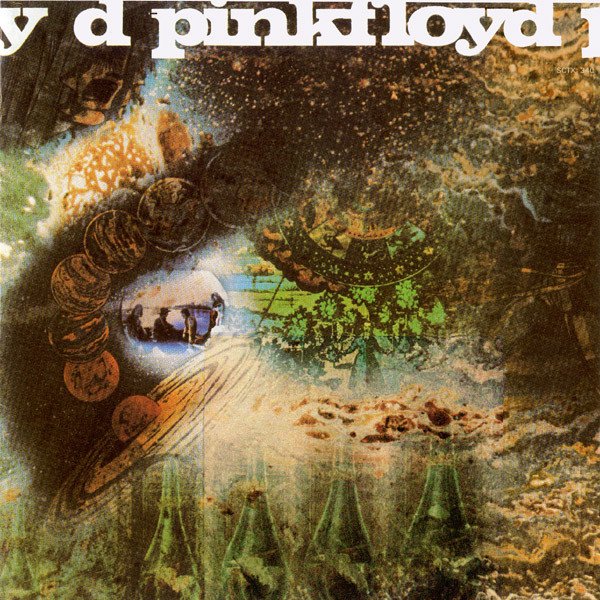
Few albums capture a band in transition quite like Pink Floyd’s A Saucerful of Secrets. Released on 28 June 1968, their second studio album emerged during a period of profound uncertainty, as founding member Syd Barrett’s involvement diminished and guitarist David Gilmour joined a group searching for a new musical direction.
Where The Piper at the Gates of Dawn had been driven by Barrett’s eccentric songwriting and psychedelic imagination, its successor presented a less clearly defined identity. Roger Waters and Richard Wright assumed greater songwriting responsibilities, while the band increasingly explored atmospheric arrangements, extended instrumental passages and unconventional musical structures.
There is much to admire in this experimentation. The hypnotic atmosphere of “Set the Controls for the Heart of the Sun”, the ambitious instrumental title track and the unsettling poignancy of Barrett’s “Jugband Blues” demonstrate a group capable of producing genuinely distinctive music. Yet these achievements sit alongside less developed compositions, revealing the difficulties of establishing a new creative direction.
A Saucerful of Secrets is therefore a fascinating, if uneven, chapter in Pink Floyd’s development. Its historical importance is undeniable, but its musical achievements deserve to be considered independently of the masterpieces that would eventually follow.
Artistic Intentions & Making of the Album
A Band Between Two Eras
By the end of 1967, Pink Floyd were facing an uncertain future. Despite the success of The Piper at the Gates of Dawn and singles such as “See Emily Play”, Syd Barrett’s increasingly unpredictable behaviour had begun disrupting the band’s live performances and working relationships.
In December 1967, David Gilmour was approached about joining Pink Floyd, initially as an additional member rather than a direct replacement for Barrett. When he began performing with the band in early 1968, the intention was to accommodate Barrett’s difficulties while allowing the group to continue its demanding live schedule. However, the five-piece arrangement proved short-lived, and Barrett’s involvement soon came to an end.
These circumstances shaped the band’s second album. Rather than representing the vision of a settled line-up, A Saucerful of Secrets brought together recordings made at different stages of Pink Floyd’s transition. Barrett remained present through his songwriting and recorded contributions, while Gilmour’s arrival introduced another guitarist into a group still establishing how it would operate without its original leader.
The album consequently became the only Pink Floyd studio release to feature contributions from all five musicians associated with this period. Yet it would be misleading to describe it as the work of a stable five-piece band. Its fragmented origins are essential to understanding its unusual character.
Finding a New Creative Direction
With Barrett’s songwriting becoming less central, Roger Waters and Richard Wright assumed greater responsibility for developing new material. Neither attempted simply to recreate the whimsical psychedelic pop that had defined much of the debut.
Waters increasingly favoured austere, atmospheric compositions. “Set the Controls for the Heart of the Sun” builds its identity around repetition, restrained instrumentation and a gradual accumulation of tension, while “Let There Be More Light” combines science-fiction imagery with a more forceful musical arrangement.
Wright offered a contrasting approach. His compositions “Remember a Day” and “See-Saw” retain some of the dreamlike qualities associated with the band’s earlier music, but their emphasis on nostalgia and melancholy gives them a more reflective character. His melodic sensibility provides an important counterbalance to Waters’ experimentation.
Gilmour’s arrival brought a different guitar-playing style, although his influence should not be overstated at this stage. Rather than immediately transforming Pink Floyd into the group heard on their later albums, he helped provide the musical stability needed to develop their existing ideas.
The result was a collection of songs reflecting several creative personalities rather than a single guiding vision. At times, their contrasting approaches complement one another; elsewhere, they reveal a band still discovering its strengths.
Recording Through Uncertainty
Recording for A Saucerful of Secrets began in 1967 and continued into the spring of 1968, with sessions taking place at EMI Studios (later renamed Abbey Road Studios) and De Lane Lea Studios in London. Norman Smith returned as producer, overseeing recordings that spanned the final months of Barrett’s involvement and the arrival of Gilmour.
Some compositions retained elements of Pink Floyd’s earlier psychedelic sound, while others embraced extended instrumental experimentation. The title track was particularly ambitious, abandoning conventional songwriting in favour of contrasting musical movements, dissonant textures and an eventual organ-led resolution.
This willingness to experiment was not entirely new. Pink Floyd had already explored extended improvisation through “Interstellar Overdrive”, but their second album suggested a growing interest in constructing instrumental passages around atmosphere, tension and dramatic progression.
Rather than emerging from a unified artistic plan, A Saucerful of Secrets developed during a period of considerable upheaval. Its recordings capture musicians testing different approaches to composition, sometimes discovering exciting possibilities and sometimes struggling to develop their ideas convincingly.
Sound & Production

The Changing Sound of Pink Floyd
On A Saucerful of Secrets, Pink Floyd begin moving away from the colourful, guitar-driven psychedelia of their debut towards a more spacious, atmospheric approach. Repetition, instrumental texture and gradual changes in intensity become increasingly important to the music.
Richard Wright plays a central role in this development. His Farfisa organ supplies much of the album’s distinctive atmosphere, moving between eerie sustained notes, delicate melodic passages and dense layers of sound. On “Set the Controls for the Heart of the Sun”, his restrained playing helps establish a hypnotic mood without relying on conventional melodic changes.
Roger Waters’ bass also becomes a more prominent musical force. The opening of “Let There Be More Light” demonstrates his ability to establish momentum through a repetitive but effective bass figure, while Nick Mason’s drumming provides the rhythmic foundation for the band’s extended arrangements.
David Gilmour’s guitar playing introduces a different character from Barrett’s unpredictable, often abrasive approach. His performances generally favour greater control and precision, although the expressive melodic style associated with his later work is not yet fully established.
What emerges is a group discovering how atmosphere itself could become the foundation of a composition. At its best, this approach produces immersive and unusually assured music. Elsewhere, the emphasis on texture occasionally comes at the expense of memorable musical development.
Experimentation and Studio Production
Recorded across sessions at EMI and De Lane Lea Studios with producer Norman Smith, A Saucerful of Secrets expands upon the studio experimentation heard on The Piper at the Gates of Dawn. Echo, reverberation, unusual instrumental effects and layered arrangements contribute to an album that frequently prioritises atmosphere over conventional polish.
“Set the Controls for the Heart of the Sun” is among the most successful examples. Its subdued percussion, repetitive bass pattern and atmospheric keyboards create a sense of suspended movement. Rather than building towards an obvious climax, the arrangement sustains tension through subtle changes in instrumental emphasis.
“Let There Be More Light” takes a more forceful approach. Its driving introduction gives way to contrasting vocal passages and swirling instrumental textures, combining direct rock instrumentation with more expansive psychedelic arrangements.
The production is not uniformly successful, however. Some passages feel crowded or indistinct, with individual instruments competing for space rather than contributing to a clearly defined arrangement.
Yet the record’s rougher edges also preserve a sense of experimentation. Pink Floyd were discovering new possibilities in the studio, and the results are often more interesting than polished.
The Ambition and Limitations of the Title Track
The album’s most ambitious composition is undoubtedly “A Saucerful of Secrets”, an instrumental lasting nearly twelve minutes that abandons traditional songwriting in favour of four contrasting musical movements.
The composition’s unusual structure was no accident. Roger Waters and Nick Mason initially mapped out its dynamic progression through an architectural-style diagram, approaching the piece as a sequence of contrasting movements before developing its musical details.
Its opening, commonly known as “Something Else”, establishes an unsettling atmosphere through abstract instrumental textures and dissonant sounds. Rather than introducing a recognisable melody, the band create a sense of uncertainty through changes in tone and intensity.
“Syncopated Pandemonium” pushes this approach further. Aggressive percussion, distorted instrumental sounds and seemingly chaotic exchanges produce one of the most abrasive passages in Pink Floyd’s early catalogue.
The following “Storm Signal” gradually introduces a sense of direction before the composition reaches its most rewarding movement, “Celestial Voices”. Here, Wright’s organ emerges through the surrounding tension, establishing a solemn, almost hymn-like progression that brings welcome clarity.
The contrast between these movements is striking. However, the extended passages of dissonance and loosely structured experimentation can make the journey towards the finale difficult to sustain.
As an artistic statement, “A Saucerful of Secrets” reveals considerable ambition. Its finest moments demonstrate Pink Floyd’s growing ability to construct atmosphere through instrumental progression, even if the composition as a whole is not consistently compelling.
Lyrical Analysis

Roger Waters: Cosmic Imagery and Emerging Social Commentary
With Syd Barrett’s involvement diminishing, Roger Waters began assuming a more prominent role as a lyricist. His contributions reveal an emerging interest in subjects that would become increasingly important to Pink Floyd, although his writing had yet to develop the directness and emotional complexity of his later work.
“Let There Be More Light” combines science-fiction imagery with references to mythology and history, imagining an extraordinary encounter between humanity and visitors from another world. Rather than developing a conventional narrative, Waters presents a succession of striking images that complement the song’s restless atmosphere.
“Set the Controls for the Heart of the Sun” is more restrained. Drawing inspiration from Chinese poetry, its lyrics evoke the natural world through images of sunlight, water and changing light. The sparse language allows the words to merge with the hypnotic instrumentation rather than dominate the composition.
“Corporal Clegg” introduces a markedly different subject. Through the story of a soldier who has lost a leg during the war, Waters explores the consequences of military service with an uneasy mixture of satire and dark humour. Its references to medals, injury and domestic life suggest a growing interest in the human cost of conflict.
This subject would eventually become central to some of Waters’ most powerful writing. Here, however, the combination of serious subject matter and deliberately eccentric presentation feels less assured. The playful arrangement sometimes undermines the emotional weight of the lyrics, leaving an interesting idea that never quite develops into a convincing statement.
These compositions reveal Waters experimenting with different approaches to songwriting. His lyrical voice is not yet consistently distinctive, but the foundations of his later artistic identity are beginning to emerge.
Richard Wright: Nostalgia and the Passage of Time
Richard Wright’s lyrical contributions offer a gentler contrast to Waters’ increasingly abstract writing.
“Remember a Day” explores the distance between childhood and adulthood, recalling a time when imagination and freedom seemed unrestricted by everyday responsibilities. Its reflective questions convey a longing for experiences that can no longer be recovered, giving the song an understated emotional quality.
Wright’s vocal delivery complements this atmosphere. Rather than expressing nostalgia through dramatic statements, he allows the melody and arrangement to communicate much of the song’s melancholy.
“See-Saw” inhabits similarly reflective territory, presenting fragments of childhood experience and family relationships through imagery that remains somewhat elusive. Its gentle musical character reinforces the sense of looking back towards a world that has become increasingly distant.
Both compositions retain traces of the whimsical sensibility associated with Barrett’s songwriting, but Wright approaches these subjects from a more contemplative perspective. Where Barrett frequently transforms childhood into a source of surreal invention, Wright seems more interested in the sadness of leaving it behind.
The limitation is that his lyrics do not always possess the same individuality as his melodies. “Remember a Day” is particularly affecting, but “See-Saw” struggles to leave an equally strong impression despite its attractive arrangement.
Syd Barrett: The Unsettling Farewell of Jugband Blues
The album closes with “Jugband Blues”, Syd Barrett’s only songwriting contribution to A Saucerful of Secrets. Recorded during the final period of his involvement with Pink Floyd, the song possesses an emotional directness that distinguishes it from much of the surrounding material.
Its opening addresses the unsettling experience of being present while somehow feeling excluded, introducing a sense of detachment that becomes increasingly difficult to ignore. Barrett’s words are characteristically ambiguous, but their combination of conversational humour and apparent resignation gives the song an unusually intimate quality.
Musically, the arrangement moves between contrasting moods. A relatively straightforward melodic opening gives way to an unexpected brass-band passage before returning to Barrett’s voice for a brief, unresolved conclusion.
These abrupt changes might initially seem typical of his eccentric songwriting, yet they create a particularly uncomfortable atmosphere here. The cheerful brass instrumentation sits uneasily beside the song’s more troubling observations, producing a contrast that feels both absurd and deeply affecting.
Given the circumstances surrounding Barrett’s departure, it is tempting to interpret “Jugband Blues” as a deliberate farewell to Pink Floyd. Its placement at the end of the album certainly gives it that significance in retrospect. However, reducing the composition to a straightforward account of Barrett’s personal difficulties would overlook the ambiguity and artistic sophistication of his writing.
What makes the song remarkable is the uncertainty it leaves behind. Its humour never entirely conceals its sadness, while its apparently simple observations suggest emotions that remain difficult to define.
As the final contribution from the musician who had shaped Pink Floyd’s original identity, “Jugband Blues” is an extraordinary conclusion to the album.
An Album Without a Single Lyrical Identity
The lyrics of A Saucerful of Secrets reveal three songwriters pursuing noticeably different creative interests.
Waters explores cosmic imagery and the beginnings of social commentary, Wright reflects upon childhood and the passage of time, and Barrett delivers a final composition characterised by ambiguity and emotional unease.
There are occasional connections between these subjects, particularly the recurring sense of distance and uncertainty. Yet these similarities should not be mistaken for a deliberately constructed concept.
Unlike Pink Floyd’s later albums, A Saucerful of Secrets does not develop a sustained lyrical argument or overarching narrative. Its songs succeed through their individual personalities rather than their relationship to a larger theme.
Cohesion & Flow

An Album of Contrasting Identities
One of the most noticeable characteristics of A Saucerful of Secrets is the contrast between its individual compositions. Where The Piper at the Gates of Dawn benefited from Syd Barrett’s distinctive songwriting personality, its successor brings together several approaches that do not always feel entirely compatible.
The difference is particularly apparent when comparing the hypnotic restraint of “Set the Controls for the Heart of the Sun” with the eccentric, almost theatrical character of “Corporal Clegg”. Both demonstrate Pink Floyd’s willingness to experiment, yet they seem to belong to different musical worlds.
Richard Wright’s “Remember a Day” and “See-Saw” introduce another dimension, favouring delicate melodies and nostalgic atmosphere over abstract instrumental ideas. Meanwhile, “Jugband Blues” retains the unpredictable songwriting that had characterised Barrett’s contributions to the debut.
Such variety is not inherently a weakness. The difficulty is that these approaches do not always complement one another, leaving the record without the strong sense of direction that distinguishes Pink Floyd’s most accomplished work.
The Strengths and Weaknesses of Its Sequencing
The album opens confidently with “Let There Be More Light”, whose driving bass introduction and expansive arrangement immediately establish a forceful musical direction.
“Remember a Day” provides a gentler contrast before “Set the Controls for the Heart of the Sun” returns to a more experimental approach. Its hypnotic rhythms and restrained instrumentation make the first three tracks a particularly engaging sequence.
The momentum becomes less consistent with “Corporal Clegg”. Its exaggerated vocal delivery, military imagery and playful arrangement introduce an almost comic atmosphere that feels awkward following the immersive restraint of the preceding composition.
The second side begins with the extended instrumental title track, whose contrasting movements culminate in the solemn beauty of “Celestial Voices”. “See-Saw” then returns to Wright’s gentler songwriting, although the composition lacks the individuality needed to make this transition particularly memorable.
Finally, “Jugband Blues” brings the album to an unexpectedly intimate conclusion. Barrett’s distinctive voice and unsettling lyrics stand apart from much of the preceding material, but the song’s emotional ambiguity makes it an effective closing statement.
The running order contains several excellent moments, yet its changes in tone are not always equally successful. Individual transitions can be effective without creating a consistently satisfying musical journey.
Does the Album Work as a Whole?
Despite its unevenness, A Saucerful of Secrets possesses a recognisable character. Its atmospheric arrangements, unconventional instrumentation and willingness to challenge familiar musical structures establish connections between compositions that might otherwise seem unrelated.
There is also something compelling about hearing Pink Floyd experiment without an established formula. The album captures musicians discovering new possibilities, and its strongest passages demonstrate that their developing approach could produce remarkable results.
Nevertheless, the distinction between experimentation and accomplishment remains important. The title track’s extended instrumental passages are ambitious but not consistently engaging, while “Corporal Clegg” and “See-Saw” contribute to the impression of an album whose songwriting varies considerably in quality.
Its imperfections do not diminish its historical importance or prevent it from being an enjoyable listen. They do, however, make it a record whose individual highlights are often more impressive than the complete experience.
Standout Tracks & Memorable Moments
Set the Controls for the Heart of the Sun – A Hypnotic Journey
Few compositions capture the emerging identity of Pink Floyd more effectively than “Set the Controls for the Heart of the Sun”. Built around a restrained bass figure, subdued percussion and Richard Wright’s atmospheric keyboards, the song creates an almost hypnotic sense of movement without relying on conventional melodic development.
Nick Mason’s drumming is particularly effective. His delicate, mallet-led patterns provide a steady rhythmic pulse while allowing the surrounding instrumentation to develop gradually. Rather than driving the composition towards an obvious climax, the percussion reinforces its meditative character.
Roger Waters’ understated vocal delivery complements the arrangement, with imagery drawn from Chinese poetry adding to the song’s mysterious atmosphere. The words rarely dominate the performance, instead becoming another element within its carefully controlled soundscape.
The recording is also particularly significant for featuring guitar contributions from both Syd Barrett and David Gilmour, making it a rare moment in which Pink Floyd’s original and emerging line-ups can be heard together.
What makes the composition so successful is its restraint. Where some of the album’s experiments become overly abstract, “Set the Controls for the Heart of the Sun” demonstrates how repetition and subtle instrumental changes can sustain tension without sacrificing musical focus.
It is one of the album’s finest achievements and an early indication of Pink Floyd’s growing ability to create immersive musical environments.
Let There Be More Light – An Impressive Opening Statement
Opening with one of Roger Waters’ most memorable early basslines, “Let There Be More Light” immediately establishes a more forceful musical direction than much of Pink Floyd’s debut.
The rapid, descending bass figure creates an immediate sense of momentum before the arrangement expands into a mixture of psychedelic guitar, organ and contrasting vocal passages. The interaction between these elements gives the composition a restless energy that distinguishes it from the album’s more restrained material.
Particularly effective is the contrast between the quieter vocal sections and the more intense instrumental passages. Rather than allowing its central musical idea to become repetitive, the band continually shifts the arrangement, introducing new textures while maintaining a recognisable structure.
David Gilmour’s guitar playing contributes to the song’s character, bringing a sharper, more controlled sound to the instrumental passages without entirely abandoning the unpredictability of Pink Floyd’s earlier work.
Although the composition retains some of the eccentricities of late-1960s psychedelia, its underlying arrangement is surprisingly confident. It suggests a group beginning to discover how powerful conventional rock instrumentation could become when combined with more adventurous musical ideas.
As an opening track, “Let There Be More Light” is among the album’s strongest moments.
Jugband Blues – Syd Barrett’s Extraordinary Farewell
“Jugband Blues” is arguably the album’s most emotionally affecting composition, not because it offers a straightforward explanation of Syd Barrett’s departure, but because its combination of humour, uncertainty and apparent vulnerability creates such an unsettling listening experience.
The song begins with Barrett’s familiar conversational delivery, accompanied by a relatively simple arrangement that recalls the eccentric melodic character of The Piper at the Gates of Dawn. Yet its atmosphere is noticeably different. Beneath the apparent lightness lies a sense of distance that gives even its most playful moments an uncomfortable quality.
The unexpected entrance of a Salvation Army brass band transforms the composition into something stranger still. Its disorderly instrumental passage disrupts the song’s melodic direction, creating a striking contrast between musical exuberance and lyrical unease.
When Barrett’s voice returns for the closing lines, the effect is remarkably intimate. The song ends without offering any reassuring explanation, leaving its unresolved questions suspended in the listener’s imagination.
Its significance extends beyond biography. The composition demonstrates Barrett’s ability to combine unconventional arrangements with genuinely affecting songwriting, producing something that remains powerful without requiring a definitive interpretation.
As the album’s closing track, it provides a poignant reminder of the creative personality that had originally defined the band.
A Saucerful of Secrets – Ambition Without Complete Resolution
The instrumental title track is perhaps the clearest example of Pink Floyd’s developing experimental ambitions, but it is also one of the album’s most divisive compositions.
Its extended structure allows the band to explore contrasting musical textures, moving from abstract instrumental passages through increasingly aggressive percussion and dissonance before arriving at the solemn, organ-led beauty of “Celestial Voices”.
That final movement is the composition’s greatest achievement. Richard Wright’s gradual harmonic progression introduces a sense of grandeur and emotional clarity that contrasts dramatically with the disorder preceding it.
However, the journey towards this conclusion is not consistently rewarding. The more abrasive passages demonstrate considerable imagination, but their reliance on dissonance and loosely structured experimentation can make the composition feel unnecessarily prolonged.
“A Saucerful of Secrets” is therefore an important and occasionally remarkable recording, but not an entirely successful one. Its finest moments point towards the band’s future achievements, while its weaker passages reveal how much they still had to learn.
Other Memorable Moments
Richard Wright’s “Remember a Day” is another of the album’s more successful compositions. Its delicate piano, reflective lyrics and unusual guitar textures create a wistful atmosphere that provides an effective contrast to the surrounding experimentation. Syd Barrett’s guitar contribution also offers a connection to the band’s earlier sound.
“Corporal Clegg” is less convincing. Its satirical treatment of military service introduces a subject that would become increasingly important to Roger Waters, but the exaggerated arrangement and prominent kazoo give the song an awkwardly comic character. Although its eccentricity is unmistakably Pink Floyd, the composition struggles to balance its darker subject matter with its playful presentation.
“See-Saw” offers a gentler listening experience, with Wright’s melodic sensibility and atmospheric keyboards creating a pleasant, dreamlike mood. However, the song lacks the distinctive musical ideas that make “Remember a Day” so memorable, leaving it among the album’s less substantial moments.
These contrasts demonstrate the considerable variation in quality across A Saucerful of Secrets. Its strongest tracks reveal a band capable of creating genuinely original music, while its weaker material struggles to leave an equally lasting impression.
Legacy & Contributions to Music

Pink Floyd’s Survival and Reinvention
Perhaps the greatest significance of A Saucerful of Secrets is that it demonstrated Pink Floyd could continue without the musician who had originally defined their sound.
Syd Barrett’s songwriting had been central to the success of The Piper at the Gates of Dawn. His departure left the band facing a difficult question: could they establish themselves as a creative force without relying on his distinctive imagination?
Their second album did not provide a complete answer, but it offered encouraging evidence. Roger Waters and Richard Wright emerged as increasingly important songwriters, while David Gilmour’s arrival helped the group develop a more stable musical foundation.
Rather than representing a clean break from their past, A Saucerful of Secrets captures the overlapping identities of a group undergoing reinvention. Its achievement was not the immediate establishment of a definitive new sound, but the demonstration that Pink Floyd possessed enough collective creativity to continue exploring beyond Barrett’s influence.
Expanding the Possibilities of Experimental Rock
Released in June 1968, A Saucerful of Secrets appeared during a period when rock musicians were increasingly challenging conventional approaches to composition and recording.
Pink Floyd had already contributed to this movement through the extended improvisations of “Interstellar Overdrive”, but their second album suggested a more deliberate interest in developing large-scale instrumental arrangements.
The title track is particularly important in this respect. Its contrasting movements, unconventional instrumentation and gradual progression towards “Celestial Voices” reveal an approach to composition in which atmosphere and dramatic development take precedence over traditional songwriting.
Although the piece is not consistently successful, its ambition anticipates the extended instrumental works that would become increasingly prominent in Pink Floyd’s catalogue.
“Set the Controls for the Heart of the Sun” offers another indication of this direction. Rather than relying upon elaborate changes or instrumental virtuosity, it demonstrates how repetition, restrained performance and subtle shifts in texture could create an immersive musical experience.
These developments contributed to the foundations of Pink Floyd’s later progressive rock identity. Nevertheless, it would be an exaggeration to credit A Saucerful of Secrets with establishing the genre or introducing techniques that were entirely unprecedented.
Its importance lies instead in the band’s distinctive application of experimental ideas, helping establish an approach that would become more sophisticated as their confidence and compositional abilities developed.
The Foundations of Pink Floyd’s Future
The musical directions explored on A Saucerful of Secrets would become increasingly important during the years that followed.
Extended instrumental structures remained central to the band’s development, particularly on Ummagumma and Atom Heart Mother. Although these albums would pursue experimentation in different ways, they continued the interest in expansive arrangements and unconventional sounds that had become increasingly prominent during 1968.
By the time of Meddle in 1971, Pink Floyd had developed a far more assured approach to these ideas. “Echoes”, in particular, demonstrated how atmospheric experimentation, melodic development and extended instrumental passages could be combined into a cohesive and emotionally satisfying composition.
The contrast with “A Saucerful of Secrets” is revealing. Where the earlier instrumental sometimes struggles to sustain interest across its contrasting movements, “Echoes” achieves a stronger balance between experimentation and musical purpose.
Similarly, the band’s growing interest in atmosphere would eventually contribute to the carefully constructed soundscapes of The Dark Side of the Moon and Wish You Were Here. These later achievements did not emerge directly from any single composition, but they built upon years of musical exploration in which A Saucerful of Secrets played an important early role.
The album is therefore best understood as an important stage in Pink Floyd’s artistic development rather than a fully realised statement of their future direction.
Closing Thoughts

A Saucerful of Secrets captures Pink Floyd at one of the most uncertain yet creatively revealing moments in their history. With Syd Barrett’s involvement coming to an end and the remaining musicians beginning to establish a new direction, the album documents a group exploring unfamiliar territory without the confidence or consistency that would eventually define their greatest work.
Its finest compositions demonstrate considerable promise. “Set the Controls for the Heart of the Sun” achieves a remarkable atmosphere through restraint and repetition, while “Let There Be More Light” reveals a more forceful musical approach. Meanwhile, “Jugband Blues” provides a poignant conclusion, preserving the extraordinary songwriting personality that had shaped the band’s beginnings.
Yet the album’s ambition occasionally exceeds its execution. The extended title track contains moments of genuine brilliance but struggles to sustain interest throughout, while “Corporal Clegg” and “See-Saw” lack the distinction of its strongest material.
Nevertheless, A Saucerful of Secrets remains a rewarding album. Rather than a forgotten masterpiece or merely a stepping stone towards greater achievements, it deserves recognition as an adventurous, occasionally frustrating and frequently compelling record in its own right.
Official Rating: 7/10
7/10 — An Ambitious but Uneven Transition
A Saucerful of Secrets is an inventive and atmospheric album whose strongest compositions reveal Pink Floyd’s growing experimental confidence. However, inconsistent songwriting and occasionally unfocused arrangements prevent its most ambitious ideas from forming a fully satisfying whole. An important chapter in the band’s development, even if its individual highlights ultimately outshine the complete album.