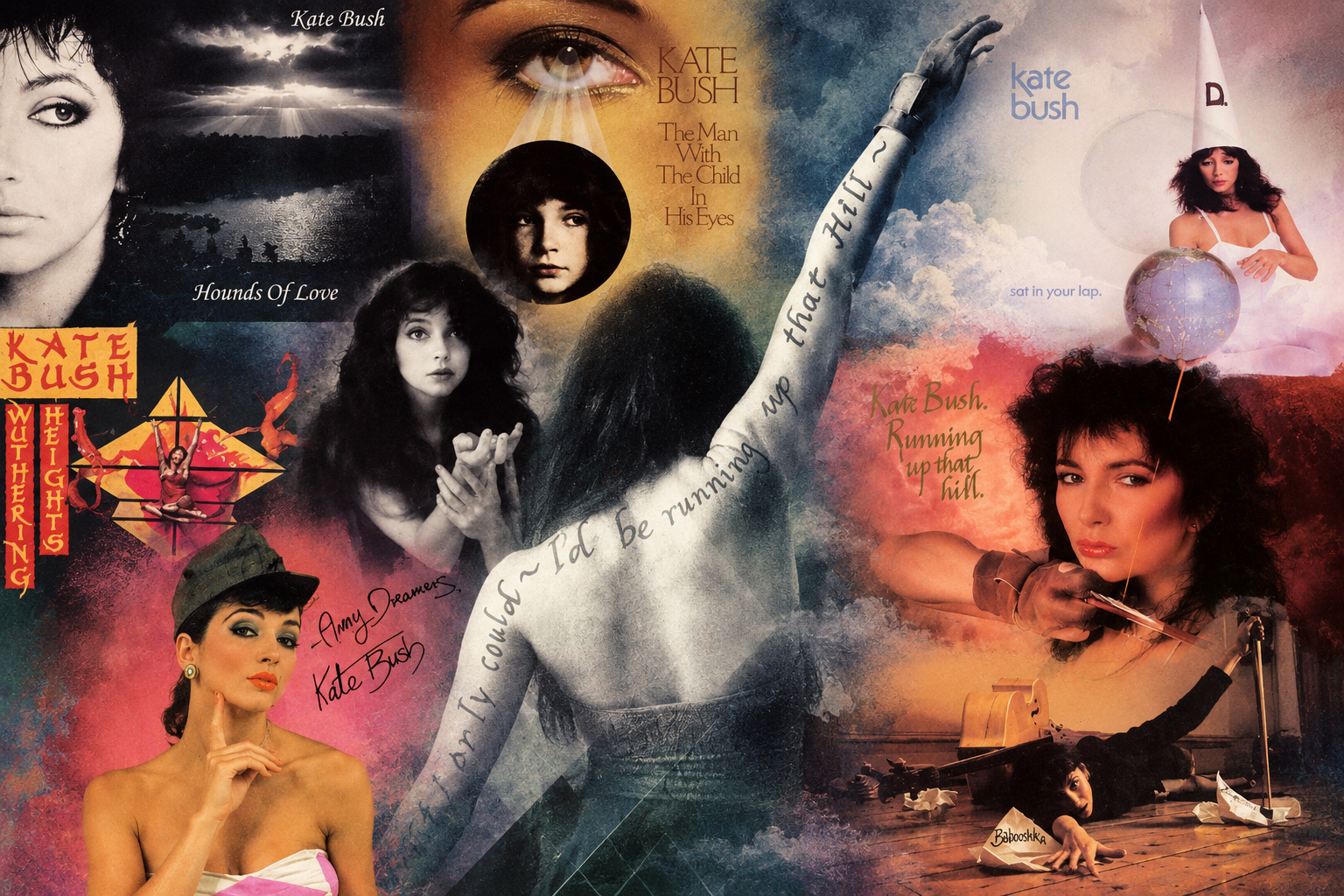
Kate Bush’s musical imagination has never been confined to her studio albums. Scattered across the B-sides of singles, film soundtracks, standalone releases and compilation albums is a remarkable collection of recordings that reveal another side of her artistry.
From the intimate piano ballad Under the Ivy to the eccentric storytelling of Ran Tan Waltz and the unsettling science fiction of Experiment IV, these lesser-known works are far more than discarded ideas. Some rank among the most intriguing compositions of her career, while others offer glimpses into her creative process and musical influences.
This guide explores Bush’s B-sides, hidden gems and rarities chronologically, alongside the compilations that have preserved them, uncovering the music that exists beyond her celebrated studio discography.
The Early B-Sides (1980–1983)
Although Kate Bush’s earliest singles largely featured material from her studio albums, 1980 marked the beginning of a fascinating collection of original B-sides. These recordings ranged from eccentric character studies to delicate piano ballads and increasingly unconventional experiments.
The Empty Bullring and Ran Tan Waltz (1980)
Released as the B-side to Breathing, The Empty Bullring is a sparse composition built around piano and Bush’s expressive vocals. Its imagery of a deserted bullring and an absent matador evokes longing and emotional abandonment, with the restrained arrangement allowing the song’s unusual imagery to take centre stage.
By contrast, Ran Tan Waltz, accompanying Babooshka, embraces a mischievous theatricality. Its lilting rhythm and exaggerated vocal characterisations disguise a darkly comic tale of infidelity, recalling the eccentric storytelling that distinguished Bush’s earliest recordings.
Passing Through Air and Warm and Soothing (1980)
Passing Through Air, released alongside Army Dreamers, is particularly intriguing because it originated from Bush’s teenage recordings in 1973, during the period when David Gilmour was helping develop her early material. Its gentle, understated arrangement offers a glimpse of her songwriting before her commercial breakthrough.
Warm and Soothing, the B-side to December Will Be Magic Again, takes a similarly restrained approach. Centred on piano and voice, its tender melancholy contrasts with the theatrical exuberance of the accompanying Christmas single.
Lord of the Reedy River (1981)
Released with Sat in Your Lap, Lord of the Reedy River is Bush’s interpretation of a song by Donovan. Its pastoral imagery and mysterious atmosphere reflect her affinity for folk traditions, while her delicate vocal phrasing lends the composition a dreamlike quality.
Dreamtime and Ne t’enfuis pas (1982–1983)
The B-side to The Dreaming, Dreamtime, is an instrumental reworking of the album’s title track. Without its vocal narrative, the recording draws attention to the dense percussion, shifting textures and intricate production that made The Dreaming such an adventurous album.
Ne t’enfuis pas, originally appearing on the reverse of There Goes a Tenner in 1982, explores an entirely different direction. Sung in French, its delicate electronic arrangement and anxious vocal performance capture the desperation of someone pleading with a lover not to leave.
A revised version appeared as a French single in 1983, accompanied by Un baiser d’enfant, a French-language interpretation of The Infant Kiss from Never for Ever. Although not an entirely new composition, the recording offers an interesting example of Bush revisiting her earlier material through another language.
The Hounds of Love Era (1985–1986)
The singles from Hounds of Love were accompanied by five additional recordings, ranging from intimate piano compositions to traditional folk interpretations and elaborate studio productions.
Under the Ivy (1985)
Released as the B-side to Running Up That Hill (A Deal with God), Under the Ivy is among Bush’s most affecting overlooked compositions. Built around little more than piano and voice, its quiet intimacy contrasts sharply with the elaborate production of Hounds of Love.
The song’s imagery of secrecy, childhood and a secluded garden creates a sense of private sanctuary, with Bush’s restrained performance suggesting emotions that remain deliberately unspoken. Its simplicity is precisely what makes it so powerful.
Burning Bridge and My Lagan Love (1985)
The Cloudbusting single introduced two strikingly different recordings.
Burning Bridge is a dramatic, rhythmically driven composition in which layered vocals and insistent percussion reinforce the song’s emotional urgency. Its directness and forceful arrangement distinguish it from the more contemplative material associated with this period.
My Lagan Love, included on the 12-inch single, moves in the opposite direction. Based on a traditional Irish song, with words adapted by Bush’s brother John Carder Bush, it relies almost entirely on her unaccompanied voice. The absence of conventional instrumentation gives the performance an unusually stark quality, allowing the melody and its folk origins to speak for themselves.
The Handsome Cabin Boy (1986)
Appearing on the reverse of Hounds of Love, The Handsome Cabin Boy is another traditional folk interpretation. Its narrative follows a young woman who disguises herself as a male sailor, only to attract unexpected romantic attention aboard the ship.
Bush approaches the story with an understated sense of humour, allowing the song’s playful ambiguity and increasingly improbable events to emerge through her vocal performance.
Not This Time (1986)
The B-side to The Big Sky, Not This Time returns to the expansive production associated with Hounds of Love. Combining prominent percussion, synthesisers and layered vocals, the recording builds towards an increasingly dramatic conclusion.
Its emotional intensity and shifting vocal textures make it one of the more compelling original compositions excluded from the album, demonstrating that Bush’s ambitious production techniques extended well beyond its final tracklisting.
The Sensual World Era (1989–1990)
The years surrounding The Sensual World produced several notable non-album recordings, including songs written for film and television alongside compositions exploring emotional uncertainty and isolation.
Walk Straight Down the Middle (1989)
Walk Straight Down the Middle appeared as an additional track on the original CD and cassette editions of The Sensual World, rather than forming part of its core ten-song sequence.
Built around an insistent rhythm, layered vocals and increasingly unsettled instrumentation, the song explores the difficulty of maintaining emotional balance. Its tense, almost claustrophobic arrangement provides an intriguing contrast to the album’s more expansive compositions.
Although not strictly a B-side, its unusual place in the album’s release history makes it an important inclusion among Bush’s less familiar recordings.
Be Kind to My Mistakes and I’m Still Waiting (1989)
First recorded for Nicolas Roeg’s 1987 film Castaway, Be Kind to My Mistakes subsequently appeared in a revised version on the This Woman’s Work single. Its driving percussion and urgent vocals create a restless energy, with the repeated plea for understanding lending the performance an underlying vulnerability.
The single’s extended formats also featured I’m Still Waiting, a more subdued composition concerned with unresolved longing. Its spacious arrangement and recurring vocal phrases create a sense of emotional suspension, as though the song itself is unable to move beyond the feelings it describes.
Ken, The Confrontation and One Last Look Around the House Before We Go… (1990)
The Love and Anger single featured three recordings associated with the Comic Strip production GLC: The Carnage Continues, revealing a more humorous and theatrical side of Bush’s work.
Ken is an exuberant, satirical tribute to politician Ken Livingstone, combining forceful guitars, energetic vocals and deliberately exaggerated characterisation. Its irreverent humour makes it one of the more unusual recordings in her catalogue.
The Confrontation is a brief instrumental built around dramatic tension, while One Last Look Around the House Before We Go… provides a short, atmospheric interlude. Neither functions as a conventional pop song, but both illustrate Bush’s ability to compose music for specific dramatic situations.
The Red Shoes Era (1991–1994)
The period surrounding The Red Shoes brought together original B-sides, cover versions and extended arrangements, reflecting Bush’s interest in both traditional songwriting and more rhythmically driven production.
Candle in the Wind (1991)
Released alongside her interpretation of Elton John’s Rocket Man, Candle in the Wind offers a restrained reinterpretation of another celebrated Elton John and Bernie Taupin composition.
Bush replaces much of the original’s grand emotional sweep with a gentler, more reflective delivery. Her measured phrasing gives the familiar melody a different sense of intimacy, making the recording feel less like a straightforward tribute than a personal interpretation.
Show a Little Devotion and Home for Christmas (1993)
Two original recordings accompanied different formats of the Moments of Pleasure single.
Show a Little Devotion combines an insistent rhythmic arrangement with an expressive vocal performance, gradually increasing in intensity as Bush explores the frustrations and uncertainties of love. Its dramatic shifts give the song a restless quality that distinguishes it from the reflective mood of its accompanying single.
Home for Christmas is a brief seasonal composition, built around a gentle melody and an atmosphere of warmth and longing. Its understated arrangement avoids the elaborate theatricality of December Will Be Magic Again, offering a quieter perspective on the emotions associated with Christmas.
You Want Alchemy? (1994)
Released as a B-side during the Red Shoes era, You Want Alchemy? is one of Bush’s most imaginative overlooked compositions.
Drawing upon the imagery of bees, honey and transformation, the song turns an apparently ordinary encounter with the natural world into something mysterious and almost magical. Its playful vocal delivery, unusual lyrical details and shifting arrangement recall the eccentric storytelling of her earlier work.
Among Bush’s original non-album recordings, it stands out for the sheer originality of its subject matter.
Shoedance and the Alternative Mixes (1994)
The Red Shoes singles also featured several alternative versions of existing compositions.
Most notable was Shoedance (The Red Shoes Dance Mix), an extended reworking of the album’s title track that places greater emphasis on its rhythmic drive and theatrical atmosphere.
Other releases included an extended mix of Rubberband Girl, an instrumental version of Moments of Pleasure and alternative mixes of Eat the Music. Although these were not entirely new songs, they offered different perspectives on Bush’s arrangements and production choices.
Soundtracks, Covers and Standalone Rarities
Beyond her traditional B-sides, Bush contributed recordings to film soundtracks, tribute albums and special projects. Some became successful singles, while others remained difficult to find until their appearance on later compilations.
December Will Be Magic Again (1980)
Originally released as a standalone Christmas single, December Will Be Magic Again captures Bush at her most whimsical.
Its theatrical vocal shifts, playful melodic turns and vivid seasonal imagery transform a familiar festive subject into a miniature musical fantasy. Rather than relying on conventional Christmas sentimentality, Bush creates a world of anticipation, imagination and childlike wonder.
Rocket Man (1991)
Recorded for the Elton John and Bernie Taupin tribute album Two Rooms, Rocket Man is among Bush’s most distinctive cover versions.
Replacing the original’s piano-led rock arrangement with reggae influences and Celtic instrumentation, she transforms the song into something unexpectedly buoyant and dreamlike. The contrast between its relaxed musical character and the isolation expressed in the lyrics gives her interpretation a distinctive emotional quality.
Brazil and The Man I Love (1993–1994)
Bush’s interpretation of Brazil, recorded in connection with the soundtrack album for Terry Gilliam’s film, brings a wistful quality to the familiar standard. Its orchestral arrangement and gently expressive vocals evoke the romantic escapism associated with the film’s imagery.
The Man I Love, recorded with harmonica virtuoso Larry Adler for The Glory of Gershwin, offers another departure from her usual musical territory. Bush’s understated interpretation of the Gershwin standard reveals her sensitivity to classic popular songwriting, allowing the melody to unfold without elaborate studio effects.
Mná na hÉireann (1996)
Recorded for Common Ground: Voices of Modern Irish Music, Mná na hÉireann (Women of Ireland) finds Bush performing in Irish.
Its measured pace and traditional musical character connect naturally with her earlier interpretations of My Lagan Love and The Handsome Cabin Boy. Rather than transforming the material into a conventional pop arrangement, she allows its melodic qualities and cultural origins to remain central.
Sexual Healing (2005)
Bush’s interpretation of Marvin Gaye’s Sexual Healing takes the original in a markedly different direction.
Slowing the familiar soul composition into a spacious, intimate performance, she removes much of its rhythmic immediacy. The result emphasises the melody’s tenderness, demonstrating her ability to uncover different emotional possibilities within an established song.
Lyra (2007)
Written for the film adaptation of Philip Pullman’s The Golden Compass, Lyra is one of Bush’s most memorable later standalone compositions.
Featuring the voices of the Magdalen College Choir, Oxford, the recording combines her ethereal singing with a choral arrangement that evokes the mystery and wonder of Pullman’s fictional universe. Its gradual development and restrained grandeur make it particularly effective as a piece of cinematic music.
Humming and Other Early Curiosities
Among the discoveries included on The Other Sides was Humming, an early Bush recording that received its first official release as part of the 2018 remastering programme.
Its inclusion offered listeners another glimpse into the development of her songwriting before her breakthrough with Wuthering Heights.
Other elusive recordings include The Magician, associated with the 1979 film The Magician of Lublin, which remains outside her principal rarities compilations.
Bush’s early demo recordings, often circulated unofficially under the name The Cathy Demos, offer another fascinating area of exploration. However, these recordings have a different release history from her officially issued B-sides and are best considered separately rather than treated as part of her formal discography.
The Whole Story (1986)
Released in November 1986, The Whole Story was Kate Bush’s first greatest-hits compilation, bringing together twelve recordings spanning her career from The Kick Inside to Hounds of Love.
Although primarily a collection of familiar singles, it introduced two recordings of particular interest to listeners exploring her rarities.
Experiment IV
Written specifically for the compilation, Experiment IV is among Bush’s most unsettling compositions.
Its narrative follows a secret military project attempting to develop a sound capable of killing, transforming music itself into a terrifying weapon. Ominous synthesisers, dramatic percussion and increasingly frantic vocals build an atmosphere of technological paranoia.
The accompanying music video, directed by Bush and featuring appearances from Dawn French and Hugh Laurie, expanded the song’s sinister premise into a miniature science-fiction horror story.
With its unusual narrative and elaborate production, Experiment IV feels closely connected to the experimental ambitions of The Dreaming and Hounds of Love.
Wuthering Heights (New Vocal)
The compilation also featured a newly recorded vocal performance of Wuthering Heights, replacing Bush’s original 1978 singing while retaining much of the familiar instrumental arrangement.
Her more mature vocal delivery gives the recording a different character, offering an intriguing comparison between the youthful theatricality of her debut and the greater control of her later performances.
Although The Whole Story was not conceived as a rarities collection, these additions ensured that it offered something beyond a straightforward retrospective.
This Woman’s Work: Anthology 1978–1990
Released in 1990, This Woman’s Work: Anthology 1978–1990 was Bush’s most ambitious retrospective to date.
The box set gathered her first six studio albums alongside additional discs devoted to B-sides, rarities, live recordings and remixes, making a substantial portion of her less accessible catalogue available in one collection.
A Treasure Trove of B-Sides
For collectors, the anthology’s principal attraction was its supplementary material.
Recordings such as The Empty Bullring, Ran Tan Waltz, Under the Ivy and Burning Bridge appeared alongside covers, instrumental pieces and alternative versions. The collection also included material from Bush’s 1979 live performances and extended mixes of familiar singles.
Previously scattered across different formats and releases, these recordings could now be explored together, revealing connections between songs written at very different stages of her career.
An Ambitious but Incomplete Collection
Despite its considerable scope, This Woman’s Work was not a complete archive.
Some recordings and alternative versions remained absent, while later soundtrack contributions and B-sides would naturally fall outside its 1990 release window. The anthology therefore represented an important collection of available material rather than an exhaustive account of Bush’s recording history.
Nevertheless, it helped establish the significance of her non-album work, demonstrating that these recordings deserved preservation alongside her better-known releases.
The Other Sides (2018–2019) and Best of The Other Sides (2025)
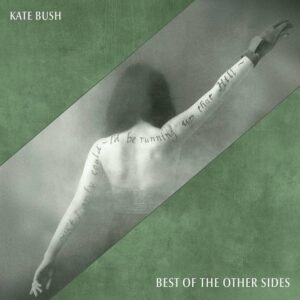
Nearly three decades after This Woman’s Work, Bush revisited her lesser-known catalogue with The Other Sides, a four-disc collection originally included in her 2018 remastered box sets before receiving a standalone release in 2019.
Bringing together B-sides, extended mixes, soundtrack recordings and covers, it offered one of the most comprehensive official surveys of her music outside the principal studio albums.
The Other Sides: A More Complete Picture
The collection’s four discs approached Bush’s rarities from different perspectives.
12″ Mixes concentrated on extended versions of familiar recordings, including Cloudbusting (The Orgonon Mix) and The Big Sky (Meteorological Mix), highlighting the elaborate production and alternative arrangements developed for her singles.
The two The Other Side discs gathered original B-sides and miscellaneous recordings, bringing together songs such as Under the Ivy, Burning Bridge, I’m Still Waiting and You Want Alchemy? alongside soundtrack contributions and other rarities.
Particularly noteworthy was Humming, an early recording receiving its first official release. Its appearance made the collection more than a straightforward reissue of previously available material.
The final disc, In Others’ Words, explored Bush’s interpretations of compositions by other artists, including Rocket Man, Sexual Healing, The Man I Love and Mná na hÉireann.
Together, the four discs offered a revealing portrait of Bush as a songwriter, arranger, interpreter and studio experimenter.
Best of The Other Sides (2025)
In 2025, Bush returned to this material with Best of The Other Sides, an eleven-track selection released digitally in September and physically in October.
Bringing together recordings such as Under the Ivy, Rocket Man, Lyra and Brazil, the compilation provided a more accessible introduction to her music beyond the studio albums.
The release also featured revised presentations of Experiment IV, You Want Alchemy? and Walk Straight Down the Middle, with Bush making adjustments to selected recordings rather than simply reproducing every earlier version unchanged.
Although considerably shorter than its predecessor, Best of The Other Sides offered another opportunity to rediscover recordings that had often remained overshadowed by her best-known albums.
Beyond the Albums: Discovering Kate Bush’s Hidden Gems
For those familiar with Kate Bush’s celebrated studio albums, her B-sides and rarities offer an entirely new avenue of discovery. Hidden among forgotten singles, film soundtracks and compilation albums are recordings every bit as imaginative, moving and surprising as her better-known work.
Whether it’s the haunting intimacy of Under the Ivy, the eccentric charm of Ran Tan Waltz or the extraordinary storytelling of You Want Alchemy?, these songs reveal just how much of Bush’s musical world exists beyond her most famous releases.
So, if you’ve explored Hounds of Love, The Dreaming and The Sensual World, why stop there? Venture into The Other Sides, revisit the forgotten B-sides and seek out the recordings that rarely appear on greatest-hits collections. Some of Kate Bush’s most rewarding musical discoveries are waiting where you might least expect them.