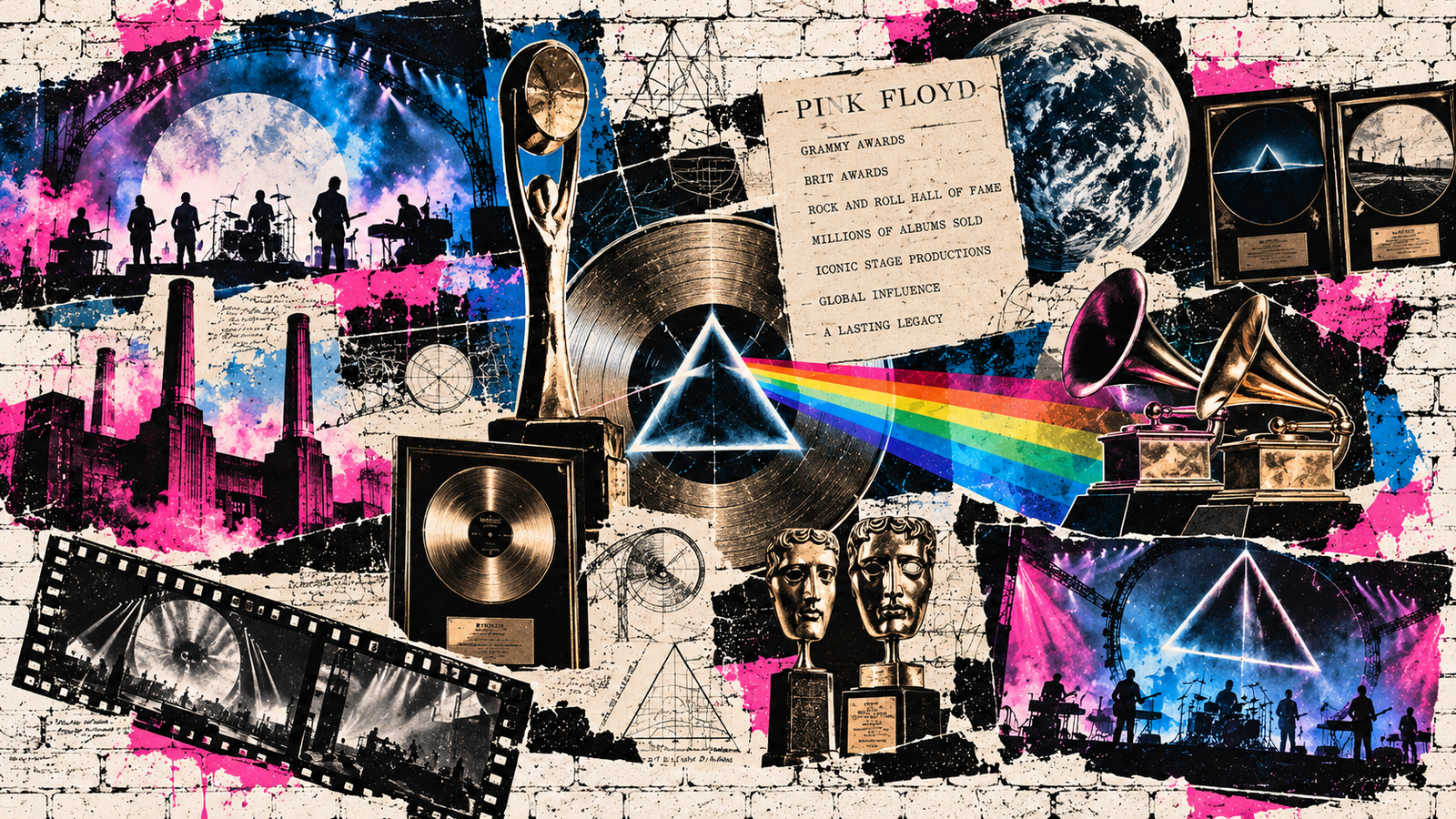
Pink Floyd became one of the most successful bands in rock history without following many of the conventions traditionally associated with commercial success. Their music grew increasingly ambitious, their albums often demanded uninterrupted listening, and their concerts evolved into elaborate productions that challenged the boundaries of live performance.
From London’s psychedelic underground to international stadium tours, their achievements were extraordinary. The Dark Side of the Moon established remarkable chart records, The Wall transformed the possibilities of theatrical rock concerts, and their influence eventually earned recognition from some of the music industry’s most prestigious institutions.
Yet Pink Floyd’s legacy cannot be measured through album sales and awards alone. Their experiments with sound, visual design and conceptual storytelling helped change expectations of what a rock band could achieve.
How did a group known for lengthy instrumentals and unconventional ideas become one of the most enduring names in popular music, and which milestones best illustrate their remarkable career?
From Underground Pioneers to Chart Success
Pink Floyd’s earliest achievements were unusual for a band whose reputation rested on extended improvisations, unconventional sounds and performances that challenged the expectations of a rock concert. Yet within a few years of emerging from London’s underground music scene, they had secured a major recording contract, entered the UK singles chart and established themselves as a successful album-oriented group.
The First Breakthrough: 1967
By late 1966, Pink Floyd had become an important presence in London’s emerging psychedelic underground, performing at venues including the Roundhouse and, subsequently, the UFO Club. Their concerts combined Syd Barrett’s distinctive songwriting with extended instrumental passages and experimental lighting, attracting audiences interested in something beyond conventional pop performances.
Their growing reputation led to a recording contract with EMI in February 1967. The following month, the band released their debut single, “Arnold Layne”, which reached number 20 on the UK Singles Chart. A more significant breakthrough followed in June with “See Emily Play”. Reaching number six, it introduced Pink Floyd to a wider national audience and earned them appearances on Top of the Pops.
Their debut album, The Piper at the Gates of Dawn, arrived in August 1967 and peaked at number six on the UK Albums Chart. Its success was particularly notable given the album’s experimental character, with compositions such as “Astronomy Domine” and “Interstellar Overdrive” occupying territory far removed from conventional pop songwriting.
Within a matter of months, Pink Floyd had demonstrated that their appeal could extend beyond London’s underground scene without abandoning the experimentation that had established their reputation.
Becoming an Album-Oriented Band
Syd Barrett’s departure in 1968 and David Gilmour’s arrival marked a difficult transition, but Pink Floyd’s commercial momentum continued.
Although the band struggled to replicate the singles success of “See Emily Play”, their albums attracted an increasingly substantial audience. A Saucerful of Secrets (1968) reached number nine in the UK, while the experimental double album Ummagumma (1969) climbed to number five.
Rather than depending on regular hit singles, Pink Floyd were developing a following willing to embrace extended compositions, unusual arrangements and increasingly ambitious musical ideas.
The clearest indication of this transformation arrived in October 1970, when Atom Heart Mother became their first UK number-one album.
Featuring an extended title composition incorporating brass and choir alongside more conventional songs, the record was hardly an obvious commercial proposition. Nevertheless, its chart-topping performance demonstrated that Pink Floyd had established a substantial audience for music that often resisted mainstream expectations.
The Foundations of International Success
By the early 1970s, Pink Floyd’s reputation was expanding beyond Britain. Their concert audiences were growing across Europe and North America, while Meddle (1971) demonstrated a more confident and distinctive musical approach.
Nevertheless, there remained a considerable difference between their popularity in Britain and their commercial standing in the United States. Atom Heart Mother, despite reaching number one in the UK, peaked at only number 55 on the American album chart.
Pink Floyd had become a successful British album band, but their transformation into an international commercial phenomenon was still to come. The audience, musical ambition and growing live reputation were already in place; what followed would take their success to an entirely different level.
Record-Breaking Albums and Commercial Milestones
Pink Floyd’s commercial achievements are remarkable not simply because of the number of records they sold, but because of the music responsible for that success. At a time when hit singles remained an important measure of popularity, the band built an international audience around ambitious albums, extended compositions and elaborate musical concepts.
Their breakthrough during the 1970s transformed them into one of the biggest names in popular music. Yet their most extraordinary achievement would prove to be longevity: albums that continued finding new audiences decades after their original release.
The Dark Side of the Moon: A Record-Breaking Phenomenon
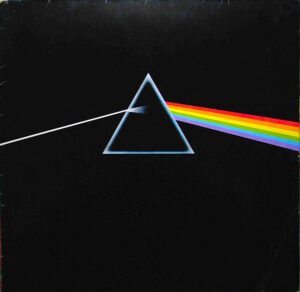
Released in March 1973, The Dark Side of the Moon became the defining commercial achievement of Pink Floyd’s career.
The album reached number one on the US Billboard album chart, although it occupied the top position for just one week. In Britain, it peaked at number two, an unusual distinction for a record that would become one of the country’s most enduring commercial successes.
Its remarkable longevity soon overshadowed those initial chart positions.
In October 1983, The Dark Side of the Moon overtook Johnny Mathis’s Johnny’s Greatest Hits to become the longest-charting album in Billboard’s history. By October 1988, it had accumulated 741 weeks on the Billboard 200 during a period spanning approximately fifteen and a half years.
That statistic deserves some clarification. The album’s original chart history included an exceptionally long continuous run followed by further appearances, rather than 741 uninterrupted weeks. Changes to Billboard’s eligibility rules subsequently affected the ability of older catalogue albums to appear on the main chart, but the record returned in December 2009 following another rule change.
Its chart longevity has continued into the twenty-first century, supported by reissues, anniversary editions and successive generations discovering the album.
What makes this achievement especially striking is the music itself. The Dark Side of the Moon was not a conventional collection of pop singles. Its interconnected compositions explored time, mortality, money and psychological pressure, with instrumental passages and sound effects forming an essential part of the experience.
Its success demonstrated that an ambitious, carefully structured album could achieve extraordinary mainstream popularity while retaining its conceptual identity.
Wish You Were Here: Success Without Compromise
Following The Dark Side of the Moon presented Pink Floyd with an unusual challenge. Their next album would inevitably be measured against one of the most commercially successful records ever released.
Wish You Were Here, issued in September 1975, demonstrated that their breakthrough had not been an isolated phenomenon. It reached number one in both Britain and the United States, confirming Pink Floyd’s status as an international commercial force.
The achievement was particularly notable given the album’s structure. Much of the record is occupied by “Shine On You Crazy Diamond”, an extended composition divided between its opening and closing sections, while the remaining songs explore absence, alienation and the pressures of the music industry.
Rather than simplifying their approach, Pink Floyd continued producing music that demanded sustained attention. By this point, the release of a new album had become a major event in its own right.
The Wall: A Concept Album Becomes a Global Hit
By the end of the 1970s, Pink Floyd had achieved a level of commercial freedom that allowed them to pursue increasingly ambitious projects.
Released in November 1979, The Wall was perhaps the clearest example. A double concept album exploring isolation, trauma and emotional withdrawal, it became one of the band’s greatest commercial successes, reaching number one on the US Billboard album chart.
The album also produced something increasingly rare in Pink Floyd’s career: a major hit single.
“Another Brick in the Wall, Part 2” reached number one in Britain in December 1979, becoming the band’s only UK chart-topping single. It remained at the summit for five weeks, including the Christmas period, and also reached number one in the United States.
The song’s success was remarkable for a band that had largely moved away from the singles market during the preceding decade.
Yet The Wall was far more than a commercially successful album accompanied by a hit song. Its theatrical ambitions would extend into an elaborate stage production and a feature film, demonstrating how a recording could develop into a much larger artistic project.
The Scale of Pink Floyd’s Commercial Legacy
Pink Floyd continued achieving major commercial success through changing musical fashions and alterations to the band’s membership. The Division Bell reached number one in Britain and the United States in 1994, while The Endless River topped the UK Albums Chart two decades later.
Their catalogue has also enjoyed remarkable longevity through reissues, anniversary editions and successive generations discovering their music.
Worldwide sales estimates run into the hundreds of millions, although precise totals vary according to the source and the methods used to calculate sales and certifications. Those differences make a single definitive figure difficult to establish.
The broader achievement is clear without relying on an uncertain total. Pink Floyd created a catalogue capable of sustaining international commercial interest long after their principal recording and touring career had ended.
Awards and Industry Recognition
Despite becoming one of the most commercially successful bands in rock history, Pink Floyd’s relationship with major music awards was surprisingly modest. Their most celebrated albums did not translate into an extensive collection of competitive prizes, and several of their most prestigious honours arrived decades after the recordings that established their reputation.
Nevertheless, the recognition they eventually received reflected the breadth of their achievements, extending beyond rock music into film, experimental composition and the relationship between music and visual art.
Grammy Awards: An Unexpectedly Modest Record
Given the extraordinary success of The Dark Side of the Moon and The Wall, it might seem surprising that Pink Floyd won only one competitive Grammy Award.
Their victory came at the 1995 ceremony, when “Marooned”, an instrumental from The Division Bell (1994), received the award for Best Rock Instrumental Performance.
Built around David Gilmour’s expressive guitar and Richard Wright’s atmospheric keyboards, “Marooned” was an interesting choice for mainstream awards recognition. Its spacious arrangement and emphasis on instrumental interplay recalled aspects of Pink Floyd’s earlier work, demonstrating that their musical identity remained distinctive more than two decades after their international breakthrough.
Pink Floyd had previously received two nominations for The Wall at the 1981 ceremony: Album of the Year and Best Rock Performance by a Duo or Group with Vocal. Their concert film Delicate Sound of Thunder subsequently received a nomination for Best Music Video, Long Form in 1990.
According to the Recording Academy’s official artist record, Pink Floyd have one competitive Grammy win from four nominations.
The contrast between their relatively limited Grammy success and enormous cultural influence is striking. Some of their most celebrated achievements were recognised more fully by audiences and subsequent generations of musicians than by contemporary award ceremonies.
The Wall: Recognition Beyond the Music Industry
Pink Floyd’s ambitions frequently extended beyond recorded music, and the film adaptation of The Wall brought recognition from a different artistic field.
Directed by Alan Parker and released in 1982, Pink Floyd – The Wall combined live action, music and Gerald Scarfe’s striking animation to translate the album’s themes of isolation, trauma and psychological collapse into a cinematic experience.
At the 1983 BAFTA Film Awards, Roger Waters received the award for Original Song Written for a Film for “Another Brick in the Wall”. The production was also recognised for its sound, reflecting the importance of audio to its cinematic presentation.
These honours acknowledged the project’s effectiveness beyond the conventions of a rock album. The music, imagery and sound design were integral to its storytelling, demonstrating how Pink Floyd’s conceptual ambitions could extend into another medium.
Rock and Roll Hall of Fame: Recognition of a Lasting Influence
In 1996, Pink Floyd were inducted into the Rock and Roll Hall of Fame, recognising their contribution to the development of popular music.
Billy Corgan of the Smashing Pumpkins delivered the induction, reflecting the influence Pink Floyd had exerted on musicians working well beyond the progressive rock movement.
By the time of the ceremony, their approach to atmosphere, extended compositions and unconventional studio techniques had inspired artists across alternative rock, electronic music and other experimental styles.
The induction acknowledged more than commercial success. It recognised a career that had helped shape psychedelic and progressive rock while expanding the possibilities of how popular music could be recorded and presented.
The Polar Music Prize: Honouring Music as an Art Form
One of Pink Floyd’s most prestigious international honours arrived in 2008, when they received Sweden’s Polar Music Prize.
Established to recognise exceptional contributions to music, the prize celebrates achievements across genres and traditions rather than concentrating solely on commercial success.
Pink Floyd were honoured for their contribution to the relationship between art and music, particularly their extensive sonic experimentation and influence on popular culture.
Roger Waters and Nick Mason attended the ceremony in Stockholm, receiving the award from King Carl XVI Gustaf of Sweden. The band shared the year’s honours with American soprano Renée Fleming.
The significance of the prize lay in its recognition of Pink Floyd’s broader artistic contribution. From experimental studio techniques to elaborate visual productions, the band had repeatedly treated music as part of a larger creative experience.
Recognition Beyond Individual Awards
Pink Floyd also entered the UK Music Hall of Fame in 2005, another acknowledgement of their enduring significance.
Yet the contrast between their relatively small collection of competitive music awards and their enormous influence remains notable. Their most important commercial and artistic achievements had already been established long before many of these honours arrived.
The awards recognise particular recordings, performances and contributions, but Pink Floyd’s wider importance is perhaps better understood through the changes they helped bring to recorded music and live performance.
Concerts That Changed Live Music
Pink Floyd’s achievements were not confined to recording studios and album charts. Throughout their career, the band helped transform the rock concert into an immersive experience, combining music with elaborate lighting, experimental sound systems, film projections and increasingly ambitious stage designs.
Their approach was distinctive because the spectacle was rarely intended as decoration alone. Visual effects became part of the music’s presentation, reinforcing its themes and sometimes challenging the relationship between performers and audience.
From Psychedelic Light Shows to Surround Sound
Pink Floyd’s reputation for innovative live performances began in London’s psychedelic underground during the mid-1960s. At venues such as the UFO Club, their extended improvisations were accompanied by colourful, constantly changing light projections, creating an atmosphere that distinguished them from more conventional rock acts.
As their audiences grew, so did their technical ambitions. During the early 1970s, Pink Floyd experimented with quadraphonic sound, using speakers positioned around concert venues to move sound effects and musical passages beyond the traditional stage.
This approach was particularly effective during performances of The Dark Side of the Moon. Clocks, voices and electronic effects could appear to travel around the audience, turning the concert space into an extension of the recording itself.
The band also developed increasingly elaborate visual presentations. In 1974, they introduced the circular projection screen that would become one of their most recognisable concert features. Film sequences and lighting effects could accompany individual compositions, giving audiences a visual dimension to music that was often atmospheric and abstract.
Pink Floyd were not alone in exploring new concert technologies, but their ability to integrate sound, lighting and imagery into a coherent performance helped establish a new standard for large-scale rock productions.
Animals and the Expansion of the Stadium Spectacle
By the time Pink Floyd embarked on their In the Flesh tour in 1977, their concerts had become considerably larger and more elaborate.
Supporting Animals, the tour incorporated extensive lighting equipment, projections and inflatable figures inspired by the album’s imagery. Most memorable was the flying pig, which had already appeared on the album’s cover and became a recurring symbol of the band’s visual identity.
Yet the tour also exposed a tension that would influence their next major achievement. Roger Waters became increasingly uncomfortable with the distance between the band and its audience, particularly the atmosphere of enormous stadium concerts.
Pink Floyd had become successful enough to command vast crowds, but the scale of those performances threatened the sense of connection that live music was supposed to create.
That frustration helped inspire The Wall, a production in which the separation between artist and audience became the central theatrical idea.
The Wall: When a Concert Became Theatre
When Pink Floyd first performed The Wall in Los Angeles on 7 February 1980, they presented one of the most ambitious stage productions rock music had seen.
Rather than simply performing the album against a backdrop of elaborate lighting, the band constructed a physical barrier between themselves and the audience.
Throughout the first half of the concert, stagehands gradually assembled a wall of large cardboard bricks across the stage. By the interval, the musicians were almost completely concealed behind it.
The production incorporated Gerald Scarfe’s animations, enormous inflatable characters, projected imagery and dramatic theatrical effects. During “Comfortably Numb”, David Gilmour appeared above the completed wall to perform his guitar solo, creating one of the show’s most memorable visual moments.
The spectacle was impressive, but its real achievement was conceptual. The wall was not merely an elaborate stage prop; it represented the emotional isolation explored throughout the album. By physically separating the musicians from their audience, Pink Floyd transformed the central idea of the record into something spectators could experience directly.
The production was also extraordinarily difficult and expensive to stage. Its scale restricted performances to just four cities: Los Angeles, New York, London and Dortmund, across 1980 and 1981.
Unlike a conventional tour designed to travel efficiently between venues, The Wall demanded a substantial theatrical infrastructure.
Its significance extended beyond technical achievement. Pink Floyd demonstrated how a rock concert could function as a fully developed dramatic production, with music, narrative and stage design working towards the same artistic purpose.
The Division Bell Tour: Spectacle on a Global Scale
Following Roger Waters’ departure, Pink Floyd continued expanding the possibilities of live performance under David Gilmour’s leadership.
Their tours supporting A Momentary Lapse of Reason (1987) and The Division Bell (1994) brought the band’s music to enormous international audiences, combining elaborate lighting rigs, film projections, lasers and carefully coordinated visual effects.
The 1994 tour represented the culmination of this approach. Its enormous stage featured the familiar circular projection screen, while sophisticated lighting sequences accompanied performances of songs spanning much of the band’s career.
The production also incorporated large inflatable figures, recalling elements of earlier concerts while taking advantage of advances in staging technology.
A particularly significant moment came during the tour’s final run at London’s Earls Court, where Pink Floyd performed The Dark Side of the Moon in its entirety on selected nights.
These performances connected the band’s 1970s achievements with their later stadium-scale presentation, demonstrating how familiar music could be reimagined through contemporary concert technology.
The tour became Pink Floyd’s final major concert tour, with performances documented on the live album and concert film Pulse (1995).
A Lasting Influence on Concert Production
Pink Floyd did not invent the light show, surround sound or theatrical rock performance. Their achievement was bringing these elements together with unusual ambition and consistency.
From the experimental projections of their early London concerts to the enormous production of The Wall, they explored how visual and technological innovations could change an audience’s relationship with music.
Their later tours demonstrated that such ideas could operate on a stadium scale, helping establish the expectation that a major rock concert could be more than a performance of familiar songs.
Historic Moments and Lasting Achievements
Pink Floyd’s greatest commercial achievements emerged during the 1970s, but their story did not end with the band’s classic albums or final major tour.
Decades after their international breakthrough, they continued to attract enormous audiences, achieve chart success and occasionally return to the public spotlight in unexpected circumstances.
Live 8: A Reunion Few Expected
On 2 July 2005, Pink Floyd delivered one of the most memorable performances of the Live 8 concerts, reuniting David Gilmour, Roger Waters, Richard Wright and Nick Mason onstage at London’s Hyde Park.
It was the first time these four musicians had performed together as Pink Floyd since 1981.
The significance of the reunion extended beyond the music. Waters had left Pink Floyd in 1985, and the subsequent disputes over the band’s future had made another performance by the classic 1970s line-up seem increasingly improbable.
Their set opened with “Speak to Me” leading into “Breathe”, followed by “Money”, “Wish You Were Here” and “Comfortably Numb”.
The performance was relatively restrained by Pink Floyd’s theatrical standards. There was no enormous wall or elaborate narrative production. Instead, attention centred on the four musicians sharing a stage again, performing songs that had become part of rock music’s cultural history.
The concert was organised as part of an international campaign to encourage action on global poverty ahead of the G8 summit, bringing Pink Floyd’s reunion to an audience extending far beyond their established fanbase.
For listeners who had never expected to see the musicians together again, the performance represented an extraordinary moment of reconciliation, even if only temporarily.
It did not lead to a full reunion tour or another studio album featuring all four members. Richard Wright’s death in September 2008 subsequently made any further performance by that line-up impossible.
Live 8 remains an important milestone precisely because it was so brief: a rare opportunity to see a celebrated musical partnership restored, without the promise of a permanent return.
The Endless River: A Final Number-One Album
Nearly two decades after The Division Bell, Pink Floyd returned with The Endless River in November 2014.
Developed largely from recordings made during the 1993–94 sessions for The Division Bell, the album featured David Gilmour, Nick Mason and the late Richard Wright. Its predominantly instrumental character made it an unusual release for a band whose most commercially successful recordings were associated with powerful lyrical themes.
Rather than attempting to recreate the sound of The Wall or The Dark Side of the Moon, The Endless River revisited the atmospheric and exploratory qualities that had long been central to Pink Floyd’s musical identity.
The album debuted at number one on the UK Albums Chart and topped charts in numerous other countries. It also reached number three in the United States.
Its vinyl sales were particularly notable. According to the Official Charts Company, The Endless River sold more than 6,000 vinyl copies in its first UK chart week, making it the fastest-selling vinyl album of the century up to that point.
That achievement was striking for a predominantly instrumental album released twenty years after the band’s previous studio record.
Although its critical reception was mixed, The Endless River provided a commercially successful farewell to an important period of Pink Floyd’s history while serving as a tribute to Wright’s musical contributions.
Hey, Hey, Rise Up!: Music for a Humanitarian Cause
Pink Floyd made another unexpected return in April 2022 with “Hey, Hey, Rise Up!”, a single recorded in support of Ukraine following Russia’s full-scale invasion.
The recording brought David Gilmour and Nick Mason together with longtime Pink Floyd bassist Guy Pratt and keyboardist Nitin Sawhney. It incorporated the voice of Ukrainian musician Andriy Khlyvnyuk, whose performance of the patriotic song “Oh, the Red Viburnum in the Meadow” had circulated internationally.
According to the band’s official announcement, it was the first new original music they had recorded together under the Pink Floyd name since The Division Bell in 1994. This distinction concerns newly recorded material rather than archival recordings released in the intervening years.
Unlike their earlier releases, the single was not conceived as part of a larger album or concert project. Its purpose was humanitarian, with proceeds directed towards relief efforts supporting people affected by the war.
Rather than breaking a chart record or introducing a new concert technology, Pink Floyd used their international recognition to draw attention and financial support towards a contemporary humanitarian crisis.
A Catalogue That Continues to Find New Audiences
Perhaps Pink Floyd’s most enduring achievement is the continued popularity of their recordings.
Their music has survived significant changes in how people discover, purchase and experience albums. Records originally conceived for vinyl have remained relevant through the cassette, CD, download and streaming eras, while anniversary editions and archival releases have introduced additional material to successive generations.
The band’s distinctive visual identity has also contributed to that longevity. Storm Thorgerson and Hipgnosis’s album artwork, Gerald Scarfe’s illustrations for The Wall and the familiar prism associated with The Dark Side of the Moon remain recognisable beyond the music itself.
Yet this continued popularity cannot be explained by imagery or nostalgia alone. Pink Floyd’s albums reward repeated listening through their attention to atmosphere, arrangement and musical development. Their recordings often work as complete experiences, encouraging listeners to explore beyond individual songs and discover the connections between them.
For a band that began by experimenting in London’s underground clubs, the ability to remain culturally and commercially relevant more than half a century later is an extraordinary achievement.
A Legacy Beyond Records and Awards
Pink Floyd’s career is marked by remarkable commercial records, prestigious honours and performances that helped redefine the possibilities of live music. From their early success in Britain’s psychedelic underground to the enduring popularity of The Dark Side of the Moon, they repeatedly challenged expectations of what a rock band could accomplish.
Yet their achievements are not fully captured by statistics or awards. Their experiments with sound, ambitious conceptual works and pioneering visual productions left an influence extending far beyond their own recordings.
The numbers are extraordinary, but Pink Floyd’s greatest achievement may be something less easily measured: their ability to make unconventional music resonate with millions without losing the qualities that made it unconventional in the first place.